

Illustrative patient discussing urgent treatment choices with a dental clinician
Specialized Care

Emergency Tooth Extractions in Old Milton

An old crown gives way, or a tooth patched many times finally splits. For Old Milton, close to our Bronte Street practice, we assess what is left, explain whether removal is the sensible step, and plan care around it.

A tooth with a long history

Decades of fillings and one bad crack: is this the end of the road?

Plenty of people in Milton's historic downtown have a tooth they have nursed along for years: a large filling replaced twice, a crown from long ago, perhaps a root canal. When it suddenly breaks or starts to throb, the natural assumption is that it has finally run out of chances. Sometimes that is true. Sometimes it is not, and only an examination can tell.

Removal in an emergency is appropriate when the tooth's condition, its support in the bone, and the chance of rebuilding it point that way, and when the source of pain has been identified. A heavily restored tooth may have less to work with, but the decision should still be explained, alongside any reasonable way to keep it. If extraction goes ahead, its difficulty and your health decide whether it happens here or through a surgical referral.

From Old Milton, a phone call is the quickest way to start. Tell us what gave way, what has been done to the tooth over the years, and whether another dentist has already raised removal. Records help. An urgent appointment is for assessment and does not commit you to an extraction at that visit.

Talk to us about the tooth
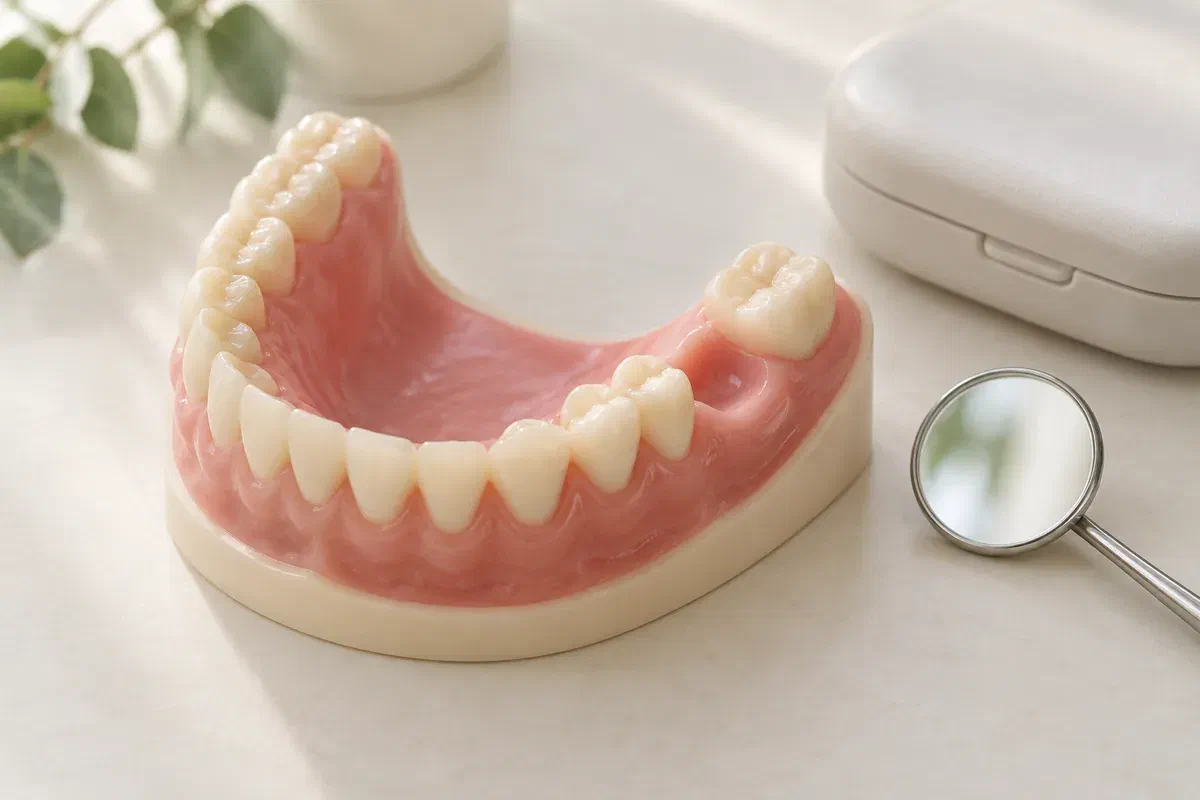
Illustrative dental arch model with a missing back tooth beside a dental mirror
What to bring to the conversation

The tooth's past, your health, and what has changed this week

Older dental work can complicate removal in ways that are worth knowing about early. Share the treatment history, your medicines, and any trouble you have had with dental appointments before.

Large restorations, crowns, or root canal treatment

Let us know roughly when the tooth was last treated and whether you were ever warned about its prospects. Previous treatment shapes the options but does not decide them. The current examination shows how much sound structure remains and whether rebuilding is still realistic.

A new ache, swelling, or a bad taste

Describe how the symptoms have developed and whether you feel unwell beyond the mouth. Possible infection needs to be seen without delay, though it does not on its own determine whether the tooth is removed or treated another way. Mention any medicine you have already been prescribed for it.

Medicines, allergies, and past bleeding

Many people take several regular medicines, and some affect dental treatment. Bring the full list, including blood thinners, and mention any bleeding problem after earlier procedures. Leave your prescriptions as they are; the team will advise you and contact your prescriber if that is needed.

Swelling that spreads fast, difficulty breathing or swallowing, or heavy bleeding that will not stop is a medical emergency. Call 911 or go to hospital emergency care rather than waiting to hear back from a dental office.

Why the consultation matters

A considered decision, made with the whole picture in view

For a tooth that can no longer reasonably be kept, removal may resolve the problem that has been diagnosed. Even so, ask what you can expect to improve and what further treatment you might still need. The case for extraction should be made about this tooth specifically, not presented as what always happens at an emergency visit.

It also helps to understand the practical side. Ask about the risks that apply to you, how comfort will be handled, the fees, and whether a referral is likely. If you may want to fill the space one day, ask how removal affects that, without feeling pressed to choose a replacement now.

Patient information: Royal Cornwall Hospitals — dental extraction risks and recovery

Honest comparison with keeping the tooth

Ask whether another filling, a crown, root canal treatment, or a different approach is clinically reasonable for a tooth like this, and why. The explanation should cover its likely outlook and the work involved. You should never leave unsure why a tooth was taken out.

The risks that apply to this tooth

Bleeding, delayed healing, and issues linked to position, such as nerves in the lower jaw or the sinus above upper back teeth, vary a great deal. Ask which matter for you and whether they affect who treats you or how the removal is done.

Planning the first few days

Find out what to eat, how to clean, when to return to normal activity, and when to call. If you care for someone else or have commitments that make rest difficult, say so beforehand. Specific advice for your procedure helps more than a general assurance.

Step by step

What happens from the moment you sit down

Not every urgent visit ends with a tooth removed. Ask when you book whether the time is set aside for assessment, for the extraction itself, or for organising a referral.

  1. A careful look at the tooth and its surroundings

    The dentist asks about your symptoms, examines the area, and takes any X-rays that are needed, reviewing your health details as well. Together you discuss the alternatives and the effect of waiting. Check that you both agree on which tooth it is, and ask about anything unclear.

  2. Consent, comfort, and the right setting

    You go over consent, costs, the anaesthetic, and whether another setting would be safer. The area is commonly numbed with local anaesthetic. Mention past difficulty getting numb or any nervousness, and agree on a signal that means stop.

  3. Removal suited to the tooth's position

    Technique depends on how the tooth sits and how much of it remains. A heavily filled or broken tooth may need surgical steps or stitches. Ask in advance what is planned and what would happen if something unexpected came up, including a possible specialist referral.

  4. A final check before you head home

    The clinician inspects the socket and explains how to manage bleeding and protect the area. Confirm whether a review, stitch removal, or referral is still needed. Make a note of how to contact us if you have a concern later.

The days that follow

Give the socket time, and follow the advice for your extraction

Instructions vary with the type of removal, any stitches, and your general health. Ask for them in writing, especially if they differ from what you were told the last time a tooth was removed.

Bleeding control and gentle cleaning

Apply pressure the way you were shown and leave the socket undisturbed. Rinse and brush near the site only when the instructions say you can. Should bleeding continue beyond what you were told to expect, phone the treating office for guidance instead of repeatedly looking.

Food, medicines, and everyday routines

Follow what you were told about numbness, softer meals, smoking, and exertion. Use pain relief and any other medicine strictly as directed, and ask whether it is suitable alongside your regular prescriptions. Those regular medicines should not be changed without professional advice.

Signs that healing is not on track

Call if pain grows instead of easing, swelling appears or increases, bleeding persists, you run a fever, or numbness or tingling lingers. Give the date of the extraction and describe the change. A difficult recovery should be checked, not simply assumed to be normal.

Patient information: Guy's and St Thomas' — caring for the mouth after dental surgery

Weighing the choices

Save, extract, or send on to a specialist?

Each route has a purpose and limits. The decision should follow the diagnosis, how much healthy tooth remains, the support around it, and your preferences once everything has been explained.

When enough remains to restore

Rebuilding or treating the tooth

Root canal treatment, a new restoration, or both may be possible if the tooth can be rebuilt soundly. Ask about the full sequence and the outlook, including any crown it would need. A long history of repairs is a factor, not an automatic verdict.

When removal is agreed together

Taking the tooth out

Go over the procedure, its specific risks, and the recovery before consenting. Ask whether surgical steps are anticipated for a heavily restored or broken tooth. The plan should mention any follow-up and whether replacement choices are worth exploring later.

When complexity or health calls for it

A specialist or hospital referral

Some teeth or medical situations are better managed elsewhere. Ask what will be shared with the receiving clinic and how the appointment is made. Find out what to do if symptoms get worse while you wait.

Questions we hear from Old Milton

Before you decide about an old, troublesome tooth

These answers are general. Your examination determines whether removal is suitable and where it should be carried out.

(905) 876-4488
My tooth has a crown and a root canal. Can it still be saved after it cracks?
Possibly, depending on where the crack runs and how much tooth remains beneath the crown. Some cracks can be managed; others leave the tooth unrestorable. The examination and any X-rays guide that answer, and the dentist should explain the reasoning either way.
If the tooth is removed, will the teeth next to it shift?
Neighbouring and opposing teeth can move into a gap over time, though how much varies. That is one reason to discuss replacement once you have healed. It is rarely a reason to rush a decision on the day of the extraction.
I take several medicines. Do I need to change any of them first?
Do not stop or adjust anything yourself. Bring a complete list, including blood thinners and supplements, and tell the team when you take each one. They will plan around your medicines and speak with your doctor or pharmacist if necessary.
Does an old tooth take longer to come out?
It can, if it is brittle, heavily filled, or has curved or fused roots, but age alone does not decide it. The dentist can usually tell you after the examination whether a straightforward removal or extra steps are expected.
Can someone come with me to the appointment?
Yes, a companion is welcome, and it can help to have someone hear the aftercare advice too. If the plan involves sedation through a referral, you will be told whether an escort is required to take you home.
Is it worth getting a second opinion before an extraction?
If the situation allows time, you can ask for one. Urgent infection or uncontrolled pain may not leave room to wait, so ask how quickly a decision needs to be made and what the risks of delay are.
Old Milton emergency extractions

Bring the tooth's story. We'll help you decide what comes next.

Call our Bronte Street practice to describe what has happened and ask about availability. We can explain the assessment, the reasons removal might be suggested, and whether a referral could be part of the plan. If urgent care is needed and you cannot reach us, contact another available emergency provider.

Online requests are for non-urgent matters. Whether removal is suitable, where it takes place, the anaesthetic, timing, cost, and recovery are all decided after assessment. Same-day extraction is not guaranteed.

Visit Milton Dental Clinic
Unit 1, 342 Bronte St. S, Milton, ON L9T 5B7
Get directions Clinic hours
Monday–Thursday
11am–7pm
Friday–Sunday
By appointment only

Areas we serve

  • Milton
  • Oakville
  • Mississauga
  • Georgetown
  • Halton Hills
  • Acton
  • Campbellville
  • Brampton
  • Burlington
  • Puslinch
  • Rockwood
  • Erin
  • Caledon
  • Etobicoke
  • Old Milton
  • Bronte Meadows
  • Timberlea
  • Dorset Park
  • Dempsey
  • Clarke
  • Beaty
  • Coates
  • Harrison
  • Scott
  • Willmott
  • Ford
  • Bowes
  • Cobden
  • Walker
  • Mountain View
  • Milton Heights
  • Hawthorne Village
  • Valley View
  • Fallingbrook
  • Nassagaweya
  • Trafalgar
  • Esquesing
  • Nelson
  • Brookville
  • Moffat
  • Glen Williams
  • Norval
  • Limehouse
  • Stewarttown
  • Ashgrove
  • Hornby
  • Silver Creek
  • Speyside
  • Scotch Block
  • North Oakville
  • River Oaks
  • Glen Abbey
  • West Oak Trails
  • Palermo
  • Bronte Creek
  • College Park
  • Joshua Creek
  • Uptown Core
  • Preserve
  • Iroquois Ridge
  • Lisgar
  • Meadowvale
  • Meadowvale Village
  • Churchill Meadows
  • Erin Mills
  • Central Erin Mills
  • Streetsville
  • East Credit
  • Creditview
  • Heartland
  • Sheridan
  • Mount Pleasant
  • Credit Valley
  • Huttonville
  • Churchville
  • Springbrook
  • Northwest Brampton
  • Bram West
  • Fletcher's Meadow
  • Fletcher's Creek South
  • Alton Village
  • Orchard
  • Millcroft
  • Headon Forest
  • Tansley
  • Brant Hills
  • Tyandaga
  • Kilbride
  • Lowville
  • Aberfoyle
  • Morriston
  • Arkell
  • Hillsburgh
  • Freelton
  • Carlisle
  • Waterdown
  • Flamborough
  • Mountsberg

How can we help?

Milton Dental Clinic

Have a question about your smile? Choose the option that works best for you.

For urgent dental concerns, please call.
Messages are reviewed during clinic hours.