

Illustrative patient describing facial discomfort during a consultation
Specialized Care

Facial Muscle Pain Assessment

Aching around the cheeks, temples, or jaw can have more than one explanation. Arrange a facial muscle pain assessment in Milton to discuss the pattern, review dental and jaw findings, and decide whether further medical or specialist care is needed.

A closer look at facial muscle pain assessment

Describe the discomfort before deciding it is coming from a muscle.

A facial muscle pain assessment explores discomfort that seems to involve the chewing muscles or nearby areas. You may notice aching in the cheeks, tenderness around the temples, or fatigue with jaw use. Those descriptions are useful starting points, but they do not establish the source without a clinical assessment.

The dentist considers dental findings, jaw movement, relevant muscles, and your history. Symptoms can overlap with other conditions, so the plan may include medical or specialist assessment. Calling the problem muscular too early can make it harder to recognize a different cause that needs a different approach.

At Milton Dental Clinic, bring a description of when the discomfort appears, what makes it better or worse, and any care already tried. We can review the dental and jaw-related findings and explain what they do or do not establish. You should leave knowing the next question to address, even if the first visit does not provide a final diagnosis.

Discuss your facial discomfort
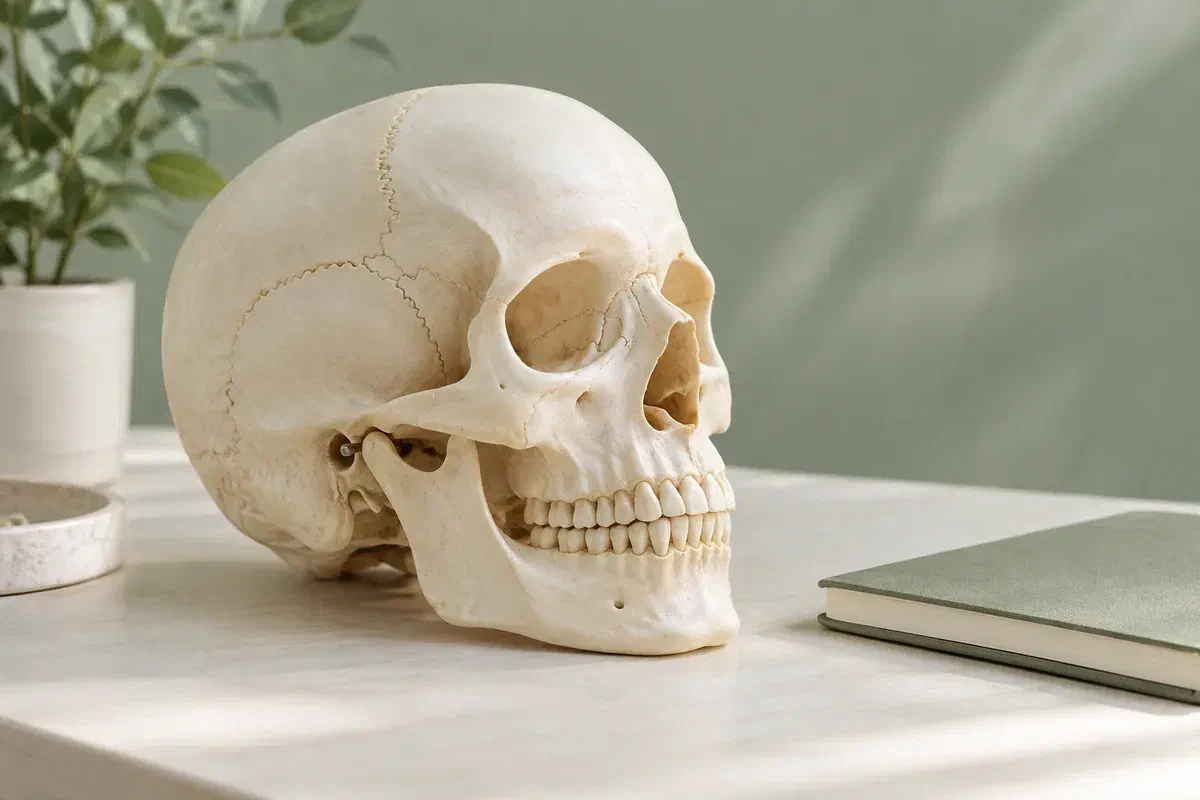
Illustrative anatomical skull teaching model with its jaw attached beside a notebook
Details that help describe the pattern

Where it hurts matters, and so does what happens around it.

Think about a typical episode rather than repeatedly pressing the sore area to reproduce it. A brief record can help explain symptoms that are less noticeable on the day of your appointment.

Timing and activities linked to the discomfort

Explain whether symptoms appear on waking, build through the day, or occur with chewing or prolonged talking. Describe the duration and whether one side or both sides are affected. A repeated pattern can guide questions without proving that a particular habit is the cause.

Jaw movement or associated dental symptoms

Mention limited opening, locking, painful movement, biting discomfort, or a specific sensitive tooth. Tell the clinician about an injury or recent change in dental work. These details help determine whether the examination needs to consider more than muscle tenderness.

Previous treatment and other health concerns

Bring information about appliances, exercises, medicines, physiotherapy, or earlier assessments. Explain what helped, had no effect, or made symptoms worse. Other pain conditions and relevant medical history may also matter, even when the current concern feels concentrated around the jaw.

Pain around the face or jaw is not automatically a temporomandibular disorder. Assessment may need to consider other explanations before a dental or muscle-focused treatment plan is chosen.

What a careful assessment can offer

Separate observations from assumptions and choose a measured next step.

The purpose of the visit is to make the problem more understandable, not to attach a treatment to every tender spot. Ask which findings support a muscle-related explanation and which require further consideration. An honest account of uncertainty is more useful than a confident label that the assessment cannot support.

The plan should also give you a way to judge progress. Discuss the daily activities that are difficult and what improvement would matter to you. A follow-up can then consider function and symptom patterns rather than relying only on how a muscle feels when it is pressed during an examination.

Patient information: NIDCR — a graduated approach to temporomandibular disorder care

A review of dental and jaw findings together

The clinician can assess relevant teeth, tissues, jaw movement, and tenderness. Ask whether a dental finding explains the discomfort or simply exists alongside it. A worn tooth or a bite variation should not automatically be treated as proof of why the face hurts.

A conservative plan with clear limits

If the findings support a jaw-muscle problem, ask about suitable reversible measures and how they will be reviewed. The plan should explain what to try, what to avoid, and when to report difficulty. More intensive treatment is not automatically a better first step.

A route to another opinion when needed

Some patterns warrant assessment by a medical clinician or an orofacial pain professional. Ask what the referral is intended to clarify and what records would help. Coordination matters when several providers have considered the same symptoms from different perspectives.

How the visit is organized

Build the history, examine relevant structures, and explain the working plan.

There is no single examination finding that answers every facial pain concern. The clinician combines the information and explains whether more assessment is needed before treatment is appropriate.

  1. Describe the pain in your own words

    Explain the location, quality, timing, and activities associated with symptoms. Mention whether discomfort spreads or occurs in brief episodes. Bring a short symptom record if useful, but do not delay seeking advice until you have collected a perfect diary.

  2. Review health, dental history, and previous approaches

    Discuss medicines, other health conditions, injuries, and earlier investigations. Bring an appliance if you currently use one and explain its prescribed purpose. Tell the clinician about any treatment that changed the bite or worsened the symptoms so it can be considered carefully.

  3. Assess the teeth, jaw, and relevant muscle findings

    The examination is guided by the history and may include jaw movement and tenderness checks. Tell the clinician if a test is uncomfortable. Imaging is considered when it would answer a relevant clinical question, rather than being assumed necessary for every facial ache.

  4. Agree on the next step and how it will be reviewed

    Ask what the findings support, what remains uncertain, and whether a reversible care trial, further investigation, or referral is appropriate. Confirm the review interval and the changes that should prompt earlier contact. A plan should have a purpose and a way to assess its effect.

After the assessment

Use the agreed plan without repeatedly testing the painful area.

Your advice depends on the findings. Ask for a clear explanation of any exercise, habit change, appliance, or referral, including what to do if the approach increases discomfort.

Keep a short, useful symptom record

Note meaningful changes in comfort, eating, sleep, or jaw use and any treatment tried. A few observations are usually easier to discuss than constant monitoring. Bring the record to review so the clinician can compare the pattern with the goals you agreed.

Avoid adding forceful self-treatment

Do not begin aggressive stretching, repeated deep pressure, or exercises copied from an unrelated diagnosis. Ask whether a technique is appropriate for your findings and how to perform it safely. If an advised measure worsens symptoms, stop and obtain guidance rather than pushing through increasing pain.

Review any appliance or medication concern

If an appliance causes pain or a persistent bite change, stop using it and contact the prescribing clinician. Use medicines only as directed and do not change regular prescriptions on your own. Bring practical difficulties to the review so the plan can be adjusted.

Choosing care after the findings are explained

Start with the diagnosis and preserve room to reassess.

Ask why a proposed approach fits the working diagnosis and what alternatives exist. A treatment should not be chosen merely because the pain happens near the teeth or jaw.

When findings support a muscle or jaw-related problem

Individualized conservative management

Discuss appropriate self-management, activity changes, or coordinated therapy and how the response will be checked. Ask for practical instructions rather than a long list of possible techniques. The first plan should be manageable enough to follow and specific enough to evaluate.

When the source remains uncertain or another cause is suspected

Further dental or medical investigation

A different symptom pattern or examination finding may call for another assessment before treatment. Ask what question remains unanswered. Referral is useful when it directs you toward the relevant expertise rather than repeating care that has not clarified the problem.

When a proposed treatment would permanently change the teeth or bite

Careful review before an irreversible intervention

Permanent bite changes are not a routine solution for facial muscle pain. Ask about the evidence, risks, alternatives, and value of another opinion. A lack of improvement with one reversible measure does not automatically justify grinding teeth, extensive restorations, or surgery.

Facial muscle pain questions

Ask what the examination can establish and what needs another look.

These answers help prepare for a discussion about the symptoms. They do not identify the cause of pain without an assessment of your own history and findings.

(905) 876-4488
Can cheek or temple aching be assumed to come from my chewing muscles?
No. The location is useful information, but different conditions can produce discomfort in nearby areas. Describe the pattern and arrange assessment. The clinician can explain whether the findings support a muscle-related cause or whether dental, medical, or specialist review is needed.
Should I keep pressing the sore muscle to show where the pain is?
You can point to the location without repeatedly provoking it. Describe what happens during ordinary activities and let the clinician guide the examination. Repeated self-testing may make it harder to judge the usual pattern of discomfort.
Will a facial muscle pain assessment automatically lead to a nightguard?
No. An appliance is not the default answer to every facial pain concern. Ask whether one has a defined purpose in your case and how its effect would be reviewed. The diagnosis and goals should come before an appliance recommendation.
Could a brief electric-shock type facial pain need a different assessment from an ache?
Yes. Explain that quality clearly, including triggers and episode length. Some nerve-related conditions require medical or specialist evaluation. The description does not establish a diagnosis by itself, but it is important information rather than something to group automatically with muscle soreness.
Does finding worn teeth prove that grinding caused my facial muscle pain?
No. Tooth wear and facial discomfort need to be interpreted in context. Ask which findings support the suspected cause and whether other explanations remain. The plan should distinguish protecting teeth from diagnosing and managing pain.
What if the suggested jaw-muscle care makes my discomfort worse?
Stop the measure that is increasing pain and contact the clinician for advice. Explain what you tried and how symptoms changed. A review may adjust the approach or reconsider the working diagnosis; worsening pain is not a reason to force the same exercise or appliance.

Patient information: NIDCR — why different facial pain patterns need appropriate diagnosis

Facial muscle pain assessment in Milton

Bring the pattern of discomfort. We can help clarify the next question.

Contact our Bronte Street practice to discuss facial aching or concerns about jaw-related muscle discomfort. Bring earlier assessments and details of approaches you have tried so the findings and possible next steps can be reviewed together.

The source of facial pain, suitable management, imaging, referral, and fees depend on assessment. A dental visit does not guarantee a muscle diagnosis or relief from a particular appliance or treatment.

Visit Milton Dental Clinic
Unit 1, 342 Bronte St. S, Milton, ON L9T 5B7
Get directions Clinic hours
Monday–Thursday
11am–7pm
Friday–Sunday
By appointment only

How can we help?

Milton Dental Clinic

Have a question about your smile? Choose the option that works best for you.

For urgent dental concerns, please call.
Messages are reviewed during clinic hours.