

Illustrative patient describing facial discomfort during a consultation
Specialized Care

Facial Muscle Pain Assessment in Campbellville

A yawn that stops short, a jaw that feels stiff and sore at the sides: these are good reasons to get a proper look. From Campbellville, a facial muscle pain assessment reviews how your jaw moves, your teeth and your history, then plans sensibly from there.

For Campbellville and the surrounding countryside

The yawn that will not open all the way

Stiffness often shows up in small moments. You start to yawn and something tugs at the side of your face. A big bite of a sandwich feels like more effort than it should. The cheeks are tender afterward. It is reasonable to suspect tight chewing muscles, and that may be part of it, but a stiff or sore jaw can have other explanations too.

An assessment pulls the pieces together. The dentist examines the teeth and gums, measures and watches how far and how smoothly the jaw opens, checks the muscles used for chewing, and listens to your history. A tooth problem, the jaw joint itself, a nerve-related condition or a broader medical issue can all play a role, so knowing when to involve someone else is part of the visit.

Rural households often prefer to make a single well-planned trip, so bring a note of when the stiffness or aching appears, what helps and what you have tried. If other family members need appointments, ask about grouping them. We will explain the findings honestly, and you should leave knowing the next step, even without a final answer yet.

Ask about jaw stiffness and aching
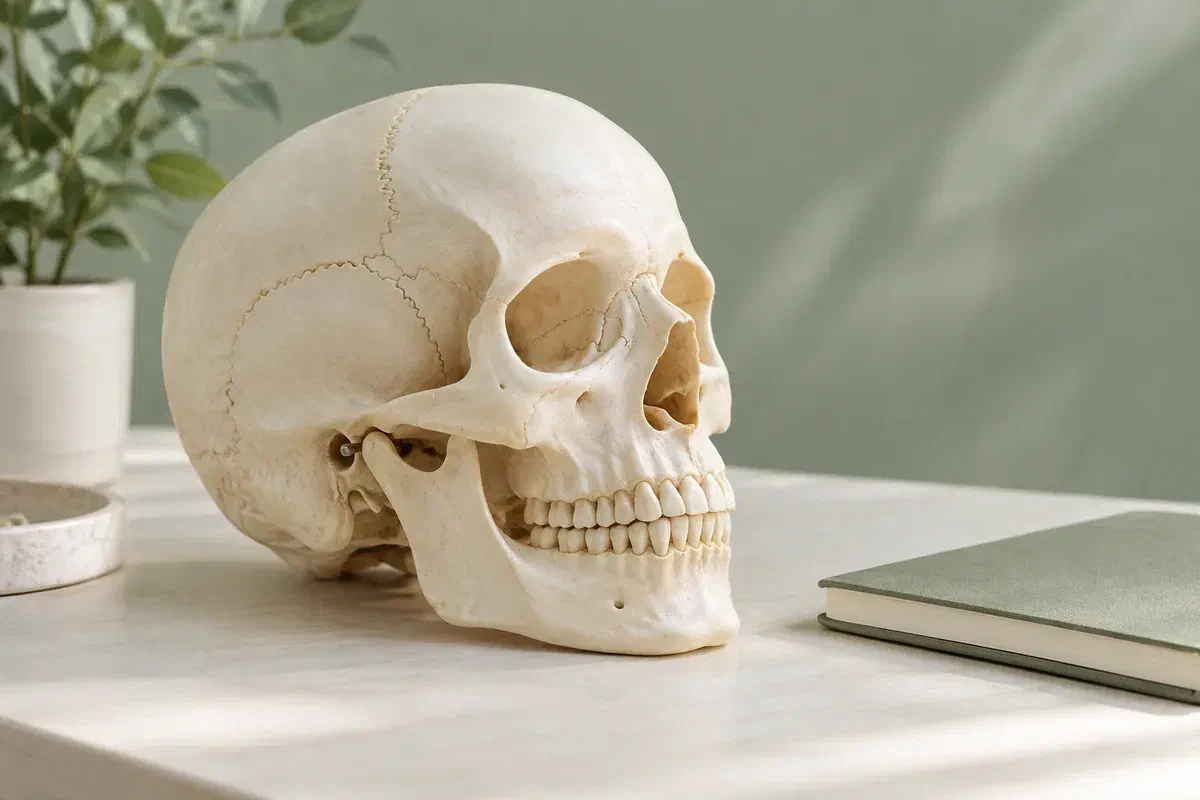
Illustrative anatomical skull teaching model with its jaw attached beside a notebook
Things to notice

How far, how often, how long?

There is no need to keep opening wide to test the limit. Remembering how the jaw behaved during normal moments, like eating, talking or yawning, is more useful than anything you push it to do at home or in the chair.

When stiffness and aching appear

Is the jaw tight first thing, after a long day, or after particular meals? Does the soreness last minutes or most of the day, and on which side? A pattern like this helps steer the conversation, though by itself it cannot show which structure is involved.

Opening, closing and biting

Describe how much opening feels limited, whether the jaw catches, locks or deviates, and whether movement hurts. Mention a tooth that is tender to bite on, a knock to the face, or recent dental treatment. Such details help decide whether to look past the muscles.

Earlier care and wider health

Note any guards, exercises, medicines, physiotherapy or earlier assessments and what difference they made. Mention anything that seemed to aggravate the stiffness. Other pain conditions, joint problems elsewhere and your medical history can be relevant to how the jaw is behaving.

A stiff, sore jaw does not automatically mean a temporomandibular disorder. Before choosing dental or muscle-focused care, other explanations may need to be weighed.

What you can expect to gain

Know what is limiting the jaw before working on it

The visit is about understanding why your jaw feels the way it does, not about attaching a fix to every tight spot. Ask the dentist which findings suggest the muscles, which suggest the joint or teeth, and which are unclear. Plain honesty about uncertainty is more helpful than a definite-sounding answer that the examination cannot justify.

Set a practical marker for progress. It might be yawning freely, taking a full bite of an apple, or getting through a busy day outdoors without an aching face. Reviews can then follow how much easier those things become, rather than depending only on whether a muscle is tender when pressed.

Patient information: NIDCR — a graduated approach to temporomandibular disorder care

Movement, teeth and muscles assessed together

The dentist can look at how the jaw opens and moves, the relevant teeth and tissues, and muscle tenderness, all in one appointment. Ask whether a dental finding explains the stiffness or merely exists alongside it. An uneven bite is not proof of the cause.

A gentle, reversible place to start

If a jaw-muscle problem fits the findings, discuss mild measures that suit your routine and how they will be reviewed. Be clear about what to try, what to avoid and when to call. Starting with more intensive treatment is not automatically better.

Another professional when it is warranted

Some patterns need a physician or an orofacial pain clinician. Ask what the referral should clarify, which records to bring, and whether appointments can be coordinated to reduce separate trips. Shared findings help when more than one provider is involved.

During your visit

A careful look at how your jaw moves and why it aches

No one measurement tells the whole story of a stiff or aching jaw. The dentist brings together what you describe and what is found, and explains if more information is needed before any treatment.

  1. Your account of the stiffness

    We ask where you feel it, what it is like, when it happens and what you are doing. Mention whether opening has become harder over time or changes from day to day. A short note helps, but do not put off booking to keep a detailed log.

  2. Health, medicines and past approaches

    We review your medicines, health conditions, injuries and any earlier investigations. Bring an appliance if you have one and explain what it was made for. Tell us about treatment that altered your bite or seemed to make the jaw worse.

  3. Measuring and examining

    The dentist may measure opening, watch the jaw’s path as it moves, and check the muscles and joint area for tenderness, along with the teeth. Say if a test is uncomfortable. Imaging is considered when it would answer a specific question, not as a default.

  4. Next steps and a review

    We explain what the findings point to, what is still uncertain, and whether reversible home measures, further tests or referral make sense. Agree on when to review and on what changes, such as a jaw that will not open or close, should prompt an earlier call.

Back home

Ease into the plan without forcing the jaw open

Advice depends on your findings. Make sure you understand any instructions you are given, and what to do if a recommendation seems to increase stiffness or pain.

Keep simple notes

Note when opening, chewing, sleep or comfort noticeably change, and what you tried. A few lines each week are easier to review than daily measurements. Bring the notes so progress can be compared with the goals agreed at your appointment.

Do not force the stretch

Pushing the jaw wide, deep repeated pressure on sore muscles, or exercises meant for a different condition can backfire. Ask whether a movement suits you and how gently to do it. If an advised exercise makes things worse, stop and call before trying again.

Speak up about guards and medicines

If a guard is painful or your bite stays altered after removing it, stop using it and contact the clinician who made it. Take medicines only as prescribed, leaving regular prescriptions unchanged unless your doctor advises otherwise. Tell us about practical problems so the plan can be adjusted.

Where things can go next

Care chosen for the cause, with room to change course

Ask how any proposed care relates to the working diagnosis and what else could be considered. Stiffness near the jaw does not by itself decide the treatment.

When the findings point to a muscle or jaw-related cause

Conservative care for muscles and jaw

This may include self-care, short-term changes to eating or other activities, or therapy arranged with another clinician, with a planned check of how you respond. Ask for a few clear instructions. The first plan should be practical and specific enough to evaluate.

When the cause is not clear or something else is suspected

Further assessment

Limited opening or another finding may need further dental or medical assessment before treatment. Ask what question remains. A referral is worth making when it leads to the relevant expertise, rather than repeating care that has not explained the stiffness.

When a proposal would permanently change teeth or bite

Patience before permanent work

Stiffness and aching are rarely, if ever, a reason to change the bite for good. Ask what evidence supports them, what the risks and alternatives are, and whether a second opinion would help. A first reversible approach not helping is not reason enough for grinding, major restorations or surgery.

Jaw stiffness questions

Answers about tight, sore and limited jaws

These answers offer general background to prepare you. What is going on with your own jaw only becomes clear once it has been examined and your history heard.

(905) 876-4488
My jaw will not open as wide as it used to. Is that a muscle problem?
It might be, but limited opening can also involve the jaw joint or other causes. The dentist measures how far and how smoothly you open, checks the muscles and joint area, and explains which explanation the findings support.
Is it normal for my jaw to feel stiff only in the morning?
Morning stiffness is a common description and can be linked to night-time clenching for some people, but it is not proof of it. Mention how long the stiffness lasts and whether it eases as the day goes on, so the pattern can be considered with the examination.
Should I avoid opening wide, for example at the dentist, until I am assessed?
If opening wide is painful, let any clinician know before treatment so breaks can be built in. In daily life, avoiding extreme opening for a while is reasonable, but do not stop moving the jaw altogether. Advice afterward depends on the findings.
Can my family members book on the same day so we only make one trip?
Ask when you call. Where schedules allow, grouping appointments can reduce trips for households outside town. Each assessment still needs its own time, so let us know who is coming and what each person needs.
Does a tender spot in my cheek prove the chewing muscles are to blame?
No. The site of the pain helps, but different problems can cause discomfort in nearby areas. The assessment looks at the whole pattern before linking it to the muscles, or to dental, medical or specialist causes.
What if the jaw exercises I was shown make the pain worse?
Stop them and call for advice. Describe what you did and how the pain changed. The plan may be modified, or the working diagnosis reconsidered. Increasing pain is not a sign to push harder.

Patient information: NIDCR — why different facial pain patterns need appropriate diagnosis

Coming in from Campbellville

Plan one good visit, and bring what you know.

Call our Bronte Street practice to arrange a facial muscle pain assessment for jaw stiffness or aching. Bring earlier reports and a list of what you have tried, and mention if other family members need appointments, so we can plan the visit well.

The source of the stiffness or pain, appropriate care, any imaging or referral, and fees depend on assessment. No visit can promise that the cause will turn out to be muscular, or that a guard, exercise or treatment will ease it.

Visit Milton Dental Clinic
Unit 1, 342 Bronte St. S, Milton, ON L9T 5B7
Get directions Clinic hours
Monday–Thursday
11am–7pm
Friday–Sunday
By appointment only

Areas we serve

  • Milton
  • Oakville
  • Mississauga
  • Georgetown
  • Halton Hills
  • Acton
  • Campbellville
  • Brampton
  • Burlington
  • Puslinch
  • Rockwood
  • Erin
  • Caledon
  • Etobicoke
  • Old Milton
  • Bronte Meadows
  • Timberlea
  • Dorset Park
  • Dempsey
  • Clarke
  • Beaty
  • Coates
  • Harrison
  • Scott
  • Willmott
  • Ford
  • Bowes
  • Cobden
  • Walker
  • Mountain View
  • Milton Heights
  • Hawthorne Village
  • Valley View
  • Fallingbrook
  • Nassagaweya
  • Trafalgar
  • Esquesing
  • Nelson
  • Brookville
  • Moffat
  • Glen Williams
  • Norval
  • Limehouse
  • Stewarttown
  • Ashgrove
  • Hornby
  • Silver Creek
  • Speyside
  • Scotch Block
  • North Oakville
  • River Oaks
  • Glen Abbey
  • West Oak Trails
  • Palermo
  • Bronte Creek
  • College Park
  • Joshua Creek
  • Uptown Core
  • Preserve
  • Iroquois Ridge
  • Lisgar
  • Meadowvale
  • Meadowvale Village
  • Churchill Meadows
  • Erin Mills
  • Central Erin Mills
  • Streetsville
  • East Credit
  • Creditview
  • Heartland
  • Sheridan
  • Mount Pleasant
  • Credit Valley
  • Huttonville
  • Churchville
  • Springbrook
  • Northwest Brampton
  • Bram West
  • Fletcher's Meadow
  • Fletcher's Creek South
  • Alton Village
  • Orchard
  • Millcroft
  • Headon Forest
  • Tansley
  • Brant Hills
  • Tyandaga
  • Kilbride
  • Lowville
  • Aberfoyle
  • Morriston
  • Arkell
  • Hillsburgh
  • Freelton
  • Carlisle
  • Waterdown
  • Flamborough
  • Mountsberg

How can we help?

Milton Dental Clinic

Have a question about your smile? Choose the option that works best for you.

For urgent dental concerns, please call.
Messages are reviewed during clinic hours.