

Illustrative patient describing facial discomfort during a consultation
Specialized Care

Facial Muscle Pain Assessment in Milton

Waking with tight temples or a cheek that aches by breakfast is worth looking into rather than guessing at. Book a facial muscle pain assessment in Milton to talk through the pattern, check your teeth and jaw, and decide what kind of care fits next.

Facial aching, looked at in Milton

The ache that greets you when you wake up

Many people first notice it before they are fully out of bed: a dull pressure at the temples, cheeks that feel heavy, or a jaw that seems tired before the day has started. It is natural to decide the muscles are to blame. That may turn out to be right, yet the feeling alone cannot confirm where the discomfort begins.

An assessment brings several pieces together. The dentist looks at your teeth and gums, watches how the jaw opens and moves, checks the muscles involved in chewing, and listens to your history. Facial pain can share features with tooth problems, nerve conditions and other medical issues, so part of the job is noticing when a different kind of review would help.

Come to our Bronte Street practice with a sense of when the aching shows up, what eases it, and anything you have already tried. We will explain what the findings suggest and what they leave open. A single visit may not settle the cause, but you should go home clearer about the next sensible step.

Book a time to talk it through
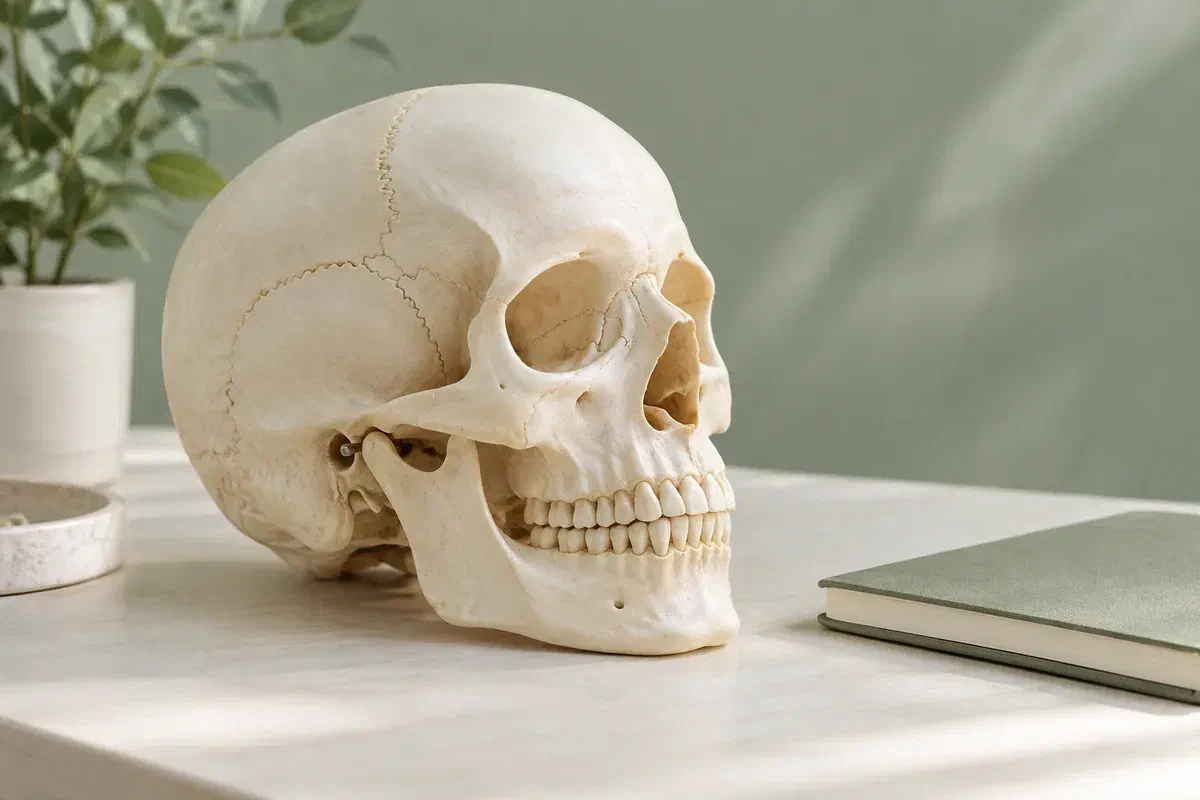
Illustrative anatomical skull teaching model with its jaw attached beside a notebook
Notes worth bringing

What a typical bad day looks like

Picture an ordinary episode instead of pressing on the tender spot to make it flare. Symptoms are often quieter during an appointment, so a few remembered details can fill the gap.

When it starts and how long it lasts

Say whether the ache is there on waking, creeps in through the afternoon, or follows meals and long conversations. Mention if it sits on one side or both, and how many hours it tends to stay. A pattern is a helpful clue for the dentist, though it does not prove any single habit is responsible.

How the jaw and teeth are behaving

Point out any trouble opening wide, catching or locking, pain as the jaw moves, a tooth that hurts on biting, or one that reacts to cold. A knock to the face or new dental work also belongs on the list. These clues show whether the examination should reach beyond sore muscles.

Care you have tried and your wider health

List any guard, exercise routine, medicine, physiotherapy or earlier assessment, along with what it changed. Something that made the aching worse is just as useful to hear about. Other ongoing pain conditions and your general medical history can matter too, even when the problem feels centred on the jaw.

An aching face or jaw does not automatically mean a temporomandibular disorder. Other possible explanations may need to be considered before choosing care aimed at the teeth or muscles.

Why it helps to slow down

Sort what is known from what is only suspected.

A good assessment makes the problem easier to understand. It is not about finding something to treat at every sore point. You can ask the dentist which findings point toward the muscles and which still need explaining. Hearing plainly that some things are uncertain is far more useful than leaving with a tidy label the evidence does not back up.

It also helps to decide early how you will know if things are getting better. Talk about what is hard right now, perhaps chewing tougher food, a long phone call or a full night of sleep, and what change would make a real difference. Later reviews can then follow those everyday markers instead of how a muscle feels under a fingertip.

Patient information: NIDCR — a graduated approach to temporomandibular disorder care

Teeth and jaw considered side by side

Your dentist can examine the relevant teeth, soft tissues, jaw movement and areas of tenderness. It is fair to ask whether something seen in your mouth actually explains the aching or just happens to be there too. Worn edges or an uneven bite are not, on their own, proof of why your face hurts.

A gentle starting plan with boundaries

When the findings fit a jaw-muscle problem, ask which reversible measures make sense and when they will be checked. You should know what to try, what to leave alone, and when to call if things get harder. Stronger treatment is not automatically the better place to begin.

Help finding the right second look

Certain patterns are better assessed by a physician or a professional who focuses on orofacial pain. Ask what the referral is meant to answer and which records to send along. When several people have looked at the same symptoms, sharing what each one found keeps care coordinated.

Step by step

From your story to a plan you can follow

No one test answers every question about facial pain. The dentist pieces the information together and tells you whether more assessment is wise before any treatment begins.

  1. Tell us about the discomfort

    Describe where it is, what it feels like, when it happens, and what you are doing at the time. Note whether it spreads elsewhere or comes in short bursts. A brief log can help, but there is no need to wait for weeks of perfect notes before you book.

  2. Go over your health and past care

    We talk through medicines, health conditions, injuries and any previous tests. If you wear a guard or other appliance, bring it and explain what it was made for. Mention any treatment that altered your bite or seemed to make the aching worse, so it can be weighed properly.

  3. Examine teeth, jaw and muscles

    The history shapes what is checked, which may include how far and how smoothly your jaw moves and where it feels tender. Speak up if any part is uncomfortable. X-rays or other imaging are used when they would answer a real question, not as a routine step for every ache.

  4. Settle on a next step and a check-in

    You will hear what the findings support, what is still unclear, and whether a reversible trial, further tests or a referral makes sense. Agree on when to review progress and which changes should bring you back sooner. Every step should have a reason and a way to see if it helped.

Between visits

Let the plan work without poking at the sore spot

What you are asked to do depends on what was found. Make sure any exercise, habit change, appliance or referral is explained clearly, including what to do if it seems to make things worse.

Jot down a few meaningful changes

Record shifts in comfort, eating, sleep or jaw use, plus anything you tried. A handful of notes is easier to talk about than checking in on the pain every hour. Bring them to your follow-up so the dentist can compare them with the goals you set together.

Skip the forceful home remedies

Hold off on hard stretching, deep repeated massage, or exercises meant for some other diagnosis. Ask first whether a technique suits your findings and how to do it safely. If anything you were advised to do increases the pain, stop and call for guidance rather than pushing on.

Raise appliance or medicine worries early

A guard that hurts or leaves your bite feeling different for a long time should be set aside until you speak with whoever made it. Take medicines only as directed, and do not adjust regular prescriptions yourself. Tell us about practical problems so the plan can change with you.

Where care can go from here

Fit the care to the findings, and keep options open

Ask why a suggested approach suits the working diagnosis and what the alternatives are. Pain near the teeth or jaw is not, by itself, a reason to choose a particular treatment.

If the examination points to a muscle or jaw problem

Conservative care shaped around you

This may involve self-care, changes to certain activities, or therapy coordinated with another provider, with a plan for checking how you respond. Ask for clear, practical steps rather than a long menu of techniques. A first plan should be simple enough to keep up and specific enough to judge.

When the cause is still unclear or something else seems likely

More dental or medical investigation

A different pattern of symptoms or an unexpected finding may call for another assessment before any treatment. Ask what question is still open. A referral earns its place when it points you toward the right expertise instead of repeating care that has not clarified anything.

When a proposal would change your teeth or bite for good

A pause before anything permanent

Permanently reshaping the bite is not a routine answer to facial muscle pain. Ask about the evidence, the risks, the alternatives, and whether another opinion would help. One reversible measure falling short does not on its own justify grinding teeth down, major restorations, or surgery.

Common questions

What people ask before their first visit

These answers are a starting point for your conversation with the dentist. They cannot pinpoint the cause of your pain without a look at your own history and examination.

(905) 876-4488
My temples ache every morning. Does that mean I clench at night?
Not necessarily. Morning aching can fit with clenching during sleep, but other explanations exist, and the timing alone does not settle it. Tell the dentist what you notice and when. The examination and your history together give a better sense of whether night-time jaw activity is a likely part of the picture.
Do I need to see my family doctor before booking with a dentist?
Not always. Many people start with a dental assessment because the discomfort sits near the jaw. If the dentist finds signs that point elsewhere, or your symptoms include things outside the mouth and jaw, they will explain why a physician’s view would help and what to bring.
Will I need X-rays at this appointment?
Only if they would answer a specific question raised by your history or examination. Imaging is not automatic for every facial ache. The dentist can tell you what an image would show and how it might change the plan before taking one.
Is it all right to press on the sore area so I can point it out?
Show where it hurts, but there is no need to keep prodding to bring the pain on. Describe how it behaves during normal activities and let the dentist guide any tenderness checks. Repeatedly testing the area can blur the usual pattern you are trying to describe.
Could a quick, jolting pain be something other than a muscle problem?
Yes. Sharp, sudden, shock-like episodes are worth describing carefully, including what sets them off and how long they last. Some nerve-related conditions need medical or specialist assessment. That description alone is not a diagnosis, but it should not simply be grouped with a dull muscle ache.
What happens if the first plan does not help?
A review looks at what you tried, what changed and what did not. The dentist may adjust the approach, revisit the working diagnosis, or suggest a referral. Little or no improvement is useful information, and it is not a reason to jump straight to permanent changes.

Patient information: NIDCR — why different facial pain patterns need appropriate diagnosis

Book in Milton

Tell us how the aching behaves, and we will help you sort the next step.

Call our Bronte Street practice to arrange time to discuss facial aching or jaw-muscle discomfort. Bring any earlier reports and a note of what you have tried, so we can review the findings and possible next steps with you.

The cause of facial pain, suitable care, imaging, referral and fees all depend on your assessment. A dental visit cannot guarantee a muscle diagnosis or relief from any particular appliance or treatment.

Visit Milton Dental Clinic
Unit 1, 342 Bronte St. S, Milton, ON L9T 5B7
Get directions Clinic hours
Monday–Thursday
11am–7pm
Friday–Sunday
By appointment only

Areas we serve

  • Milton
  • Oakville
  • Mississauga
  • Georgetown
  • Halton Hills
  • Acton
  • Campbellville
  • Brampton
  • Burlington
  • Puslinch
  • Rockwood
  • Erin
  • Caledon
  • Etobicoke
  • Old Milton
  • Bronte Meadows
  • Timberlea
  • Dorset Park
  • Dempsey
  • Clarke
  • Beaty
  • Coates
  • Harrison
  • Scott
  • Willmott
  • Ford
  • Bowes
  • Cobden
  • Walker
  • Mountain View
  • Milton Heights
  • Hawthorne Village
  • Valley View
  • Fallingbrook
  • Nassagaweya
  • Trafalgar
  • Esquesing
  • Nelson
  • Brookville
  • Moffat
  • Glen Williams
  • Norval
  • Limehouse
  • Stewarttown
  • Ashgrove
  • Hornby
  • Silver Creek
  • Speyside
  • Scotch Block
  • North Oakville
  • River Oaks
  • Glen Abbey
  • West Oak Trails
  • Palermo
  • Bronte Creek
  • College Park
  • Joshua Creek
  • Uptown Core
  • Preserve
  • Iroquois Ridge
  • Lisgar
  • Meadowvale
  • Meadowvale Village
  • Churchill Meadows
  • Erin Mills
  • Central Erin Mills
  • Streetsville
  • East Credit
  • Creditview
  • Heartland
  • Sheridan
  • Mount Pleasant
  • Credit Valley
  • Huttonville
  • Churchville
  • Springbrook
  • Northwest Brampton
  • Bram West
  • Fletcher's Meadow
  • Fletcher's Creek South
  • Alton Village
  • Orchard
  • Millcroft
  • Headon Forest
  • Tansley
  • Brant Hills
  • Tyandaga
  • Kilbride
  • Lowville
  • Aberfoyle
  • Morriston
  • Arkell
  • Hillsburgh
  • Freelton
  • Carlisle
  • Waterdown
  • Flamborough
  • Mountsberg

How can we help?

Milton Dental Clinic

Have a question about your smile? Choose the option that works best for you.

For urgent dental concerns, please call.
Messages are reviewed during clinic hours.