

Illustrative patient explaining a dental infection concern to a clinician
Specialized Care

Facial Swelling from Dental Infection in Mississauga

Dentist or emergency department? With a swollen face and a suspected tooth infection, that's the first thing to settle, and a phone call to us helps. Breathing or swallowing trouble, eye changes, or spreading swelling point straight to hospital.

Choosing a door from Mississauga

Two places you might need. One decision to make quickly.

A puffy cheek and a sore back tooth leave most people unsure where to turn. Infection from a tooth is one possible explanation; it can't be confirmed by how things look. So the starting point is not a diagnosis but a sorting question: how serious is this, and does it call for a dental office, a hospital, or both? Anything affecting your breathing, swallowing, sight or overall health weighs most heavily in that answer.

Some situations settle the question on their own. Laboured breathing, difficulty swallowing, an eye that is swollen or sore, blurred vision, or swelling that is plainly spreading all mean going to a hospital emergency department now, and calling 911 if you need help getting there. For everything else, phone us and explain where the swelling began, its pace, and any toothache or recent dental care.

Calling from Mississauga, you'll hear what availability looks like and which step seems right. Messages sent through email or our callback form are not a safe route for a changing swelling, so call. If we can't be reached and you need dental attention right away, go to another emergency dental provider instead of holding a place in our queue.

Ask for an appointment about a non-urgent issue
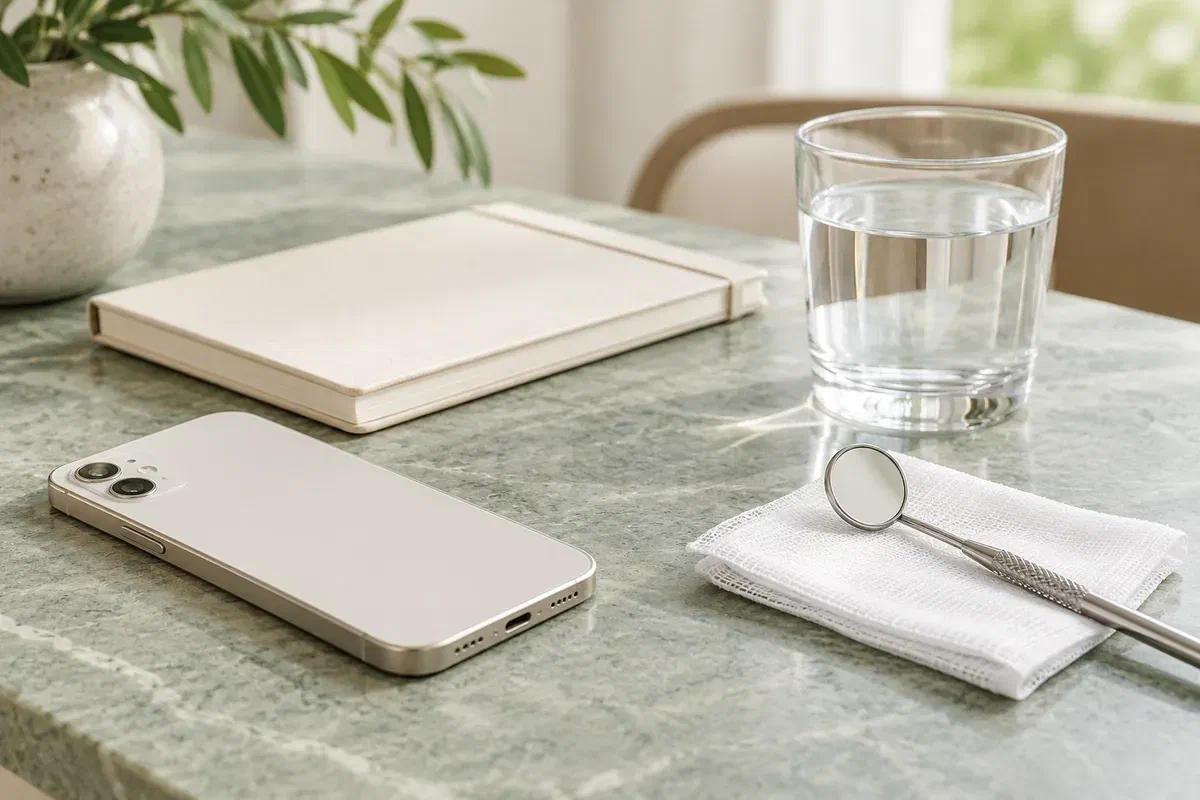
Illustrative phone and notebook beside a dental mirror, emphasizing prompt contact for assessment
Information that helps us sort it

Pace and reach of the swelling count for more than its sting.

Say whether you've noticed anything outside your mouth and tell us about conditions you're managing. Nobody needs you to decide whether it's an abscess, and the swollen area is best left untouched, never pushed or lanced.

From first spot to current edge

Begin with where it showed up, then whether it has crept into the cheek, along the jaw, down the neck or up toward an eye. Give your best guess at timing. Rapid change matters even when the tooth has stopped throbbing.

Whole-body clues

A temperature, a run-down feeling, difficulty opening wide, or not managing to eat or drink are important. Breathing or swallowing problems belong at the very start of the call. Mentioning these early changes how and where help is arranged.

What the tooth has been through

Recent ache, a chipped or cracked tooth, an extraction or another procedure are all relevant. So are any prescriptions and the date you began them. Grab records if they're close by, but urgent care comes first.

A suspected dental abscess needs urgent treatment by a dental professional. Spreading infection or airway and eye symptoms may need a hospital, and reading about symptoms online can't establish that it's safe to wait.

Why the sorting step matters

Getting the level of care right.

Prompt assessment has two aims: identifying where the swelling originates and deciding how fast it needs managing. Ask what was found and why that particular setting was chosen. Referral to hospital or a specialist simply matches you with the assessment or treatment your situation demands.

Equally, once an infection from a tooth is confirmed, the plan ought to spell out what will deal with where it starts. Comfort from painkillers, or a swelling that eases for a while, is no proof the work is done. Before you head home, find out which steps happened and which are still waiting to be booked.

Patient information: American Dental Association — definitive treatment and antibiotic decisions

Evidence from a hands-on exam

Teeth, gums and the swollen tissue are examined, and imaging or tests may be added when they'd help. Ask which findings link your swelling to a dental cause. A different condition sometimes needs another route, so don't anchor everything on the tooth you've been worried about.

Clarity about antibiotics

Medicine may suit an infection that's spreading or making you unwell overall, or other clinical situations. It doesn't replace care for the tooth or tissue behind the problem. Ask what the prescription is for and what will follow it.

Knowing when to come back

Ask who you should call if the swelling grows or you feel worse, at any hour. Check when your progress will be reviewed. A plan worth having leaves room for change and tells you what to do about it.

Four stages, roughly

First where, then why, then what to do about it.

Real cases vary with severity and findings. If you need emergency medical care, get it first; a dental exam or an opening on our schedule can come afterwards.

  1. The triage conversation

    We'll ask where the swelling is, when it began, how quickly it's changing and how you feel. Flag breathing, swallowing, eye or jaw-opening difficulty the moment the call starts. This conversation decides where you should be seen.

  2. Your medical and dental background

    Expect questions about medicines, allergies, conditions and any recent dental work. Tell us whether symptoms shifted after a prescription or another appointment, so the clinician isn't working from an outdated picture.

  3. The examination itself

    Source and severity are assessed in person, with tests where indicated. You'll hear what treatment fits this setting and whether another provider should be involved. Ask what's achievable today and what still needs answering.

  4. A plan with names attached

    Confirm the intended treatment, whether that's drainage, root canal therapy, extraction, tissue care or something else. Where several providers share the work, check who arranges each part. Save the review instructions and warning signs on your phone.

Back at home

Steady follow-through, quick action on any setback.

What you're asked to do will depend on the treatment and on whether another provider is carrying on with your care. Make sure your instructions cover the procedure, any medicine, and your next check.

Go back for the review

Keep the follow-up the clinician suggested, even when the swelling is clearly going down. Tell them what's improved and what hasn't. Progress after first treatment helps plan the next step but doesn't mean the dental work is finished.

Treat the prescription as instructions, not suggestions

Take it as written and check with a pharmacist about anything you're unsure of, including interactions and side effects. Keep antibiotics to yourself and leave old ones out of it. If you can't continue a medicine, the person who prescribed it needs to hear so they can rethink things.

Resist the urge to fiddle

Squeezing, pricking or pressing on the swelling at home can do harm. Follow the cleaning and eating guidance from your appointment. Something new? Tell the treating provider rather than switching to a different home remedy.

Where the plan might lead

Office, specialist or emergency department?

Ask why one route is being recommended and what it's supposed to fix. Be ready for the choice to change if symptoms progress or new information turns up.

When findings show the source can be handled there

Treatment in a dental office

Options may include root canal therapy, removing the tooth involved, drainage, or treatment for surrounding tissue. Ask what tips the balance and how many visits to expect. Saving a tooth depends on its condition, not just on the presence of swelling.

When the cause or the treatment needs more expertise

Specialist referral or further tests

An unclear cause or complex findings can mean another clinician gets involved. Ask about the timeline and who's making the arrangements. Temporary steps should come with a practical path to whatever care is still needed.

When warning signs mean medical management

Emergency department

Extensive spread, airway or eye concerns, or significant illness may require hospital care. Follow urgent referral advice and take a medication list along if it's handy. A preferred dentist or an unanswered form is never a reason to delay emergency care.

Mississauga callers often ask

Questions about where to go and what to expect.

Phone for urgent concerns; call 911 or go to hospital when warning signs appear. These answers explain the usual pathway and can't rate the seriousness of any one swelling.

(905) 876-4488
Will a hospital emergency department treat a tooth infection?
Hospitals assess and manage serious or spreading infections and warning signs such as airway or eye problems. The tooth itself often still needs dental treatment afterwards, so ask what follow-up you should arrange.
Is it safe to drive myself if my face is swelling?
If you feel unwell, feverish, or your eye or vision is affected, it’s wiser to have someone else drive or to call 911. Breathing or swallowing difficulty always means calling for emergency help.
Does a fever alongside the swelling change anything?
It’s an important detail to report, because it can be a sign that an infection is affecting your body more widely. Mention it when you call, along with how you feel overall, so the urgency and setting can be judged properly.
If the swelling is small, can I wait for my next routine checkup?
Don’t assume so. A suspected infection should be discussed promptly, whatever the size. Swelling can change, and the assessment, not the next available routine visit, should decide the timing.
Could my swelling be something other than a tooth problem?
Possibly. That’s one reason an in-person examination matters more than a guess at home. The clinician looks for evidence of a dental source, such as a problem tooth or gum, and if the findings don’t fit, a different kind of assessment may be recommended.
My swelling shrank on antibiotics. Is the tooth fixed?
Not necessarily. Less swelling is helpful to know, but the responsible tooth or tissue may still need treatment. Keep your follow-up and ask what definitive care remains.
From Mississauga to our practice

Call first, and we'll help you work out the right door.

Phone our Bronte Street practice to discuss a suspected dental infection and available assessment times. If immediate care is needed and we can't be reached, find another emergency provider. Medical warning signs call for a hospital emergency department, not a booking request.

Our online forms aren't monitored for emergencies. Diagnosis, setting, medicines, referrals, fees and availability are decided by assessment, so never wait on a form response about urgent swelling.

Visit Milton Dental Clinic
Unit 1, 342 Bronte St. S, Milton, ON L9T 5B7
Get directions Clinic hours
Monday–Thursday
11am–7pm
Friday–Sunday
By appointment only

Areas we serve

  • Milton
  • Oakville
  • Mississauga
  • Georgetown
  • Halton Hills
  • Acton
  • Campbellville
  • Brampton
  • Burlington
  • Puslinch
  • Rockwood
  • Erin
  • Caledon
  • Etobicoke
  • Old Milton
  • Bronte Meadows
  • Timberlea
  • Dorset Park
  • Dempsey
  • Clarke
  • Beaty
  • Coates
  • Harrison
  • Scott
  • Willmott
  • Ford
  • Bowes
  • Cobden
  • Walker
  • Mountain View
  • Milton Heights
  • Hawthorne Village
  • Valley View
  • Fallingbrook
  • Nassagaweya
  • Trafalgar
  • Esquesing
  • Nelson
  • Brookville
  • Moffat
  • Glen Williams
  • Norval
  • Limehouse
  • Stewarttown
  • Ashgrove
  • Hornby
  • Silver Creek
  • Speyside
  • Scotch Block
  • North Oakville
  • River Oaks
  • Glen Abbey
  • West Oak Trails
  • Palermo
  • Bronte Creek
  • College Park
  • Joshua Creek
  • Uptown Core
  • Preserve
  • Iroquois Ridge
  • Lisgar
  • Meadowvale
  • Meadowvale Village
  • Churchill Meadows
  • Erin Mills
  • Central Erin Mills
  • Streetsville
  • East Credit
  • Creditview
  • Heartland
  • Sheridan
  • Mount Pleasant
  • Credit Valley
  • Huttonville
  • Churchville
  • Springbrook
  • Northwest Brampton
  • Bram West
  • Fletcher's Meadow
  • Fletcher's Creek South
  • Alton Village
  • Orchard
  • Millcroft
  • Headon Forest
  • Tansley
  • Brant Hills
  • Tyandaga
  • Kilbride
  • Lowville
  • Aberfoyle
  • Morriston
  • Arkell
  • Hillsburgh
  • Freelton
  • Carlisle
  • Waterdown
  • Flamborough
  • Mountsberg

How can we help?

Milton Dental Clinic

Have a question about your smile? Choose the option that works best for you.

For urgent dental concerns, please call.
Messages are reviewed during clinic hours.