

Illustrative adult patient discussing an oral tissue assessment with a clinician
Specialized Care

Frenectomy in Acton

Knowing what recovery involves can make a frenectomy decision easier. For households in Acton, we explain what the days after a procedure look like, which symptoms need a call, and how to tell whether treatment did what it was meant to.

Frenectomy and recovery for Acton

Picture the week after before you decide.

Many people find a decision easier once they can imagine the recovery: what meals will look like, how the mouth will feel, and when life returns to normal. That picture depends on the procedure. A frenulum is the tissue under the tongue or between the lip and gum. Frenectomy removes it, frenotomy releases it, and frenuloplasty reshapes it, and healing differs among them.

Before recovery comes the more basic question of whether a procedure is needed at all. The clinician looks at how the tongue or lip moves and whether the attachment is contributing to a specific problem with eating, speech, oral care, gums, or teeth. An attachment that simply looks prominent may need nothing.

Acton is a smaller community northwest of Milton, and families there often like to plan care around work, school, and the drive. We explain the assessment, the options, and what aftercare would ask of you, so you can decide with the whole process in view, including any referral or shared care.

Ask what recovery would involve
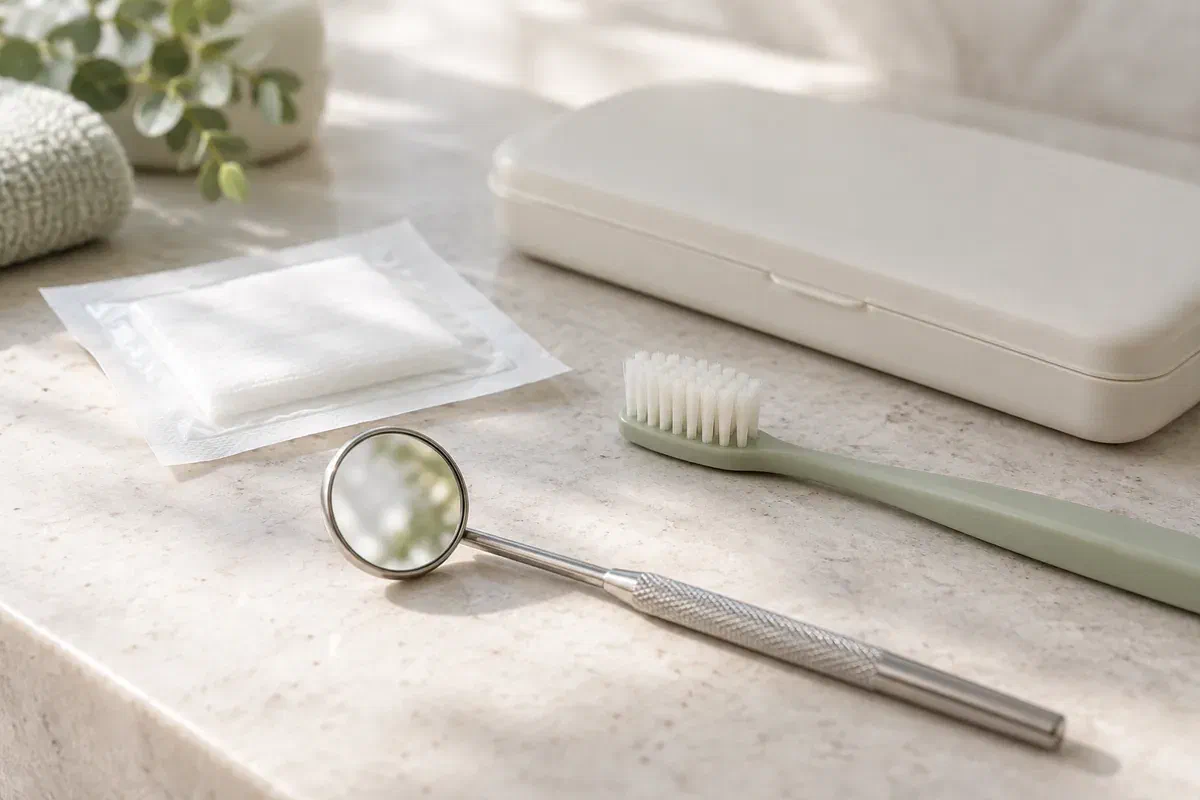
Illustrative dental mirror and gentle oral-care supplies beside a closed instrument case
The reason behind the question

Recovery only makes sense if the reason is sound.

Start with the concern that prompted the suggestion. If a therapist, physician, or orthodontist has already assessed it, bring their notes so the tissue can be judged in context.

Difficulty moving the tongue or lip

Explain which movements feel limited, how long it has been noticeable, and whether it varies. Ask how the clinician will test function. Real examples from daily life will help more than comparisons with photographs on the internet.

A suggestion from orthodontic or gum care

If the attachment came up in an orthodontic or periodontal visit, ask which finding the procedure targets and how its timing relates to other treatment. Recovery may need to fit around appliances, so sequence is worth discussing early.

Feeding or speech in a child

Bring assessments and describe what is difficult. Feeding concerns call for medical and feeding expertise, and a speech-language pathologist is the right person to evaluate speech. Seeing an attachment does not establish that removing it will help.

Joint planning among dental, feeding, speech, and orthodontic providers helps confirm whether a procedure is warranted and when, and who will support recovery. Many frenula are normal and need no care.

Expectations worth setting

Know the goal, and know the healing it requires.

If the examination confirms a significant restriction or tissue-related concern, a procedure may form part of the plan. Ask what you should notice once healing is complete and how the review will check it. The aim should match the documented problem, not a broad claim about sleep, speech, or overall health.

Ask also what recovery will not change. Healing restores comfort to the area, but therapy, orthodontic care, or feeding support may still be needed. Understanding the full journey, including those limits, helps you judge whether the procedure is worth the recovery it asks for.

A reason based on the exam

Ask which attachment is involved and which finding supports treatment. You should understand how it differs from normal variation. If more assessment is needed first, ask what it is intended to clarify.

Alternatives with no recovery period

Monitoring, therapy, another professional’s opinion, or waiting for a better point in orthodontic treatment may be suitable. Ask what would happen if the procedure were postponed. Timing should reflect the clinical reason and the patient’s development.

Recovery details from the start

Ask about technique, anaesthetic, stitches, risks, expected discomfort, and how long healing usually takes for this procedure. Find out who would treat and where. Some techniques, ages, or anaesthetic choices may require referral elsewhere.

From first visit to final check

Every step, including the ones after treatment.

The steps vary with the attachment, age, and concern. An assessment is separate from any procedure, and recovery planning is part of the decision rather than an afterthought.

  1. Discuss the concern and health history

    Describe the problem and share any reports, along with medical history, medicines, and allergies. Mention anything that might affect healing. Ask whether another assessment should come before deciding on surgery.

  2. Examine and explain

    The clinician looks at the attachment and how it moves, relating findings to the concern. Ask whether appearance and function match. If the indication is uncertain, you should hear the reasons clearly.

  3. Consent with recovery in mind

    Go over benefit, limits, alternatives, fees, and the expected recovery. If a frenectomy is recommended, ask about the extent, stitches, anaesthetic, and setting, and what the first days at home will involve.

  4. Recovery plan and review

    Take home written instructions for eating, cleaning, and comfort, and book a review that checks function as well as healing. If an orthodontist, therapist, or feeding team is involved, confirm how they will be updated.

Healing at home in Acton

What to do, what to watch, and when to call.

Your instructions should fit your procedure and your age. Keep the written guidance and avoid using exercises or wound routines meant for babies, other techniques, or someone else.

Eating, drinking, and cleaning

Ask how to clean around the area, when brushing can return to normal, and how to care for stitches. Follow advice about numbness and soft, easy meals in the first days. If soreness makes the routine difficult, call the treating office.

Symptoms that need attention

Know what is expected and what is not. Bleeding that does not settle, swelling that keeps increasing, fever, or difficulty taking in food and fluids should be reported promptly. Breathing or swallowing difficulty needs emergency medical care immediately.

The review that matters most

Once the area looks healed, the question becomes whether the original concern has eased. Attend the review and describe what is different. If difficulty continues, ask for a proper reassessment rather than assuming the tissue has reattached.

Patient information: American Academy of Pediatrics — infant frenotomy selection and aftercare

Three ways forward

Different paths, different demands.

Ask which option fits the documented concern and why. A frenulum is a normal part of the mouth, so a recommendation to treat it should explain the problem it is meant to solve.

When there is no significant problem requiring surgery

Observation, no procedure

A clinician may recommend monitoring or another opinion instead of acting now. Ask what to look for and when to come back. Not operating is a careful choice when findings do not support a procedure, and it involves no recovery.

When therapy, feeding care, or orthodontics should lead

Coordinated support for the concern

Sometimes the most useful next step belongs to someone else: a speech-language pathologist, a feeding team, a periodontist, or an orthodontist. Their work may come first or run in parallel with dental care. Ask what each person is responsible for and how it serves the goal. Cutting tissue is no substitute for understanding why an activity is hard.

When assessment supports intervention

A frenulum procedure that is clearly indicated

Here the conversation turns to specifics. Which operation is planned, and what should it change? What are the other choices? The risks to understand include soreness, bleeding, infection, scarring, and a concern that does not resolve. Ask what evidence supports the technique and how recovery compares between methods, since a device name alone says little about results.

Recovery questions

What families ask about healing.

Bring the recommendation and any questions about the days after treatment. These answers help you prepare without assuming every attachment needs to be removed.

(905) 876-4488
How sore will the area be after a frenectomy?
Discomfort varies with the procedure, the site, and the person. Ask the clinician what to expect and how to manage it, and call the treating office if pain is stronger or lasts longer than you were told.
Which foods are easiest in the first few days?
Follow the specific advice you are given. Soft foods that need little chewing are often suggested, and very hot, spicy, or crunchy foods may be uncomfortable at first. Ask what suits your procedure.
When can normal brushing start again?
Ask the treating clinician. Gentle cleaning is usually encouraged, with care around the treated area, but timing for normal brushing depends on the procedure and whether stitches were placed.
What does normal healing look like inside the mouth?
Healing tissue in the mouth can look different from surrounding gum for a while. Ask what is typical for your procedure, and contact the office if you are unsure or if swelling, bleeding, or pain is increasing.
What should I do if a stitch comes loose early?
Call the office that treated you and describe what you see. They can advise whether it needs attention. If there is significant bleeding or difficulty breathing or swallowing, seek urgent medical care.
How can I tell reattachment from ordinary healing?
It is not something to judge at home. If the original difficulty persists or returns, book a review so the clinician can assess function and healing properly rather than assuming the tissue has reattached.

Patient information: AAPD — procedure definitions and orthodontic timing considerations · Royal Cornwall — avoiding preventive tongue-tie procedures without a current functional indication

Plan a visit from Acton

See the whole process, recovery included.

Call our Bronte Street practice to talk about a frenectomy recommendation or an attachment you have been told about. Bring any reports so we can go through the assessment, the alternatives, what recovery would involve, and whether shared or specialist care would help.

Indication, suitability for age, technique, anaesthetic, treatment location, referral, fees, and expected benefit require individual assessment. Changes in feeding, speech, tooth spacing, or function cannot be guaranteed.

Visit Milton Dental Clinic
Unit 1, 342 Bronte St. S, Milton, ON L9T 5B7
Get directions Clinic hours
Monday–Thursday
11am–7pm
Friday–Sunday
By appointment only

Areas we serve

  • Milton
  • Oakville
  • Mississauga
  • Georgetown
  • Halton Hills
  • Acton
  • Campbellville
  • Brampton
  • Burlington
  • Puslinch
  • Rockwood
  • Erin
  • Caledon
  • Etobicoke
  • Old Milton
  • Bronte Meadows
  • Timberlea
  • Dorset Park
  • Dempsey
  • Clarke
  • Beaty
  • Coates
  • Harrison
  • Scott
  • Willmott
  • Ford
  • Bowes
  • Cobden
  • Walker
  • Mountain View
  • Milton Heights
  • Hawthorne Village
  • Valley View
  • Fallingbrook
  • Nassagaweya
  • Trafalgar
  • Esquesing
  • Nelson
  • Brookville
  • Moffat
  • Glen Williams
  • Norval
  • Limehouse
  • Stewarttown
  • Ashgrove
  • Hornby
  • Silver Creek
  • Speyside
  • Scotch Block
  • North Oakville
  • River Oaks
  • Glen Abbey
  • West Oak Trails
  • Palermo
  • Bronte Creek
  • College Park
  • Joshua Creek
  • Uptown Core
  • Preserve
  • Iroquois Ridge
  • Lisgar
  • Meadowvale
  • Meadowvale Village
  • Churchill Meadows
  • Erin Mills
  • Central Erin Mills
  • Streetsville
  • East Credit
  • Creditview
  • Heartland
  • Sheridan
  • Mount Pleasant
  • Credit Valley
  • Huttonville
  • Churchville
  • Springbrook
  • Northwest Brampton
  • Bram West
  • Fletcher's Meadow
  • Fletcher's Creek South
  • Alton Village
  • Orchard
  • Millcroft
  • Headon Forest
  • Tansley
  • Brant Hills
  • Tyandaga
  • Kilbride
  • Lowville
  • Aberfoyle
  • Morriston
  • Arkell
  • Hillsburgh
  • Freelton
  • Carlisle
  • Waterdown
  • Flamborough
  • Mountsberg

How can we help?

Milton Dental Clinic

Have a question about your smile? Choose the option that works best for you.

For urgent dental concerns, please call.
Messages are reviewed during clinic hours.