

Illustrative adult patient discussing an oral tissue assessment with a clinician
Specialized Care

Frenectomy in Milton

Noticing a tight-looking lip or tongue attachment is a reason to ask questions, not a diagnosis. Book a frenectomy consultation in Milton to learn what the tissue is doing, what a procedure could and could not change, and which other paths exist.

Frenectomy care in Milton

Spotted at a checkup? Start by asking what it changes day to day.

Many people first hear the word frenulum when a clinician points to the small fold of tissue under a child’s tongue or behind the upper lip. Everyone has these attachments, and they vary a great deal in size and position. A frenectomy is the removal of one, done only when there is a sound clinical reason. Frenotomy, which divides the tissue, and frenuloplasty, which reshapes it, are related but not identical.

Being noticed is not the same as causing trouble. What matters is function: how the tongue or lip moves, whether eating, speech, or a gum or orthodontic issue is actually affected, and whether the attachment plays a part. A label like tongue-tie or lip-tie, or a photo comparison, does not decide on its own that surgery is needed.

With young families making up so much of Milton, we often meet parents who simply want to know whether a comment from a checkup needs follow-up. Tell us what was said and what you have observed at home. We can assess, plan, and arrange referral or coordination when another provider should be involved.

Ask about a frenulum you’ve noticed
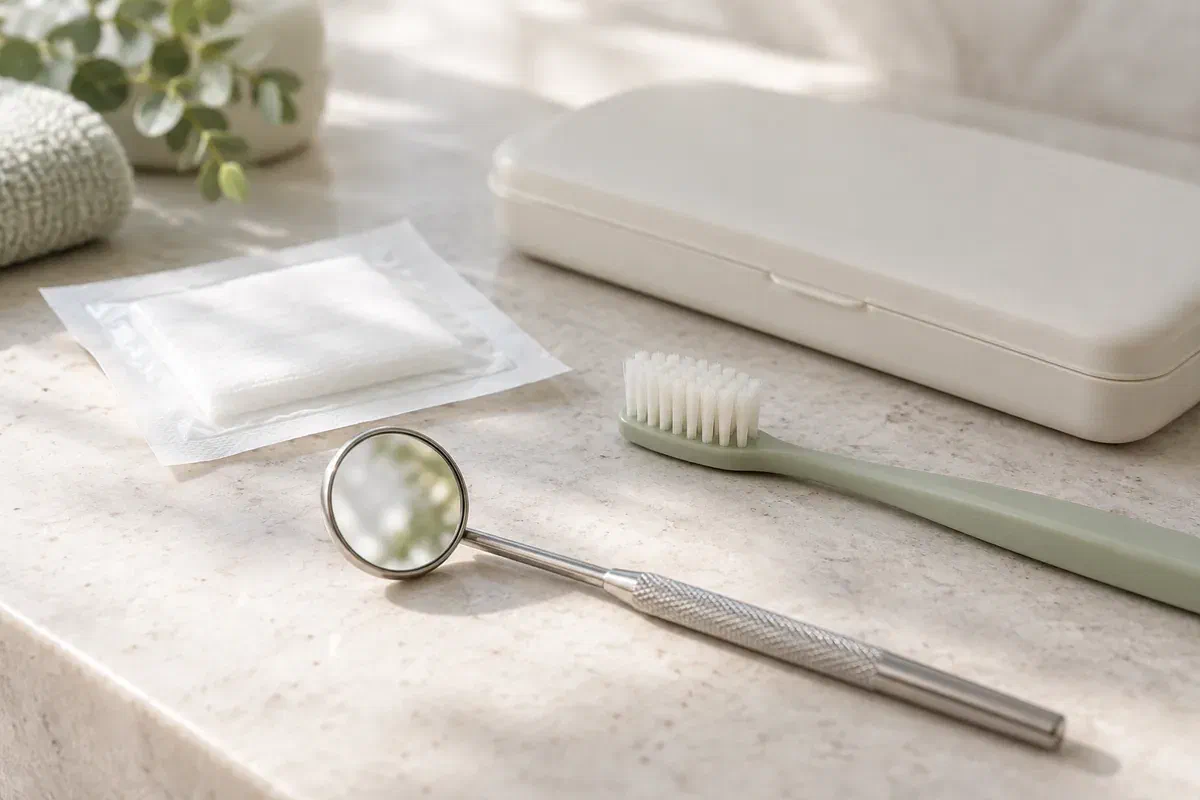
Illustrative dental mirror and gentle oral-care supplies beside a closed instrument case
What brought the attachment to attention

The reason for the visit shapes what should be examined.

A comment during a routine exam, a referral from another provider, and a problem you notice yourself each call for different questions. Share whatever reports or notes you already have so they can be weighed together.

Movement that seems limited

Explain what looks or feels restricted, when you first noticed it, and whether it changes from day to day. Ask how the clinician will judge movement and function during the visit. Comparing a mouth with pictures online tends to raise worry without answering the practical question.

A link suggested with gums or braces

Sometimes an attachment is mentioned during gum care or orthodontic planning. Find out which specific finding the procedure would target and how timing fits around other treatment. A gap between front teeth, in particular, is usually best considered as part of a larger plan.

A child who struggles with feeding or speech

Bring any assessments that have been done and describe the difficulty in plain terms. Feeding problems call for medical and feeding support, and speech concerns may need a speech-language assessment. A noticeable attachment does not prove that cutting it will resolve either one.

When dental, feeding, speech, and orthodontic questions overlap, working as a team helps establish whether treatment is indicated and when. Most visible frenula are normal and need nothing at all.

Leaving the consultation with clarity

A useful plan names one goal and is honest about its edges.

If the assessment finds a meaningful restriction or a tissue-related dental issue, a procedure might form part of the answer. Ask what specific change you should expect and how anyone will know it happened. Good goals stay tied to the documented concern, not to sweeping promises about sleep, speech, feeding, or general health.

It is just as important to hear what a frenectomy would leave untouched. When other factors feed into a difficulty, extra support or treatment may still be required afterward. Knowing that in advance lets you judge whether the recommendation suits your family’s needs and hopes.

Findings you can follow

The clinician should show you which attachment is involved and which observation supports acting on it. You should come away able to tell an ordinary variation from a problem worth treating. If more testing is suggested, ask what it is meant to clarify.

Other choices and the question of when

Watching over time, supportive therapy, another professional’s opinion, or fitting care around an existing plan can all be reasonable. Ask what happens if you postpone. Timing ought to reflect the reason for care, a child’s stage of development, and the overall clinical picture.

Plain details about the procedure

Talk through the technique, numbing or other anaesthetic, whether stitches are likely, risks, and the recovery period. Ask who would perform it and where. Discussing a procedure here does not mean every age group, method, or anaesthetic option is offered at our practice.

How an assessment unfolds

Listen first, examine second, decide together.

The steps depend on which attachment is involved, the patient’s age, and why treatment is being raised. Surgery is not automatically offered at the same appointment as the assessment.

  1. Hear the concern and gather earlier reports

    Describe the functional problem or the recommendation you received, and bring notes from any professional involved. We review medical history, medicines, allergies, and past procedures in the mouth. Ask whether any other assessment should come before a surgical decision.

  2. Look at the tissue alongside what it does

    The clinician examines the attachment while keeping the reported concern in view. Ask what the findings show and whether the appearance matches how things actually work. Any doubt about the indication should be explained to you before treatment is chosen.

  3. Weigh the proposal and give consent

    Go over expected benefit, limits, alternatives, fees, and recovery. If a frenectomy is suitable, you will hear how much tissue would be removed and whether stitches are planned. Anaesthetic and the treatment setting are chosen to fit the individual.

  4. Plan healing and check the goal

    Confirm how to clean, eat, and manage comfort, plus any added professional support. Ask when healing and function will be reviewed. If an orthodontist, speech-language professional, or feeding team shares care, agree on how updates and follow-up will be passed along.

Healing at home in Milton

Care for the site, then check whether the original problem eased.

Aftercare is specific to the procedure and the person. Ask for written instructions you can keep, and avoid routines borrowed from someone of a different age or with different treatment.

Eat and clean as you were shown

Ask how to look after the treated area, when ordinary brushing can resume, and what stitches will feel like if used. Follow the advice on numbness and soft foods. Call the treating provider if soreness gets in the way of the plan.

Know which signs need a call

Ask which sensations are normal and which deserve a prompt review. Ongoing bleeding, swelling that grows, fever, or trouble eating or drinking should be reported. Any difficulty breathing or swallowing needs emergency medical help, not a routine message to the office.

Judge function, not just appearance

A site that looks healed has not necessarily met the goal. Keep the review appointment and describe what has changed in the activity that led to care. More support may be needed, and lasting difficulty should be assessed rather than blamed automatically on reattachment.

Patient information: American Academy of Pediatrics — infant frenotomy selection and aftercare

Three possible directions

Watching, supporting, or treating: each answers a different need.

Ask which direction matches the documented concern, and why. Having a frenulum is completely normal, so any recommendation should explain the problem it targets.

When no significant problem calls for surgery

Monitoring with no procedure

The clinician may suggest keeping an eye on things or seeking another assessment instead of acting right away. Ask what to watch for and what would prompt another look. Deciding against surgery can be a careful, deliberate plan when findings do not support it.

When feeding, speech, gums, or orthodontics are involved

Support aimed at the functional issue

Another qualified professional may need to contribute before or alongside dental care. Ask how each person’s role connects to the goal. Removing tissue should never replace a look at the wider reasons something is hard.

When the assessment supports treatment

A frenulum procedure with a clear indication

Discuss the exact operation, its expected benefit, alternatives, and risks such as soreness, bleeding, infection, scarring, or symptoms that persist. Ask what evidence backs the chosen technique. A brand of device or a procedure name does not by itself promise a better result.

Common Milton questions

Questions worth asking before anyone picks up an instrument.

Bring the comment or recommendation and the concern that came with it. These answers help frame the conversation without assuming every lip or tongue attachment needs surgery.

(905) 876-4488
My child’s dentist mentioned a lip tie, but nothing seems wrong. Should we act on it?
Not automatically. If eating, speech, and oral care are going well, observation may be all that is needed. Ask what was seen, whether anything should be monitored, and what change would be a reason to reassess.
Is a frenulum something everyone has?
Yes. Attachments under the tongue and between the lips and gums are a normal part of the mouth, and their shape differs from person to person. Treatment is considered only when one is linked to a specific functional or dental problem.
Will stitches be needed after a frenectomy?
It depends on the site and the technique. Some procedures are closed with stitches and others are not. Ask during consent whether closure is planned, what it may feel like, and how to care for the area while it heals.
Does removing the attachment guarantee a gap between the front teeth will close?
No. Spaces have several possible causes, and closing one often involves orthodontic planning. Ask how the tissue relates to the space, whether treatment is indicated at all, and where it would fit in the overall sequence.
Is one technique, such as laser, always the better choice?
No. The American Academy of Pediatrics reports no evidence that laser outperforms other methods for infant frenotomy. The more important questions are whether there is real functional impairment, whether non-surgical support has been tried, and whether a procedure fits.
Can a family in Milton start with a consultation only?
Yes. A consultation lets you hear the findings, alternatives, timing, likely costs, and any referral needs before deciding. It is a chance to understand the proposal, and booking one does not commit you to treatment.

Patient information: AAPD — procedure definitions and orthodontic timing considerations · Royal Cornwall — avoiding preventive tongue-tie procedures without a current functional indication

Book a visit close to home

Find out whether the attachment matters, and what to do if it does.

Reach our Bronte Street practice in Milton to talk through a frenectomy suggestion or a tissue attachment you have noticed. Please bring any reports you have so we can consider assessment, alternatives, and coordinated or specialist care together.

Indication, suitability for age, technique, anaesthetic, availability, referral, fees, and expected benefit all depend on an individual assessment. No change in feeding, speech, tooth spacing, or other function can be guaranteed.

Visit Milton Dental Clinic
Unit 1, 342 Bronte St. S, Milton, ON L9T 5B7
Get directions Clinic hours
Monday–Thursday
11am–7pm
Friday–Sunday
By appointment only

Areas we serve

  • Milton
  • Oakville
  • Mississauga
  • Georgetown
  • Halton Hills
  • Acton
  • Campbellville
  • Brampton
  • Burlington
  • Puslinch
  • Rockwood
  • Erin
  • Caledon
  • Etobicoke
  • Old Milton
  • Bronte Meadows
  • Timberlea
  • Dorset Park
  • Dempsey
  • Clarke
  • Beaty
  • Coates
  • Harrison
  • Scott
  • Willmott
  • Ford
  • Bowes
  • Cobden
  • Walker
  • Mountain View
  • Milton Heights
  • Hawthorne Village
  • Valley View
  • Fallingbrook
  • Nassagaweya
  • Trafalgar
  • Esquesing
  • Nelson
  • Brookville
  • Moffat
  • Glen Williams
  • Norval
  • Limehouse
  • Stewarttown
  • Ashgrove
  • Hornby
  • Silver Creek
  • Speyside
  • Scotch Block
  • North Oakville
  • River Oaks
  • Glen Abbey
  • West Oak Trails
  • Palermo
  • Bronte Creek
  • College Park
  • Joshua Creek
  • Uptown Core
  • Preserve
  • Iroquois Ridge
  • Lisgar
  • Meadowvale
  • Meadowvale Village
  • Churchill Meadows
  • Erin Mills
  • Central Erin Mills
  • Streetsville
  • East Credit
  • Creditview
  • Heartland
  • Sheridan
  • Mount Pleasant
  • Credit Valley
  • Huttonville
  • Churchville
  • Springbrook
  • Northwest Brampton
  • Bram West
  • Fletcher's Meadow
  • Fletcher's Creek South
  • Alton Village
  • Orchard
  • Millcroft
  • Headon Forest
  • Tansley
  • Brant Hills
  • Tyandaga
  • Kilbride
  • Lowville
  • Aberfoyle
  • Morriston
  • Arkell
  • Hillsburgh
  • Freelton
  • Carlisle
  • Waterdown
  • Flamborough
  • Mountsberg

How can we help?

Milton Dental Clinic

Have a question about your smile? Choose the option that works best for you.

For urgent dental concerns, please call.
Messages are reviewed during clinic hours.