

Illustrative adult patient discussing an oral tissue assessment with a clinician
Specialized Care

Frenectomy in Oakville

A gap between the front teeth and a mention of the lip attachment often arrive together. If you’re coming from Oakville, we can help sort out whether a frenectomy belongs in the orthodontic plan, when it would fit, and what else could explain the space.

Oakville frenectomy consultations

Is the tissue behind the gap, or just sitting near it?

Lift your upper lip and you will see a thin web of tissue running to the gum between the two front teeth. That web is the labial frenulum, and there is a similar one under the tongue. Removing one is called a frenectomy. Dividing it is a frenotomy, and reshaping it is a frenuloplasty, so it helps to know which of these is on the table.

A space between the front teeth can have more than one cause, and the frenulum may or may not be one of them. The examination asks what the tissue is actually doing to the teeth, gums, or lip movement. How prominent it looks, or whether someone has called it a tie, does not show that surgery will help.

For families in Oakville already working with an orthodontist, the key issue is often sequence: should anything happen before, during, or after tooth movement? Bring the orthodontic notes and your questions. We can assess, explain the reasoning, and coordinate with the provider managing the teeth.

Ask about a gap and a frenulum
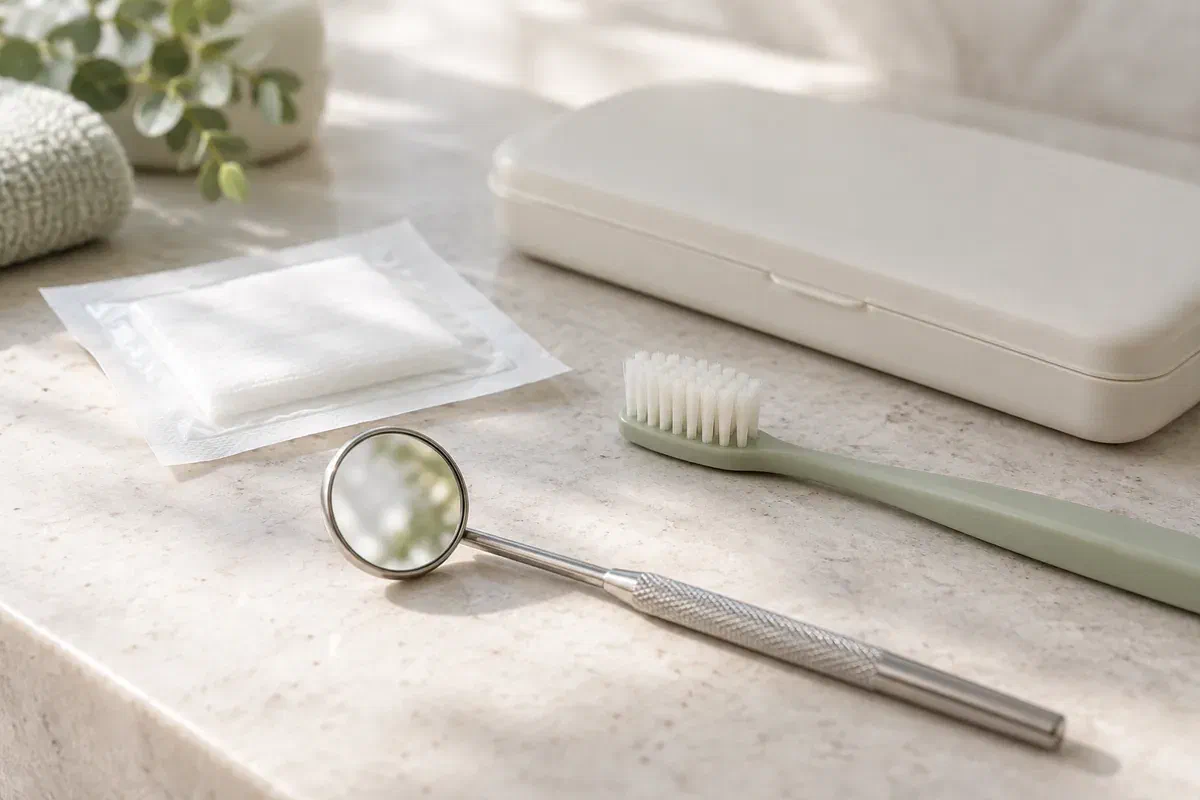
Illustrative dental mirror and gentle oral-care supplies beside a closed instrument case
Why the attachment came up

Three common starting points, three different conversations.

The concern that led you here decides what the clinician needs to look at. If an orthodontist, speech-language professional, or physician has already weighed in, their notes help connect the tissue findings to the wider plan.

A lip or tongue that does not move freely

Note what seems restricted, when it began, and whether it is the same every day. Ask how the exam will check movement in practice. You are trying to identify a real difficulty with eating, cleaning, or speaking, not judge the tissue against images found online.

Braces, aligners, or a space between front teeth

If the frenulum was mentioned during orthodontic planning, ask which finding prompted it and whether it relates to the space. Timing with tooth movement can make a difference. The procedure should be explained as one part of the orthodontic picture, not as a standalone fix.

Feeding or speech difficulties in a child

Bring any feeding or speech reports and describe what is hard. Feeding concerns call for medical and feeding expertise, and speech concerns may need a speech-language assessment. An attachment that is easy to see is not automatically the cause.

When orthodontic, dental, speech, and feeding questions overlap, coordinated care helps decide whether a procedure is warranted and at what stage. Plenty of visible frenula are perfectly healthy.

What a good assessment delivers

One clear purpose, stated alongside what it cannot fix.

If a meaningful restriction or tissue-related problem is confirmed, a procedure might become part of the plan. Ask what should change and how that change will be measured, whether through function, gum health, or the orthodontic result. A sensible goal stays linked to the finding rather than to broad promises about speech, sleep, or health.

Spend some of the visit on the limits. Closing a gap usually depends on orthodontics, and other contributors to a difficulty may still need attention afterward. Knowing that ahead of time makes it easier to judge whether the recommendation lines up with your expectations.

A finding you can point to

Ask which attachment is involved and which observation supports treating it. You should understand how it differs from a normal variation. If a further opinion is advised, find out what question it is meant to answer.

Alternatives, and where timing fits

Monitoring, supportive therapy, another professional’s review, or aligning with the orthodontic schedule may each be reasonable. Ask what would happen if you waited. Timing should reflect the reason for care, the patient’s growth and development, and the treatment already under way.

What the procedure would involve

Discuss technique, anaesthetic, whether stitches are planned, risks, and healing time. Ask who would provide treatment and where. A discussion here does not mean every age group, technique, or anaesthetic option is available at our office.

Step by step

From the first question to a plan both providers agree on.

The sequence varies with the attachment’s location, the patient’s age, and why treatment has been suggested. Being assessed does not mean surgery happens that same day.

  1. Bring the orthodontic and medical background

    Explain the concern and share notes from your orthodontist or any other professional. Your health history, current medications, allergies, and any earlier work near the attachment are part of the picture. Ask whether another opinion should be sought before a decision about surgery.

  2. Assess the tissue against the concern

    The clinician looks at the attachment, how the lip and tongue move, and its relationship to the teeth and gums. Ask what the findings show and whether appearance and function match. Any doubt about the indication should be talked through first.

  3. Agree on the approach and consent

    Before anything is booked, the conversation covers what the procedure should achieve, its limits, other routes, costs, and healing. When a frenectomy makes sense, the clinician outlines the extent of the tissue work and whether the site will be closed with sutures. The anaesthetic and setting are tailored to the patient.

  4. Plan follow-up with everyone involved

    Confirm cleaning, eating, and comfort instructions, along with any extra support. Put a date on the check that looks at both the wound and the original concern. If your orthodontist or another professional shares care, settle how records and follow-up will move between offices.

Recovery after a frenulum procedure

Protect the healing site and keep the bigger goal in sight.

Aftercare depends on what was done and who had it. Ask for instructions in writing, and do not borrow an exercise or wound routine meant for a different age or someone else’s procedure.

Stick to the guidance on meals and cleaning

Find out how to clean the area, when normal brushing can start again, and how to handle stitches if there are any. Follow the advice on numbness and softer foods. Let the treating provider know if discomfort is getting in the way.

Call about bleeding, swelling, or trouble eating

Ask what is normal and what needs a prompt check. Bleeding that continues, swelling that increases, fever, or difficulty keeping up with food and fluids should be raised. Breathing or swallowing difficulty calls for emergency medical care right away.

Check the result, not only the healing

A site that looks fine has not necessarily done its job. Keep the review visit and describe what has changed in the original concern. Ongoing difficulty deserves assessment rather than an automatic assumption of reattachment.

Patient information: American Academy of Pediatrics — infant frenotomy selection and aftercare

Possible ways forward

Wait and watch, support the function, or treat the tissue.

Ask which approach suits the documented problem and why. Having a frenulum is normal, so any recommendation should spell out the issue it is meant to address.

When there is no significant problem needing surgery

Observation with planned check-ins

Rather than acting now, the clinician may suggest monitoring or another opinion. Ask what you should keep an eye on and what would justify a fresh look. Choosing not to operate is a reasoned plan when the findings do not support a procedure.

When the concern involves spacing, gums, feeding, or speech

Orthodontic or therapy-led care

Another qualified provider may need to lead or contribute before dental surgery is considered. Ask how each role connects to the goal. Removing tissue should not replace looking at the wider reasons a dental or functional problem exists.

When findings support intervention

A procedure backed by the assessment

Review the specific operation and what it is meant to change. Weigh it against the alternatives and the risks, which include discomfort, bleeding, infection, scarring, and symptoms that may not go away. Ask what evidence supports the technique offered. Neither a device nor a procedure name guarantees a better result.

Frenectomy and spacing questions

Gaps, braces and timing: the questions we hear most.

Have the orthodontic notes and the concern behind the suggestion handy. These answers help steer the conversation without assuming that every lip attachment should be removed.

(905) 876-4488
Is a space between the front teeth always caused by the lip attachment?
No. Tooth size, jaw growth, missing teeth, habits, and other factors can all play a part. The frenulum is only one possibility, and an examination together with orthodontic planning helps show whether it is involved.
Should the frenulum be treated before braces start closing the gap?
It depends on the reason for treatment and the orthodontic plan. Timing is something the treating providers should agree on. Ask your orthodontist and the clinician assessing the tissue to explain the order they recommend and why.
Could a gap come back even after orthodontic treatment?
Spaces can sometimes reopen for several reasons, which is why retention and follow-up are part of orthodontic care. Ask your orthodontist how the tissue, if relevant, factors into keeping the result stable.
Is cutting the tissue the same as removing it?
Not quite. A frenotomy divides the attachment, a frenectomy removes it, and other techniques exist for particular cases. Ask which one is proposed and why that extent suits the problem identified.
Does a laser technique give a better outcome for babies?
Not on current evidence. According to the American Academy of Pediatrics, nothing shows laser outperforming other methods for infant frenotomy. What matters more is whether feeding is significantly impaired, whether help without surgery has been explored, and whether any procedure is indicated.
My orthodontist is near home in Oakville. Can you still coordinate?
Yes. Bring their notes or ask them to send records, and we can share our findings after the assessment. Clear communication between offices helps keep the timing and the goals aligned.

Patient information: AAPD — procedure definitions and orthodontic timing considerations · Royal Cornwall — avoiding preventive tongue-tie procedures without a current functional indication

Planning a visit from Oakville

See where the tissue fits before the teeth start moving.

Get in touch with our Bronte Street practice to review a frenectomy suggestion or a lip or tongue attachment you are unsure about. Bring orthodontic and other reports so the assessment, alternatives, and any coordinated or specialist care can be considered.

Each person’s indication, age, suitable technique and anaesthetic, whether treatment is offered here or by referral, fees, and likely benefit are assessed individually. Better spacing, feeding, speech, or function cannot be guaranteed.

Visit Milton Dental Clinic
Unit 1, 342 Bronte St. S, Milton, ON L9T 5B7
Get directions Clinic hours
Monday–Thursday
11am–7pm
Friday–Sunday
By appointment only

Areas we serve

  • Milton
  • Oakville
  • Mississauga
  • Georgetown
  • Halton Hills
  • Acton
  • Campbellville
  • Brampton
  • Burlington
  • Puslinch
  • Rockwood
  • Erin
  • Caledon
  • Etobicoke
  • Old Milton
  • Bronte Meadows
  • Timberlea
  • Dorset Park
  • Dempsey
  • Clarke
  • Beaty
  • Coates
  • Harrison
  • Scott
  • Willmott
  • Ford
  • Bowes
  • Cobden
  • Walker
  • Mountain View
  • Milton Heights
  • Hawthorne Village
  • Valley View
  • Fallingbrook
  • Nassagaweya
  • Trafalgar
  • Esquesing
  • Nelson
  • Brookville
  • Moffat
  • Glen Williams
  • Norval
  • Limehouse
  • Stewarttown
  • Ashgrove
  • Hornby
  • Silver Creek
  • Speyside
  • Scotch Block
  • North Oakville
  • River Oaks
  • Glen Abbey
  • West Oak Trails
  • Palermo
  • Bronte Creek
  • College Park
  • Joshua Creek
  • Uptown Core
  • Preserve
  • Iroquois Ridge
  • Lisgar
  • Meadowvale
  • Meadowvale Village
  • Churchill Meadows
  • Erin Mills
  • Central Erin Mills
  • Streetsville
  • East Credit
  • Creditview
  • Heartland
  • Sheridan
  • Mount Pleasant
  • Credit Valley
  • Huttonville
  • Churchville
  • Springbrook
  • Northwest Brampton
  • Bram West
  • Fletcher's Meadow
  • Fletcher's Creek South
  • Alton Village
  • Orchard
  • Millcroft
  • Headon Forest
  • Tansley
  • Brant Hills
  • Tyandaga
  • Kilbride
  • Lowville
  • Aberfoyle
  • Morriston
  • Arkell
  • Hillsburgh
  • Freelton
  • Carlisle
  • Waterdown
  • Flamborough
  • Mountsberg

How can we help?

Milton Dental Clinic

Have a question about your smile? Choose the option that works best for you.

For urgent dental concerns, please call.
Messages are reviewed during clinic hours.