

Illustrative adult patient discussing an oral tissue assessment with a clinician
Specialized Care

Frenectomy in Rockwood

Sometimes a frenulum procedure heals well but the original difficulty remains. From Rockwood, you can bring us the records and your questions for a careful review of function, the possible reasons, and whether further treatment, support, or simply time is appropriate.

Frenulum reviews for Rockwood

The site has healed. The difficulty hasn’t.

It is discouraging to go through a procedure and find that feeding, speech, or comfort is much the same afterward. Before anyone talks about doing more, it helps to step back. The frenulum is the tissue band under the tongue or between lip and gum. Frenotomy releases it, frenectomy removes it, and frenuloplasty reshapes it. Knowing which one was done is the first piece of the puzzle.

A lingering problem can have many explanations. The original concern may have had other contributors, healing may still be under way, or support such as therapy may be needed to make use of new movement. Reattachment is possible, but it is only one explanation and should be assessed rather than assumed.

Rockwood is a village northwest of Milton, and families there sometimes come to us after treatment somewhere else. Bring whatever records you have, including the procedure notes and any reports from before and after. We can examine function, explain what we see, and suggest next steps, including referral or coordinated care.

Ask for a post-procedure review
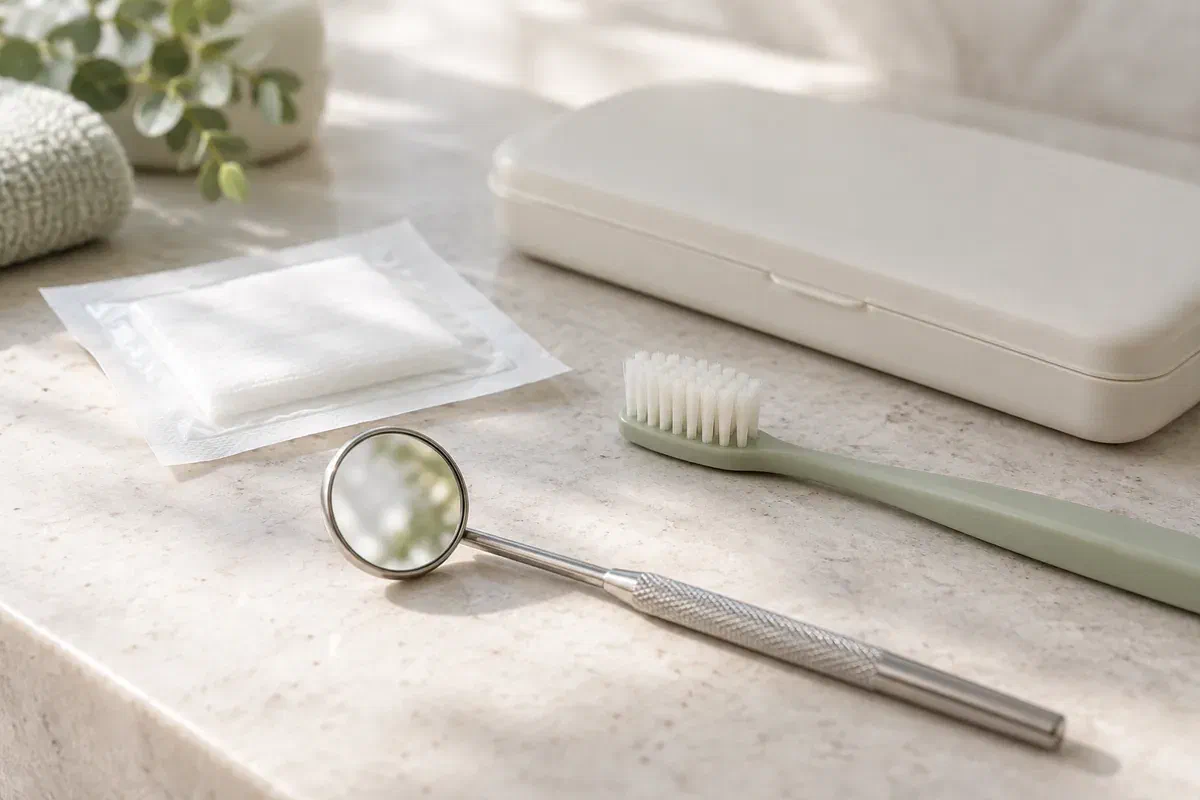
Illustrative dental mirror and gentle oral-care supplies beside a closed instrument case
What is still bothering you

Start from the original concern, not the scar.

Describe what led to treatment in the first place and what has or has not changed. Notes from the treating provider, therapists, or feeding specialists help us understand the full sequence.

Movement still seems restricted

Explain which movements remain limited and whether anything improved at all. Ask how function will be compared with what was recorded before treatment. Specific observations from daily life will tell us more than how the healed site looks.

A dental or orthodontic goal not yet met

If the procedure was part of gum or orthodontic care, ask whether the expected change was ever likely to come from the tissue alone. A space between teeth, for example, usually depends on orthodontic treatment. Check how the next step fits the wider plan.

Feeding or speech that has not improved

Bring any feeding or speech assessments from before and after. Ongoing feeding difficulty needs medical and feeding support, and speech often needs continued work with a speech-language pathologist. A healed site does not explain why progress has stalled.

When results fall short, getting the dentist, therapist, feeding team, and orthodontist talking to one another is often what uncovers the real reason. Repeating a procedure is not automatically the answer.

What a review can offer

An honest explanation, and a sensible next step.

If our examination finds that a significant restriction remains and still relates to the concern, further treatment may be worth discussing. Ask what a second intervention would be expected to change that the first did not, and how that would be measured. Any new goal should be narrow and tied to what is found now.

Often, the more useful outcome is understanding what the procedure could never have addressed. Learned patterns, other anatomy, development, or feeding factors may be the bigger part of the picture, and support aimed at those may help more than additional surgery.

A fresh look at the findings

Ask what we see in the tissue now and how it compares with the original records. You should understand whether there is a current restriction or a normal healed attachment. If more assessment is suggested, ask what it would show.

Support, time, or further care

Therapy, feeding support, a period of observation, or an orthodontic plan may be more appropriate than another procedure. Ask what would happen if no further treatment were done. Timing should follow the concern and the patient’s development.

Details if more treatment is considered

If a further procedure is discussed, ask about technique, anaesthetic, stitches, risks, recovery, and who would provide it. Not every age, technique, or anaesthetic option is offered at our office, so referral may be part of the plan.

How we review a previous procedure

Compare before and after, then decide together.

The review depends on the original procedure, the patient’s age, and the concern. It is an assessment, not a booking for another surgery.

  1. Collect the full history

    Bring the procedure notes, any before-and-after reports, and details of medical history, medicines, and allergies. Tell us what has changed since treatment. Ask whether the original provider should be involved in the review.

  2. Examine the healed tissue and its function

    The clinician looks at the healed area and how the tongue or lip moves now. Ask how the findings compare with what was recorded before. If it is unclear whether the tissue is still a factor, that should be explained.

  3. Discuss explanations and options

    We go through possible reasons for the ongoing difficulty, the benefits and limits of each option, costs, and recovery if relevant. Further surgery is discussed only if the findings support it, with its extent and anaesthetic explained.

  4. Coordinate the next stage of care

    Agree on next steps, whether therapy, feeding support, observation, or treatment. Ask when progress will be reviewed and how information will be shared with the original provider and any therapists.

Looking after healing

Recovery advice that fits the procedure you had.

Aftercare differs with the procedure and the patient. Use the written instructions you were given and do not adopt exercises meant for a different age group or technique.

Ongoing care of the treated area

Ask the treating provider how to clean the area, when normal brushing is fine, and whether any stitches need attention. Follow advice on numbness and food choices. If discomfort continues, contact them for guidance.

Symptoms that need prompt review

Some signs during recovery should never be left to sort themselves out. Call the treating office about bleeding that keeps going, swelling that grows rather than settles, a fever, or a child or adult who cannot manage food and fluids. Difficulty breathing or swallowing is an emergency and needs immediate medical care.

Review function, not only the wound

A healed appearance does not confirm that the concern has resolved. Attend reviews and describe what has changed. If difficulty persists, request reassessment rather than accepting reattachment as the default explanation.

Patient information: American Academy of Pediatrics — infant frenotomy selection and aftercare

Possible next steps

More surgery is only one of several answers.

Ask which next step fits the current findings and why. A healed frenulum is still a normal structure, so recommending more treatment needs a clear explanation.

When no significant restriction remains

Allow time and monitor

If the tissue looks and works normally, monitoring and time may be advised. Ask what changes to watch for. Holding off on further surgery is sensible when the findings do not support it.

When feeding, speech, gums, or orthodontics still need work

Therapy and coordinated support

A therapist, feeding team, or orthodontist may hold the key to progress. Ask how each provider can help with the goal. Another procedure should not replace understanding why the difficulty continues.

When a significant restriction is confirmed

Further treatment when indicated

If a clear restriction is still present, a further procedure may be discussed. You deserve to know exactly what it would involve and what it should change this time. A repeat procedure carries its own risks, including soreness, bleeding, infection, scarring, and the possibility that the concern still does not improve. Ask what evidence supports the approach before deciding.

Questions after a previous procedure

When things haven’t improved as hoped.

Having the procedure records and a clear description of your current concern makes these conversations far more productive. The answers below help guide a review without assuming that more treatment is needed, and without assuming the first procedure was wrong.

(905) 876-4488
The procedure was done elsewhere and things haven’t improved. Can you assess it?
Yes. We can review the records, examine the healed tissue and function, and explain what we see. Bringing notes from before and after treatment makes the review much more useful.
Does ongoing difficulty mean the tissue grew back?
Not necessarily. Reattachment is one possibility, but other factors often explain persistent difficulty, such as learned movement patterns, other anatomy, or a feeding or speech issue that was never tissue-related. An assessment of function helps tell these apart before anyone suggests more surgery.
Should a second procedure be considered?
Only if the assessment finds a significant restriction that still relates to the concern. Many people are better served by therapy, feeding support, or time. Ask what a second procedure could realistically add.
Who should I contact first if I’m worried after treatment somewhere else?
For healing concerns, contact the treating provider first. For breathing or swallowing difficulty or heavy bleeding, seek emergency care. A review here can help when questions remain about the overall result.
What records from the original procedure should I bring?
The procedure notes or summary, any assessments from before treatment, aftercare instructions, and reports from therapists or feeding specialists since then. A short timeline of changes is also helpful.
Could something other than the frenulum explain the ongoing problem?
Yes. Feeding, speech, and dental concerns often have several contributors. A review looks at the whole picture so that support can be directed where it is most likely to help.

Patient information: AAPD — procedure definitions and orthodontic timing considerations · Royal Cornwall — avoiding preventive tongue-tie procedures without a current functional indication

Booking from Rockwood

Get a clear explanation of why progress has stalled.

Contact our Bronte Street practice to arrange a review after a frenulum procedure, or to discuss a frenectomy recommendation. Bring the records you have, and we can look at function, possible reasons, and whether support, observation, or coordinated care fits best.

Whether any further treatment is justified, and if so the technique, anaesthetic, place of care, referral, cost, and likely benefit, is a decision made for each patient individually. Better feeding, speech, spacing, or function cannot be promised.

Visit Milton Dental Clinic
Unit 1, 342 Bronte St. S, Milton, ON L9T 5B7
Get directions Clinic hours
Monday–Thursday
11am–7pm
Friday–Sunday
By appointment only

Areas we serve

  • Milton
  • Oakville
  • Mississauga
  • Georgetown
  • Halton Hills
  • Acton
  • Campbellville
  • Brampton
  • Burlington
  • Puslinch
  • Rockwood
  • Erin
  • Caledon
  • Etobicoke
  • Old Milton
  • Bronte Meadows
  • Timberlea
  • Dorset Park
  • Dempsey
  • Clarke
  • Beaty
  • Coates
  • Harrison
  • Scott
  • Willmott
  • Ford
  • Bowes
  • Cobden
  • Walker
  • Mountain View
  • Milton Heights
  • Hawthorne Village
  • Valley View
  • Fallingbrook
  • Nassagaweya
  • Trafalgar
  • Esquesing
  • Nelson
  • Brookville
  • Moffat
  • Glen Williams
  • Norval
  • Limehouse
  • Stewarttown
  • Ashgrove
  • Hornby
  • Silver Creek
  • Speyside
  • Scotch Block
  • North Oakville
  • River Oaks
  • Glen Abbey
  • West Oak Trails
  • Palermo
  • Bronte Creek
  • College Park
  • Joshua Creek
  • Uptown Core
  • Preserve
  • Iroquois Ridge
  • Lisgar
  • Meadowvale
  • Meadowvale Village
  • Churchill Meadows
  • Erin Mills
  • Central Erin Mills
  • Streetsville
  • East Credit
  • Creditview
  • Heartland
  • Sheridan
  • Mount Pleasant
  • Credit Valley
  • Huttonville
  • Churchville
  • Springbrook
  • Northwest Brampton
  • Bram West
  • Fletcher's Meadow
  • Fletcher's Creek South
  • Alton Village
  • Orchard
  • Millcroft
  • Headon Forest
  • Tansley
  • Brant Hills
  • Tyandaga
  • Kilbride
  • Lowville
  • Aberfoyle
  • Morriston
  • Arkell
  • Hillsburgh
  • Freelton
  • Carlisle
  • Waterdown
  • Flamborough
  • Mountsberg

How can we help?

Milton Dental Clinic

Have a question about your smile? Choose the option that works best for you.

For urgent dental concerns, please call.
Messages are reviewed during clinic hours.