

Illustrative patient discussing gum health with a clinician and a small dental model
Specialized Care

Gingivitis Treatment in Caledon

You have been flossing faithfully and changed toothbrushes, yet the gums still look red. For people travelling from Bolton and the other communities of Caledon, our gingivitis care looks again at why the inflammation is hanging on and what the next sensible step should be.

Stubborn gum inflammation

You changed your routine. The redness stayed.

Effort without results is frustrating. You may have added floss, bought a better brush or cut back on snacks, and still the gumline looks angry in places. Gingivitis, or inflammation of the gums, does often calm down with good home care, so when it does not, it is a signal to look more closely rather than try harder.

Several explanations are possible. Hardened deposits below the gumline can keep irritating the tissue until they are professionally removed. A local factor such as a rough filling edge may be involved. Periodontitis, where support around the teeth has been lost, behaves differently from gingivitis, and some gum changes stem from health factors or other conditions altogether.

For anyone coming from Caledon, the visit starts with what you have already changed and how long you have kept it up. We examine the tissue, compare it with any earlier findings and explain what may be holding back improvement. Then we agree on what to adjust, and when to check again.

Have persistent gum redness re-examined
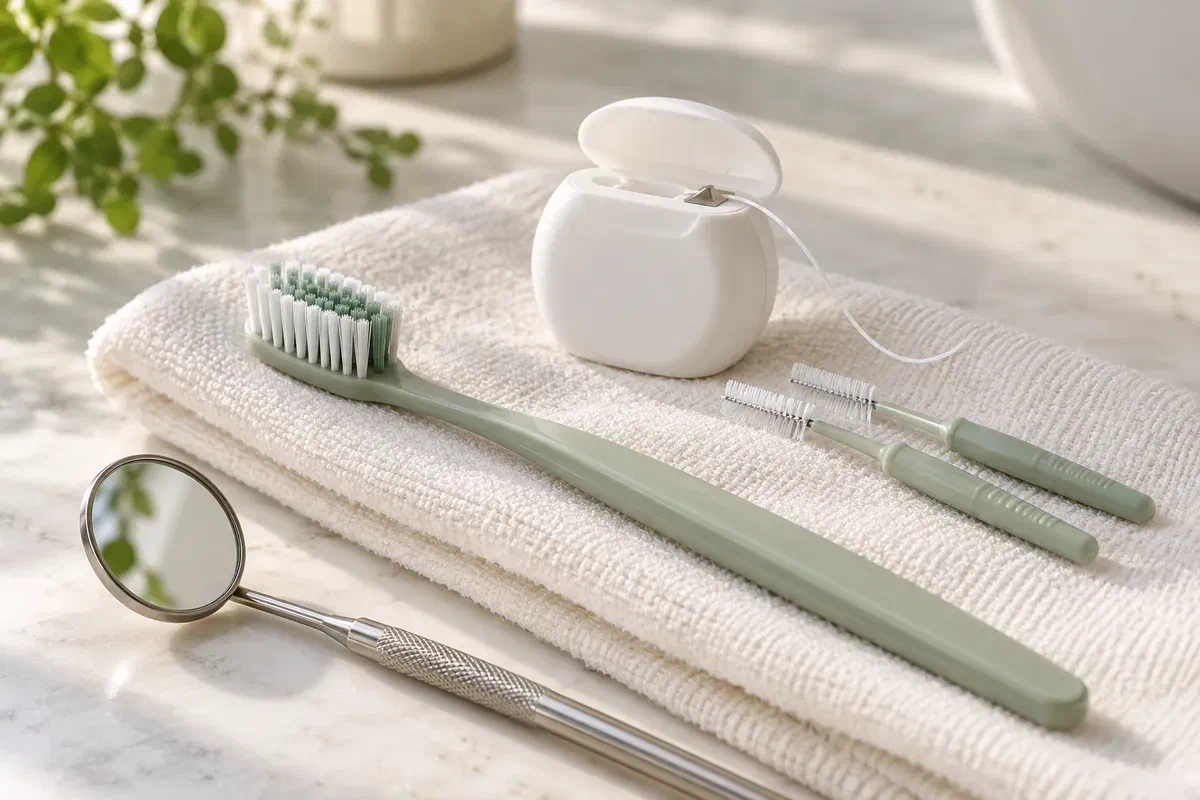
Illustrative soft toothbrush, floss, interdental brushes, and dental mirror on an ivory towel
Changes that have not settled

When improvement stalls, the details matter more.

Let us know which areas have stayed red or bleeding, how long you have kept up your new routine and whether anything else has changed. Medicines, health developments, dental work and new products may all be relevant, so share them freely.

Bleeding that continues despite better cleaning

Explain which sites still bleed and what you have been doing differently. The clinician can check the tissue and watch your technique. It is easy to respond by brushing harder or giving up on an area, but neither tends to help; the cause usually needs identifying first.

Redness or swelling that will not shift

Point out the places that look the same as before, particularly near crowns, fillings or spaces that trap food. Stubborn inflammation in one spot often has a local reason. Ask what the examination suggests, since a targeted change may help more than general effort.

Breath that has not improved

If bad breath persists despite a cleaner mouth, mention it. Gum inflammation may contribute, but dryness and other causes are possible. A stronger rinse could disguise the problem without solving it, so it belongs in the conversation.

Report bleeding that happens without cleaning, unusual swelling, sores, or symptoms affecting your general health. Inflammation that does not respond to good care may not be ordinary plaque-related gingivitis and could need wider investigation.

What a second look can achieve

Finding what the routine alone could not reach

A fresh assessment connects your efforts so far with what the tissue is actually showing. You should come away knowing which areas remain inflamed, whether professional cleaning is needed and what change might make the difference. Slow progress is information that helps refine the plan, not proof that you have done something wrong.

It also tests the original diagnosis. Gingivitis is inflammation of the gums alone; periodontitis involves loss of attachment and needs a different approach. If the findings suggest periodontitis or another condition, ask how treatment changes and whether a specialist or medical input is appropriate.

Patient information: NIDCR — plaque, gum inflammation, professional cleaning, and individualized treatment

Clearing deposits that keep irritating the gum

Tartar, especially just below the gumline, cannot be brushed away and may keep inflammation going. Ask whether any was found and what removing it involves. The type of cleaning should match the findings rather than being assumed.

Checking for a local cause

A filling edge, a crowded area or a food trap can undermine good brushing. Ask whether anything like that was seen and whether it can be addressed. The routine may also be adjusted for spacing, dental work, dexterity and comfort.

A planned recheck with clear criteria

Agree on when the gums will be looked at again and what should prompt a call before then. If the tissue still has not responded, the next step might be further investigation, a referral or a different treatment approach.

Re-examining step by step

Review the effort, examine again, then adjust.

Knowing the sequence helps you bring the right information. The reassessment and any cleaning may happen in one appointment or separate visits, depending on the findings and your comfort.

  1. Describe what you have tried

    Tell us which changes you made, how long you have kept them up and which areas are still red or bleeding. We review your medical history and current medications. Bring the tools you have been using so we can see whether they suit your teeth.

  2. A careful re-examination

    The clinician checks the persistent areas, looks for deposits or local factors and considers whether the findings fit gingivitis, periodontitis or something else. Measurements and images may be part of this. Ask which findings explain the slow response.

  3. Targeted cleaning and revised guidance

    Before treatment, we talk through what is planned, how you will be kept comfortable, the costs and expected visits. Cleaning addresses the deposits found, and we revise your home routine where needed. Let us know if an area is sensitive or you need a pause.

  4. Recheck against the new plan

    At the agreed interval, we look at how the tissue has responded to the changes. If improvement has arrived, we discuss maintenance. If not, ask about further investigation, referral or a different management approach.

Adjusting your home care

Smarter, not harder

Ask for instructions that show what to change, not just what to keep doing. A short routine works best when it targets the right places with tools that fit.

Aim your brushing at the persistent sites

Keep using a soft brush and fluoride toothpaste, but direct the bristles at the gumline in the areas that stayed red. If a spot is sore, note exactly where and what triggers it so we can check. More pressure is rarely the missing piece.

Recheck your interdental aid

An aid that is the wrong size or shape may skip the very spot that needs cleaning. Bring it to your visit so the fit can be tested. Ease it in gently each time; a different option is usually available.

Be wary of stronger products as a shortcut

If a rinse is suggested, understand its purpose, duration and cautions. Switching to harsher products rarely solves inflammation with an underlying cause. Continue the revised plan and let us know if symptoms persist or worsen.

Next steps after a slow response

The reason it lingers points to the next move.

A revised plan should follow from what the second examination turned up. Lingering gingivitis, longstanding periodontal damage and a gum problem with some other origin each call for a different response.

When plaque-related gingivitis is still the explanation

Further cleaning and a revised routine

Remaining deposits are removed and your routine is changed to reach the areas it was missing. Find out how the next check will be done and what ongoing maintenance looks like. Both your part and ours should be clearly set out.

When support around the teeth has been lost

Periodontal treatment

Sometimes the reason the gums would not settle is that the problem was never gingivitis alone. With periodontitis, care may move toward cleaning beneath the gumline, a scheduled re-measurement, longer-term periodontal upkeep or an opinion from a gum specialist. Each of those should come with an explanation rooted in what was found in your mouth.

When the gums do not respond as expected

Investigation of another cause

When neither plaque nor periodontitis fits, the explanation may be irritation from dental work, something in your medical picture or a separate condition of the gum tissue. Ask what the clinician is still unsure about, and whether another examination, a word with your physician or a referral should come next. Redness that refuses to fade has earned that closer attention.

When gums will not settle

Questions about stubborn inflammation

These questions can help you understand why gum redness may persist and what a further assessment can look at, so the next step is a considered one.

(905) 876-4488
Why are my gums still inflamed after weeks of good brushing?
Possible reasons include deposits that need professional removal, a local factor, technique that misses certain areas, periodontitis or another condition. A re-examination helps narrow it down. Bring details of what you have changed.
Can tartar under the gums keep gingivitis going?
Hardened deposits can continue to irritate the tissue and cannot be removed by brushing. The clinician can check whether any are present and explain what cleaning would involve.
Could my persistent gum redness be something other than gingivitis?
It can be. Other gum conditions, health factors and local irritation can all cause redness. That is why persistent changes deserve a careful examination and, where appropriate, further investigation or referral.
Will I be referred to a gum specialist?
Referral is sometimes recommended, for example when periodontitis is complex or a tissue change needs further evaluation. The clinician can explain whether it applies to you and why.
Should I try a different toothpaste or rinse before coming in?
Switching products repeatedly can make the picture harder to read. It is usually better to keep your routine steady and have the area examined. Bring the products you have used so the clinician can see them.
Can I book a reassessment from Caledon without waiting for my next checkup?
Yes. If redness or bleeding has not improved, call to arrange an earlier visit. Mention how long it has persisted and what you have tried, so the appointment can be planned accordingly.
Caledon gum care

Let us find out why your gums have not settled.

Contact our Bronte Street practice about redness, bleeding or swelling that has persisted despite your best efforts. Let us know what you have tried so the visit can start from there.

The diagnosis, cleaning needed, review timing and how your gums respond depend on the re-examination and your circumstances.

Visit Milton Dental Clinic
Unit 1, 342 Bronte St. S, Milton, ON L9T 5B7
Get directions Clinic hours
Monday–Thursday
11am–7pm
Friday–Sunday
By appointment only

Areas we serve

  • Milton
  • Oakville
  • Mississauga
  • Georgetown
  • Halton Hills
  • Acton
  • Campbellville
  • Brampton
  • Burlington
  • Puslinch
  • Rockwood
  • Erin
  • Caledon
  • Etobicoke
  • Old Milton
  • Bronte Meadows
  • Timberlea
  • Dorset Park
  • Dempsey
  • Clarke
  • Beaty
  • Coates
  • Harrison
  • Scott
  • Willmott
  • Ford
  • Bowes
  • Cobden
  • Walker
  • Mountain View
  • Milton Heights
  • Hawthorne Village
  • Valley View
  • Fallingbrook
  • Nassagaweya
  • Trafalgar
  • Esquesing
  • Nelson
  • Brookville
  • Moffat
  • Glen Williams
  • Norval
  • Limehouse
  • Stewarttown
  • Ashgrove
  • Hornby
  • Silver Creek
  • Speyside
  • Scotch Block
  • North Oakville
  • River Oaks
  • Glen Abbey
  • West Oak Trails
  • Palermo
  • Bronte Creek
  • College Park
  • Joshua Creek
  • Uptown Core
  • Preserve
  • Iroquois Ridge
  • Lisgar
  • Meadowvale
  • Meadowvale Village
  • Churchill Meadows
  • Erin Mills
  • Central Erin Mills
  • Streetsville
  • East Credit
  • Creditview
  • Heartland
  • Sheridan
  • Mount Pleasant
  • Credit Valley
  • Huttonville
  • Churchville
  • Springbrook
  • Northwest Brampton
  • Bram West
  • Fletcher's Meadow
  • Fletcher's Creek South
  • Alton Village
  • Orchard
  • Millcroft
  • Headon Forest
  • Tansley
  • Brant Hills
  • Tyandaga
  • Kilbride
  • Lowville
  • Aberfoyle
  • Morriston
  • Arkell
  • Hillsburgh
  • Freelton
  • Carlisle
  • Waterdown
  • Flamborough
  • Mountsberg

How can we help?

Milton Dental Clinic

Have a question about your smile? Choose the option that works best for you.

For urgent dental concerns, please call.
Messages are reviewed during clinic hours.