

Illustrative patient discussing gum health with a clinician and a small dental model
Specialized Care

Gingivitis Treatment in Milton

A streak of pink in the sink at the end of a long day is easy to rinse away and forget. Gingivitis care in Milton starts with a proper look at that gumline, a cleaning suited to what is found, and a home routine that fits a busy household.

Gum inflammation, explained

That pink in the sink is worth a conversation.

Most people first notice gingivitis at the bathroom sink, often while helping a child brush or rushing through their own routine before bed. The gums may bleed a little, look darker along the edge of a tooth, or feel slightly swollen between teeth. None of this has to hurt to be worth checking. Gingivitis simply means the gums are inflamed, and the useful question is why.

When plaque is the main cause, the gums can often settle with a professional cleaning and steady care at home. Still, bleeding and redness are signs rather than a diagnosis. An examination helps separate inflammation limited to the gums from periodontitis, where the tissues holding the teeth in place have also been affected, or from a different problem that calls for its own investigation.

For people across Milton juggling work, school runs and evening activities, the plan has to be realistic. We talk through what you have noticed, how you clean now and what gets skipped on hectic days. You leave knowing which areas need attention, what cleaning is recommended and when a follow-up check makes sense.

Book a gum assessment
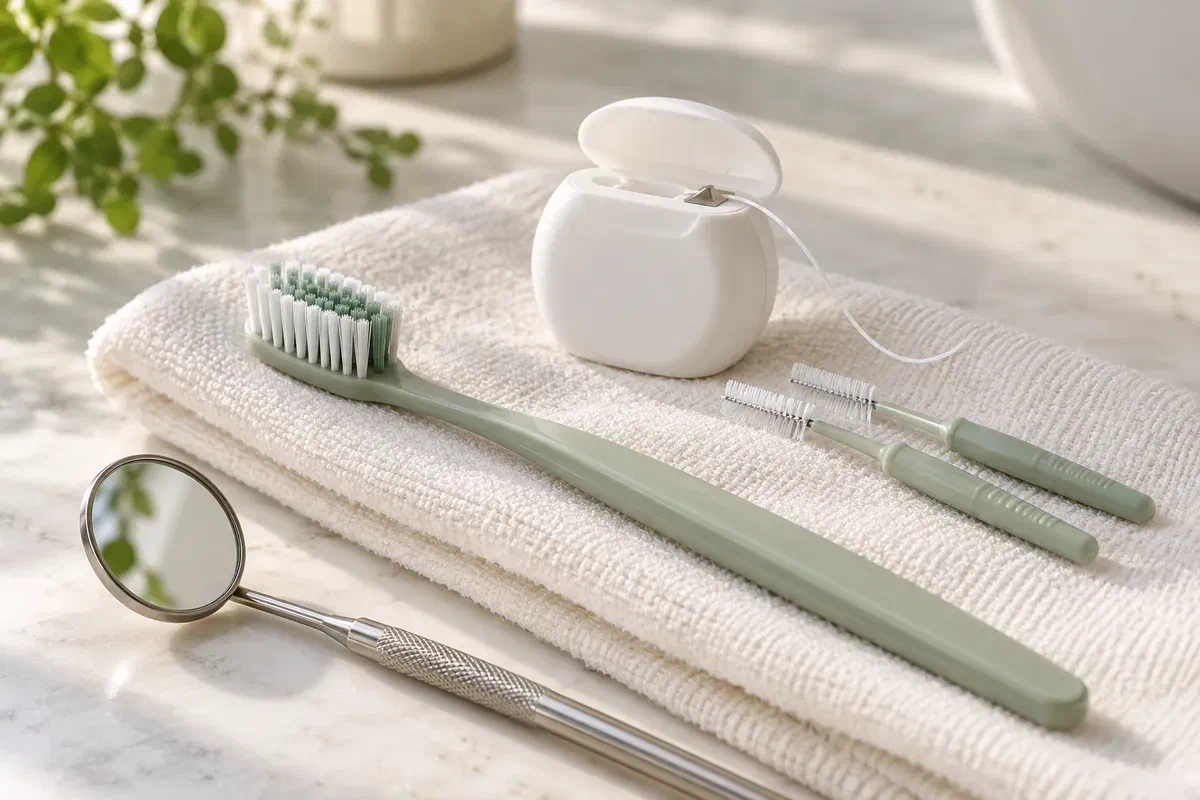
Illustrative soft toothbrush, floss, interdental brushes, and dental mirror on an ivory towel
Signs to mention

Bleeding, puffiness or a change in breath can all start the discussion.

It helps to describe where you see the change, roughly when it began and whether it comes and goes. New toothpaste, a recent filling, a change in medication or a health change may all be relevant, so share them and let the examination sort out what matters.

Gums that bleed when you brush or floss

Note whether the bleeding is in one spot or shows up around many teeth. Skipping the area because it bleeds can let the irritation continue, and pressing harder can bruise the tissue or wear the gumline. A clinician can watch how you clean and suggest a gentler, more effective approach for that site.

Swollen or sore gum around certain teeth

Show us any patch that looks puffy, shiny or tender, especially near a crown, a filling edge or a place where food tends to wedge. A single stubborn area often has a local reason behind it, and it may need a more specific plan than the usual reminder to brush twice a day.

Breath that stays stale despite brushing

Ongoing bad breath sometimes travels with gum inflammation, but it can have other causes too. Mention how long it has lasted and whether your mouth also feels dry or sore. Masking it with a strong rinse may hide the clue without telling anyone where it comes from, so it belongs in the assessment.

Let us know about bleeding that starts without brushing, unusual swelling, mouth sores or symptoms elsewhere in your body. Gum changes are not always ordinary plaque-related gingivitis, and those details shape what we look for.

The purpose of care

Calmer gums, and a routine that actually reaches the trouble spots.

Good gingivitis care links what the clinician sees with what you do each evening. You should come away knowing which areas are inflamed, what cleaning we suggest and how we will tell whether things are improving. A hard-to-reach spot is a practical problem to solve together, not a sign that you have failed at brushing.

An assessment also marks out what gingivitis is not. Periodontitis involves loss of the tissues that support the teeth, and that changes the conversation about treatment. If the examination points toward something broader than gum inflammation, ask what the findings mean for your plan and whether further assessment would be useful.

Patient information: NIDCR — plaque, gum inflammation, professional cleaning, and individualized treatment

Removing hardened deposits a toothbrush cannot shift

Tartar has to be removed professionally. Ask where it has built up and what the cleaning will involve. The amount of care should follow your examination findings; simply being overdue for a cleaning is not, on its own, a reason for a more extensive procedure.

Tools chosen for your teeth, not a generic list

Tight contacts, wider gaps, bridges and crowns each respond to different aids. Ask to be shown how to clean the sites that bleed or trap food. Hand comfort, spacing and dental work all matter, because a routine only helps if you can keep doing it.

A follow-up to see how the gums respond

One visit rarely finishes the job. Ask when your gums should be checked again and what would be worth calling about before then. If the inflammation lingers, the review can revisit the diagnosis, any remaining deposits, local factors or whether the home routine is workable.

How a gingivitis visit unfolds

From the first look to the follow-up check

Knowing the steps ahead of time makes it easier to ask what you need to. Depending on what we find and how comfortable you are, the assessment and the cleaning may happen at the same visit or across separate appointments.

  1. Tell us what you have seen at home

    Describe where the bleeding or redness shows up, how long it has been going on and what you currently use, from toothbrush to floss to rinse. We review your health history and medicines. Bring along any product you are unsure about so the advice reflects your real routine.

  2. A careful check of the gums and supporting tissue

    The clinician looks closely at the areas you mentioned and considers whether the picture fits gingivitis or suggests something else. Gum measurements and, where relevant, images may be part of this. Ask which findings stood out and what diagnosis they point to.

  3. Cleaning and hands-on guidance

    Before treatment begins, we go over the proposed care, comfort options, fees and how many visits are likely. The cleaning targets the deposits found, and a short demonstration shows how to carry the advice home. Say so if a spot is tender or you would like a break.

  4. A review to check progress

    Come back at the suggested interval and tell us what has improved and what still feels difficult. We check how the tissue has responded and fine-tune your cleaning. If the gums have not settled as expected, ask what further evaluation or change in approach would make sense.

Between appointments

Gentle and regular does more than hard and occasional.

Ask for instructions that spell out where to clean and how. A brief routine is easier to keep up, especially in a busy Milton home, when each step makes sense to you and the tools fit the spaces they are meant for.

Brush along the gumline the way you were shown

Use the suggested brush with fluoride toothpaste and focus on the areas we pointed out. If brushing a particular spot hurts, describe exactly where and which movement causes it. The fix may be a change in angle or a second look at the tissue, rather than more pressure.

Find a between-teeth method you will stick with

Ask which interdental aid suits your spaces and how to guide it in without forcing it. If it feels awkward after a week or two, bring it to your next appointment so we can adjust the choice. There is nearly always an alternative to giving up on a hard area.

Use any rinse for its stated purpose

If we recommend a rinse, confirm what it is for, how long to use it and any cautions on the label. A stronger product does not automatically clear stubborn redness. Keep up the cleaning plan and call us if symptoms persist or become more uncomfortable.

Care that follows the findings

The right plan depends on what the examination shows.

Ask how the suggested approach connects to what was found. Inflammation limited to the gums is handled differently from established periodontal damage or a gum change with another cause.

When the picture fits plaque-related gingivitis

Professional cleaning plus targeted home care

This means removing the deposits found and building a daily routine around the inflamed areas. Ask how progress will be checked and what maintenance makes sense afterwards. You should leave with clear instructions for both the cleaning we do and the habits you keep up at home.

When the supporting tissue is involved

A wider periodontal plan

If periodontitis is identified, ask how that changes the approach. More extensive cleaning, reassessment, ongoing periodontal maintenance or input from a specialist may come into the discussion. The plan should rest on your findings rather than treating every bleeding gum the same way.

When the gums look or respond in an unusual way

Looking further into an unexpected change

A local irritant, a health factor or a separate tissue condition may be involved. Ask what is still uncertain and whether another examination or a referral would help. A change that persists deserves review, not a cycle of new products tried without a diagnosis.

Common questions

What people ask about inflamed gums

These questions can turn a general reminder to look after your gums into a focused conversation about your diagnosis, the cleaning you need and how follow-up will work.

(905) 876-4488
My gums bleed when I start flossing again after a break. Should I stop?
Not without checking first. Inflamed gums often bleed when cleaning resumes, and gentle, regular cleaning is usually part of the solution. If bleeding is heavy, painful or still present after the period your clinician suggests, book an assessment so the area can be examined.
Can my children have gingivitis too?
Yes, children and teens can develop gum inflammation, particularly where brushing is rushed or braces make cleaning harder. Mention any bleeding or puffy gums you notice at their checkups. The team can look at the tissue and show a technique suited to their age and dexterity.
Is gingivitis the same thing as gum disease?
Gingivitis is the early, inflammatory stage that affects the gums. Periodontitis is a separate diagnosis that involves loss of the structures supporting the teeth. Your examination determines which applies, so ask the clinician to explain the difference using what they found in your mouth.
Will a stronger mouthwash clear up the bleeding faster?
A rinse cannot replace brushing and cleaning between the teeth. Some rinses have a specific role for a limited time, and the team can tell you whether one fits your plan. If cleaning is uncomfortable or bleeding seems excessive, get in touch for advice.
Do I need to mention medications at a gum appointment?
Yes. Some medicines can affect the gums, bleeding or saliva flow, and health conditions such as diabetes may be relevant to gum care. Bring an up-to-date list so the clinician can take it into account when assessing your gums and planning treatment.
How will I know whether my gums are getting better?
Your review appointment is where this is checked. Let us know whether bleeding has reduced and which areas still feel difficult to clean. The clinician can compare the tissue with your earlier findings and decide whether the plan needs adjusting.
Gum care for Milton

Bring your questions about bleeding gums to our Bronte Street practice.

Call or request a visit to talk about redness, bleeding or tenderness along your gums. Tell us what you have noticed so the appointment can start with the spots that bother you most.

Diagnosis, cleaning needs, review timing and how your gums respond all depend on your examination and individual circumstances.

Visit Milton Dental Clinic
Unit 1, 342 Bronte St. S, Milton, ON L9T 5B7
Get directions Clinic hours
Monday–Thursday
11am–7pm
Friday–Sunday
By appointment only

Areas we serve

  • Milton
  • Oakville
  • Mississauga
  • Georgetown
  • Halton Hills
  • Acton
  • Campbellville
  • Brampton
  • Burlington
  • Puslinch
  • Rockwood
  • Erin
  • Caledon
  • Etobicoke
  • Old Milton
  • Bronte Meadows
  • Timberlea
  • Dorset Park
  • Dempsey
  • Clarke
  • Beaty
  • Coates
  • Harrison
  • Scott
  • Willmott
  • Ford
  • Bowes
  • Cobden
  • Walker
  • Mountain View
  • Milton Heights
  • Hawthorne Village
  • Valley View
  • Fallingbrook
  • Nassagaweya
  • Trafalgar
  • Esquesing
  • Nelson
  • Brookville
  • Moffat
  • Glen Williams
  • Norval
  • Limehouse
  • Stewarttown
  • Ashgrove
  • Hornby
  • Silver Creek
  • Speyside
  • Scotch Block
  • North Oakville
  • River Oaks
  • Glen Abbey
  • West Oak Trails
  • Palermo
  • Bronte Creek
  • College Park
  • Joshua Creek
  • Uptown Core
  • Preserve
  • Iroquois Ridge
  • Lisgar
  • Meadowvale
  • Meadowvale Village
  • Churchill Meadows
  • Erin Mills
  • Central Erin Mills
  • Streetsville
  • East Credit
  • Creditview
  • Heartland
  • Sheridan
  • Mount Pleasant
  • Credit Valley
  • Huttonville
  • Churchville
  • Springbrook
  • Northwest Brampton
  • Bram West
  • Fletcher's Meadow
  • Fletcher's Creek South
  • Alton Village
  • Orchard
  • Millcroft
  • Headon Forest
  • Tansley
  • Brant Hills
  • Tyandaga
  • Kilbride
  • Lowville
  • Aberfoyle
  • Morriston
  • Arkell
  • Hillsburgh
  • Freelton
  • Carlisle
  • Waterdown
  • Flamborough
  • Mountsberg

How can we help?

Milton Dental Clinic

Have a question about your smile? Choose the option that works best for you.

For urgent dental concerns, please call.
Messages are reviewed during clinic hours.