

Illustrative adult describing a dental concern to a clinician in a consultation room
Specialized Care

Gum Abscess Treatment in Acton

Diabetes, a weakened immune system or regular medicines can change how a gum infection should be handled. From Acton, call us with your health details so we can discuss urgency, the right first visit and the care to follow.

For Acton adults managing other health conditions

Your general health is part of the treatment plan.

A gum abscess is a pocket of infection in the gum or in the tissue that supports a tooth, often felt as a tender swelling with a bad taste or some drainage. For most people it is a dental problem first. If you live with diabetes, take medicines that affect immunity or bleeding, or are pregnant, it also becomes a question of how your body is coping.

The swelling’s position does not settle its origin. Infection may arise in a gum pocket, or begin inside the tooth and drain outward through the gum. Each source is managed differently, and your medical history can affect which approach is safest. Pressure relief alone does not resolve either cause.

Phone our team from Acton and have your medicine list close by. Describe how the swelling is developing and anything that concerns you about your general health. We will talk about timing and the next step. If you need dental attention sooner than we can manage, reach another emergency dental provider instead of sending an online request and waiting.

Arrange an assessment for gum swelling
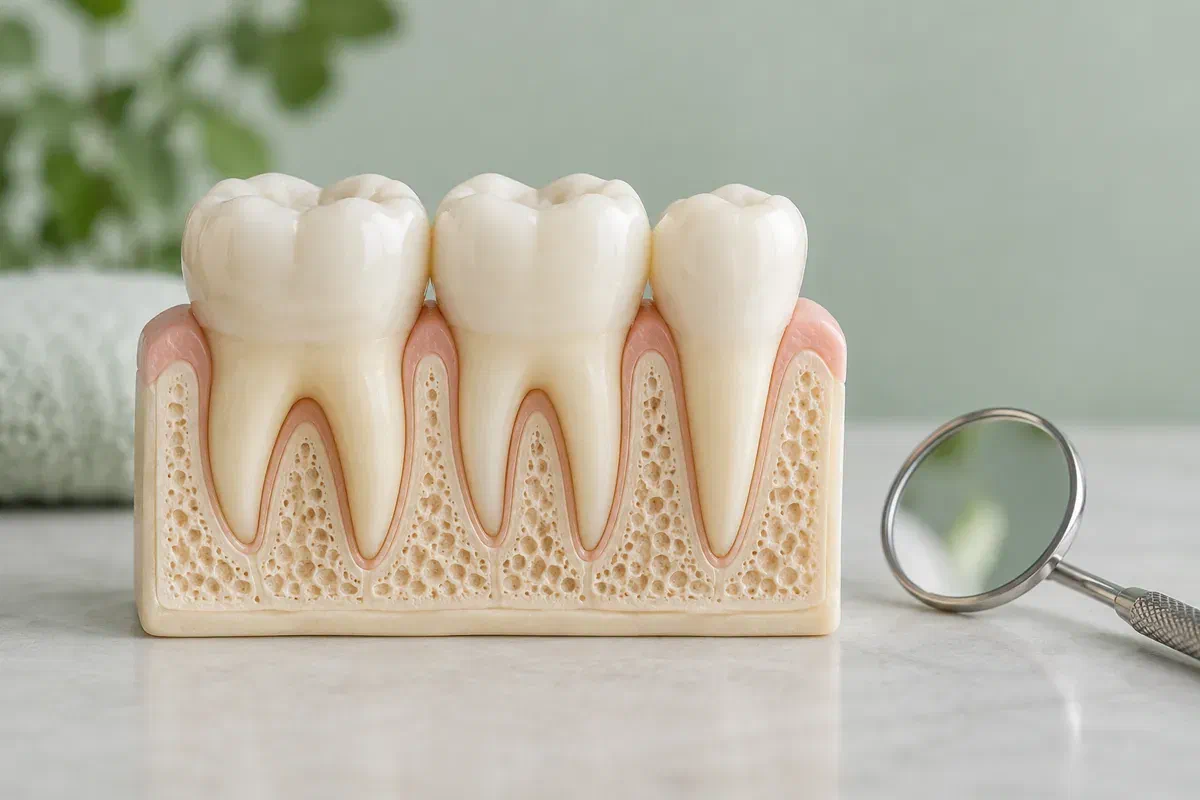
Illustrative physical model showing teeth supported by gum tissue and underlying bone
Health details we need

Tell us about the swelling and about you.

Explain where the problem is, when it appeared and whether it is getting worse. Then share the conditions and medicines you have, especially anything that lowers your resistance to infection or affects healing.

A painful swelling at one tooth

Say which area is affected and whether it is sore to touch or bite on. Past gum pockets, recent dental work or trapped food are helpful to know. If blood sugar has been harder to control lately, mention it as well. The examination still has to confirm the source.

Drainage or a sudden easing

Let us know if fluid has come out or the swelling has gone down. Easing pressure does not mean the infection is treated, particularly when your immune response may be reduced. Keep the appointment, and please do not squeeze or puncture the area.

Feeling unwell beyond the mouth

Facial swelling, fever, chills, unusual tiredness or trouble opening your mouth should be reported quickly. With some health conditions, these signs matter even more. If anything has changed since you booked, tell us so the setting and timing can be reconsidered.

Seek emergency medical care for trouble breathing, swallowing or speaking, swelling or pain around the eye, changed vision, or significant swelling in the mouth that makes opening difficult. If it is an immediate emergency, call 911 rather than waiting for a callback.

Care that accounts for your health

Treat the source safely, with your medical history in view.

At the urgent visit, the clinician judges how serious the infection is and offers local treatment that fits both the findings and your health. Ask what is being done now, what will follow and whether any precautions apply because of your medicines or conditions. Feeling more comfortable is not the same as being finished.

Options for the tooth depend on its condition and support, and sometimes on your general health too. Ask whether the findings suggest the tooth can be kept and whether further gum or root canal assessment is needed. A single swelling does not automatically decide the tooth’s future.

Patient information: SDCEP — local treatment and appropriate antibiotic use for dental abscesses · SDCEP — periodontal abscess management and review

Local care aimed at the cause

A gum-pocket infection may call for drainage and cleaning, while an infection from within the tooth takes a separate path. Ask which source was identified and what the treatment is meant to achieve. Swellings that look the same can need different procedures.

Antibiotics weighed against your health

Medicine does not replace treating the local source. The clinician considers spread, general illness, whether drainage is possible and your medical circumstances, including how well your body fights infection. Ask the reasons for prescribing, or not prescribing, in your situation.

Follow-up timed with care

Agree on when the area should be reviewed and what treatment may come after the acute stage. If a pocket or a problem tooth is still present, the plan should explain how it will be handled. A swelling that returns needs a new assessment, especially when your health makes infections harder to clear.

During your visit

A careful review before any treatment begins

The sequence depends on the findings and how unwell you are. Severe or spreading infection can require a hospital or other setting, whereas a localized problem may be treated through an appropriate dental plan.

  1. Go through your medical picture

    We ask about the swelling’s onset, pain, drainage, fever and facial symptoms, then review your medicines, allergies, conditions and recent treatment in detail. Tell us about any antibiotics already taken. With some conditions, we may suggest coordinating with your physician.

  2. Examine the gum and the tooth

    The clinician assesses the area and may use tooth tests, gum measurements or suitable X-rays to find where the infection started. Ask what the results establish and what is still uncertain. The visible swelling is one finding, not the whole diagnosis.

  3. Plan urgent care that suits you

    We discuss proposed local treatment, comfort options, limitations, any health-related precautions and the fees. Treatment may address a gum pocket, the tooth’s interior or another problem. If hospital assessment or referral is wiser, we explain why and what to do next.

  4. Confirm the road ahead

    Check which improvements to expect, which symptoms mean calling at once and when you will be seen again. Ask whether the visit completed treatment or only the acute stage. Any further gum, restorative, root canal or extraction care should be written into your plan.

Recovery with a health condition

Follow your own instructions and watch closely.

Aftercare depends on what was done, where the infection began and your general health. Ask for advice that fits your situation rather than relying on what someone else was told after an extraction, root canal or gum surgery.

Gentle cleaning of the area

Ask how to brush and clean near the treated spot and whether your routine should change briefly. Avoid pressing or squeezing the gum to check on it. If cleaning as instructed is too uncomfortable, call the team for help finding a manageable approach.

Check medicines before you take them

Before choosing a pain reliever, confirm with the clinician or pharmacist that it is suitable alongside your regular medicines and conditions. Follow antibiotic directions and report side effects. Do not use leftover antibiotics, share prescriptions or increase doses on your own.

Keep a close eye on recovery

Notice whether swelling, comfort and function improve as expected. Call if things worsen, return or do not follow the explained course, and contact your physician as well if your condition is affected. Attend the review so remaining treatment can be confirmed.

Possible paths

Diagnosis first, then the treatment that fits.

Ask how each recommendation connects to the diagnosis, the condition of the tooth and your health. You may receive local care now and a different treatment once the acute episode is under control.

When gum support and pockets are involved

Periodontal care for infection around the tooth

Local treatment may be followed by reassessment and care for the underlying gum condition, which can be harder to control alongside some health conditions. Ask what remains after drainage or cleaning and whether a periodontist’s input would help.

When the source is within the tooth

Root canal care for infection inside the tooth

A suitable tooth may be considered for root canal treatment, then a lasting restoration. Drainage appearing on the gum does not make it a gum-only problem. Ask about the tooth’s long-term prospects, other options and whether an endodontist should be involved.

When the tooth cannot be kept or infection needs escalation

Extraction or medical-level care

A badly compromised tooth may need removal, and spreading infection may require urgent care beyond a dental office. Ask why the recommended option suits the findings and your health. The decision should reflect clinical need and alternatives, not a single rule for all abscesses.

Health-related questions

What to know when other conditions are involved

These answers can help you prepare. They cannot determine the source or urgency of your swelling, or how your health affects it, without an examination and a review of your medical history.

(905) 876-4488
I have diabetes. Does that change how urgent a gum abscess is?
It can make infections harder to control and gum disease more likely, so mention it when you call. Prompt assessment is sensible. Let us know if your blood sugar has been unusually high or difficult to manage.
I take a blood thinner. Should I stop it before treatment?
Do not stop or change any prescribed medicine on your own. Tell us what you take, and the clinician will discuss whether any coordination with your physician is needed for the planned treatment.
Can I get a gum abscess treated while pregnant?
Dental infections should not be ignored during pregnancy. Tell us you are pregnant when you call, and the clinician will consider that when planning assessment, any X-rays and treatment. Your prenatal care provider may also be consulted.
Are antibiotics more likely to be needed if my immune system is weak?
Your health is one of the factors the clinician weighs, along with spread and whether drainage is possible. Treating the local source is still essential. Ask how your condition affects the plan and what follow-up is needed.
Which pain relievers are safe with my other medicines?
That depends on what you already take and your health conditions. A pharmacist or your clinician can advise. Follow label directions, and remember that pain relief does not treat the infection.
Does the swelling still need treatment if it has drained?
Yes. Drainage may ease pressure, but the source is often still active. With a condition that affects healing, keeping the assessment is especially important so the cause can be found and treated.
Acton to Bronte Street

Call with your medicine list in hand.

Our Bronte Street team is at (905) 876-4488 to discuss an urgent gum concern and appointment availability. Mention spreading swelling, feeling unwell and relevant health conditions clearly. Use email and online requests for non-urgent questions only.

Urgent appointments are not guaranteed. When needed, contact another emergency dental provider, or seek emergency medical care for serious symptoms.

Visit Milton Dental Clinic
Unit 1, 342 Bronte St. S, Milton, ON L9T 5B7
Get directions Clinic hours
Monday–Thursday
11am–7pm
Friday–Sunday
By appointment only

Areas we serve

  • Milton
  • Oakville
  • Mississauga
  • Georgetown
  • Halton Hills
  • Acton
  • Campbellville
  • Brampton
  • Burlington
  • Puslinch
  • Rockwood
  • Erin
  • Caledon
  • Etobicoke
  • Old Milton
  • Bronte Meadows
  • Timberlea
  • Dorset Park
  • Dempsey
  • Clarke
  • Beaty
  • Coates
  • Harrison
  • Scott
  • Willmott
  • Ford
  • Bowes
  • Cobden
  • Walker
  • Mountain View
  • Milton Heights
  • Hawthorne Village
  • Valley View
  • Fallingbrook
  • Nassagaweya
  • Trafalgar
  • Esquesing
  • Nelson
  • Brookville
  • Moffat
  • Glen Williams
  • Norval
  • Limehouse
  • Stewarttown
  • Ashgrove
  • Hornby
  • Silver Creek
  • Speyside
  • Scotch Block
  • North Oakville
  • River Oaks
  • Glen Abbey
  • West Oak Trails
  • Palermo
  • Bronte Creek
  • College Park
  • Joshua Creek
  • Uptown Core
  • Preserve
  • Iroquois Ridge
  • Lisgar
  • Meadowvale
  • Meadowvale Village
  • Churchill Meadows
  • Erin Mills
  • Central Erin Mills
  • Streetsville
  • East Credit
  • Creditview
  • Heartland
  • Sheridan
  • Mount Pleasant
  • Credit Valley
  • Huttonville
  • Churchville
  • Springbrook
  • Northwest Brampton
  • Bram West
  • Fletcher's Meadow
  • Fletcher's Creek South
  • Alton Village
  • Orchard
  • Millcroft
  • Headon Forest
  • Tansley
  • Brant Hills
  • Tyandaga
  • Kilbride
  • Lowville
  • Aberfoyle
  • Morriston
  • Arkell
  • Hillsburgh
  • Freelton
  • Carlisle
  • Waterdown
  • Flamborough
  • Mountsberg

How can we help?

Milton Dental Clinic

Have a question about your smile? Choose the option that works best for you.

For urgent dental concerns, please call.
Messages are reviewed during clinic hours.