

Illustrative adult describing a dental concern to a clinician in a consultation room
Specialized Care

Gum Abscess Treatment in Erin

Seen at a walk-in clinic or emergency department and sent home with a prescription? The dental source may still need care. From Erin or Hillsburgh, call us to arrange the assessment and follow-up the gum infection needs.

Erin: after an urgent visit somewhere else

You were treated in a hurry. Now comes the dental part.

Sometimes a swollen gum flares up at a moment when the nearest help is a walk-in clinic, a pharmacist or a hospital emergency department. That first stop may have been exactly right. Even so, a gum abscess is infection gathered in the gum or in the tissue anchoring a tooth, and its dental cause usually needs a dentist to find and treat it.

Medicine can quiet the swelling for a while. It does not tell anyone whether the trouble began in a pocket alongside the root or inside the tooth itself, and those two sources need different treatment. A dental examination with tooth tests and a look at the surrounding bone fills that gap. Feeling better on antibiotics is not the same as being finished.

From Erin, call us and explain where you were seen, what you were given and how the swelling has changed since. We will talk through availability and the next step. If symptoms are urgent and we cannot offer a time soon enough, please contact another emergency dental provider instead of waiting for an online reply.

Arrange a dental follow-up for gum swelling
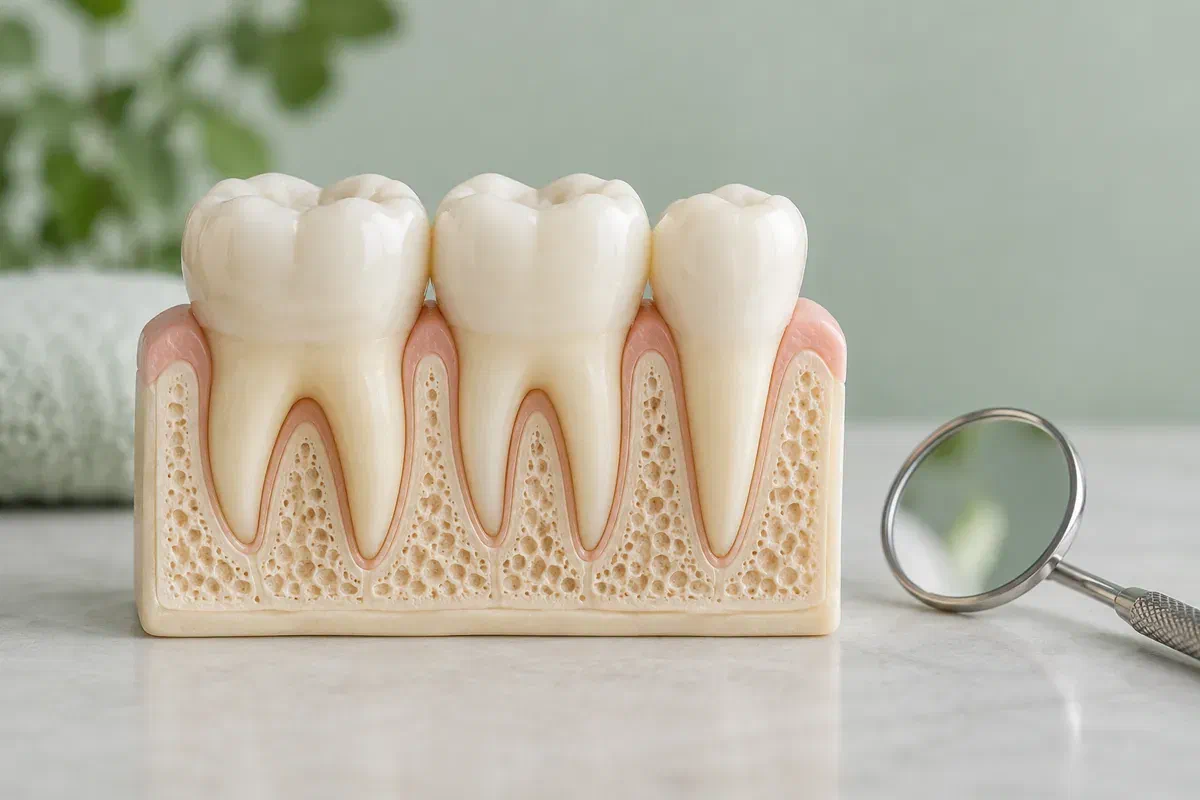
Illustrative physical model showing teeth supported by gum tissue and underlying bone
Bring us up to date

What happened at the first visit, and what has happened since

Tell us when the swelling started, where you were seen and whether it is improving or worsening. List your health conditions and all medicines, including any new prescription, especially those that affect resistance to infection.

The swelling and the tooth beside it

Describe which tooth is involved and whether biting or touching it is still painful. A history of gum pockets, recent dental work there or trapped food helps us plan. Whatever the first provider suspected, the source still needs a dental examination.

Drainage at home or at the first visit

If the swelling was drained, burst on its own or shrank on medicine, let us know. Less pressure brings comfort but not a cure. Keep your dental appointment and avoid pressing or squeezing the gum to check whether more will come out.

Symptoms that are not settling

Report any facial swelling, fever, feeling unwell or difficulty opening your mouth, especially if they persist despite medicine. These may mean you need to go back to a medical setting. If anything is worse than at your first visit, tell us right away.

Return to emergency medical care, or call 911 in an immediate emergency, if you have trouble breathing, swallowing or speaking, swelling or pain around an eye, a change in vision, or mouth swelling severe enough to restrict opening. A callback request is not the right route for these.

What the dental visit adds

Medicine bought time. Treatment of the source finishes the job.

The dental appointment assesses how the infection looks now and provides local treatment suited to it. Ask the clinician to explain how this visit builds on the care you already had, what is being done today and what remains. A calmer gum after medicine is welcome, though it rarely means everything is complete.

The tooth’s condition and the bone and gum around it determine the options from here. Ask whether the findings support keeping it and whether further periodontal or root canal assessment is needed. An episode that was serious enough to send you elsewhere still does not automatically decide the tooth’s future.

Patient information: SDCEP — local treatment and appropriate antibiotic use for dental abscesses · SDCEP — periodontal abscess management and review

Local treatment for the identified source

A gum-pocket infection may be drained and cleaned once it is assessed. A tooth-origin infection generally needs a separate path. Ask what the dental examination identified and what today’s step is meant to achieve, as similar swellings may need different procedures.

A second look at antibiotics

If you were prescribed medicine elsewhere, the clinician will consider whether it is still needed alongside treating the cause. Medicine never substitutes for local care. Bring the prescription details and ask how they fit with the dental plan.

Follow-up so it does not repeat

Agree on when the area will be reviewed and what treatment may come after the acute stage. If a pocket or a compromised tooth is still there, there should be a plan for it. A swelling that returns after medicine runs out deserves prompt reassessment.

The follow-up appointment

Picking up where the first visit left off

The steps depend on what we find and how you are feeling now. An infection that is still spreading may need medical care again, while one that is contained can be treated through a suitable dental plan.

  1. Review the earlier care

    We ask where you were seen, what was found and what was given, then how the swelling, pain and any drainage have behaved since. Medicines, allergies, conditions and recent dental treatment are reviewed, including the name and dose of any antibiotic and how long you have taken it.

  2. Examine for the dental source

    Your clinician checks the gum and tooth and may use tooth tests, pocket measurements or suitable X-rays to find where the infection began. Ask what those results show and what is still uncertain, since the earlier visit may not have included a dental assessment.

  3. Provide the dental treatment needed now

    We explain the local care proposed, comfort measures, limitations and fees. Treatment may address a periodontal pocket, the inside of the tooth or another identified problem. If you need to return to hospital or see a specialist, we explain why and what to do first.

  4. Plan the remaining steps

    Leave knowing which improvements to expect, which warning signs mean calling straight away and when your review is. Ask whether treatment is now complete. Any further gum care, restoration, root canal treatment or extraction should be recorded so you can plan visits from Erin.

After the dental visit

Combine instructions sensibly, and ask when unsure.

Aftercare depends on the treatment and the source of infection. If you received advice at a walk-in or hospital, tell your dental clinician so the guidance can be brought together, rather than following tips meant for someone else’s procedure.

Cleaning the area gently

Check whether a soft brush, a pause in flossing that space or another small change makes sense for the next few days. Avoid pressing, squeezing or prodding the gum. If cleaning as directed is too painful, call the team for a practical alternative.

Finishing or changing medicines correctly

Do not stop or extend a prescription on your own; ask the prescriber or your dental clinician. Check pain relief with a pharmacist alongside your other medicines and conditions. Avoid leftover antibiotics, shared prescriptions or extra doses.

Tracking recovery honestly

Swelling, comfort and chewing should continue to improve as explained. Call if symptoms worsen, return when medicine finishes or do not follow the expected course. Keep the review so the source and any remaining treatment can be checked.

Dental treatment options

Treatment follows the source the dentist finds.

Ask how each recommendation fits the diagnosis and the condition of the tooth. Local care may come first, with a different form of treatment once the acute stage is fully settled.

If the gum pocket and supporting tissues are involved

Periodontal treatment

Local care may be followed by reassessment and treatment of the gum disease involved. Ask what remains after drainage or cleaning, how much support the tooth still has and whether a periodontist might be helpful.

If the infection started inside the tooth

Root canal treatment

For a suitable tooth, root canal therapy and a durable restoration may be recommended. A swelling that showed up on the gum can still have a tooth origin. Ask about restorability, alternatives and whether an endodontist should see it.

If the tooth cannot be kept or infection is spreading

Extraction or medical care

A tooth that is badly compromised may need removal, and infection that is spreading may need urgent care in a hospital setting. Ask why the suggested option suits the findings. The choice should reflect clinical need, alternatives and your health.

Follow-up questions

After a walk-in or hospital visit

These answers are general and can help you plan the next step. They cannot determine the source or urgency of your swelling without a dental examination and a review of your symptoms.

(905) 876-4488
The hospital gave me antibiotics. Why do I need a dentist too?
Antibiotics can help in some situations, but they do not remove the dental cause, such as a deep pocket or an infected tooth. A dental assessment finds that source and provides local treatment so the problem is less likely to return.
Should I finish my prescription before seeing you?
Continue taking it as directed unless the prescriber or your dental clinician advises otherwise. Do not wait to finish it before arranging a dental appointment. Bring the details so we know what you have taken.
The swelling came back after my antibiotics ran out. What now?
That often means the source has not been treated. Call us promptly to arrange an assessment. If swelling is spreading or you feel unwell, seek urgent medical care.
Can a pharmacist help with a gum abscess?
A pharmacist can advise on pain relief that suits your medicines and health and tell you when to seek urgent care. They cannot treat the dental source, so an assessment with a dentist is still needed.
What records should I bring from the walk-in clinic or hospital?
Bring any discharge notes, the name and dose of medicines given and the date you were seen. If imaging was done, let us know where. This helps us understand what has already happened.
Is a follow-up from Erin worth the trip if I feel fine now?
Feeling fine on medicine does not confirm the cause is gone. A single well-planned visit can identify the source and set out any further treatment, which may save an unplanned trip if the swelling returns.
Calling from Erin

Let us know what happened, and we will plan the follow-up.

Reach our Bronte Street team on (905) 876-4488 about your gum concern and the earliest suitable appointment. Tell us clearly if swelling is spreading or you feel unwell. Use email and online requests only for non-urgent matters.

We cannot promise urgent availability. Return to medical care or contact another emergency dental provider when needed, especially if symptoms are serious.

Visit Milton Dental Clinic
Unit 1, 342 Bronte St. S, Milton, ON L9T 5B7
Get directions Clinic hours
Monday–Thursday
11am–7pm
Friday–Sunday
By appointment only

Areas we serve

  • Milton
  • Oakville
  • Mississauga
  • Georgetown
  • Halton Hills
  • Acton
  • Campbellville
  • Brampton
  • Burlington
  • Puslinch
  • Rockwood
  • Erin
  • Caledon
  • Etobicoke
  • Old Milton
  • Bronte Meadows
  • Timberlea
  • Dorset Park
  • Dempsey
  • Clarke
  • Beaty
  • Coates
  • Harrison
  • Scott
  • Willmott
  • Ford
  • Bowes
  • Cobden
  • Walker
  • Mountain View
  • Milton Heights
  • Hawthorne Village
  • Valley View
  • Fallingbrook
  • Nassagaweya
  • Trafalgar
  • Esquesing
  • Nelson
  • Brookville
  • Moffat
  • Glen Williams
  • Norval
  • Limehouse
  • Stewarttown
  • Ashgrove
  • Hornby
  • Silver Creek
  • Speyside
  • Scotch Block
  • North Oakville
  • River Oaks
  • Glen Abbey
  • West Oak Trails
  • Palermo
  • Bronte Creek
  • College Park
  • Joshua Creek
  • Uptown Core
  • Preserve
  • Iroquois Ridge
  • Lisgar
  • Meadowvale
  • Meadowvale Village
  • Churchill Meadows
  • Erin Mills
  • Central Erin Mills
  • Streetsville
  • East Credit
  • Creditview
  • Heartland
  • Sheridan
  • Mount Pleasant
  • Credit Valley
  • Huttonville
  • Churchville
  • Springbrook
  • Northwest Brampton
  • Bram West
  • Fletcher's Meadow
  • Fletcher's Creek South
  • Alton Village
  • Orchard
  • Millcroft
  • Headon Forest
  • Tansley
  • Brant Hills
  • Tyandaga
  • Kilbride
  • Lowville
  • Aberfoyle
  • Morriston
  • Arkell
  • Hillsburgh
  • Freelton
  • Carlisle
  • Waterdown
  • Flamborough
  • Mountsberg

How can we help?

Milton Dental Clinic

Have a question about your smile? Choose the option that works best for you.

For urgent dental concerns, please call.
Messages are reviewed during clinic hours.