

Illustrative patient discussing a gum-health assessment with a clinician
Specialized Care

Gum Disease Assessment in Acton

Noticing that a tooth suddenly feels a little loose is unsettling. For anyone travelling from Acton, our gum disease assessment examines that tooth with its gum and bone, checks the rest of your mouth for inflammation or lost support, and explains whether treatment or monitoring is right.

An Acton concern

Something moved when I bit into an apple.

It might be a faint give when chewing, or a front tooth that now sits slightly forward. Teeth can feel loose for several reasons: inflamed tissue, lost bone, a heavy bite, an injury, or an infection. A gum disease assessment helps work out which. It gathers your history, examines the gums and the tooth in question, and uses images where they are justified.

Movement is not the only trigger for a visit. Bleeding, gums that seem to have dropped, food packing, or a hygienist's suggestion are just as valid. Some people come with no complaint, wanting reassurance. Whatever the reason, how your mouth feels and what you can see in a mirror cannot replace a measured examination.

For people in Acton, a trip to Milton is easier to plan when you know what to expect. Ask why the tooth feels the way it does, whether other teeth are affected, and how any treatment will be judged a success. The aim is a diagnosis you can repeat to someone else and a next step that makes sense.

Book a gum and tooth check
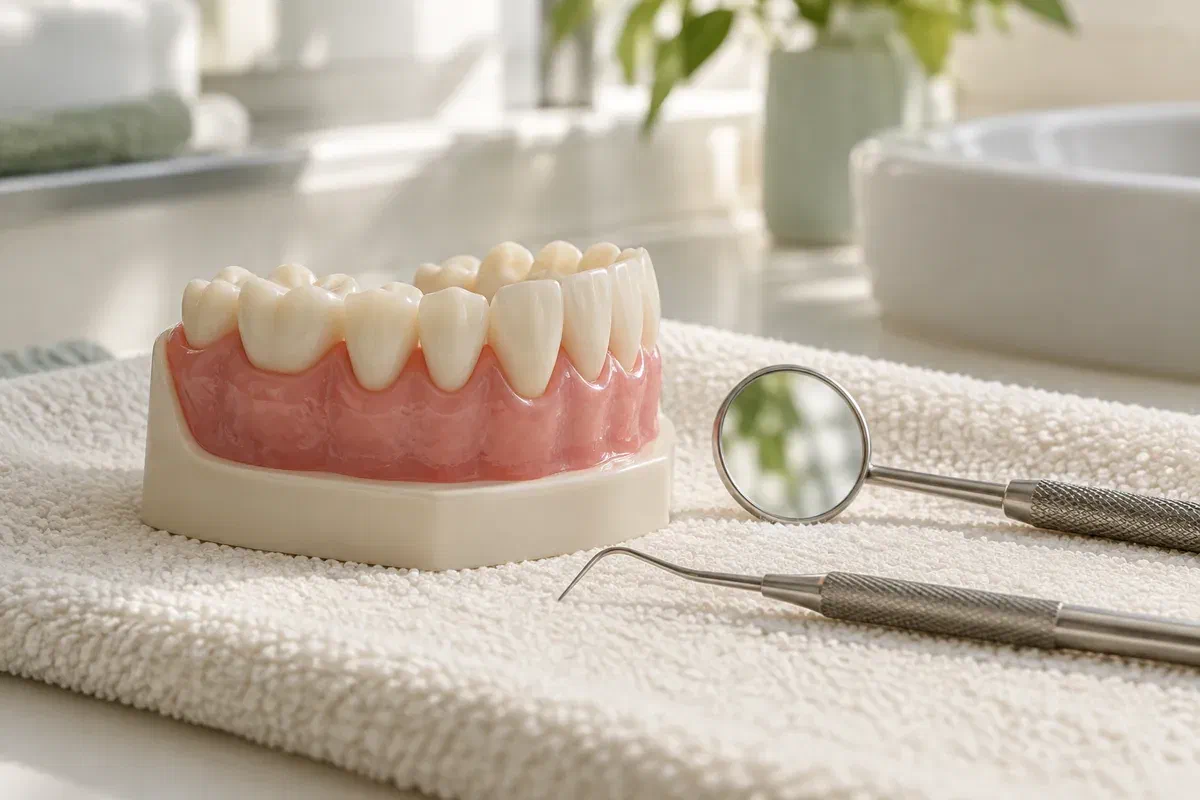
Illustrative tooth-and-gum model beside a periodontal probe and dental mirror
Tell us what you feel

A moving tooth is rarely the only clue.

There is no need to label the problem first. Describe what has changed, and if you have been told you need deep cleaning or a periodontist, bring the paperwork so the findings that prompted it can be reassessed.

Gums that bleed, recede, or look swollen

Point out where and say whether this is a fresh change or something long familiar. Food that packs in, tenderness, or a spot you cannot clean well are helpful details. The examination then relates these surface signs to the condition of the gum attachment and bone.

A tooth that shifts, wobbles, or bites strangely

Describe when you notice it: biting, chewing on one side, or touching it with your tongue. Please stop checking it with a finger, since repeated pressure does not help. The clinician assesses movement together with bone support and your bite, and explains whether more than one cause could be involved.

Past treatment and health factors

Mention any earlier gum care, a knock or injury to the tooth, tobacco use, diabetes, medicines, and recent health changes. Older records are useful. All of this guides the plan, but how much support has been lost can only be found by examining your mouth.

When booking, say if the area around a loose tooth is swollen and painful, if there is pus, or if things are getting worse quickly. That may need an urgent visit before a broader gum discussion.

What the assessment can tell you

Why the tooth moves matters more than how much.

A loose tooth is a symptom, and the reason behind it decides what should be done. The clinician looks at pocket depth, bleeding, recession, and bone level around the tooth and across your mouth. Ask which of these explains the movement you feel, and why no one measurement should settle the question alone.

Today's findings are also a reference for later. Ask what can be stated with confidence now and what needs a re-check or earlier records to judge. With a baseline in place, the team can tell whether the tooth is becoming more stable or less, without promising a particular outcome for any single site.

Patient information: American Academy of Periodontology — the components of a comprehensive periodontal evaluation

A cause, not just a sensation

Mobility is what you notice. Periodontitis, bite stress, injury, or infection are possible explanations established by assessment. Ask which applies and whether other teeth share the problem, since that shapes the advice.

Tests you understand

If X-rays or added measurements are proposed, ask what they will show about the tooth's support. Recent images from elsewhere may be suitable. Each investigation should connect to a clear question rather than be presented as automatic.

A realistic plan and timeline

Ask which steps aim to treat current disease, which address the bite, and which are about monitoring. Talk through visits, fees, and any referral. Knowing the order helps you plan and makes the difference between treatment and maintenance clear.

Inside the assessment

Looking at the tooth, its support, and your bite together

How much is included depends on your reason for coming and the records on hand. If you are worried about the tooth being touched, or feel anxious in general, say so first and agree on a pause signal.

  1. Your history and the tooth's history

    Explain when the movement started, whether there was any injury, and if you have noticed bleeding, gum changes, or chewing discomfort. Previous gum care, your cleaning routine, medical history, and medicines are reviewed, along with any report you bring.

  2. A gentle, careful examination

    The clinician examines the gums and measures the spaces around each tooth with a periodontal probe. The loose tooth's movement and how it meets the opposing teeth are checked carefully. Signs like bleeding and recession help interpret the readings.

  3. Images to see the supporting bone

    Where indicated, images can show how much bone surrounds the tooth and whether another problem, such as infection, is present. They are read alongside the exam and history. Ask what is certain and whether a specialist view would help.

  4. Priorities you agree on

    You learn what is causing the movement, which areas need care, and what any treatment is intended to do. Ask about alternatives and the risks of delay. Confirm the purpose of the next visit before leaving.

Between appointments

Protect the tooth while the plan gets under way.

The assessment is often the start of care. Follow the steps agreed on, and check with the team before changing a routine or deciding that a review is unnecessary.

Clean carefully around the affected area

Ask which tools are safe and effective around the loose tooth and other sites that were flagged. A demonstration can help if you are worried about pressing too hard. Mention sore hands, tight spaces, or dental work so the advice is practical.

Know whether the next visit treats, measures, or maintains

Each has a different purpose. Grouping appointments where clinically sensible can help when you are coming from Acton. If scheduling or cost is a problem, raise it early so the team can explain which steps matter most.

Report increased movement or new symptoms

Call if the tooth gets looser, the gum swells, or discomfort increases, instead of waiting for your next booking. Tell the team about new medicines or medical diagnoses too, since this can change how the findings are understood.

Options for a loose tooth

The cause shapes the care.

Ask what evidence supports the recommendation and how improvement will be measured. The option depends on the diagnosis, the sites affected, remaining support, your bite and risk factors, and earlier care.

When movement is minor and support is largely intact

Preventive care and inflammation control

Professional cleaning, home-care guidance, and monitoring may be suggested where suitable. Ask which teeth to watch and when they will be checked again. A preventive plan should have a clear purpose; it is not permission to ignore a tooth that keeps changing.

When periodontitis has reduced support

Periodontal treatment and a healing review

Treatment of the affected sites may be recommended, followed by a visit to assess healing and stability. Ask what each part of the course involves and how maintenance will be planned. More than one appointment is often needed.

When the outlook for the tooth is uncertain

Specialist assessment or coordinated care

A periodontist may help evaluate advanced or complex problems and discuss what can be done for the tooth. Ask what the referral should answer and which records will be sent, and how both offices will share follow-up.

Loose tooth questions

What to know when a tooth starts to move

Helpful questions link the movement to a cause and the cause to a plan. Bring any earlier records so the clinician can compare.

(905) 876-4488
Can an adult tooth that feels loose become firm again?
Sometimes, depending on the cause. Movement from inflammation or a heavy bite may improve once that cause is managed, while significant bone loss is less likely to reverse. The assessment helps the clinician explain what is realistic for your tooth.
What else besides gum disease can make a tooth loose?
An injury, grinding or a heavy bite, infection at the root, or other dental problems can all play a part. The clinician examines the tooth, its support, and your bite to identify the cause, which is why describing when it started is useful.
Should I avoid chewing on the side with the loose tooth?
Being gentle with it until it is assessed is sensible, but ask for specific advice at your visit. If chewing on it is painful or the area swells, call the clinic rather than waiting.
Is my loose tooth an emergency?
Gradual loosening usually calls for a timely assessment rather than emergency care. A tooth loosened by an injury, or one with pain, swelling, or pus, should be reported promptly so the team can advise how quickly you need to be seen.
Does feeling no pain mean my gums are fine?
Not necessarily. Gum disease can progress without discomfort. An examination can identify changes you have not noticed and clarify whether treatment or monitoring is appropriate.
If a periodontist is suggested, what should I ask?
Ask why the referral is being made, what the specialist will evaluate, and whether anything should be done in the meantime. Confirm which records will go with you and how the specialist’s advice will return to your dental team.
Visiting from Acton

Have that tooth looked at, and the gums around it.

Phone our Bronte Street practice and mention the loose tooth when you book, so the right amount of time is set aside. Bring earlier periodontal records, details of any knock or injury, and the questions you would like the visit to answer.

How far the assessment goes, whether images are taken, and any treatment, maintenance schedule, or referral are decided case by case, guided by the findings and your response to care.

Visit Milton Dental Clinic
Unit 1, 342 Bronte St. S, Milton, ON L9T 5B7
Get directions Clinic hours
Monday–Thursday
11am–7pm
Friday–Sunday
By appointment only

Areas we serve

  • Milton
  • Oakville
  • Mississauga
  • Georgetown
  • Halton Hills
  • Acton
  • Campbellville
  • Brampton
  • Burlington
  • Puslinch
  • Rockwood
  • Erin
  • Caledon
  • Etobicoke
  • Old Milton
  • Bronte Meadows
  • Timberlea
  • Dorset Park
  • Dempsey
  • Clarke
  • Beaty
  • Coates
  • Harrison
  • Scott
  • Willmott
  • Ford
  • Bowes
  • Cobden
  • Walker
  • Mountain View
  • Milton Heights
  • Hawthorne Village
  • Valley View
  • Fallingbrook
  • Nassagaweya
  • Trafalgar
  • Esquesing
  • Nelson
  • Brookville
  • Moffat
  • Glen Williams
  • Norval
  • Limehouse
  • Stewarttown
  • Ashgrove
  • Hornby
  • Silver Creek
  • Speyside
  • Scotch Block
  • North Oakville
  • River Oaks
  • Glen Abbey
  • West Oak Trails
  • Palermo
  • Bronte Creek
  • College Park
  • Joshua Creek
  • Uptown Core
  • Preserve
  • Iroquois Ridge
  • Lisgar
  • Meadowvale
  • Meadowvale Village
  • Churchill Meadows
  • Erin Mills
  • Central Erin Mills
  • Streetsville
  • East Credit
  • Creditview
  • Heartland
  • Sheridan
  • Mount Pleasant
  • Credit Valley
  • Huttonville
  • Churchville
  • Springbrook
  • Northwest Brampton
  • Bram West
  • Fletcher's Meadow
  • Fletcher's Creek South
  • Alton Village
  • Orchard
  • Millcroft
  • Headon Forest
  • Tansley
  • Brant Hills
  • Tyandaga
  • Kilbride
  • Lowville
  • Aberfoyle
  • Morriston
  • Arkell
  • Hillsburgh
  • Freelton
  • Carlisle
  • Waterdown
  • Flamborough
  • Mountsberg

How can we help?

Milton Dental Clinic

Have a question about your smile? Choose the option that works best for you.

For urgent dental concerns, please call.
Messages are reviewed during clinic hours.