

Illustrative patient discussing a gum-health assessment with a clinician
Specialized Care

Gum Disease Assessment in Burlington

A little pink in the sink after brushing is easy to shrug off. A gum disease assessment for people coming from Burlington checks what that bleeding means, how well your teeth are supported, which risk factors apply, and whether care or simple monitoring is the right call.

For Burlington smiles

Pink in the sink is a place to start.

You spit after brushing and notice a streak of red. Maybe it happens every night, maybe only after flossing. It might be brushing too hard, or it might be inflammation that deserves attention. A gum disease assessment exists to tell the difference, using your history, a hands-on examination, and images where they add something, to find out whether support around the teeth is intact.

Bleeding is the most common reason people book, but it is far from the only one. Gums that look longer, a tooth that feels different, or a note from your hygienist can all lead here. So can nothing at all. Gum changes are often quiet, and neither comfort nor a selfie can replace measurement at the chair.

If you are travelling from Burlington, one well-planned visit should give you a lot to work with. Ask what the bleeding points to, which areas need care, and how improvement will be tracked. Leave with a diagnosis in plain language and a clear idea of the next appointment's role.

Book a gum check
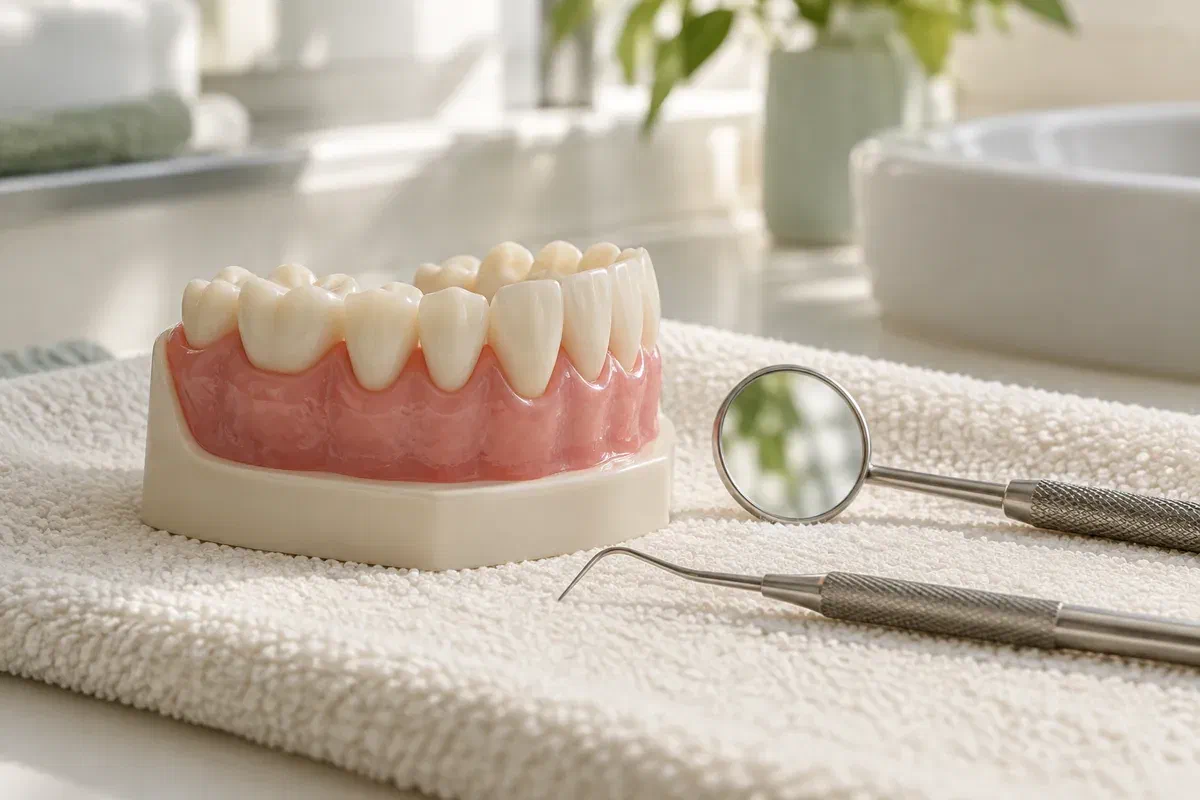
Illustrative tooth-and-gum model beside a periodontal probe and dental mirror
Signs to mention

What have you noticed lately?

Say what you have seen or felt without worrying about naming it. If a dentist or hygienist has already mentioned deep cleaning or a periodontist, bring what they gave you so the evidence behind that suggestion can be checked.

Bleeding gums, receding edges, or swelling

Note when the bleeding happens, such as during brushing, flossing, or eating, and whether it is new or longstanding. Tenderness, puffy edges, or food caught in one area are worth adding. The examination then connects what you see with the condition of the tissue below the gumline.

A tooth that seems looser or bites unevenly

Tell the clinician what you feel and when it occurs. Leave the tooth alone rather than testing it repeatedly. Its movement and comfort are judged together with the bone and gum around it, and you will hear whether more than one cause may be at work.

Factors that raise your risk

Share any earlier gum treatment, tobacco or vaping, diabetes, medicines that affect the mouth, and recent health changes. Previous records are welcome. Risk factors are part of the plan, though only an examination can show how much, if any, disease is present.

Mention a painful gum swelling, pus, or fast-changing symptoms when you book. An infection may need to be seen urgently, ahead of a broader discussion about looking after your gums.

The value of a proper check

Find out whether the bleeding is a passing irritation or something deeper.

Gum charting produces a lot of figures, and few people are shown what they mean. Ask which ones are significant and how they connect. Bleeding on probing, pocket depth, recession, and bone levels each describe part of the picture, and none of them should be read as the full explanation.

What is recorded now becomes the baseline for later visits. You can ask what is clear today and what will need another measurement or older records to judge. With that starting point, the team can discuss how your gums respond without suggesting that every site will behave the same way.

Patient information: American Academy of Periodontology — the components of a comprehensive periodontal evaluation

Telling the sign from the condition

Bleeding is what you notice. Whether it reflects gingivitis, periodontitis, or something else is decided by the assessment. Ask which diagnosis fits and whether it is limited or widespread, since that shapes whether a routine cleaning is enough.

Knowing why a test is suggested

When images or more measurements are recommended, ask what they will clarify. Records from another office may be usable if recent and suitable. Each step should serve a purpose rather than form part of an automatic package.

Seeing the whole plan at once

Ask which visits address active disease and which are for ongoing care. Go through the number of appointments, the fees, and any referral. With the sequence in front of you, the line between treatment and maintenance is much easier to see.

During your visit

Questions, a gentle probe, images if needed, then answers

The length and scope depend on why you came and what records exist. Feeling uneasy, or have a sore spot? Tell the clinician at the beginning and agree on how to ask for a pause.

  1. Describe the bleeding and anything else

    Talk about when your gums bleed, any change in gum position, chewing comfort, or tooth firmness. The clinician reviews earlier gum treatment, your cleaning habits, health history, and medicines. A report from another provider can be shared so their question is answered too.

  2. Probe and record

    A fine probe slips gently along each tooth to measure the small cuff of gum around it. Each spot that bleeds is marked, which matters for you, since bleeding was what prompted the visit. Mention any tender area first, and feel free to ask what each step involves.

  3. Assess the bone where indicated

    Images may be used to show supporting bone and other concerns when there is a reason to take them. They are interpreted together with the examination and your history. Ask which findings are confirmed and whether further assessment or a specialist view would help.

  4. Hear the diagnosis and decide on next steps

    Now the bleeding gets its explanation: what is causing it, where it is worst, and what any care would set out to change. Ask about alternatives and the effect of waiting. Confirm the purpose of the next booking so you know whether it is treatment, re-assessment, or maintenance.

What to do next

Brush with a purpose. Return with a reason.

The assessment often marks the beginning of care. Keep to the agreed plan, and check with the team before you change a routine they recommended or decide a follow-up visit can wait.

Adjust your routine for the spots identified

Ask which brush, floss, or interdental cleaner suits each area. If you are unsure of the angle or pressure, ask for a demonstration in your own mouth. Mention sore hands, tight contacts, or orthodontic or restorative work so the advice is practical.

Keep treatment and review visits separate in your plans

A treatment appointment, a re-check, and a maintenance visit each have a different aim. Making the trip from Burlington is easier when you know which one is coming. If timing or money is a concern, bring it up early and ask which steps matter most.

Let the team know if things change

Call about new swelling, a sore spot that is getting worse, or a tooth that has started to wobble, instead of waiting for your next scheduled visit. Report new medicines or medical care too, since that can change how the original findings are interpreted.

Choosing a path

Light care, active treatment, or specialist input

Ask what the recommendation is based on and how success will be judged. The fitting option depends on the diagnosis, the sites affected, tooth support, your risk factors, and treatment you have had in the past.

When a less extensive approach is supported

Preventive care for gum inflammation

A professional cleaning and personalised home-care advice may be recommended where suitable. Ask which areas need extra attention and when they will be re-checked. Prevention still needs a stated aim and is no excuse to overlook mild-seeming bleeding.

When periodontitis has been diagnosed

Periodontal therapy followed by reassessment

Treatment aimed at the affected sites may be advised, with a later check on healing and remaining needs. Ask what each stage includes and how maintenance will be decided. The first treatment visit may be one of several.

When the case is complicated or uncertain

Specialist assessment or shared periodontal care

A periodontist can help assess advanced, complex, or persistent problems. Find out what the specialist is being asked to look at and which records will go along. Find out how your usual dental care and the specialist's advice will be coordinated.

About bleeding gums and more

Answers to the questions people bring from home

Questions that connect a measurement to a diagnosis, and a diagnosis to a plan, are the most helpful. Earlier reports make it easier to see how new advice relates to the old.

(905) 876-4488
Could my gums be bleeding because I brush too hard?
Heavy brushing can irritate gums, but bleeding is also a common sign of inflammation. The assessment helps sort out the cause. Bring the brush you use, or describe it, and the clinician can comment on technique as well as the condition of the gums.
Is an electric toothbrush better for bleeding gums?
Many people find a powered brush easier to use well, but a manual brush can also be effective with good technique. The clinician can suggest what suits the areas found during your assessment and your own comfort.
Should I use mouthwash to stop my gums bleeding?
Mouthwash may have a role for some people, but it does not replace cleaning between the teeth or an assessment of why the gums bleed. Ask before relying on a rinse to manage symptoms.
Can gum problems be present even if my mouth feels fine?
Yes. Gum disease often develops without pain. An examination can reveal changes you would not notice and clarify whether treatment or monitoring is appropriate, so comfort alone is not a reliable measure.
How do pocket readings and gum recession relate to each other?
They describe different features of the tissue around a tooth. Together they help the clinician estimate how much support has been lost. Ask to have the explanation tied to a particular tooth so it makes sense.
Is the assessment visit also when gum treatment is done?
Not always. The assessment establishes the findings and plan, and treatment may follow at another visit. Confirm what your appointment covers when you book, and ask what later visits are likely.
Burlington to Bronte Street

Bring the questions. Leave with answers.

Reach out to our Bronte Street practice to arrange a gum and tooth-support assessment. If you have earlier periodontal charts or advice, bring them, together with whatever you most want to learn from the visit.

The scope of the assessment, imaging, treatment, maintenance timing, and any referral are decided for each person, based on findings and how the gums respond to care.

Visit Milton Dental Clinic
Unit 1, 342 Bronte St. S, Milton, ON L9T 5B7
Get directions Clinic hours
Monday–Thursday
11am–7pm
Friday–Sunday
By appointment only

Areas we serve

  • Milton
  • Oakville
  • Mississauga
  • Georgetown
  • Halton Hills
  • Acton
  • Campbellville
  • Brampton
  • Burlington
  • Puslinch
  • Rockwood
  • Erin
  • Caledon
  • Etobicoke
  • Old Milton
  • Bronte Meadows
  • Timberlea
  • Dorset Park
  • Dempsey
  • Clarke
  • Beaty
  • Coates
  • Harrison
  • Scott
  • Willmott
  • Ford
  • Bowes
  • Cobden
  • Walker
  • Mountain View
  • Milton Heights
  • Hawthorne Village
  • Valley View
  • Fallingbrook
  • Nassagaweya
  • Trafalgar
  • Esquesing
  • Nelson
  • Brookville
  • Moffat
  • Glen Williams
  • Norval
  • Limehouse
  • Stewarttown
  • Ashgrove
  • Hornby
  • Silver Creek
  • Speyside
  • Scotch Block
  • North Oakville
  • River Oaks
  • Glen Abbey
  • West Oak Trails
  • Palermo
  • Bronte Creek
  • College Park
  • Joshua Creek
  • Uptown Core
  • Preserve
  • Iroquois Ridge
  • Lisgar
  • Meadowvale
  • Meadowvale Village
  • Churchill Meadows
  • Erin Mills
  • Central Erin Mills
  • Streetsville
  • East Credit
  • Creditview
  • Heartland
  • Sheridan
  • Mount Pleasant
  • Credit Valley
  • Huttonville
  • Churchville
  • Springbrook
  • Northwest Brampton
  • Bram West
  • Fletcher's Meadow
  • Fletcher's Creek South
  • Alton Village
  • Orchard
  • Millcroft
  • Headon Forest
  • Tansley
  • Brant Hills
  • Tyandaga
  • Kilbride
  • Lowville
  • Aberfoyle
  • Morriston
  • Arkell
  • Hillsburgh
  • Freelton
  • Carlisle
  • Waterdown
  • Flamborough
  • Mountsberg

How can we help?

Milton Dental Clinic

Have a question about your smile? Choose the option that works best for you.

For urgent dental concerns, please call.
Messages are reviewed during clinic hours.