

Illustrative patient discussing a gum-health assessment with a clinician
Specialized Care

Gum Disease Assessment in Caledon

Unsure whether your gums need a specialist or can be managed by your regular dental team? People from Bolton and the villages across Caledon can book a gum disease assessment that measures inflammation and support, weighs risk factors, and explains if and why a referral fits.

Caledon gum health

General dentist, periodontist, or both?

Someone mentions the word periodontist and suddenly the situation feels serious. In reality, many gum problems are managed well in general practice, while others benefit from a specialist's input. Deciding which applies starts with a gum disease assessment: a review of your history, a measured examination of the gums, and images where they are justified, to find out whether there is inflammation or lost support.

Referral is only one question people bring. Others arrive with bleeding, gums that have shifted, a tooth that feels unsteady, or simply because it has been a while. Some feel fine. Gum disease often causes little discomfort, so how your mouth feels is not a reliable guide, and neither is a photo.

Living in Caledon, with more than one dental office possibly involved, it helps to know who is responsible for what. Ask which findings matter, whether they can be managed here, and what a specialist would add. You should leave with a diagnosis, a plan, and a clear idea of who handles each part.

Request an assessment
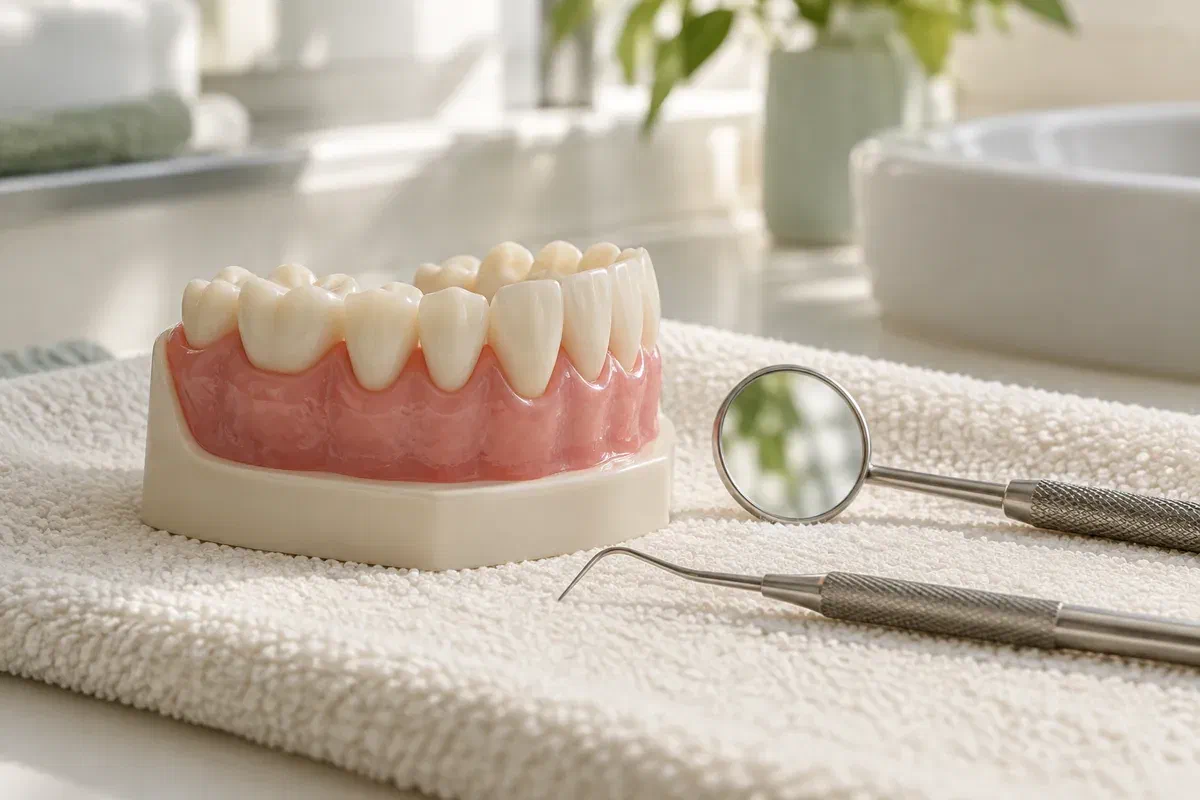
Illustrative tooth-and-gum model beside a periodontal probe and dental mirror
Reasons for a closer look

Bring the referral letter, if there is one.

Describe what you have noticed without trying to name it. If you have already been told you need a deep cleaning or a periodontist, bring the letter or plan, so the findings behind it can be examined and the next step explained.

Bleeding, gum recession, or changes along the gumline

Say where it happens and whether it is new or longstanding. Tenderness, food catching, or an area that is hard to keep clean are worth mentioning. The examination then shows how the visible change relates to the gum attachment and the bone below.

A tooth that feels loose or chews differently

Explain the sensation and when you notice it. Let the tooth be checked at the chair rather than pressing on it. Its movement and support are examined together, and the clinician can tell you whether more than one cause could be involved.

History that may influence referral

Mention earlier periodontal treatment and how it went, tobacco use, diabetes, medicines, and recent health changes. Records from other offices are helpful. These factors guide planning, but whether specialist care is needed depends on what the examination finds.

If your gum is painfully swollen, you notice pus, or symptoms are changing fast, say so when booking. An urgent infection visit may come before any referral or long-term planning.

What you gain

Know what can be done here, and what a specialist would add.

Referral decisions rest on the details. The clinician can show which readings are concerning and how they fit together: how deep the pockets are, where there is bleeding, how much the gum has receded, and what the bone looks like. No one number decides whether you need a specialist.

The findings also create a record for comparison. Ask what is clear today and what needs a re-measurement after initial care before a referral decision can be made. Sometimes the response to treatment is itself what determines whether specialist input is needed.

Patient information: American Academy of Periodontology — the components of a comprehensive periodontal evaluation

A diagnosis, not a label

Bleeding is a sign. Gingivitis or periodontitis, and how advanced it is, are diagnoses reached by assessment. Ask which applies, whether it is localized or generalized, and how that affects the choice between general and specialist care.

Information gathered once and shared

If images or extra measurements are recommended, ask what they will show. Recent records from other offices can sometimes be used. If a referral follows, the same information can travel with you, which saves repeating tests.

A clear division of responsibilities

Ask which steps will happen here, which might happen with a specialist, and who will provide maintenance afterwards. Talk through visits, fees, and timing so you can see how treatment and maintenance fit around each other.

From assessment to decision

Gather, measure, review, and decide who does what.

The scope depends on why you came and the information already available. If you feel anxious, or a spot is tender, let the clinician know first and agree on a signal for when you need a pause.

  1. Collect the history

    You describe changes in bleeding, gum position, chewing, or tooth firmness. Earlier gum care, your home routine, medical history, and medicines are reviewed. If someone has already suggested a referral, the reasons behind it are discussed directly.

  2. Measure the gums

    The clinician examines your gums and uses a periodontal probe to measure the spaces around your teeth. Bleeding and recession are recorded so the measurements can be interpreted properly. Tell the clinician about tender spots before they are reached.

  3. Review the bone and any other concerns

    Images are used where there is a clinical reason, to look at the supporting bone and other problems. They are read alongside the examination and history. Ask which findings are definite and which would benefit from a specialist's opinion.

  4. Agree on a plan and the roles

    You discuss the diagnosis, the sites involved, and what any treatment is meant to achieve. Ask about alternatives, the consequences of waiting, and whether care can begin here before or instead of referral. Confirm the purpose of the next appointment.

Keeping care coordinated

One plan, even if two offices are involved

The assessment may lead to treatment here, a referral, or both. Keep to the agreed steps, and ask before changing a routine or assuming that a referral replaces your regular dental visits.

Follow the home-care advice for the sites found

Ask which cleaning tools suit the areas identified, and have them demonstrated if a site is hard to reach. Mention sore hands, crowding, or dental work. The same advice should apply whether you are being seen here, by a specialist, or both.

Keep track of who is seeing you and why

Treatment, re-measurement, maintenance, and specialist visits each serve a different purpose. Keeping a simple list of upcoming appointments helps for anyone travelling from Caledon. If timing or cost is a concern, mention it early.

Tell both teams about changes

Call if a gum swells, an ache builds, or a tooth begins to move more. Share new medicines or medical diagnoses with your dental team and any specialist, since this information can change how the original findings are interpreted.

Three possible routes

Where your care continues depends on what the assessment shows.

Ask what supports each option and how progress will be judged. The choice rests on the diagnosis, the teeth affected, the support that remains, your risk factors, and care you have already had.

When gum inflammation is mild or support is intact

Preventive care managed by your dental team

Professional cleaning and tailored home-care advice may be enough where appropriate, with a review at an agreed interval. Ask which areas to monitor. Prevention still needs a clear aim; it is not a reason to dismiss mild symptoms.

When periodontitis can be treated in general practice

Periodontal treatment here, then reassessment

Treatment of the affected sites may be recommended, followed by a check on healing. Ask how the course is structured and how maintenance will be set. The response at reassessment may also help decide whether a referral is needed later.

When the condition is advanced, complex, or not responding

Referral to a periodontist or shared care

A periodontist may assess and treat advanced or persistent problems. Ask what question the specialist should settle, which records will be sent, and whether there are specialists closer to Caledon. Clarify who provides maintenance afterwards.

Referral questions

Understanding when a specialist is involved

The best questions link the findings to a diagnosis and the diagnosis to who should provide care. Bring any referral letters or earlier reports you have.

(905) 876-4488
What does a periodontist do that a general dentist does not?
A periodontist is a dentist with additional specialist training in the gums and supporting structures of the teeth. They often manage advanced or complex gum disease and certain surgical procedures. Many people with gum problems are cared for in general practice, with referral when needed.
Do I need a referral to see a periodontist?
Practices differ, and some specialists accept self-referrals while others prefer a referral from your dentist. A referral usually means your records and the clinical question travel with you, which can make the specialist visit more productive.
Will I keep seeing my regular dentist if I am referred?
Usually yes. Specialist care often focuses on particular treatment, while routine dental care continues with your regular team. Ask how maintenance will be shared and who you should call with a new concern. Some people alternate maintenance visits between the two offices, while others return fully to their general dentist.
Can treatment start here while I wait to see a specialist?
Sometimes it can, depending on the findings and what the specialist is being asked. Ask whether anything should be done in the meantime, including home-care changes, and how urgent the referral is. Waiting lists vary, so knowing the priority helps you plan.
If nothing hurts, why would I need a specialist?
Gum disease can progress without pain, so the decision rests on measurements and images rather than comfort. Ask which findings prompted the suggestion and what the specialist would assess that has not already been checked.
Will I need X-rays at both offices?
Not necessarily. With your consent, images can often be shared between offices. Whether more are needed depends on the clinical question and how recent and clear the existing images are. Ask each office to explain why a new view would add something before it is taken.
From Caledon

Find out who should look after your gums, and why.

Call our Bronte Street practice or book online for a gum and tooth-support assessment. Bring referral letters, earlier periodontal charts, and the names of any other dental offices involved, so records can be gathered.

Referral, and what the assessment, imaging, treatment, and maintenance involve, are decided from your own findings and how you respond to care.

Visit Milton Dental Clinic
Unit 1, 342 Bronte St. S, Milton, ON L9T 5B7
Get directions Clinic hours
Monday–Thursday
11am–7pm
Friday–Sunday
By appointment only

Areas we serve

  • Milton
  • Oakville
  • Mississauga
  • Georgetown
  • Halton Hills
  • Acton
  • Campbellville
  • Brampton
  • Burlington
  • Puslinch
  • Rockwood
  • Erin
  • Caledon
  • Etobicoke
  • Old Milton
  • Bronte Meadows
  • Timberlea
  • Dorset Park
  • Dempsey
  • Clarke
  • Beaty
  • Coates
  • Harrison
  • Scott
  • Willmott
  • Ford
  • Bowes
  • Cobden
  • Walker
  • Mountain View
  • Milton Heights
  • Hawthorne Village
  • Valley View
  • Fallingbrook
  • Nassagaweya
  • Trafalgar
  • Esquesing
  • Nelson
  • Brookville
  • Moffat
  • Glen Williams
  • Norval
  • Limehouse
  • Stewarttown
  • Ashgrove
  • Hornby
  • Silver Creek
  • Speyside
  • Scotch Block
  • North Oakville
  • River Oaks
  • Glen Abbey
  • West Oak Trails
  • Palermo
  • Bronte Creek
  • College Park
  • Joshua Creek
  • Uptown Core
  • Preserve
  • Iroquois Ridge
  • Lisgar
  • Meadowvale
  • Meadowvale Village
  • Churchill Meadows
  • Erin Mills
  • Central Erin Mills
  • Streetsville
  • East Credit
  • Creditview
  • Heartland
  • Sheridan
  • Mount Pleasant
  • Credit Valley
  • Huttonville
  • Churchville
  • Springbrook
  • Northwest Brampton
  • Bram West
  • Fletcher's Meadow
  • Fletcher's Creek South
  • Alton Village
  • Orchard
  • Millcroft
  • Headon Forest
  • Tansley
  • Brant Hills
  • Tyandaga
  • Kilbride
  • Lowville
  • Aberfoyle
  • Morriston
  • Arkell
  • Hillsburgh
  • Freelton
  • Carlisle
  • Waterdown
  • Flamborough
  • Mountsberg

How can we help?

Milton Dental Clinic

Have a question about your smile? Choose the option that works best for you.

For urgent dental concerns, please call.
Messages are reviewed during clinic hours.