

Illustrative patient discussing a gum-health assessment with a clinician
Specialized Care

Gum Disease Assessment in Campbellville

The gum check you meant to book last season can still be done properly. For households in Campbellville, a gum disease assessment reviews bleeding, pocket depths and bone support, weighs your risk factors, and sets out treatment or monitoring in a sequence that fits real life.

Gum care for Campbellville

The appointment that kept slipping down the list

Out in the Nassagaweya area, a trip into town tends to be planned around work, animals, school pickups, and weather. A gum check that does not seem urgent is easy to postpone. Yet gum disease often progresses quietly, which is exactly why an assessment is useful. It pulls together your history, a measured examination of the gums, and images where warranted to see if inflammation or lost support is present.

Bleeding while brushing, gums that look lower on a few teeth, a tooth that feels different, or a hygienist's note are all common prompts. Sometimes nothing has changed that you can see. Feeling fine is not the same as being fine at the gumline, and a photo is no replacement for a probe and a trained eye.

For anyone from Campbellville, the practical question is how to make the visit worthwhile. Ask what the findings mean, which teeth need attention, and how follow-up can be arranged sensibly. You should leave with a diagnosis, a plan, and a realistic idea of how many trips it involves.

Book the assessment
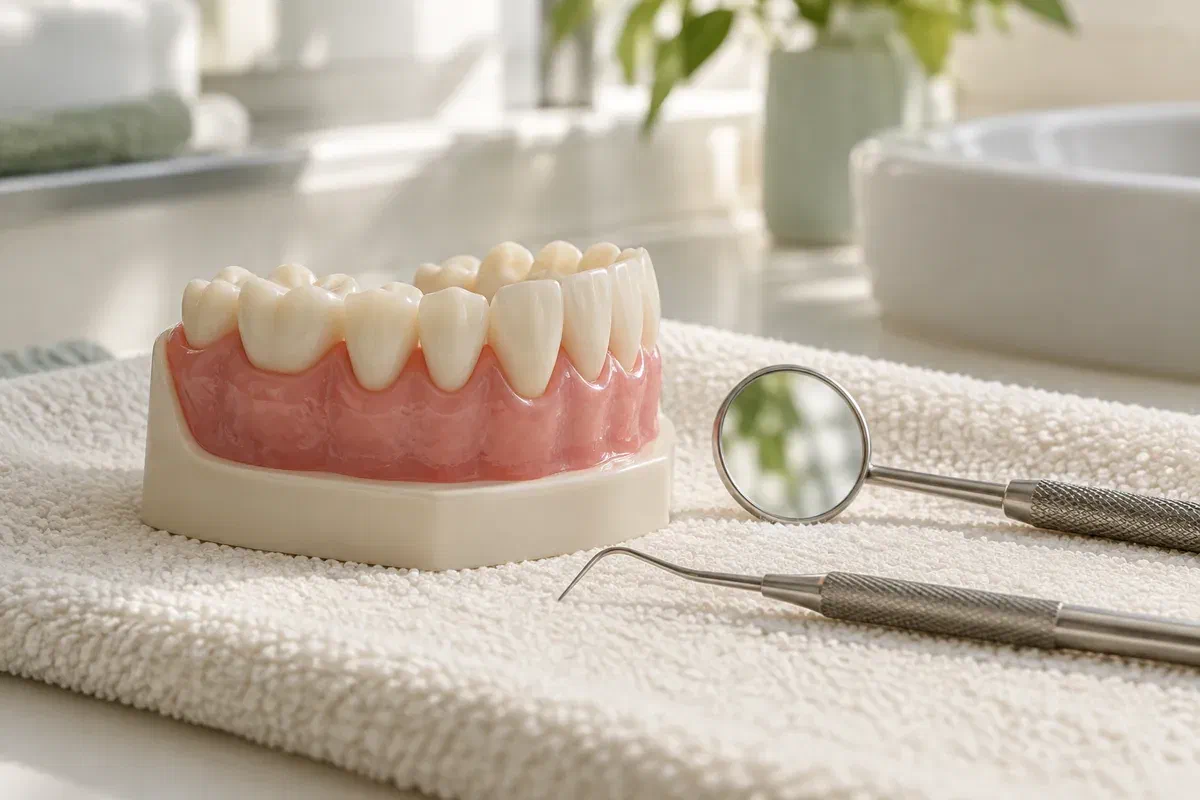
Illustrative tooth-and-gum model beside a periodontal probe and dental mirror
Things you may have put off mentioning

Mention it, even if it has been going on for months.

You do not have to work out what it is. Just describe it. If a dentist once told you that you need a deep cleaning or a periodontist, and it never got booked, bring that advice and the team will look at whether it still applies.

Bleeding or receding gums

Tell us where it happens and whether it has been steady, getting worse, or coming and going. Note tender spots, food that catches, and areas you find hard to clean. The examination then links what you have noticed to what is happening below the gumline.

Changes in how a tooth feels or meets the others

If a tooth feels loose or your bite has shifted, describe when it is most noticeable. Avoid testing it repeatedly. The clinician looks at the tooth and its support as a whole and can explain whether more than one problem might be behind it.

Risk factors and time since your last gum check

Mention earlier gum treatment, smoking or chewing tobacco, diabetes, medicines, and any recent health change. Say roughly when your gums were last measured. These details guide planning, but only an examination of your mouth shows how much, if any, disease is present.

Before driving in with a swollen, painful gum, pus, or symptoms that are worsening fast, call and describe it. You may need an urgent infection visit before any long-term planning.

Why it is worth the trip

Get a starting point you can measure future visits against.

If your gums have not been charted in a while, the numbers can be surprising. Ask the clinician which readings are important and what they mean together. Pocket depth, bleeding, recession, and bone level each contribute, and no single figure should be read as the full story.

The assessment also creates a record for later comparison. Ask what can be concluded now and what genuinely needs a re-check before a decision is made. Knowing this up front helps you plan around a busy season, and lets the team judge your response honestly rather than guess.

Patient information: American Academy of Periodontology — the components of a comprehensive periodontal evaluation

A diagnosis that explains the sign

Bleeding is a sign; gingivitis and periodontitis are diagnoses reached through the full assessment. Ask which one fits and whether it involves a few teeth or many. This explains why the advice might differ from an ordinary cleaning.

Tests that serve a purpose

When images or extra measurements are recommended, ask what each will add. Earlier records may be requested if suitable. The aim is for every test to answer a real question, so nothing is done simply out of habit.

A schedule that makes sense

Ask which visits are for treatment, which for a re-check, and which for maintenance. Discuss the number of appointments, fees, and any referral. Seeing the sequence helps you fit the plan around work and family commitments.

How it goes

Talk, examine, image if needed, decide.

The scope depends on your reasons for booking and what records exist. If you get nervous at the dentist, or have a sore area, say so first and agree on how to signal a pause.

  1. Catch up on what has changed

    You explain any bleeding, shifts in gum position, chewing changes, or teeth that feel different, and how long it has been since your last thorough gum check. Past treatment, home care, medical conditions, and medicines are reviewed.

  2. Chart the gums

    With a slender probe, the clinician works tooth by tooth, measuring the pocket at several points. If it has been years since your last charting, this becomes the record future visits are compared against. Point out sore spots before they are examined.

  3. Check the bone if indicated

    When there is a clinical reason, images help show the bone around your teeth and any other concern. They are interpreted along with the examination and your history. Ask what has been established and what remains uncertain.

  4. Map out the next steps

    You hear the diagnosis, the teeth involved, and what any treatment is meant to accomplish. Ask about alternatives and what delay could mean. Agree on what the next appointment is for and whether visits for others in your household could be booked alongside.

Afterward

Keep the momentum going once you are home.

The assessment often starts a course of care rather than completing it. Stick to the agreed next steps, and call before dropping a recommended routine or deciding the follow-up can wait another season.

Make home care specific

Ask which brushes or interdental aids suit the areas found during the examination, and have the technique shown if a site is hard to reach. Mention work-roughened or sore hands, tight contacts, or dental work so the advice fits your daily routine.

Line up appointments with clear purposes

Treatment, re-measurement, and maintenance visits do different jobs. Booking them early, and grouping them with other household appointments where possible, can make the plan easier to keep. Raise cost or timing concerns at the start.

Phone if something new turns up

New swelling, more discomfort, or a tooth that starts to feel looser warrants a call rather than a wait. Mention new medicines or health diagnoses too. Updated information can change how the original findings should be read.

Deciding on care

What the gums show is what decides the plan.

Ask what the recommendation is based on and how success will be judged. Your diagnosis, the number of teeth involved, how much support is left, your risk factors, and past care all feed into the choice.

When the findings support a lighter approach

Preventive care and control of inflammation

Professional cleaning and focused home-care advice may be enough where appropriate. Ask which areas to watch and when they will be reviewed. Prevention still needs a clear goal; it should not become a reason to let mild symptoms drift.

When periodontitis requires treatment

Active gum treatment, then a review

Treatment of the affected sites may be advised, followed by a visit to see how the gums have healed. Ask what the course involves and how the interval for maintenance will be set. The first visit is often one of several.

When the situation is advanced or unclear

A periodontist's view or shared care

A periodontist may assess advanced, complicated, or persistent problems. Ask what the specialist is expected to decide, and whether your charts and images will be forwarded. Find out how your regular dental care and the specialist's recommendations will be coordinated.

Campbellville questions

Practical questions about a gum check

Questions that link the findings to a diagnosis and then to a plan help the most. If you have earlier dental reports, even old ones, they can still be useful.

(905) 876-4488
It has been years since my gums were properly measured. Is that a problem?
It is common, and it simply means today’s findings become your new baseline. The assessment shows where things stand now. Any earlier records you can find may still help the clinician see whether changes are recent or longstanding.
Can family members book their dental visits on the same day as my assessment?
Often that can be arranged, depending on availability and the type of appointments needed. Ask when booking. Grouping visits can reduce trips, though some treatment and review appointments need to be spaced apart.
Does chewing tobacco affect gum health the same way smoking does?
Tobacco in any form is a recognized risk factor for gum problems, and smokeless tobacco can also affect the tissue where it is held. Mention any use so the clinician can examine the relevant areas and discuss it with you.
Is it worth booking if my teeth and gums feel normal?
It can be. Gum disease often develops without pain or obvious signs. An examination can detect changes you would not notice and clarify whether monitoring or treatment is the right approach.
Will I automatically need X-rays at the assessment?
Not necessarily. Images are chosen based on the clinical question, your history, and the records available. If you have had X-rays elsewhere recently, share the details so the team can consider requesting them.
What does one deep pocket reading tell the clinician?
On its own, not enough to describe your whole mouth. It is interpreted with other findings at that site, images, and the overall pattern. Ask whether the concern is localized or more widespread and what supports that conclusion.
From Campbellville

Finally get that gum check done.

Call our Bronte Street practice to arrange a gum and tooth-support assessment, and ask about grouping it with other household appointments. Bring older periodontal records if you can find them, plus your questions.

What the assessment covers, imaging, treatment, maintenance timing, and any referral are decided individually, based on findings and how your gums respond to care.

Visit Milton Dental Clinic
Unit 1, 342 Bronte St. S, Milton, ON L9T 5B7
Get directions Clinic hours
Monday–Thursday
11am–7pm
Friday–Sunday
By appointment only

Areas we serve

  • Milton
  • Oakville
  • Mississauga
  • Georgetown
  • Halton Hills
  • Acton
  • Campbellville
  • Brampton
  • Burlington
  • Puslinch
  • Rockwood
  • Erin
  • Caledon
  • Etobicoke
  • Old Milton
  • Bronte Meadows
  • Timberlea
  • Dorset Park
  • Dempsey
  • Clarke
  • Beaty
  • Coates
  • Harrison
  • Scott
  • Willmott
  • Ford
  • Bowes
  • Cobden
  • Walker
  • Mountain View
  • Milton Heights
  • Hawthorne Village
  • Valley View
  • Fallingbrook
  • Nassagaweya
  • Trafalgar
  • Esquesing
  • Nelson
  • Brookville
  • Moffat
  • Glen Williams
  • Norval
  • Limehouse
  • Stewarttown
  • Ashgrove
  • Hornby
  • Silver Creek
  • Speyside
  • Scotch Block
  • North Oakville
  • River Oaks
  • Glen Abbey
  • West Oak Trails
  • Palermo
  • Bronte Creek
  • College Park
  • Joshua Creek
  • Uptown Core
  • Preserve
  • Iroquois Ridge
  • Lisgar
  • Meadowvale
  • Meadowvale Village
  • Churchill Meadows
  • Erin Mills
  • Central Erin Mills
  • Streetsville
  • East Credit
  • Creditview
  • Heartland
  • Sheridan
  • Mount Pleasant
  • Credit Valley
  • Huttonville
  • Churchville
  • Springbrook
  • Northwest Brampton
  • Bram West
  • Fletcher's Meadow
  • Fletcher's Creek South
  • Alton Village
  • Orchard
  • Millcroft
  • Headon Forest
  • Tansley
  • Brant Hills
  • Tyandaga
  • Kilbride
  • Lowville
  • Aberfoyle
  • Morriston
  • Arkell
  • Hillsburgh
  • Freelton
  • Carlisle
  • Waterdown
  • Flamborough
  • Mountsberg

How can we help?

Milton Dental Clinic

Have a question about your smile? Choose the option that works best for you.

For urgent dental concerns, please call.
Messages are reviewed during clinic hours.