

Illustrative patient discussing a gum-health assessment with a clinician
Specialized Care

Gum Disease Assessment in Erin

You brush twice a day, so why do the gums still bleed? From Erin or Hillsburgh, a gum disease assessment measures inflammation and tooth support, looks at the risk factors in play, and shows you which cleaning tools and habits suit the exact spots that need help.

Erin and Hillsburgh

Doing everything right at the sink, and still not sure it is working

Plenty of careful brushers still see bleeding, or are told at a cleaning that some pockets are deeper than they should be. Brushing reaches the outer surfaces well, but the spaces between teeth and just under the gumline are another matter. A gum disease assessment shows where the problem sits. It combines your history, a measured examination, and images where they are warranted.

Bleeding is not the only reason to come in. A gum that has dropped, a tooth with a new feel, a hygienist's comment, or simple curiosity about how your gums are doing are all good reasons. Your mouth may feel perfectly comfortable. That is common, and it is why measurement matters more than sensation or a mirror.

When you live out in Erin, a single visit should give you plenty to work with at home. Ask which sites need attention, what is causing the trouble there, and which tools will actually reach them. You should leave knowing the diagnosis, what to change in your routine, and when the effect will be checked.

Book an assessment visit
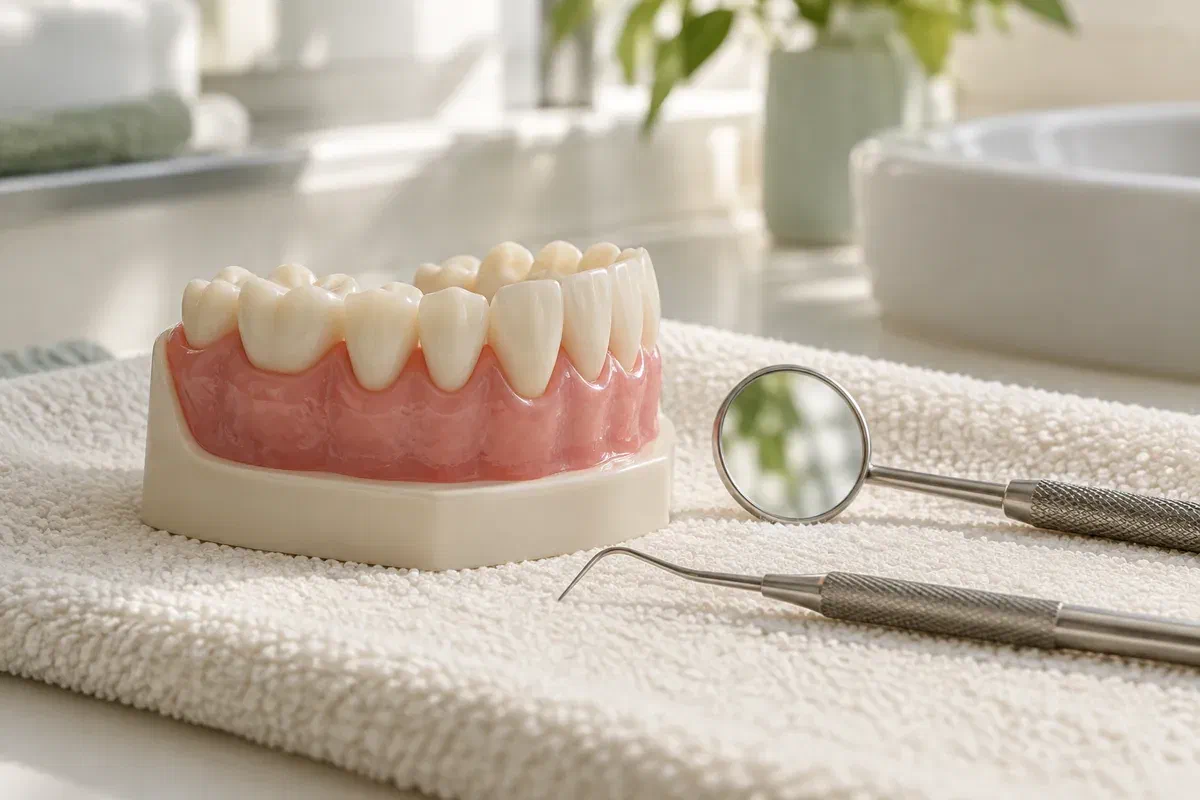
Illustrative tooth-and-gum model beside a periodontal probe and dental mirror
What to tell us

Describe your routine as well as your symptoms.

Explain what you have noticed and how you clean, including the tools you use. You do not need to diagnose anything. If someone has already recommended a deep cleaning or a periodontist, bring the note so the team can review the findings behind it.

Bleeding or receding gums despite regular brushing

Point to where it happens and how long it has been going on. Mention whether it bleeds more with floss or with the brush, and any spot that always feels missed. The examination then shows how the bleeding relates to pockets and attachment beneath the gum.

A tooth that feels different when chewing

Explain when you notice it and what it feels like. Avoid testing it with your fingers. The clinician checks the tooth's movement and its support together, and can explain whether a single cause or more than one is likely.

Things that make cleaning harder

Arthritis, a recent injury, crowded teeth, bridges, braces, or a dry mouth can all get in the way. Mention these alongside any tobacco use, diabetes, medicines, earlier gum treatment, and health changes. They shape the plan, though only an examination reveals the extent of disease.

A painful swollen gum, pus, or symptoms that are worsening quickly should be raised when you call. Infection may need to be seen urgently, before any detailed discussion of home care and long-term gum health.

What changes after the assessment

Your routine gets aimed at the right places.

General advice to floss more is hard to act on. A periodontal chart shows exactly which sites are inflamed or deeper than expected. Ask the clinician to point out those sites and explain how pocket depth, bleeding, recession, and bone level fit together. No single number tells you everything about a tooth.

Once recorded, today's findings become a baseline. Ask what can be concluded now and what needs re-measuring after you have adjusted your routine. That comparison shows whether the changes are helping, without suggesting that one visit can predict how each site will behave.

Patient information: American Academy of Periodontology — the components of a comprehensive periodontal evaluation

Knowing what the bleeding means

Bleeding is a sign. Gingivitis, periodontitis, or a local irritation such as a rough filling edge are possible explanations confirmed by assessment. Ask which applies and whether the issue is local or widespread.

Investigations with a purpose

If images or extra measurements are suggested, ask what they will clarify. Records from elsewhere may help if recent. Each investigation should link to a question about your gums rather than arrive as a standard set.

Clear steps for treatment and home care

Ask which steps treat current disease, what you should change at home, and when the response will be reviewed. Discuss visits, fees, and any referral. Seeing the whole sequence helps you separate treatment from maintenance.

During the assessment

From your toothbrush to the probe, and back again

The scope depends on why you are booking and the records already available. Feeling anxious, or have a sore area? Say so first, and agree on a way to signal a pause.

  1. Talk about symptoms and routine

    Describe any bleeding, gum changes, chewing discomfort, or loose feeling, and walk the clinician through how you clean. Earlier gum treatment, health conditions, and medicines are reviewed too, along with any report you bring from elsewhere.

  2. Measure the gums site by site

    The gums are examined and a periodontal probe measures the pocket at several points around every tooth. Bleeding and recession are noted so the readings can be interpreted. If a spot is sensitive, mention it before it is checked.

  3. Assess the bone where images help

    When there is a clinical reason, images are used to look at the bone supporting your teeth and other concerns. They are read together with the examination and your history. Ask what is confirmed and what remains uncertain.

  4. Leave with a diagnosis and a routine

    You hear what was found, which teeth need care, and what any treatment would aim to do. You may be shown how to use a particular tool. Ask about alternatives and the effect of delay, and confirm the purpose of the next appointment.

At home

The right tool for each gap

Often an assessment starts care rather than finishing it. Keep to the routine you agreed on, and check before swapping tools or deciding the review visit is not needed.

Use aids that suit the sites found

Interdental brushes, floss, floss holders, or a powered brush may be suggested depending on the size of the gaps and your dexterity. Ask to practise in the chair. If your hands are stiff or sore, say so, since there are often easier options.

Know what each upcoming visit is for

A treatment visit, a re-check, and a maintenance cleaning do different jobs. Grouping appointments sensibly can help households in Erin with longer trips. Raise schedule or cost concerns early, and ask which steps are most important.

Call when something changes

Swelling, more discomfort, or a tooth that starts to feel looser is a reason to phone, not to wait for the next booking. Let the team know about new medicines or health issues, which can change how your findings are interpreted.

Next steps

Better home care, active treatment, or a specialist

Ask what the recommendation is based on and how success will be measured. What fits best comes down to the diagnosis, how widespread it is, the support left around each tooth, risk factors, how easily you can clean, and earlier care.

When inflammation is mild or support is intact

Prevention and refined home care

Professional cleaning and specific home-care changes may be recommended where appropriate, with a review after a set period. Ask which sites to concentrate on. Even a lighter plan needs a defined goal and should not mean ignoring bleeding.

When periodontitis needs treating

Periodontal therapy with a follow-up check

Treatment of the affected sites may be advised, followed by a review of healing. Find out what each stage involves and how the maintenance interval will be decided. More than one visit is often needed.

When problems are advanced or persistent

Referral to a periodontist

A periodontist may assess advanced, complex, or stubborn concerns. You can ask what the specialist would add and whether your periodontal chart travels with you. Clarify how your regular dentist and the specialist will coordinate follow-up.

Home-care questions

What people ask about cleaning and gum health

The most useful questions connect your findings to a diagnosis and your diagnosis to what you do each day. Bring earlier reports if you have them.

(905) 876-4488
Are interdental brushes better than floss?
It depends on the size of the spaces between your teeth and what you find easy to use. Interdental brushes often suit larger gaps, while floss may work better for tight contacts. The clinician can recommend the right size and type for the sites identified.
What can I use if arthritis makes flossing difficult?
Floss holders, interdental brushes with larger handles, water flossers, and powered toothbrushes can all help some people. Mention your difficulty at the assessment so the advice reflects what you can manage comfortably. Trying a tool in the chair, with guidance, is often the quickest way to find one that works for your hands.
How soon after changing my routine might bleeding improve?
It varies from person to person and depends on the diagnosis. Inflammation from gingivitis may respond to better cleaning, while periodontitis usually needs professional treatment as well. Ask when your gums will be re-checked to measure the change.
Is a water flosser enough on its own?
For some people it is a helpful addition, but it may not replace other methods for every site. Ask the clinician whether it suits your findings and how it fits with brushing and other interdental cleaning. Bringing the device, or a photo of it, can make the conversation more specific.
If my gums do not hurt, could they still need treatment?
Yes. Gum disease often causes little discomfort, especially early on. An examination can find changes you have not noticed and clarify whether treatment or monitoring fits your situation. Comfort is reassuring, but it is not a measurement.
Does one deep pocket mean the whole mouth is affected?
No. That reading is interpreted alongside other findings at the site and the pattern elsewhere in your mouth. Ask whether the concern is localized or generalized and what evidence supports it.
Booking from Erin

Learn exactly where to aim your toothbrush.

Phone or book online with our Bronte Street practice for an assessment of your gums and tooth support. Bring the cleaning tools you use now if that is easy, any earlier periodontal records, and your questions.

The assessment's scope, imaging, treatment, maintenance timing, and referral are decided for each person, guided by findings and how the gums respond to care.

Visit Milton Dental Clinic
Unit 1, 342 Bronte St. S, Milton, ON L9T 5B7
Get directions Clinic hours
Monday–Thursday
11am–7pm
Friday–Sunday
By appointment only

Areas we serve

  • Milton
  • Oakville
  • Mississauga
  • Georgetown
  • Halton Hills
  • Acton
  • Campbellville
  • Brampton
  • Burlington
  • Puslinch
  • Rockwood
  • Erin
  • Caledon
  • Etobicoke
  • Old Milton
  • Bronte Meadows
  • Timberlea
  • Dorset Park
  • Dempsey
  • Clarke
  • Beaty
  • Coates
  • Harrison
  • Scott
  • Willmott
  • Ford
  • Bowes
  • Cobden
  • Walker
  • Mountain View
  • Milton Heights
  • Hawthorne Village
  • Valley View
  • Fallingbrook
  • Nassagaweya
  • Trafalgar
  • Esquesing
  • Nelson
  • Brookville
  • Moffat
  • Glen Williams
  • Norval
  • Limehouse
  • Stewarttown
  • Ashgrove
  • Hornby
  • Silver Creek
  • Speyside
  • Scotch Block
  • North Oakville
  • River Oaks
  • Glen Abbey
  • West Oak Trails
  • Palermo
  • Bronte Creek
  • College Park
  • Joshua Creek
  • Uptown Core
  • Preserve
  • Iroquois Ridge
  • Lisgar
  • Meadowvale
  • Meadowvale Village
  • Churchill Meadows
  • Erin Mills
  • Central Erin Mills
  • Streetsville
  • East Credit
  • Creditview
  • Heartland
  • Sheridan
  • Mount Pleasant
  • Credit Valley
  • Huttonville
  • Churchville
  • Springbrook
  • Northwest Brampton
  • Bram West
  • Fletcher's Meadow
  • Fletcher's Creek South
  • Alton Village
  • Orchard
  • Millcroft
  • Headon Forest
  • Tansley
  • Brant Hills
  • Tyandaga
  • Kilbride
  • Lowville
  • Aberfoyle
  • Morriston
  • Arkell
  • Hillsburgh
  • Freelton
  • Carlisle
  • Waterdown
  • Flamborough
  • Mountsberg

How can we help?

Milton Dental Clinic

Have a question about your smile? Choose the option that works best for you.

For urgent dental concerns, please call.
Messages are reviewed during clinic hours.