

Illustrative patient discussing a gum-health assessment with a clinician
Specialized Care

Gum Disease Assessment in Georgetown

A taste that lingers after brushing, or food that keeps wedging between the same two teeth, can point to the gums. From Georgetown, book a gum disease assessment that checks inflammation and tooth support, reviews risk factors, and explains whether treatment or monitoring fits.

From Georgetown to our chair

That stubborn taste may have a simple explanation, or a gum one.

You floss the same gap every evening and always find something. Or a family member mentions your breath, even though you brush carefully. These everyday annoyances can come from many sources, and sometimes they point to pockets forming between gum and tooth. A gum disease assessment looks into it properly, combining history, examination, and any images that are warranted.

Other reasons to book are just as common: bleeding, a gum that seems to have shifted, or a reminder from your hygienist. Some people feel nothing unusual at all. Gum changes are frequently painless, so comfort is a poor guide, and a picture on your phone cannot measure what lies below the gumline.

Coming down from Georgetown, you will want the visit to produce more than reassurance. Ask what is causing the trapping or taste, which sites need care, and how anyone will know it is improving. You should go home with a named diagnosis and a clear reason for whatever comes next.

Request a gum assessment
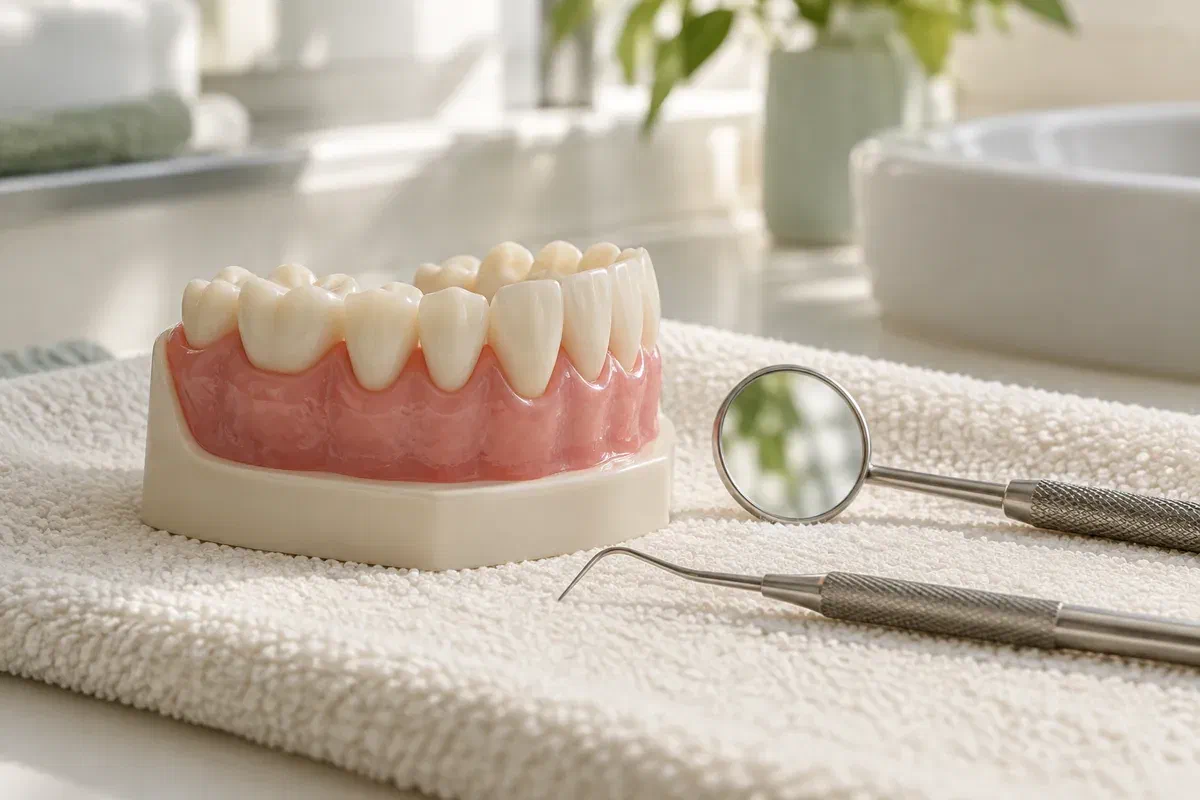
Illustrative tooth-and-gum model beside a periodontal probe and dental mirror
Clues worth describing

Small irritations that keep coming back

Tell us what bothers you, in everyday terms. If a previous office suggested deep cleaning or a specialist, bring the plan or letter along, so today's examination can test the findings that led to it.

Bleeding, puffiness, or a gum that looks different

Say which area it is and whether the change is recent or familiar. A bad taste from one spot, a gap that keeps catching food, or soreness when you clean there all help direct the examination. What is seen at the surface is then compared with the tissue and bone beneath.

A tooth that has drifted or bites oddly

If a gap has opened or a tooth meets its partner differently, describe when you noticed. Avoid pressing on it to check. The clinician considers the tooth's position, movement, and support together, and explains whether more than one factor is likely.

Health details and earlier gum care

Share any past periodontal treatment, smoking, diabetes, current medicines, or recent changes in your health. Records from a previous dentist help. These factors inform the plan, but the extent of any disease is something only an examination can establish.

A gum that is swollen and painful, a discharge of pus, or symptoms that change quickly should be mentioned as soon as you call. That may call for an urgent infection visit ahead of a fuller gum review.

Answers you can use

Find the source, then decide what to do about it.

Food traps and odd tastes can have dental causes that have nothing to do with gum disease, like an open contact or a worn filling. They can also reflect deeper pockets. The clinician separates these by looking at pocket depth, bleeding, recession, and bone support together. No single reading is allowed to decide the matter.

Your findings also serve as a benchmark. Ask what is clear now and what needs a second look or older records before a conclusion can be drawn. That record lets future visits show whether things are improving, without anyone pretending to know exactly how each site will respond.

Patient information: American Academy of Periodontology — the components of a comprehensive periodontal evaluation

A diagnosis instead of a guess

A bad taste or bleeding is a sign. Gingivitis, periodontitis, or another dental problem is the diagnosis. Ask which one applies and whether it is confined to one area or more widespread, so you understand why the recommended care looks the way it does.

Investigations with a point

If X-rays or extra measurements are suggested, ask what they are expected to show. Earlier images from another office may be usable. Each test should answer something specific, rather than form part of an unexplained bundle.

Treatment and upkeep, clearly separated

Ask which steps tackle current problems and which are intended to keep things stable afterwards. Discuss the likely number of visits, the costs, and whether a referral could come up. A clear order helps you plan.

Walking through the visit

Four things happen, in roughly this order.

The details depend on why you came and the records available. If you feel uneasy or have a tender spot, mention it before anything starts, and agree on how you can signal for a rest.

  1. You describe the problem

    Explain the taste, the food trapping, any bleeding, changes in gum position, or a tooth that feels different. You will also be asked about earlier gum treatment, home care, medical history, and medicines. A report from another clinician can be reviewed at this stage.

  2. The gums are examined and measured

    A periodontal probe is used gently around each tooth to measure the pockets, and the contacts between teeth are checked for gaps where food collects. Bleeding and recession are noted too. Say which areas are tender before the clinician reaches them.

  3. Images are considered

    Where there is a clinical reason, images help reveal bone levels and problems such as decay between teeth that could explain the symptom. They are read together with the exam and your history. You can ask which findings are definite.

  4. You agree on what matters most

    The clinician sets out the diagnosis, the areas involved, and what any recommended care is meant to achieve. Ask about alternatives, and what could happen if you wait. Before you leave, make sure you know what the next visit is for.

At home in Georgetown

Turn the findings into a routine that sticks.

Often the assessment opens a course of care. Keep to the steps agreed, and ask first before dropping part of a prescribed routine or deciding the follow-up is not needed.

Clean the trouble spots with the right tools

Ask which floss, interdental brush, or other aid suits the gaps and pockets identified. Have the technique shown to you if a back tooth is hard to reach. Mention stiff hands, crowding, or dental work so the advice works in your bathroom, not just in the chair.

Keep each appointment's role in view

Some visits treat, some re-measure, some maintain. They are not interchangeable. If the drive, your work hours, or the cost make the plan difficult, say so early, and ask which steps the clinician considers most important.

Call when things change

Swelling, more discomfort, a worsening taste, or a tooth that feels looser is a reason to phone rather than wait for the next booking. Tell the team about new medicines or diagnoses as well, since that can change how the findings are read.

What happens next

Not every finding leads to the same kind of care.

Ask what supports the recommendation and how you will both judge whether it worked. The suitable path depends on the diagnosis, the sites involved, tooth support, risk factors, and the care you have already had.

When the findings suggest a lighter approach

Preventive care and gum inflammation control

Professional cleaning, targeted home-care advice, and sometimes repair of a food trap may be discussed. Ask which areas to focus on and when they will be reviewed. A preventive plan still has an aim and is not a reason to ignore mild symptoms.

When established gum disease is present

Treatment for periodontitis, then review

Care directed at the affected pockets may be recommended, followed by a visit to see how the tissues have healed. Find out what each step involves and how maintenance will be scheduled. The course may continue past the first treatment.

When complexity or uncertainty warrants a second opinion

Specialist assessment or coordinated care

A periodontist may evaluate advanced or persistent problems. Ask what question the referral should answer and which records go with it. Make sure you understand how your usual dentist and the specialist will divide the follow-up.

Taste, breath, and gums

Questions about the everyday signs

Useful questions connect what you notice to what was found, and what was found to a plan. Bring earlier reports if you want to compare new advice with old.

(905) 876-4488
Can gum disease cause bad breath that brushing does not fix?
It can contribute, because bacteria and debris can collect in deeper pockets. Persistent bad breath has other possible causes too, including the tongue, dry mouth, decay, or medical issues. The assessment helps identify whether the gums are involved and what to do next.
Why does food keep getting stuck between the same two teeth?
A gap between teeth, a worn or broken filling, or gum changes around the area can all allow food to pack in. The clinician checks the contact, the restoration, and the gum and bone to find the cause, since the solution depends on which one it is.
Is a bad taste from one spot a sign of infection?
It can be, particularly if there is also swelling, tenderness, or discharge. Other explanations are possible. Mention it when you book, and call promptly if the area becomes painful or swollen, as an urgent visit may be needed.
Do I need gum treatment if my mouth does not hurt at all?
Not automatically, but a lack of pain does not rule out gum disease. An examination can find changes you have not noticed and clarify whether treatment or simple monitoring is the better approach.
How do recession and pocket depth together describe my gums?
Each measures a different part of the tissue around a tooth. Combined, they help estimate how much attachment has been lost. Ask the clinician to show you the readings for a particular tooth so the explanation is concrete.
Will the gum assessment include treatment at the same appointment?
Sometimes some care can be provided, but that should be confirmed beforehand. The assessment itself establishes findings and a plan. Ask what your booking includes and which visits may follow.
Booking from Georgetown

Find out where that taste is coming from.

Call or book online with our Bronte Street practice for an assessment of your gums and the support around your teeth. Bring any previous periodontal charts or recommendations, and a list of what you would like the visit to clear up.

The assessment's scope, any imaging, treatment, maintenance timing, and referral decisions are made individually, guided by your findings and how you respond to care.

Visit Milton Dental Clinic
Unit 1, 342 Bronte St. S, Milton, ON L9T 5B7
Get directions Clinic hours
Monday–Thursday
11am–7pm
Friday–Sunday
By appointment only

Areas we serve

  • Milton
  • Oakville
  • Mississauga
  • Georgetown
  • Halton Hills
  • Acton
  • Campbellville
  • Brampton
  • Burlington
  • Puslinch
  • Rockwood
  • Erin
  • Caledon
  • Etobicoke
  • Old Milton
  • Bronte Meadows
  • Timberlea
  • Dorset Park
  • Dempsey
  • Clarke
  • Beaty
  • Coates
  • Harrison
  • Scott
  • Willmott
  • Ford
  • Bowes
  • Cobden
  • Walker
  • Mountain View
  • Milton Heights
  • Hawthorne Village
  • Valley View
  • Fallingbrook
  • Nassagaweya
  • Trafalgar
  • Esquesing
  • Nelson
  • Brookville
  • Moffat
  • Glen Williams
  • Norval
  • Limehouse
  • Stewarttown
  • Ashgrove
  • Hornby
  • Silver Creek
  • Speyside
  • Scotch Block
  • North Oakville
  • River Oaks
  • Glen Abbey
  • West Oak Trails
  • Palermo
  • Bronte Creek
  • College Park
  • Joshua Creek
  • Uptown Core
  • Preserve
  • Iroquois Ridge
  • Lisgar
  • Meadowvale
  • Meadowvale Village
  • Churchill Meadows
  • Erin Mills
  • Central Erin Mills
  • Streetsville
  • East Credit
  • Creditview
  • Heartland
  • Sheridan
  • Mount Pleasant
  • Credit Valley
  • Huttonville
  • Churchville
  • Springbrook
  • Northwest Brampton
  • Bram West
  • Fletcher's Meadow
  • Fletcher's Creek South
  • Alton Village
  • Orchard
  • Millcroft
  • Headon Forest
  • Tansley
  • Brant Hills
  • Tyandaga
  • Kilbride
  • Lowville
  • Aberfoyle
  • Morriston
  • Arkell
  • Hillsburgh
  • Freelton
  • Carlisle
  • Waterdown
  • Flamborough
  • Mountsberg

How can we help?

Milton Dental Clinic

Have a question about your smile? Choose the option that works best for you.

For urgent dental concerns, please call.
Messages are reviewed during clinic hours.