

Illustrative patient discussing a gum-health assessment with a clinician
Specialized Care

Gum Disease Assessment in Halton Hills

Teeth looking a little longer in photos than they used to? For anyone in Halton Hills, a gum disease assessment measures recession alongside pocket depth and bone support, considers your risk factors, and explains whether the change needs treatment, monitoring, or a closer look.

Halton Hills gum checks

When the gumline starts to creep

It often shows up in a photo first. A canine looks taller, a darker band appears near the root, or cold water suddenly stings one tooth. Receding gums can come from brushing habits, from the shape of your bite or the thin tissue some people have, or from loss of support linked to periodontitis. Telling these apart is what a gum disease assessment is for.

The visit draws on your history, a close examination with measurements, and images where they are warranted, to see whether the tissue around each tooth is inflamed or has lost attachment. Some people come because of recession; others because of bleeding, a referral, or no symptom at all. Comfort does not answer the question, and neither does a mirror.

From Georgetown, Acton, Glen Williams, or a smaller hamlet across Halton Hills, it helps to know how many visits a plan might involve. Ask what caused the recession you noticed, whether anything is active, and how change will be tracked. You should leave knowing both the diagnosis and its practical meaning.

Book an assessment
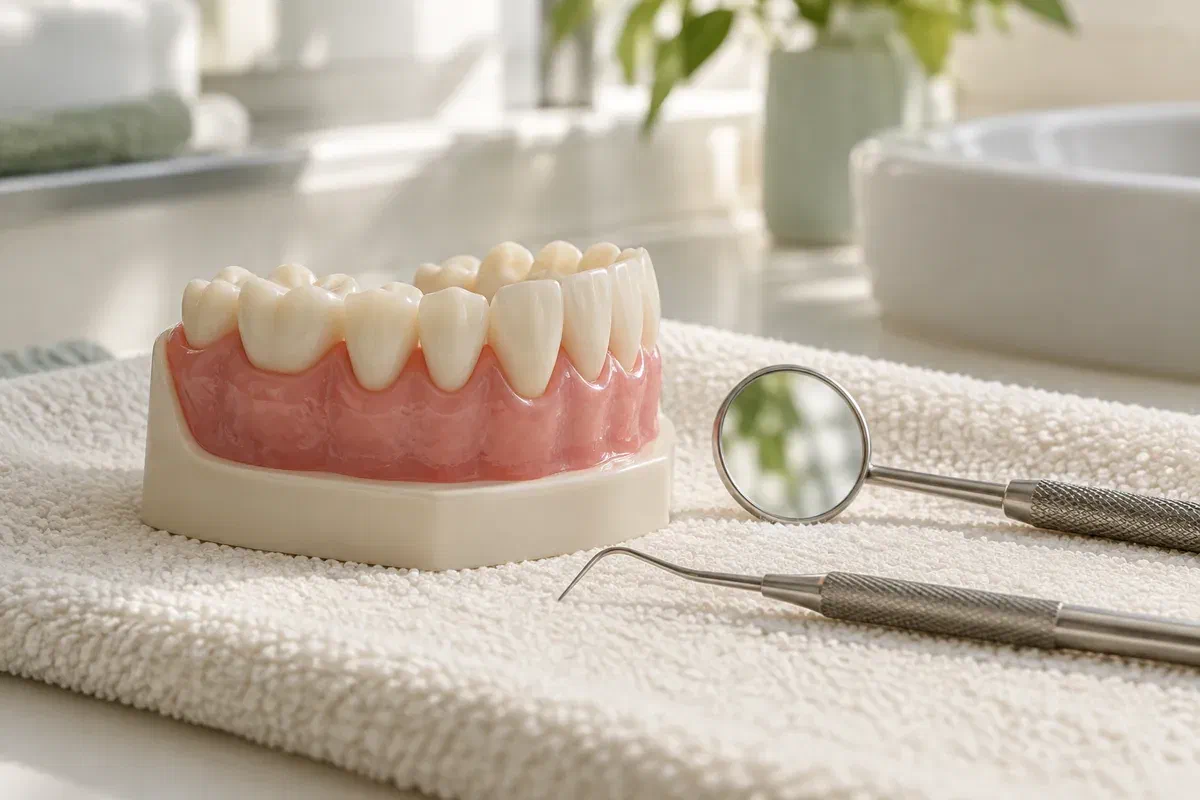
Illustrative tooth-and-gum model beside a periodontal probe and dental mirror
Changes you might have noticed

Longer-looking teeth, tender spots, or a bite that feels new

Simply describe what you have seen. You do not need to know what it is. If a hygienist or dentist has raised recession, deep cleaning, or a referral, bring their notes so the evidence behind that advice can be reviewed.

Gums pulling back, bleeding, or looking different

Show which teeth are affected and whether the change happened gradually or seems recent. Sensitivity to cold, bleeding when you floss, or food catching near the root are worth mentioning. Examination then shows how the visible recession relates to the attachment and bone underneath.

A tooth that feels less settled when chewing

Explain what you feel and when. Leave testing to the clinician rather than rocking the tooth yourself. Movement, bite, and support are looked at together, and you will hear whether one cause or several might explain the change.

Habits and health factors that play a part

Mention how you brush, whether you clench or grind, any earlier gum treatment, tobacco use, diabetes, and medicines. Past records help if you have them. These details shape the plan, though only examining your mouth reveals what is actually happening.

Tell us when booking if a gum is swollen and painful, if there is pus, or if things are changing fast. An infection may need to be seen first, before a fuller conversation about recession and gum health.

Why measure it properly

Recession is one clue. The full picture needs several.

On its own, a receding gum does not tell you whether the tooth has lost support. The clinician can explain how recession combines with pocket depth to describe attachment, and how bleeding and bone levels add to the story. Ask which measurements matter for each affected tooth, and why one number is never the whole answer.

The assessment also gives you a record to compare against. Recession that has been stable for years is very different from recession that is advancing. Ask what can be concluded now and what will need a later measurement or earlier records to judge, so any future change can be recognized.

Patient information: American Academy of Periodontology — the components of a comprehensive periodontal evaluation

Cause, not only appearance

Recession is something you see. Whether it stems from brushing, anatomy, or periodontitis is a diagnosis made through the assessment. Ask which explanation fits and whether other teeth are involved, since the answer shapes the advice.

Tests matched to the question

If images or added measurements are recommended, ask what they will reveal about support around the receding teeth. Earlier records may be helpful if available and suitable. Each step should have a purpose you can understand.

A plan covering care, review, and upkeep

Ask which steps address active disease, which aim to protect exposed areas, and which are for monitoring. Clarify the expected visits, fees, and any referral. Seeing the sequence helps you tell treatment and maintenance apart.

The assessment, stage by stage

How recession gets measured, explained, and planned for

What is covered depends on why you are coming and which records exist. If you are anxious, or a tooth is sensitive to air or touch, let the clinician know before starting and agree on a way to pause.

  1. Tell the story of the change

    Explain when you first noticed the gumline moving, along with any bleeding, sensitivity, or change in how your teeth meet. Your earlier gum care, brushing technique, health conditions, and medicines are reviewed, as is any report from another provider.

  2. Measure recession and pocket depth

    The clinician examines the gums and uses a periodontal probe to measure both the pockets and how far the gum has receded at each site. Together with bleeding, these readings describe attachment. Mention sensitive teeth before they are checked.

  3. Look at bone support if images are indicated

    When there is a clinical reason, images help show the bone around the teeth and any other concern. They are read alongside the examination and your history. Ask what is confirmed and whether further assessment or a specialist would add clarity.

  4. Discuss what the findings mean for you

    You hear whether the recession reflects active disease, past change, or another cause, and what any treatment would aim for. Ask about alternatives and what waiting might mean. Confirm what the next appointment is for before leaving.

Looking after receding gums

Gentler habits, clearer follow-up

The assessment may begin a course of care. Keep to what was agreed, and ask before changing a routine you were given or deciding that a review visit can be skipped.

Adjust technique around exposed areas

Ask which brush, pressure, and interdental tools suit the teeth that were flagged. A demonstration can help if you tend to scrub. Mention sensitivity, hand discomfort, or dental work so the advice is something you can follow every day.

Know which visit is which

Treatment, re-measurement, and maintenance appointments serve different purposes. For households in Halton Hills balancing commutes and school schedules, it helps to see the sequence early. Raise any timing or cost concerns so priorities can be explained.

Report anything new

Increasing sensitivity, swelling, discomfort, or a tooth that feels looser is worth a call rather than a wait. Changes in medicines or medical care also matter, since they can alter how the original findings are understood.

Options once you know

Watch, treat, or refer: each depends on the cause.

Ask what the recommendation rests on and how its success will be measured. The right path depends on the diagnosis, which sites are affected, how much support remains, your habits and risk factors, and earlier care.

When recession is stable or inflammation is mild

Prevention and protective home care

Cleaning advice, gentler technique, and professional care may be recommended where appropriate. Ask which areas to watch and when they will be re-measured. Prevention should have a defined goal rather than serve as a reason to ignore change.

When periodontitis is part of the cause

Periodontal treatment and a follow-up check

Treatment for the affected sites may be advised, followed by a review of healing and remaining needs. Ask what each stage includes and how maintenance timing is decided. More than one appointment may be involved.

For advanced recession or a cause that stays unclear

Specialist opinion or shared care

A periodontist may assess advanced or complicated recession and discuss options that fall outside general care. Ask what the referral should clarify and which records will be sent, and how follow-up will be coordinated between offices.

Recession questions

What people ask about receding gums

The most helpful questions link a measurement to its cause and its cause to a plan. Old photos or dental records can help show how quickly a change has happened.

(905) 876-4488
Do receding gums always mean I have gum disease?
No. Recession can result from brushing too hard, thin gum tissue, tooth position, or periodontitis, among other causes. The assessment compares recession with pocket readings, bleeding, and bone levels to identify which explanation fits your mouth.
Can receded gum tissue grow back by itself?
Gum tissue that has receded generally does not return on its own. Care usually focuses on finding the cause, preventing further change, and, where suitable, discussing options with a specialist. Ask what is realistic for the areas affected.
Why have my teeth become sensitive near the gumline?
When the gum recedes, part of the root surface may be exposed, and that area can be more sensitive to cold or touch. The clinician can check the cause and suggest ways to manage it during the assessment. Sensitivity can have other causes too, such as worn enamel or a cavity, so it is worth having it examined.
Could clenching or grinding be connected to my receding gums?
It may be a factor for some people, though the relationship varies. Mention any clenching, grinding, or jaw soreness so the clinician can consider your bite alongside the gum findings. A partner who hears you grind at night can be a useful source of information here.
Is one deep reading enough to say my disease is advanced?
No. A single site is interpreted with the other findings there and across your mouth. Ask whether the concern is localized or more general, and which findings support the conclusion.
Will the assessment automatically include new X-rays?
Not automatically. Imaging is chosen for the clinical question, your history, and what is already available. Share details of recent images from another office, and ask why any new ones would help.
Visiting from Halton Hills

Learn what is behind the change at your gumline.

Contact our Bronte Street practice to book an assessment of your gums, recession, and tooth support. Bring earlier periodontal records or advice, older photos if they show the change, and the questions you want answered.

Assessment scope, imaging, treatment, maintenance timing, and referral are decided individually and guided by what is found and how you respond to care.

Visit Milton Dental Clinic
Unit 1, 342 Bronte St. S, Milton, ON L9T 5B7
Get directions Clinic hours
Monday–Thursday
11am–7pm
Friday–Sunday
By appointment only

Areas we serve

  • Milton
  • Oakville
  • Mississauga
  • Georgetown
  • Halton Hills
  • Acton
  • Campbellville
  • Brampton
  • Burlington
  • Puslinch
  • Rockwood
  • Erin
  • Caledon
  • Etobicoke
  • Old Milton
  • Bronte Meadows
  • Timberlea
  • Dorset Park
  • Dempsey
  • Clarke
  • Beaty
  • Coates
  • Harrison
  • Scott
  • Willmott
  • Ford
  • Bowes
  • Cobden
  • Walker
  • Mountain View
  • Milton Heights
  • Hawthorne Village
  • Valley View
  • Fallingbrook
  • Nassagaweya
  • Trafalgar
  • Esquesing
  • Nelson
  • Brookville
  • Moffat
  • Glen Williams
  • Norval
  • Limehouse
  • Stewarttown
  • Ashgrove
  • Hornby
  • Silver Creek
  • Speyside
  • Scotch Block
  • North Oakville
  • River Oaks
  • Glen Abbey
  • West Oak Trails
  • Palermo
  • Bronte Creek
  • College Park
  • Joshua Creek
  • Uptown Core
  • Preserve
  • Iroquois Ridge
  • Lisgar
  • Meadowvale
  • Meadowvale Village
  • Churchill Meadows
  • Erin Mills
  • Central Erin Mills
  • Streetsville
  • East Credit
  • Creditview
  • Heartland
  • Sheridan
  • Mount Pleasant
  • Credit Valley
  • Huttonville
  • Churchville
  • Springbrook
  • Northwest Brampton
  • Bram West
  • Fletcher's Meadow
  • Fletcher's Creek South
  • Alton Village
  • Orchard
  • Millcroft
  • Headon Forest
  • Tansley
  • Brant Hills
  • Tyandaga
  • Kilbride
  • Lowville
  • Aberfoyle
  • Morriston
  • Arkell
  • Hillsburgh
  • Freelton
  • Carlisle
  • Waterdown
  • Flamborough
  • Mountsberg

How can we help?

Milton Dental Clinic

Have a question about your smile? Choose the option that works best for you.

For urgent dental concerns, please call.
Messages are reviewed during clinic hours.