

Illustrative patient discussing a gum-health assessment with a clinician
Specialized Care

Gum Disease Assessment in Puslinch

Quit smoking recently and noticed your gums bleed more, not less? That can happen. A gum disease assessment for people coming from Puslinch looks past the surface, measuring inflammation and tooth support, reviewing tobacco and other risk factors, and explaining what care fits.

Puslinch gum assessments

Smoke can hide what the gums are doing.

Smoking tends to reduce visible gum bleeding, so someone who smokes may see very little blood even when there is a problem. After quitting, bleeding sometimes becomes more noticeable, and that can feel like a step backwards. A gum disease assessment sorts this out. Your history, a careful examination with measurements, and images where indicated show whether there is inflammation or lost support.

Tobacco is one route to booking, but plenty of people come for other reasons: gums that look lower, a tooth that feels different, food that traps, or a suggestion from a hygienist. Some have no complaint. Comfort is not proof of healthy gums, and you cannot judge pocket depth from a photo.

Coming in from the Puslinch countryside, you will want clear answers from one visit. Ask what the findings mean, whether tobacco history changes the plan, and how progress will be tracked. Expect to leave with a diagnosis, a set of priorities, and a sensible next appointment.

Arrange a gum assessment
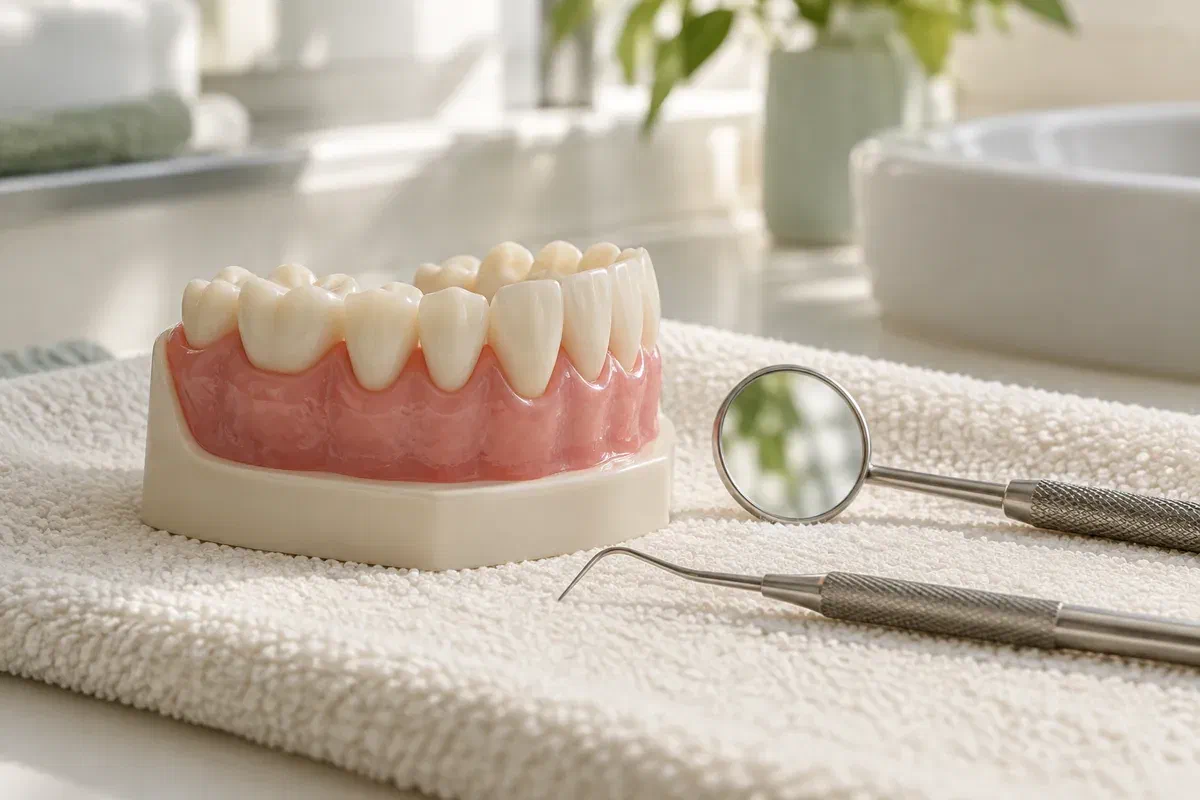
Illustrative tooth-and-gum model beside a periodontal probe and dental mirror
Raise these at your visit

Be candid. It helps the clinician read your gums correctly.

Describe what you have noticed without needing a name for it. Tobacco and vaping history, past or present, is especially useful here. If deep cleaning or a periodontist was recommended before, bring that advice along.

Bleeding, recession, or a changed gumline

Show the area and explain whether the change is recent or longstanding, and whether it started around the time you cut back or quit. Tenderness, food trapping, or stained spots that are hard to clean are worth noting. The examination relates these signs to the tissue underneath.

A tooth that moves or bites differently

Say when you notice the change and what it feels like. Leave it to the clinician to check rather than pressing on it yourself. The tooth and its support are assessed together, and you will hear whether more than one cause is likely.

Tobacco, health, and earlier treatment

Share how much and how long you smoked, chewed, or vaped, and when you stopped if you have. Diabetes, medicines, earlier gum treatment, and recent health changes matter too. These factors inform planning, but the condition of your gums is established by examining them.

If you have a painful swelling on the gum, pus, or symptoms that are changing quickly, mention it when you call. An infection may need to be seen first, before a broader gum-health review.

What you find out

Know whether the bleeding you see now is new or newly visible.

Because smoking can mask bleeding, the clinician will rely on more than one sign. Pocket depth, recession, bone level, and bleeding are read together. Ask which findings carry the most weight in your case, and why one number should never be treated as the full explanation.

This visit also gives you a baseline to compare against, which is useful if you have recently quit and want to see how your gums respond. Ask what can be concluded today and what needs a later re-measurement or earlier records, so future visits can show genuine change.

Patient information: American Academy of Periodontology — the components of a comprehensive periodontal evaluation

The diagnosis behind the sign

Bleeding, or its absence, is only a sign. Gingivitis and periodontitis are diagnoses reached through the full assessment. Ask which applies and whether it is localized or widespread, since that shapes the care suggested.

Purposeful investigations

If images or more measurements are proposed, ask what each will clarify. Previous records may sometimes be used. Every test should link to a question about your gums rather than come as a fixed package. If you have had dental X-rays elsewhere in the past year or two, mention it.

A plan with clear stages

Ask which steps address current disease and which are for monitoring afterwards. Talk about the expected visits, fees, and any referral. Knowing the stages helps you see where treatment stops and maintenance starts, and makes it easier to plan time away from work or the farm.

The visit itself

Why the clinician will look beyond bleeding alone

The scope depends on your reasons for coming and the records available. If you are anxious or have a sensitive area, say so at the beginning and agree on a simple signal to pause.

  1. An honest history

    You describe any bleeding, gum changes, chewing difficulty, or tooth movement, along with tobacco history, earlier gum care, your home routine, medical conditions, and medicines. Bring any recommendation from another provider so it can be addressed.

  2. Probing and recording

    The gums are examined and a periodontal probe measures the space between each tooth and its gum. Because smoking may reduce bleeding, recession and pocket readings carry particular weight. Mention tender spots first, and ask questions as you go.

  3. Bone support, where images are justified

    When there is a clinical reason, images help assess the bone around the teeth and other concerns. They are read alongside the examination and history. You can ask which conclusions are firm and whether further assessment would help.

  4. A plain-language summary and plan

    The clinician explains the diagnosis, which teeth are affected, and what any treatment would aim to achieve. Ask about alternatives, the effect of delay, and how quitting might affect your gums over time. Confirm what the next visit is for.

After the assessment

Small, steady habits matter more than one big effort.

An assessment often marks the start of care. Follow the agreed steps, and ask before changing a routine you were given or deciding a review is not needed.

Focus cleaning on the sites identified

Ask which brush, floss, or interdental aid suits the areas found, and request a demonstration for any site that is hard to reach. Mention sore hands, tight contacts, or dental work so the advice suits what you can do each day.

Treat each appointment as having its own goal

A treatment visit, a re-measurement, and a maintenance cleaning are not the same thing. For a household in Puslinch planning trips around work, knowing the sequence early helps. Raise any timing or cost concerns at the outset.

Tell us about changes, including quitting

Call if swelling appears, discomfort increases, or a tooth feels less stable. Let the team know if you stop or restart tobacco, or begin a new medicine, since these changes can affect how your findings and progress are interpreted.

After the findings

Three ways forward, depending on what was found

Ask what supports the recommendation and how you will know if it has worked. The best path depends on the diagnosis, affected sites, tooth support, tobacco history and other risks, and care you have already received.

When a lighter approach is supported

Prevention and inflammation control

Professional cleaning and home-care advice may be recommended where appropriate, with a check after some time. Ask which areas to watch. A preventive plan needs a clear purpose and should not be a reason to dismiss bleeding after quitting.

When periodontitis needs active care

Periodontal treatment and reassessment

Treatment for the affected sites may be advised, followed by a review of healing. Ask what is included at each stage and how maintenance intervals are set. Tobacco use can affect healing, which the clinician may discuss.

When the problem is advanced or not responding

Periodontist referral or shared care

A periodontist may help with advanced, complicated, or persistent concerns. Ask what the referral is meant to answer and which records will be sent. Clarify how both offices will share responsibility for follow-up.

Tobacco and gum questions

Common questions from people who smoke, vape, or recently quit

The best questions connect a finding to a diagnosis and a diagnosis to a plan. Earlier reports help the clinician see how your gums have changed.

(905) 876-4488
Why do my gums bleed more since I stopped smoking?
Smoking can reduce blood flow in the gums and mask bleeding. After quitting, existing inflammation may become more visible. This is a good time for an assessment, so the clinician can see what is happening and help you respond to it.
Does vaping affect the gums too?
Research on vaping is still developing, but it is sensible to mention any use. The clinician can examine the areas involved and discuss what is known. Being open about it helps them interpret your findings accurately. Mention how often you vape and whether the products contain nicotine, since that detail can be relevant too.
Will quitting tobacco help my gum treatment?
Quitting is generally recognized as good for gum health and for how the gums respond to care. Your clinician or family doctor can point you to support for stopping. The assessment helps track how your gums change over time.
Can my gums be unhealthy if they never bleed?
Yes, particularly if you smoke, since bleeding may be reduced. Gum disease can also develop with little discomfort. Measurements of pockets, recession, and bone give a fuller picture than bleeding alone. Ask the clinician to show you which of these findings matter most for your own teeth.
Is one deep pocket a sign that the disease is everywhere?
No. A single reading is interpreted alongside findings at that site and the pattern across your mouth. Ask whether the concern is local or general and what supports that view. A deep reading at one tooth may have a very specific cause that does not apply elsewhere.
Is the gum assessment the same visit as treatment?
Not necessarily. The assessment sets out the findings and plan, while treatment deals with the diagnosed problem. Some care can occasionally begin on the same day, but it is better to confirm that than to assume it. Ask what your booking includes and which further visits may be needed.
Coming from Puslinch

Find out what the smoke may have been hiding.

Reach our Bronte Street practice by phone or online to arrange a gum and tooth-support assessment. Bring earlier periodontal records or advice, an honest note of your tobacco history, and whatever you most want to ask.

Each person's plan is individual. The extent of the assessment, any images, treatment, maintenance spacing, and referral follow from your findings, risk factors, and response to care.

Visit Milton Dental Clinic
Unit 1, 342 Bronte St. S, Milton, ON L9T 5B7
Get directions Clinic hours
Monday–Thursday
11am–7pm
Friday–Sunday
By appointment only

Areas we serve

  • Milton
  • Oakville
  • Mississauga
  • Georgetown
  • Halton Hills
  • Acton
  • Campbellville
  • Brampton
  • Burlington
  • Puslinch
  • Rockwood
  • Erin
  • Caledon
  • Etobicoke
  • Old Milton
  • Bronte Meadows
  • Timberlea
  • Dorset Park
  • Dempsey
  • Clarke
  • Beaty
  • Coates
  • Harrison
  • Scott
  • Willmott
  • Ford
  • Bowes
  • Cobden
  • Walker
  • Mountain View
  • Milton Heights
  • Hawthorne Village
  • Valley View
  • Fallingbrook
  • Nassagaweya
  • Trafalgar
  • Esquesing
  • Nelson
  • Brookville
  • Moffat
  • Glen Williams
  • Norval
  • Limehouse
  • Stewarttown
  • Ashgrove
  • Hornby
  • Silver Creek
  • Speyside
  • Scotch Block
  • North Oakville
  • River Oaks
  • Glen Abbey
  • West Oak Trails
  • Palermo
  • Bronte Creek
  • College Park
  • Joshua Creek
  • Uptown Core
  • Preserve
  • Iroquois Ridge
  • Lisgar
  • Meadowvale
  • Meadowvale Village
  • Churchill Meadows
  • Erin Mills
  • Central Erin Mills
  • Streetsville
  • East Credit
  • Creditview
  • Heartland
  • Sheridan
  • Mount Pleasant
  • Credit Valley
  • Huttonville
  • Churchville
  • Springbrook
  • Northwest Brampton
  • Bram West
  • Fletcher's Meadow
  • Fletcher's Creek South
  • Alton Village
  • Orchard
  • Millcroft
  • Headon Forest
  • Tansley
  • Brant Hills
  • Tyandaga
  • Kilbride
  • Lowville
  • Aberfoyle
  • Morriston
  • Arkell
  • Hillsburgh
  • Freelton
  • Carlisle
  • Waterdown
  • Flamborough
  • Mountsberg

How can we help?

Milton Dental Clinic

Have a question about your smile? Choose the option that works best for you.

For urgent dental concerns, please call.
Messages are reviewed during clinic hours.