

Illustrative patient discussing a daily gum-care routine with a dental clinician
Specialized Care

Gum Disease Prevention in Acton

A new prescription, a dry mouth, or a health change can quietly alter how your gums respond to everyday cleaning. For people in Acton, a preventive visit reviews your gums with your medical picture in mind, adjusts your routine, and sets sensible follow-up.

When health changes, gums can too

A dry mouth, a new pill bottle, a second look at your gums

Sometimes the trigger for thinking about gums has nothing to do with your teeth. A doctor starts a new medicine, a condition is diagnosed, or your mouth begins to feel dry at night. Gum disease prevention responds to changes like these by combining an updated home routine with a professional examination that considers your whole health picture.

A mouth that feels dry or sticky may make cleaning feel less comfortable, and some health conditions, diabetes among them, are known to influence gum health. None of that is a reason for alarm. It is a reason to tell your dental team, so the aids, technique, and review timing reflect what is actually going on, rather than a routine designed years ago.

Coming from Acton, bring a current list of your medications and the cleaning aids you use. Tell us what has changed and which teeth feel hardest to keep clean. We will examine your gums, demonstrate a gentle method for the difficult areas, and suggest a follow-up interval, coordinating with your physician’s care rather than altering it.

Review your gums after a health change
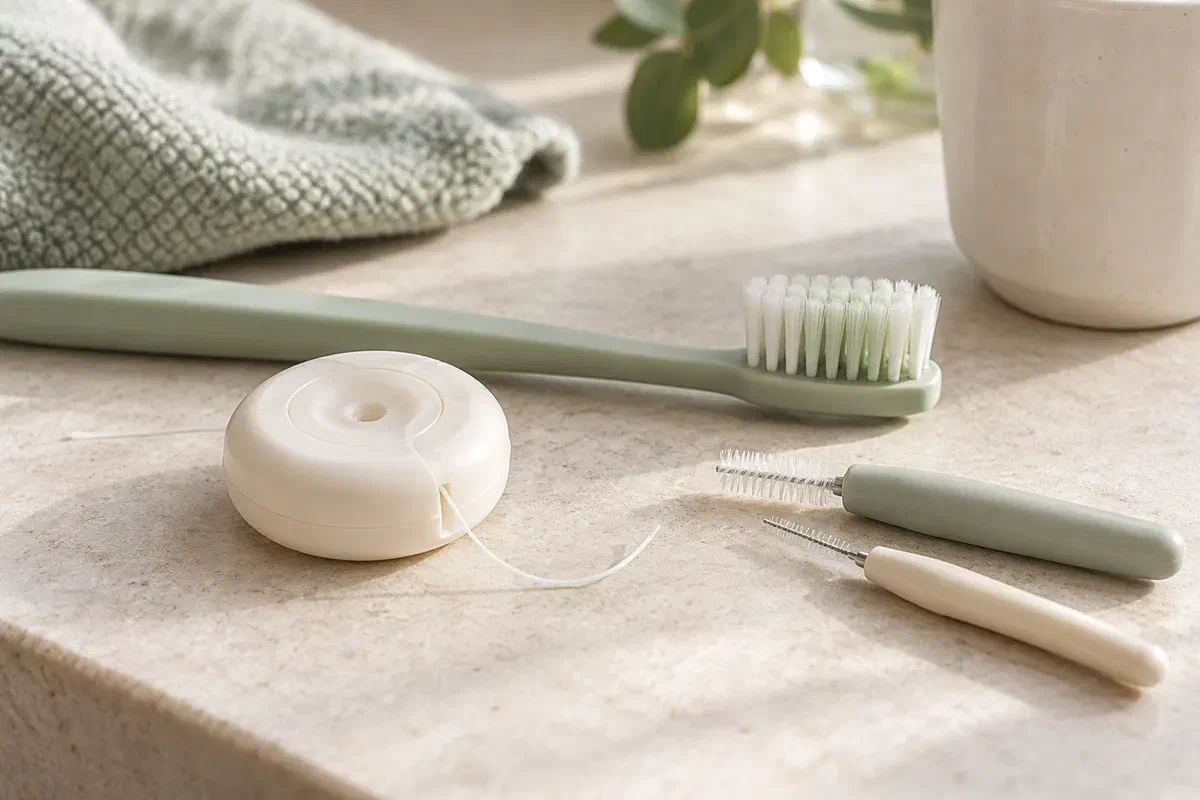
Illustrative soft toothbrush, floss, and interdental brushes arranged beside a ceramic cup
Changes worth telling us about

What has shifted since your routine was last updated?

You do not need to have everything figured out. Describe your current habits, which steps have become harder, and anything about your health that has changed, even if it seems unrelated.

Areas that have become harder to clean

Show us where floss now drags, where an interdental brush feels too tight, or where food has started collecting. Mention crowns, bridges, or implants nearby. A demonstration at those teeth with an aid that suits them is more useful than repeating old instructions.

Bleeding or tenderness that is new

New bleeding deserves a look, especially after a health change. Tell us where it happens and when you first noticed it. The clinician can examine the gums, review your technique, explain likely causes, and say whether this is a prevention matter or something needing treatment.

Medicines, diagnoses, and dry mouth

Bring a list of prescriptions and over-the-counter products, and mention conditions such as diabetes, tobacco use, or earlier periodontal treatment. These details help us shape advice and review timing. We will not suggest changing a prescribed medicine; that conversation belongs with your doctor.

Health changes are nobody’s fault, and neither are the gum changes that sometimes follow. The visit is about understanding your situation and agreeing on helpful care from here.

What an updated plan offers

Advice that keeps up with your health

The routine that suited you five years ago may not suit you now. Ask which single change will help most today and how to tell whether an aid is working. If something feels harsh on a dry or tender mouth, say so, because gentler options may be available.

An examination can identify changes that you would not notice yourself. Gum disease can progress with little pain, so comfort is not proof that a review can wait. Ask how your health history, medications, and current findings influence the recommended spacing of examinations and cleanings.

Patient information: Canadian Dental Association — plaque control, professional cleaning, and gum-disease review

Gentle, practical daily cleaning

Talk through brushing with a soft brush and fluoride toothpaste, plus a between-teeth aid suited to your spaces. Ask for guidance on pressure if your gums are tender. The right tool is one you can use comfortably at the sites it is meant to clean.

Professional care for tartar and tissue changes

Hardened deposits need removal by the dental team. They can explain which areas need attention and whether the findings call for more than preventive care. Ask what the visit adds to your home routine and what will be checked next time.

Intervals that respond to your health

A previous periodontal diagnosis, diabetes, or other factors may mean a different review schedule. Ask why the suggested interval suits you and what would change it. The timing should rest on clinical reasons, and it can be revisited if your health changes again.

How we approach the visit

Health first, then gums, then a routine that fits both

A preventive appointment can include examination, practical coaching, and suitable professional cleaning. Ask what yours will cover and whether treatment, if needed, would be arranged at another visit.

  1. Review your health and medicine list

    Share your medications, recent diagnoses, and any dryness or tenderness you have noticed. Describe how you brush and clean between teeth and how often. Bring your aids, and mention food trapping or earlier gum treatment.

  2. Examine the gums with that context in mind

    The clinician assesses the tissues and supporting structures as appropriate and identifies the areas that need attention. Ask whether the findings fit prevention or show active disease. Clarifying this first means home advice never replaces needed treatment.

  3. Show a method that is comfortable for you

    Watch the technique demonstrated on your difficult teeth, then practise it. If grip, dryness, or tenderness makes an aid hard to use, ask for alternatives. Where relevant, discuss tobacco support or coordinating with your physician, without changing prescribed treatment yourself.

  4. Agree on next steps and follow-up

    Choose one change to begin with and confirm what the next appointment will look at. Ask which symptoms should prompt an earlier call. At follow-up, describe what has been easy and what has not, so the plan can be refined.

Living with the changes

Small, gentle steps tend to last longest.

A routine survives when aids are handy, steps are clear, and there is a regular moment for them. Tell us about difficulties early, especially if your health or medicines change again.

Keep aids and water within reach

Choose a consistent time and place for the agreed steps. If your mouth feels dry, ask whether sipping water or other simple measures may help you clean comfortably. Ask which products you truly need so the routine stays short.

Use a lighter touch on tender gums

Avoid forcing an interdental brush into a snug space or scrubbing sore tissue. Note where discomfort happens and ask about a softer aid or different size. Persistent bleeding or soreness should be assessed rather than put up with.

Tell us when your health changes again

A new medicine, a change in dexterity, fresh dental work, or returning gum symptoms may mean the routine needs adjusting. Mention it at your next visit or sooner if symptoms warrant. The plan should keep pace with your health.

Which path applies

Three purposes, one aim: gums that stay as healthy as possible

Ask which category matches your current findings. A careful home routine supports all three, but it cannot make them equivalent or substitute for a diagnosis.

Keeping healthy tissue healthy through change

Prevention for gums without established periodontal disease

Plan cleaning, coaching, and examination spacing around what is found and what has changed in your health. Ask which areas to watch and how changes will be measured. No routine removes all future risk, but a plan supports continued health.

Addressing a problem found during assessment

Treatment where inflammation or disease is identified

Professional treatment may be needed as well as better home cleaning. Ask what has been found and how it changes your routine. Prevention supports treatment and should never be a reason to postpone it.

Continuing care when there is a periodontal history

Ongoing maintenance after periodontal treatment

Once active treatment is complete, maintenance visits keep watch over the tissues and deal with remaining needs. Ask what makes these different from a standard cleaning and why your spacing suits your history. Sites that improved still need review.

Acton questions about gums and health

Practical answers when your health picture changes

Bring your medication list and aids, show us the difficult areas, and ask for a demonstration. Advice works best when it fits your mouth and your health.

(905) 876-4488
Can my medications affect my gums?
Some medicines can cause dry mouth or other changes in the mouth. Bring a full list to your visit so the clinician can take it into account. Do not stop or change a prescription on your own; discuss any concerns with your doctor or pharmacist.
Is diabetes linked to gum health?
Diabetes is recognised as a factor that can influence gum health. Let the clinician know about your diagnosis and how it is being managed. That information helps shape your review interval and home advice.
What helps if my mouth feels dry when I clean?
Mention dryness at your visit. The clinician can discuss gentle techniques and products that may be more comfortable, and whether anything else should be looked into. Your doctor or pharmacist may also be able to help.
Should I use a softer toothbrush if my gums are tender?
A soft brush with gentle pressure is often recommended. Bring the brush you use so the clinician can check your technique and suggest adjustments if needed. Firm bristles and heavy scrubbing are not more thorough; they can make tender tissue feel worse without reaching plaque any better.
If my gums don’t hurt, do I still need my review?
Yes. Gum disease can progress without pain. Keep to the interval agreed after your examination, and call sooner if bleeding or swelling persists. If your health or medicines change in the meantime, that can also be a good reason to check in before the review date.
What should I bring when coming in from Acton?
Bring a medicine list, your cleaning aids, and a note of any sites that bleed or trap food. Mention any recent health changes when booking with our Bronte Street practice so the visit can be planned accordingly.
Book from Acton

Tell us what has changed. We will help your gum care catch up.

Contact our Bronte Street practice about preventive gum care, cleaning that has become harder, or a periodontal history. We will start with your health, your current routine, and the questions you want answered.

What we recommend, including cleaning, any treatment, and how often you return, rests on your own examination and health. Even a careful routine cannot promise gum disease will never develop.

Visit Milton Dental Clinic
Unit 1, 342 Bronte St. S, Milton, ON L9T 5B7
Get directions Clinic hours
Monday–Thursday
11am–7pm
Friday–Sunday
By appointment only

Areas we serve

  • Milton
  • Oakville
  • Mississauga
  • Georgetown
  • Halton Hills
  • Acton
  • Campbellville
  • Brampton
  • Burlington
  • Puslinch
  • Rockwood
  • Erin
  • Caledon
  • Etobicoke
  • Old Milton
  • Bronte Meadows
  • Timberlea
  • Dorset Park
  • Dempsey
  • Clarke
  • Beaty
  • Coates
  • Harrison
  • Scott
  • Willmott
  • Ford
  • Bowes
  • Cobden
  • Walker
  • Mountain View
  • Milton Heights
  • Hawthorne Village
  • Valley View
  • Fallingbrook
  • Nassagaweya
  • Trafalgar
  • Esquesing
  • Nelson
  • Brookville
  • Moffat
  • Glen Williams
  • Norval
  • Limehouse
  • Stewarttown
  • Ashgrove
  • Hornby
  • Silver Creek
  • Speyside
  • Scotch Block
  • North Oakville
  • River Oaks
  • Glen Abbey
  • West Oak Trails
  • Palermo
  • Bronte Creek
  • College Park
  • Joshua Creek
  • Uptown Core
  • Preserve
  • Iroquois Ridge
  • Lisgar
  • Meadowvale
  • Meadowvale Village
  • Churchill Meadows
  • Erin Mills
  • Central Erin Mills
  • Streetsville
  • East Credit
  • Creditview
  • Heartland
  • Sheridan
  • Mount Pleasant
  • Credit Valley
  • Huttonville
  • Churchville
  • Springbrook
  • Northwest Brampton
  • Bram West
  • Fletcher's Meadow
  • Fletcher's Creek South
  • Alton Village
  • Orchard
  • Millcroft
  • Headon Forest
  • Tansley
  • Brant Hills
  • Tyandaga
  • Kilbride
  • Lowville
  • Aberfoyle
  • Morriston
  • Arkell
  • Hillsburgh
  • Freelton
  • Carlisle
  • Waterdown
  • Flamborough
  • Mountsberg

How can we help?

Milton Dental Clinic

Have a question about your smile? Choose the option that works best for you.

For urgent dental concerns, please call.
Messages are reviewed during clinic hours.