

Illustrative patient discussing a daily gum-care routine with a dental clinician
Specialized Care

Gum Disease Prevention in Burlington

Starting with a new dental team is a good moment to rethink gum care. From Burlington, you can bring your records and routine to our Bronte Street practice for a fresh look at your gums, coaching where cleaning is hardest, and a sensible review plan.

A fresh start for Burlington patients

New clinic, same gums. Let’s learn their history.

Changing dentists can feel like starting over, but your gums carry their history with them. Earlier findings, past deep cleanings, and the advice you were given all help shape what prevention should look like now. A first visit combines a careful examination with a conversation about the home routine that keeps plaque under control.

Prevention rests on two supports. Daily brushing and between-teeth cleaning disturb plaque before it hardens, and professional assessment spots inflammation or changes in bone and gum support that rarely announce themselves. If one site keeps resisting your efforts, a different aid or approach is usually more productive than brushing with more force.

Before your first appointment, it can help to request copies of recent records or radiographs from your previous office, if you have them. Bring your usual brush, floss, or picks as well. We will examine your gums, compare what we find with your history where possible, and suggest a review rhythm that can change over time.

Start your gum review with us
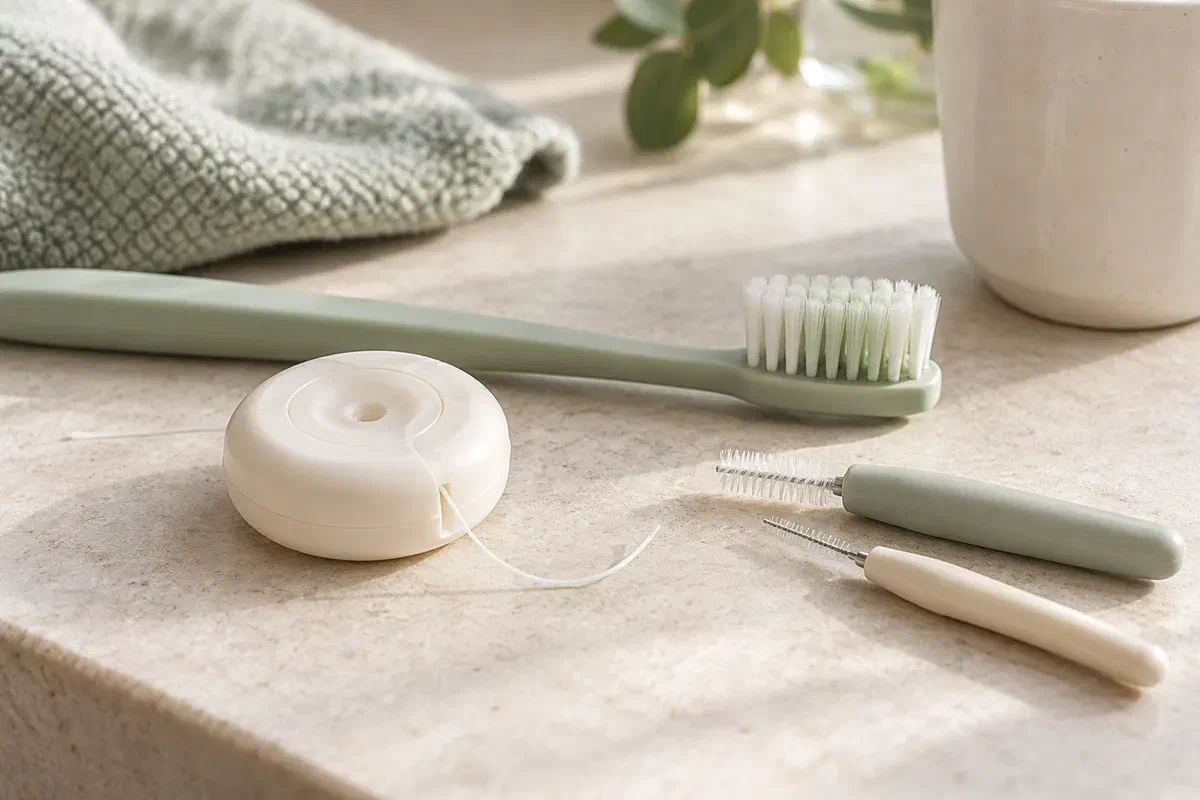
Illustrative soft toothbrush, floss, and interdental brushes arranged beside a ceramic cup
Where to begin

Tell us what your last dentist flagged.

Any routine is a fine starting point. Share what you were told before, what you actually manage each day, and anything that has made previous advice hard to follow.

Sites that were mentioned before and still bother you

If a hygienist once pointed to a particular corner or molar, show us. Explain whether floss frays there, a brush jams, or food gathers after meals, and mention any crowns or bridges. Targeted coaching at those teeth is more useful than repeating the same general advice.

Bleeding that has been noted at past cleanings

Bleeding that shows up visit after visit is worth investigating rather than tolerating. Describe where and how often it happens at home. The clinician can examine the tissue, review your method, explain the likely cause, and clarify whether prevention is enough or treatment is called for.

Health history, tobacco, and earlier periodontal care

Fill us in on medical conditions, medications, and any periodontal treatment you have had. Diabetes and smoking are among the factors that can influence gum health. Knowing them lets us set advice and review timing around your situation rather than a default.

Your gum history is information, not a report card. Many factors contribute, and the purpose of a first visit is to understand where things stand and what will help from here.

What continuity adds

A plan that picks up where your history leaves off

Advice is easiest to follow when it is short and concrete. Ask which habit to focus on first and how you can tell that an aid is reaching its target. If something you were taught elsewhere never quite worked for you, say so; that is useful information for the new plan.

Professional examination fills gaps that self-checks leave. Gum disease often advances with little discomfort, so feeling well is not a reliable sign that a review is unnecessary. Ask how today’s findings, together with anything from your previous office, affect the interval for examinations and cleanings.

Patient information: Canadian Dental Association — plaque control, professional cleaning, and gum-disease review

Daily plaque control you can sustain

Go over gentle brushing with fluoride toothpaste and a between-teeth method that fits your spaces. Ask for feedback on angle and pressure where you have trouble. Even a well-chosen aid only helps if you can use it comfortably at the surfaces it is designed for.

Professional cleaning and tissue monitoring

Hardened deposits stay in place regardless of brushing. The team can show where professional cleaning is needed and whether your gums require more than preventive care. Ask what this visit adds to your own efforts and which measurements will serve as a baseline.

Intervals shaped by what came before

If you have been treated for periodontitis, your maintenance needs may differ from someone who has not. Ask why a given interval is recommended and what might change it. A schedule should reflect a clinical purpose, not just the timing your previous office happened to use.

Your first prevention visit

Gather the history, examine, coach, and set a course

A preventive appointment may include examination, guidance, and suitable professional cleaning. Ask what your visit will involve and whether any treatment the examination reveals would be scheduled separately.

  1. Bring your records and describe your habits

    Share any records you have, then explain how you brush and clean between teeth and how regularly. Bring the aids you want reviewed. Mention bleeding, food trapping, a dry mouth, previous gum treatment, and changes in your health or medicines.

  2. Examine and compare with your history

    The clinician assesses the gums and supporting structures as appropriate, then highlights the sites that need attention. Ask whether the picture fits prevention or active disease. Making that distinction early keeps a coaching session from overlooking a problem that needs professional care.

  3. Learn a method for the difficult areas

    Watch the technique on the teeth you find hard, then practise it with guidance. If an aid is awkward to hold, ask about other options. Where relevant, discuss support for quitting tobacco or coordinating with your physician, without changing prescribed treatment yourself.

  4. Agree on a first change and a review date

    Pick one habit to start with and confirm the purpose of your next appointment. Ask which signs should prompt an earlier call. At follow-up, tell us honestly how the new routine went, so we can refine it rather than restate it.

After your first visit

Settle the new routine into your week

Routines survive when tools are handy, steps are clear, and the habit has a regular slot. Raise problems as they appear rather than waiting until the routine has fallen away.

Give the tools a permanent home

Choose a consistent time and place for the steps you agreed on. If your schedule changes or you are away, plan how to keep the basics with you. Ask which items are essential so the routine does not hinge on a long product list.

Report discomfort instead of pushing through

Do not jam an interdental brush into a tight gap or scrub a tender gumline. Tell us where the problem occurs and ask for a different size or technique. If bleeding or soreness continues, arrange an assessment rather than accepting it.

Let changes prompt a fresh look

New restorations, reduced dexterity, or gum symptoms returning can make a routine less suitable. Mention these at your next visit or earlier if symptoms warrant. A good plan stays practical as well as clinically appropriate.

Where you fit today

Three kinds of gum care, three different goals

Ask which one matches your current findings, especially if your previous office used different terms. A good home routine supports each, but it does not make them interchangeable or replace a diagnosis.

Maintaining healthy gums and addressing early concerns

Preventive care without established periodontal disease

Discuss cleaning, coaching, and examination intervals based on your findings. Ask which areas need attention and how changes will be monitored over time. The plan supports ongoing health but cannot promise to eliminate every future risk.

When the examination finds a current problem

Treatment for active inflammation or periodontal disease

Professional treatment may be needed alongside improved daily cleaning. Ask what the diagnosis is and how it changes the advice. Prevention should support that treatment rather than serve as a reason to defer it.

When a past periodontal diagnosis still matters

Maintenance after earlier periodontal treatment

After active care, continued assessment and maintenance help monitor the tissues and address remaining needs. Ask how this differs from routine preventive cleaning and why your interval fits your history. Feeling well does not remove the need to recheck sites treated before.

Common questions from Burlington

Practical answers when you are new to our practice

Bring your aids, point to the areas you struggle with, and ask to see a demonstration. Advice is most useful when it fits your mouth, your restorations, and your routine.

(905) 876-4488
Should I get my records sent from my old dentist?
It can help. Recent radiographs and notes about previous gum findings or treatment give useful context. You can ask your previous office about transferring them. If records are not available, the examination will still establish a starting point.
Can bad breath be a sign of a gum problem?
It can have several causes, and gum inflammation is one possibility. Mention it during your visit so the clinician can examine your gums and discuss other likely causes. Cleaning between teeth and along the gumline is often part of the conversation.
Do implants need gum-disease prevention too?
Yes. The tissues around implants need regular cleaning and professional monitoring as well. Ask which aids suit your implant and how often it should be reviewed. Bring any information you have about the implant from the office that placed it.
Is a water flosser enough on its own?
It can be useful for some people, but whether it is suitable depends on your spaces and dental work. Bring it along and ask whether it covers your needs or should be combined with another between-teeth method.
My gums don’t hurt. Why keep regular reviews?
Gum disease can progress quietly, so the absence of pain is not reliable reassurance. Keep to the interval suggested after your examination and get in touch sooner about persistent bleeding or swelling. Ask what each review is checking.
Is it practical to keep gum reviews here from Burlington?
Many people plan their reviews ahead to make the trip straightforward. Our Bronte Street practice is open Monday to Thursday, 11am to 7pm, with Friday to Sunday by appointment. Booking the next review before you leave can help.
Book from Burlington

Bring your history and your toothbrush. We will take it from there.

Contact our Bronte Street practice about preventive gum care, difficult cleaning areas, or previous periodontal treatment. We will start with your records, your current routine, and the questions you want the examination to address.

Recommendations, professional cleaning, treatment needs, and review timing depend on your individual findings. No routine guarantees protection from future gum disease.

Visit Milton Dental Clinic
Unit 1, 342 Bronte St. S, Milton, ON L9T 5B7
Get directions Clinic hours
Monday–Thursday
11am–7pm
Friday–Sunday
By appointment only

Areas we serve

  • Milton
  • Oakville
  • Mississauga
  • Georgetown
  • Halton Hills
  • Acton
  • Campbellville
  • Brampton
  • Burlington
  • Puslinch
  • Rockwood
  • Erin
  • Caledon
  • Etobicoke
  • Old Milton
  • Bronte Meadows
  • Timberlea
  • Dorset Park
  • Dempsey
  • Clarke
  • Beaty
  • Coates
  • Harrison
  • Scott
  • Willmott
  • Ford
  • Bowes
  • Cobden
  • Walker
  • Mountain View
  • Milton Heights
  • Hawthorne Village
  • Valley View
  • Fallingbrook
  • Nassagaweya
  • Trafalgar
  • Esquesing
  • Nelson
  • Brookville
  • Moffat
  • Glen Williams
  • Norval
  • Limehouse
  • Stewarttown
  • Ashgrove
  • Hornby
  • Silver Creek
  • Speyside
  • Scotch Block
  • North Oakville
  • River Oaks
  • Glen Abbey
  • West Oak Trails
  • Palermo
  • Bronte Creek
  • College Park
  • Joshua Creek
  • Uptown Core
  • Preserve
  • Iroquois Ridge
  • Lisgar
  • Meadowvale
  • Meadowvale Village
  • Churchill Meadows
  • Erin Mills
  • Central Erin Mills
  • Streetsville
  • East Credit
  • Creditview
  • Heartland
  • Sheridan
  • Mount Pleasant
  • Credit Valley
  • Huttonville
  • Churchville
  • Springbrook
  • Northwest Brampton
  • Bram West
  • Fletcher's Meadow
  • Fletcher's Creek South
  • Alton Village
  • Orchard
  • Millcroft
  • Headon Forest
  • Tansley
  • Brant Hills
  • Tyandaga
  • Kilbride
  • Lowville
  • Aberfoyle
  • Morriston
  • Arkell
  • Hillsburgh
  • Freelton
  • Carlisle
  • Waterdown
  • Flamborough
  • Mountsberg

How can we help?

Milton Dental Clinic

Have a question about your smile? Choose the option that works best for you.

For urgent dental concerns, please call.
Messages are reviewed during clinic hours.