

Illustrative patient discussing a daily gum-care routine with a dental clinician
Specialized Care

Gum Disease Prevention in Caledon

Finishing gum treatment is a milestone, not a finish line. If you are coming from Caledon after periodontal care, we can review how the treated areas are holding up, refine your home routine, and explain a maintenance schedule built on your history.

After gum treatment, from Caledon

The deep cleaning is done. Now comes the part that keeps it working.

Once periodontal treatment ends, it is natural to feel the problem is behind you. Gums often feel and look better. Yet areas that were once affected still benefit from close attention, and prevention now means keeping plaque under control at home while professional maintenance checks those sites over time.

Treatment can leave your mouth a little different from before. Spaces between teeth may be more open, some root surfaces may be exposed, and familiar floss may not suit every gap any more. Matching aids to those new shapes, and learning the angle that reaches them, usually matters more than brushing harder or adding a stronger rinse.

From Caledon, including Bolton and the surrounding villages, it helps to plan maintenance visits well ahead. Bring the aids you were given after treatment, and any notes from whoever provided it. We will examine the previously treated areas, refine your routine, and explain why your recommended interval is what it is.

Plan your gum maintenance
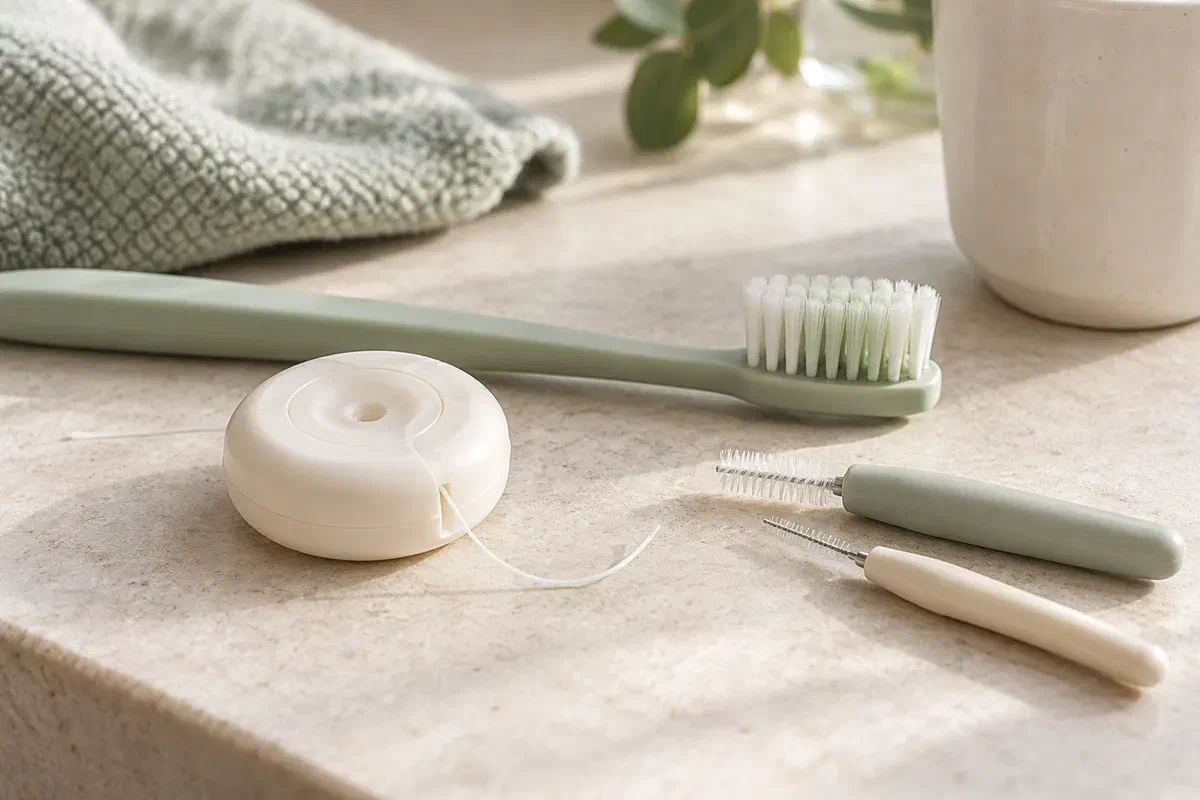
Illustrative soft toothbrush, floss, and interdental brushes arranged beside a ceramic cup
Questions after treatment

Keeping treated gums stable takes a slightly different routine.

Your routine does not need to be flawless. Let us know what you have kept up since treatment, what has slipped, and what has felt awkward or uncomfortable.

New or wider spaces between teeth

Show us where gaps have opened, where food now collects, or where the floss you used before no longer seems right. Mention crowns, bridges, or implants. Having the right aid sized and demonstrated for those spaces helps protect the result of your treatment.

Bleeding returning at treated sites

If bleeding has crept back where it had settled, mention it rather than waiting. Describe the area and when you noticed the change. The clinician can examine the tissue, review your cleaning, and explain whether further treatment is needed or the routine simply needs adjusting.

Health and lifestyle factors that still matter

Keep us updated on conditions such as diabetes, new medications, and tobacco use. These can influence how gums respond after treatment. Sharing them helps us set maintenance timing and advice that fit you rather than a standard pattern.

Needing periodontal treatment was not a personal failing, and neither is a setback afterward. Several factors play a part, and maintenance is about keeping the gains you have made.

What maintenance provides

Protect the gains, watch the sites, adjust as needed

After treatment, simplicity helps you stay consistent. Ask which part of the routine protects your treated areas most and how to tell whether an aid is reaching those sites. If a step has become uncomfortable or impractical, say so, so the routine can be adapted before it drops away.

Maintenance visits gather information that cannot be collected at home. Gum disease can return with little discomfort, so feeling fine does not confirm that previously affected areas are stable. Ask how your current findings compare with earlier ones and how they shape the timing of future visits.

Patient information: Canadian Dental Association — plaque control, professional cleaning, and gum-disease review

Home cleaning matched to your treated mouth

Revisit soft brushing with fluoride toothpaste and between-teeth aids sized for the spaces you have now. Ask for help with technique around exposed roots or wider gaps. Any aid is only useful if you can manage it comfortably where it is needed.

Professional maintenance of treated areas

Deposits can re-form, and some will need professional removal. The team can review sites that were treated, note any change, and tell you whether additional care is needed. Ask what each maintenance visit includes and which measurements are being tracked.

A maintenance interval with a clear reason

People with a history of periodontitis often need visits more frequently than those without it. Ask why your interval was chosen and what might lengthen or shorten it. The schedule should follow your findings, not a generic six-month habit.

A typical maintenance visit

Check, compare, clean, and refine

Maintenance appointments usually combine examination with professional cleaning and a review of your routine. Find out what yours will involve and whether any further treatment would require a separate booking.

  1. Update us on how things have gone

    Describe your current routine since treatment, which aids you still use, and what has become difficult. Bring them with you. Mention bleeding, food trapping, dryness, changes in health or medications, and any notes from previous periodontal care.

  2. Examine and compare treated sites

    The clinician reviews the gums and supporting structures as appropriate, with attention to the areas treated before. Ask whether the findings show stability or active disease, so the maintenance routine does not hide a problem that needs more treatment.

  3. Refine technique where it counts

    Have the method demonstrated again on the sites that matter most, then practise it. Ask about other aids if one has become hard to use. Where relevant, discuss quitting tobacco or coordination with your physician, without changing prescribed treatment on your own.

  4. Confirm the next maintenance date

    Agree on any change to your routine and the purpose of the next visit. Ask which symptoms mean you should call in between. At each review, share what has worked and what has not, so maintenance keeps pace with you.

Living with treated gums

Consistency matters more than intensity.

A maintenance routine holds when the aids are close, the method is second nature, and it has a set time. Bring up problems early rather than waiting for them to grow.

Keep the right sizes stocked

Interdental brushes in particular wear out. Choose a regular time and place for cleaning and keep spares of the sizes you were shown. If you travel, take the essentials. Ask which items really matter so the list stays short.

Speak up if something hurts

Do not force an aid into a space it does not fit or brush tender gums harder. Tell us where it is uncomfortable and ask about another size or method. Ongoing bleeding or soreness after treatment should be examined.

Treat changes as a reason to call

New dental work, loss of dexterity, or symptoms returning at treated sites can all mean the routine needs revisiting. Raise these at your next visit, or contact us earlier if symptoms warrant it.

Knowing which stage you are in

Maintenance is its own kind of care.

Ask which description fits your findings today. Your home routine supports each of these, but it does not make them interchangeable or replace an examination.

Where the goal is keeping healthy gums healthy

Prevention for gums without established periodontal disease

Plan cleaning, coaching, and examination intervals around what is found. Ask which areas need monitoring and how they will be compared. The plan supports long-term health, but no routine can rule out every future concern.

Where the examination shows current disease

Treatment for active inflammation or periodontal disease

Professional treatment may be needed alongside improved home care, including if disease returns after earlier care. Ask what has changed and how the plan will respond. Home habits support treatment and should not be a reason to postpone it.

Where past treatment means ongoing review

Supportive periodontal maintenance

After active care, maintenance visits check the tissues and handle remaining needs. Ask how these differ from a standard cleaning and what makes your interval appropriate. Improvement does not mean previously treated sites can be left unchecked.

Maintenance questions from Caledon

What people ask after their gum treatment is complete

Bring your aids, show us where cleaning is difficult, and ask for a refresher demonstration. Advice is most useful when it fits your teeth and your treated areas.

(905) 876-4488
Why are my maintenance visits more frequent than a normal cleaning?
Areas affected by periodontitis can be more vulnerable to recurring problems, so closer monitoring is often recommended. Ask the clinician to explain why your interval was chosen and what might change it.
My teeth feel more sensitive since treatment. Is that expected?
Some people notice sensitivity when root surfaces are more exposed. Mention it at your visit so the clinician can check and suggest ways to manage it, rather than avoiding cleaning in that area. Skipping a sensitive spot can let plaque build up there, which is the opposite of what treated gums need.
Can I go back to regular cleanings once my gums are healthy?
That decision depends on your findings over time. Ask what would need to be true for your interval to change, and what is being monitored at each visit. Some people stay on a maintenance schedule for the long term, while others see their spacing adjusted as stability is shown over several reviews.
Why do the spaces between my teeth look bigger now?
As inflammation settles after treatment, gums can shrink slightly, making spaces more visible. Ask which aids suit those spaces now, and whether anything else should be considered. A larger interdental brush is often easier in a wider gap than floss, but the right size is best confirmed in your own mouth.
If my gums feel great, why keep coming in?
Gum disease can return without pain, and the early signs are often only measurable at the chair. Maintenance is how changes are caught before they progress. Stay with the recommended spacing, and phone ahead of it if bleeding keeps recurring or a gum becomes puffy.
How can I keep maintenance visits manageable from Caledon?
Booking the next visit before you leave helps, as does mentioning any timing constraints when you call our Bronte Street practice. Bring your aids, a medicine list, and any notes from previous treatment.
Booking from Caledon

Keep the results of your treatment working for you.

Reach our Bronte Street team to arrange periodontal maintenance or preventive gum care, ask about spaces that are hard to clean, or talk through your treatment history. We will start with how things have gone since your treatment and what you want to know.

Maintenance intervals, cleaning, treatment, and advice all depend on what each examination shows. No routine can guarantee that gum disease will not return.

Visit Milton Dental Clinic
Unit 1, 342 Bronte St. S, Milton, ON L9T 5B7
Get directions Clinic hours
Monday–Thursday
11am–7pm
Friday–Sunday
By appointment only

Areas we serve

  • Milton
  • Oakville
  • Mississauga
  • Georgetown
  • Halton Hills
  • Acton
  • Campbellville
  • Brampton
  • Burlington
  • Puslinch
  • Rockwood
  • Erin
  • Caledon
  • Etobicoke
  • Old Milton
  • Bronte Meadows
  • Timberlea
  • Dorset Park
  • Dempsey
  • Clarke
  • Beaty
  • Coates
  • Harrison
  • Scott
  • Willmott
  • Ford
  • Bowes
  • Cobden
  • Walker
  • Mountain View
  • Milton Heights
  • Hawthorne Village
  • Valley View
  • Fallingbrook
  • Nassagaweya
  • Trafalgar
  • Esquesing
  • Nelson
  • Brookville
  • Moffat
  • Glen Williams
  • Norval
  • Limehouse
  • Stewarttown
  • Ashgrove
  • Hornby
  • Silver Creek
  • Speyside
  • Scotch Block
  • North Oakville
  • River Oaks
  • Glen Abbey
  • West Oak Trails
  • Palermo
  • Bronte Creek
  • College Park
  • Joshua Creek
  • Uptown Core
  • Preserve
  • Iroquois Ridge
  • Lisgar
  • Meadowvale
  • Meadowvale Village
  • Churchill Meadows
  • Erin Mills
  • Central Erin Mills
  • Streetsville
  • East Credit
  • Creditview
  • Heartland
  • Sheridan
  • Mount Pleasant
  • Credit Valley
  • Huttonville
  • Churchville
  • Springbrook
  • Northwest Brampton
  • Bram West
  • Fletcher's Meadow
  • Fletcher's Creek South
  • Alton Village
  • Orchard
  • Millcroft
  • Headon Forest
  • Tansley
  • Brant Hills
  • Tyandaga
  • Kilbride
  • Lowville
  • Aberfoyle
  • Morriston
  • Arkell
  • Hillsburgh
  • Freelton
  • Carlisle
  • Waterdown
  • Flamborough
  • Mountsberg

How can we help?

Milton Dental Clinic

Have a question about your smile? Choose the option that works best for you.

For urgent dental concerns, please call.
Messages are reviewed during clinic hours.