

Illustrative patient discussing a daily gum-care routine with a dental clinician
Specialized Care

Gum Disease Prevention in Etobicoke

Preventive gum care is one of the easiest kinds of dentistry to plan ahead. From Etobicoke, you can make each visit count: examination, cleaning where suitable, and coaching in one well-organised appointment, with a review schedule shaped by your history.

Planning gum care from Etobicoke

Prevention rewards planning, and planning shortens the trip list.

Unlike a sudden toothache, gum disease prevention can be mapped out in advance. That makes it well suited to a longer trip. A preventive visit pairs a professional look at your gums with practical work on the daily habits that remove plaque from tooth surfaces and the spaces in between.

Your own mouth sets the agenda. Tight contacts that tear floss, open spaces after gum recession, a bridge, crowding, or stiff hands each call for a slightly different approach. When a site will not come clean, the fix is usually a better-fitting aid or angle, rather than brushing harder or buying a stronger rinse.

Travelling from Etobicoke, it makes sense to tell us your goals when booking so the visit covers as much as is appropriate. Bring the tools you use and a short list of the teeth that worry you. We will examine your gums, demonstrate a method you can repeat at home, and explain what the next visit is for.

Plan an efficient gum-care visit
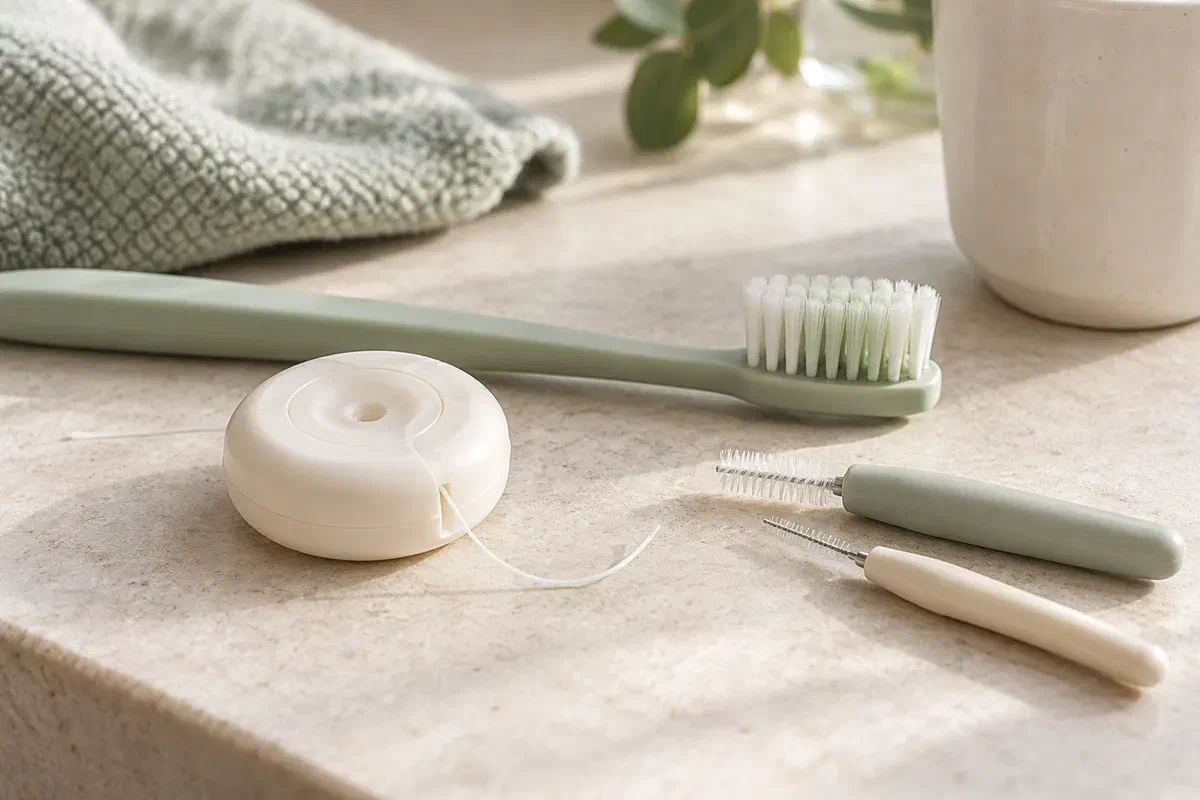
Illustrative soft toothbrush, floss, and interdental brushes arranged beside a ceramic cup
Things to sort out before the trip

Make a short list of what bothers you most

You can come with an imperfect routine. Write down what you do, what you skip, and anything that makes advice hard to follow, so the appointment can deal with it in one go.

Areas that defeat your floss or brush

Note where floss shreds, where a small brush will not go, or where food tends to wedge. Mention crowns, bridges, or implants near those teeth. Having the right aid shown at those exact places gives you something useful to take home after a long drive.

Bleeding you keep noticing

Bleeding that recurs is worth examining. Record where and when it happens. The clinician can look at the gums, watch how you clean, explain the likely reason, and tell you whether preventive advice is enough or professional treatment is needed.

Health factors that affect gum planning

Bring a list of your conditions, medications, and any past periodontal treatment. Tobacco use and diabetes can both influence gum health. Sharing these details means review intervals can be set around you, which matters more when each trip takes planning.

Gum findings are not about blame. Several factors play a role, and the point of the appointment is to agree on useful actions and suitable care from here on.

What one good visit can give you

Leave with enough clarity to manage well at home

When visits are further apart, clear instructions matter even more. Ask which habit to prioritise and how you will know an aid is reaching the right surface. If something is awkward or painful, say so during the visit, while there is still time to try an alternative.

An examination provides information that home checks cannot. Gum disease often develops with little pain, so comfort is not a reliable reason to skip a review. Ask how your findings and periodontal history affect the interval being recommended, and plan your next trip around it.

Patient information: Canadian Dental Association — plaque control, professional cleaning, and gum-disease review

Home cleaning you can run on your own

Go over gentle brushing with fluoride toothpaste and the between-teeth method that suits your spaces. Ask for hands-on help with angle and pressure where you struggle. An aid you can use confidently at home is worth more than several you are unsure about.

Professional cleaning when deposits are present

Hardened tartar will not come off with a toothbrush. The team can tell you where professional cleaning is needed and whether gum findings call for treatment beyond prevention. Ask what the appointment adds and what will be compared at your next one.

Review intervals with a clear rationale

Previously treated periodontitis may mean a different maintenance schedule from someone without that history. Ask why a particular interval suits you and what could change it. Knowing the reason makes it easier to justify the trip when your gums feel fine.

An organised appointment

One visit, four clear parts

A preventive appointment may include examination, coaching, and suitable professional cleaning. Ask what yours will include and whether any treatment identified can be grouped into as few visits as is clinically appropriate.

  1. Go through your list and routine

    Explain how you brush and clean between teeth, how often, and what gets in the way. Bring the aids you want checked and your list of concerns. Mention bleeding, food trapping, dryness, previous gum care, and changes in health or medicines.

  2. Examine and prioritise

    The clinician assesses the gums and supporting structures as appropriate and identifies the most important sites. Ask whether your findings fit prevention or active disease. That answer determines whether coaching is the main task or treatment needs to be scheduled.

  3. Practise the method before you leave

    Have the technique shown on your difficult teeth, then try it while the clinician watches. If an aid is hard to grip, ask about alternatives. Where relevant, discuss tobacco support or coordination with your physician, without altering prescribed treatment yourself.

  4. Book the next visit with a purpose

    Agree on the first change to make and what the next appointment should accomplish. Ask which symptoms would justify an earlier call. Booking before you leave helps, and at review we will refine the plan based on your experience.

Managing well between trips

Keep the plan simple enough to run without reminders.

Routines last when aids are on hand, the method is understood, and the habit has a fixed moment. Call with questions as they come up instead of saving them all for the next visit.

Stock up on the aids that work

Choose a regular time and place for the agreed steps, and keep spares of the sizes that fit. If you travel, pack the essentials. Ask which items matter most so you are not relying on a long list of products.

Phone if a tool causes pain

Do not force an interdental brush into a tight space or brush tender gums harder. You can call to describe the problem and ask whether a different size or approach makes sense. Ongoing bleeding or soreness should be assessed.

Report changes rather than waiting

New dental work, reduced dexterity, or returning gum symptoms can make your routine less suitable. Mention them at your next visit, or call sooner if symptoms warrant. The plan should stay realistic and clinically appropriate.

Know which visit you need

Prevention, treatment, or maintenance: each needs different planning

Ask which applies to your findings, so you can plan trips realistically. A good home routine supports all three, but it does not make them the same or replace a diagnosis.

Usually the simplest to schedule in advance

Preventive visits when gums have no established disease

Discuss cleaning, coaching, and examination intervals based on your findings. Ask which areas need monitoring and how they will be tracked. The plan supports ongoing health, while recognising that no routine removes every future risk.

May involve more than one appointment

Treatment for diagnosed inflammation or disease

Professional treatment may be needed along with improved home care. Ask what has been diagnosed and how many visits are likely. Prevention advice supports treatment and should not become a reason to postpone it because of travel.

Regular visits with a defined purpose

Maintenance after periodontal treatment

After active care, maintenance appointments monitor the tissues and address remaining needs. Ask how they differ from routine preventive cleaning, and how your past diagnosis decides their frequency. Comfort alone does not mean previously affected sites can go unchecked.

Planning questions from Etobicoke

Getting the most from a longer trip

Bring your aids, point out the hard-to-clean teeth, and ask for a demonstration. The best advice fits your mouth, your restorations, and how often you can realistically visit.

(905) 876-4488
Can my exam, cleaning, and coaching happen in one appointment?
Often they can, depending on your needs. Mention it when booking so the appointment can be planned accordingly and enough time is set aside. If treatment is identified, the clinician will explain whether it needs a separate visit and how appointments might be grouped to limit the number of trips.
What should I do if a gum problem flares up between visits?
For a painful swelling, pus, or worsening symptoms, contact a dental provider promptly, and consider one closer to home. Severe swelling or difficulty breathing or swallowing needs emergency medical care. You can also call us for guidance.
Is there a way to check my own technique at home?
Watching in a mirror helps, and some people find disclosing tablets useful for showing where plaque remains. Ask during your visit whether that would help you and which areas to watch most closely. Gums that bleed less over a few weeks of careful cleaning can be encouraging, but they do not replace a professional examination.
How often should I replace my toothbrush or interdental brushes?
Replace them when bristles are worn or bent, as they clean less effectively. Interdental brushes wear quickly, especially in tighter spaces, and a bent wire can make them uncomfortable. Ask what signs to look for and note which sizes to restock, so you are not guessing at the pharmacy.
If my gums are comfortable, can I stretch the time between visits?
Comfort is not a reliable guide, because gum disease can progress without pain. Discuss your interval with the clinician, including the travel involved, and keep to the plan your findings support.
Can I sort out questions by phone between appointments?
You can call our Bronte Street practice to ask about aids, sizes, or whether a symptom needs attention. Some concerns will still need an examination, and we will tell you when that is the case. A quick call can often save a trip that is not yet needed, or confirm that one is.
Visiting from Etobicoke

Plan it once, plan it well.

Contact our Bronte Street practice to arrange preventive gum care, ask about difficult cleaning areas, or discuss past periodontal treatment. We will start with your routine, your concerns, and how to organise visits around the trip.

Every recommendation, from home aids to treatment and the gap between visits, follows from what your examination finds. Prevention lowers the odds of trouble; it cannot rule gum disease out.

Visit Milton Dental Clinic
Unit 1, 342 Bronte St. S, Milton, ON L9T 5B7
Get directions Clinic hours
Monday–Thursday
11am–7pm
Friday–Sunday
By appointment only

Areas we serve

  • Milton
  • Oakville
  • Mississauga
  • Georgetown
  • Halton Hills
  • Acton
  • Campbellville
  • Brampton
  • Burlington
  • Puslinch
  • Rockwood
  • Erin
  • Caledon
  • Etobicoke
  • Old Milton
  • Bronte Meadows
  • Timberlea
  • Dorset Park
  • Dempsey
  • Clarke
  • Beaty
  • Coates
  • Harrison
  • Scott
  • Willmott
  • Ford
  • Bowes
  • Cobden
  • Walker
  • Mountain View
  • Milton Heights
  • Hawthorne Village
  • Valley View
  • Fallingbrook
  • Nassagaweya
  • Trafalgar
  • Esquesing
  • Nelson
  • Brookville
  • Moffat
  • Glen Williams
  • Norval
  • Limehouse
  • Stewarttown
  • Ashgrove
  • Hornby
  • Silver Creek
  • Speyside
  • Scotch Block
  • North Oakville
  • River Oaks
  • Glen Abbey
  • West Oak Trails
  • Palermo
  • Bronte Creek
  • College Park
  • Joshua Creek
  • Uptown Core
  • Preserve
  • Iroquois Ridge
  • Lisgar
  • Meadowvale
  • Meadowvale Village
  • Churchill Meadows
  • Erin Mills
  • Central Erin Mills
  • Streetsville
  • East Credit
  • Creditview
  • Heartland
  • Sheridan
  • Mount Pleasant
  • Credit Valley
  • Huttonville
  • Churchville
  • Springbrook
  • Northwest Brampton
  • Bram West
  • Fletcher's Meadow
  • Fletcher's Creek South
  • Alton Village
  • Orchard
  • Millcroft
  • Headon Forest
  • Tansley
  • Brant Hills
  • Tyandaga
  • Kilbride
  • Lowville
  • Aberfoyle
  • Morriston
  • Arkell
  • Hillsburgh
  • Freelton
  • Carlisle
  • Waterdown
  • Flamborough
  • Mountsberg

How can we help?

Milton Dental Clinic

Have a question about your smile? Choose the option that works best for you.

For urgent dental concerns, please call.
Messages are reviewed during clinic hours.