

Illustrative patient discussing a daily gum-care routine with a dental clinician
Specialized Care

Gum Disease Prevention in Georgetown

Cutting back on tobacco, or quitting, is a good time to take stock of your gums. From Georgetown, you can come in for an honest gum assessment, coaching on the areas that need the most care, and a review schedule that takes your habits and history into account.

Gum health, Georgetown edition

Changing one habit? Your gums are a good place to start noticing.

People often decide to look after their gums at the same moment they change something else: stopping smoking, managing a new diagnosis, or simply getting healthier overall. That timing works well. Preventing gum disease relies on thorough daily plaque removal and periodic professional examination, and a fresh start makes both easier to commit to.

Tobacco is one of several factors that can affect gum health, and it may make some warning signs less obvious. That is one reason an examination matters even when gums look calm. Alongside it, the home routine should fit your own mouth, with suitable aids for tight contacts, wider spaces, bridges, or crowded teeth.

Coming from Georgetown, you can book a visit that covers the examination and practical coaching together. Tell us about any changes you are making, and bring the aids you currently use. We will assess your gums, show you a method for the tricky spots, and suggest a review interval that can be revisited as your health changes.

Talk about a fresh start for your gums
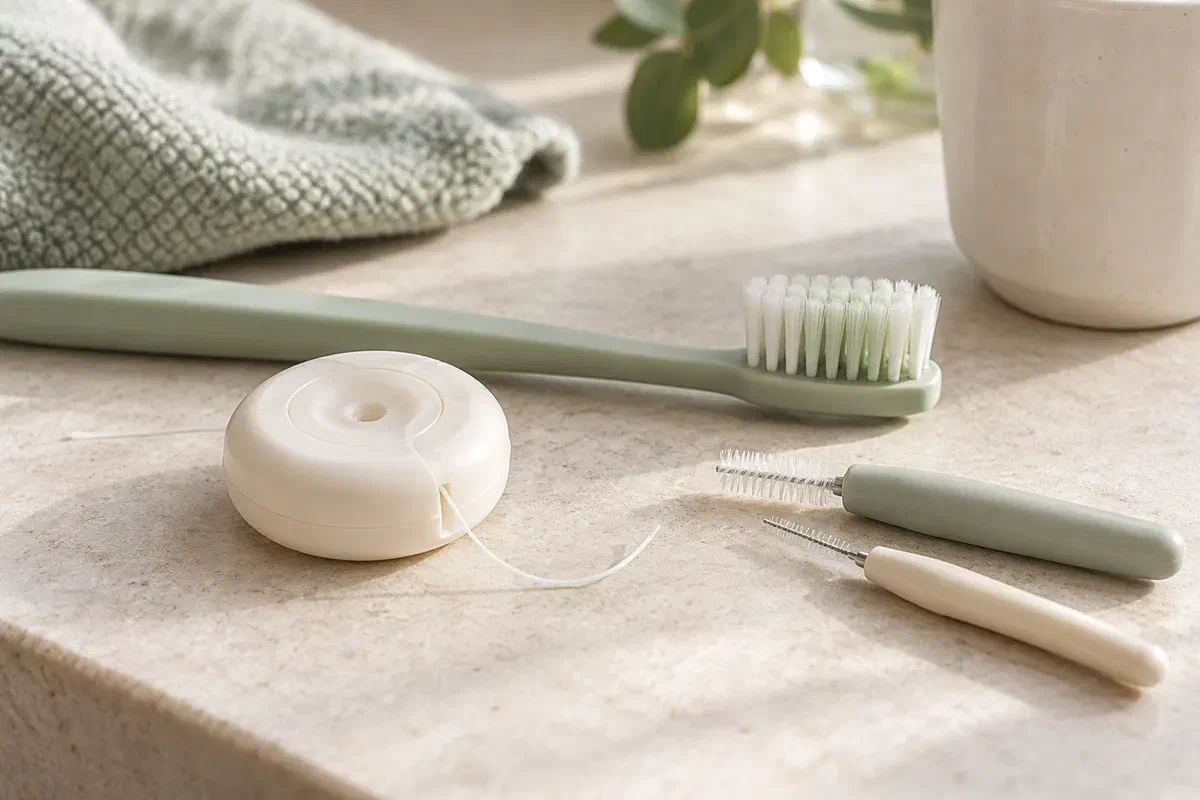
Illustrative soft toothbrush, floss, and interdental brushes arranged beside a ceramic cup
What to mention

Your habits, your health, and the teeth that get missed

Bring the routine you have, not the one you plan to have. Tell us what you do, what you skip, and what has made sticking with advice difficult before.

Teeth that are always rushed or skipped

Point out where floss jams, a brush does not fit, or food keeps collecting. Mention any crowns or bridges nearby. Demonstrating a suitable aid at those teeth is more useful than another general reminder to clean thoroughly.

Bleeding, or a change in bleeding

Regular bleeding should be examined, and so should a noticeable change after a shift in habits. Describe where and when it happens. The clinician can review the tissue and your technique, explain the likely cause, and say whether treatment is needed beyond prevention.

Tobacco, vaping, and other health factors

Tell us honestly about smoking or vaping, as well as conditions such as diabetes, medications, and any past periodontal care. These can influence gum health and planning. Open discussion lets the advice and interval reflect your real situation.

Talking about tobacco or health habits is not about blame. Gum health has many influences, and the aim is to support useful steps and appropriate care from here.

What you gain from a plan

A clear routine to anchor a bigger change

When you are already working on one habit, the gum routine should be simple. Ask for the single most useful change and how to check you are doing it properly. If anything is uncomfortable or hard to fit in, mention it; that helps shape a plan you will keep.

Professional assessment catches what is not visible at home. Gum disease may progress with little pain, and some signs may be harder to spot in people who use tobacco. Ask how your findings and history inform how often examinations and cleanings should be scheduled.

Patient information: Canadian Dental Association — plaque control, professional cleaning, and gum-disease review

A manageable home routine

Go over gentle brushing with fluoride toothpaste and one suitable way to clean between teeth. Ask for coaching on angle and pressure at the sites you find hard. A tool helps only when you can use it comfortably on the surfaces it is meant for.

Professional cleaning and gum monitoring

Tartar clings on no matter how diligent you are with a brush, and tobacco can add staining that makes the gumline harder to judge at home. The team will point out the areas that need professional attention and tell you if anything goes beyond prevention. Ask what this visit contributes and which observations become your baseline.

Review timing that reflects your risks

Factors such as previous periodontitis or tobacco use may affect how often you should be seen. Ask why a particular interval is recommended and what could change it. The schedule should have a clinical reason behind it.

Inside the appointment

Talk, assess, demonstrate, and decide

A preventive visit can include examination, guidance, and suitable professional cleaning. Ask what yours includes and whether any treatment found would need another appointment.

  1. Start with your habits and health

    Describe your brushing and between-teeth cleaning and how regularly you manage them. Bring the aids you use. Mention tobacco or vaping, bleeding, food trapping, dryness, earlier gum treatment, and any changes in health or medicines.

  2. Look at the gums and find priority sites

    The clinician examines the tissues and supporting structures as appropriate and identifies where attention is needed. Ask whether the findings fit prevention or indicate active disease. That answer keeps home advice from overshadowing a problem that needs treatment.

  3. Practise and discuss support

    Watch the method on your difficult teeth and try it with feedback. If an aid is awkward, ask about alternatives. If you are working on quitting tobacco, ask about support, and coordinate any medical questions with your doctor rather than changing prescribed treatment.

  4. Set a first step and a review

    Choose one change to begin with and confirm what the next visit should achieve. Ask which symptoms call for an earlier phone call. When you return, tell us what helped and what was hard, so the plan improves over time.

In the weeks that follow

Keep the gum routine steady while other habits change

Routines last when the aids are close, the steps are easy to remember, and there is a regular time. Mention problems as they arise rather than waiting until the habit fades.

Pair the routine with an existing habit

Attach the agreed steps to something you already do each day, and keep the aids nearby. If your schedule changes, plan how to keep the basics on hand. Ask which items you really need so the list stays short.

Adjust if an aid causes pain

Do not force a brush into a tight space or scrub tender gums. Let us know which tooth or space is the problem; a smaller brush, a softer pick, or a slightly different angle often solves it. If bleeding or soreness continues for more than a short while, arrange an assessment rather than ignoring it.

Mention changes at your next visit

New dental work, changes in dexterity, a change in tobacco use, or returning symptoms may mean the plan needs updating. Bring these up at your review or sooner if symptoms warrant. The routine should stay practical.

The level of care that fits

Prevention, treatment, and maintenance are not interchangeable.

Ask which one describes your current findings. A good home routine helps in each case, but it does not turn one kind of visit into another or replace a diagnosis.

Protecting healthy gums and addressing early signs

Preventive care for gums without established disease

Agree on cleaning, coaching, and examination intervals that suit your findings and risk factors. Ask which areas to monitor and how changes will be tracked. No routine can eliminate every future risk, but a plan can support ongoing health.

Responding to a problem the assessment has found

Treatment when inflammation or periodontal disease is present

Professional treatment may be needed together with better daily cleaning. Ask about your diagnosis and how it affects the advice. Prevention should support treatment, not replace or delay it.

Continuing care for a past periodontal diagnosis

Supportive maintenance after treatment

After active care, maintenance visits keep track of the tissues and address remaining needs. Ask how these differ from routine preventive cleaning and why your interval fits your history. Feeling better does not mean earlier sites can go unchecked.

Questions from Georgetown

Honest answers about habits and gum health

Bring your aids, point out the difficult teeth, and ask to see the method. Advice is most useful when it fits your mouth, your dental work, and the changes you are making.

(905) 876-4488
Does smoking affect my gums even if they don’t bleed?
Tobacco use is a recognised factor in gum health, and it may make bleeding less noticeable. That is one reason a professional examination matters. Tell the clinician about your tobacco use so they can take it into account.
Is vaping easier on the gums than smoking?
Mention vaping during your visit so it can be considered as part of your gum health. Ask the clinician what is known and what it means for your own care, rather than relying on assumptions or marketing claims. Whatever you use, the basics stay the same: careful daily cleaning and an examination at the interval your findings support.
My gums started bleeding after I quit smoking. Is that a problem?
Any new or persistent bleeding is worth having examined. Let the clinician know when it began and where you notice it. They can check the gums and advise whether your routine, technique, or treatment needs attention.
Can stress affect how well I look after my gums?
Stressful periods often disrupt routines. If cleaning has slipped, say so, and ask for a simpler version you can keep during busy times. Clenching or grinding can also become more noticeable when life is hectic, so mention jaw soreness too. The clinician can check whether anything needs attention beyond the routine itself.
Do I still need reviews if my gums feel healthy?
Yes. Gum disease can develop without pain, so comfort is not reliable reassurance. Keep to the interval suggested after your examination and call sooner if bleeding or swelling persists.
How should I prepare for a visit from Georgetown?
Bring a medicine list, your usual aids, and notes on any sites that bleed or trap food. Mention tobacco use and any recent changes. Our Bronte Street practice can suggest appointment times when you call.
Georgetown to Bronte Street

A good moment to look after your gums is the one you are in.

Contact our Bronte Street practice about preventive gum care, difficult cleaning areas, tobacco-related questions, or earlier periodontal treatment. The conversation begins with what you do each day now and whatever you most want to understand about your gums.

Your plan for cleaning, treatment, and review timing is shaped by your own findings and habits. No routine, however consistent, can promise you will avoid gum disease.

Visit Milton Dental Clinic
Unit 1, 342 Bronte St. S, Milton, ON L9T 5B7
Get directions Clinic hours
Monday–Thursday
11am–7pm
Friday–Sunday
By appointment only

Areas we serve

  • Milton
  • Oakville
  • Mississauga
  • Georgetown
  • Halton Hills
  • Acton
  • Campbellville
  • Brampton
  • Burlington
  • Puslinch
  • Rockwood
  • Erin
  • Caledon
  • Etobicoke
  • Old Milton
  • Bronte Meadows
  • Timberlea
  • Dorset Park
  • Dempsey
  • Clarke
  • Beaty
  • Coates
  • Harrison
  • Scott
  • Willmott
  • Ford
  • Bowes
  • Cobden
  • Walker
  • Mountain View
  • Milton Heights
  • Hawthorne Village
  • Valley View
  • Fallingbrook
  • Nassagaweya
  • Trafalgar
  • Esquesing
  • Nelson
  • Brookville
  • Moffat
  • Glen Williams
  • Norval
  • Limehouse
  • Stewarttown
  • Ashgrove
  • Hornby
  • Silver Creek
  • Speyside
  • Scotch Block
  • North Oakville
  • River Oaks
  • Glen Abbey
  • West Oak Trails
  • Palermo
  • Bronte Creek
  • College Park
  • Joshua Creek
  • Uptown Core
  • Preserve
  • Iroquois Ridge
  • Lisgar
  • Meadowvale
  • Meadowvale Village
  • Churchill Meadows
  • Erin Mills
  • Central Erin Mills
  • Streetsville
  • East Credit
  • Creditview
  • Heartland
  • Sheridan
  • Mount Pleasant
  • Credit Valley
  • Huttonville
  • Churchville
  • Springbrook
  • Northwest Brampton
  • Bram West
  • Fletcher's Meadow
  • Fletcher's Creek South
  • Alton Village
  • Orchard
  • Millcroft
  • Headon Forest
  • Tansley
  • Brant Hills
  • Tyandaga
  • Kilbride
  • Lowville
  • Aberfoyle
  • Morriston
  • Arkell
  • Hillsburgh
  • Freelton
  • Carlisle
  • Waterdown
  • Flamborough
  • Mountsberg

How can we help?

Milton Dental Clinic

Have a question about your smile? Choose the option that works best for you.

For urgent dental concerns, please call.
Messages are reviewed during clinic hours.