

Illustrative patient discussing a daily gum-care routine with a dental clinician
Specialized Care

Gum Disease Prevention in Milton

Pink in the sink on a rushed weekday morning is easy to ignore. Close to home in Milton, we can look at what your gums are showing, tune your cleaning to the tricky spots, and set a review rhythm that matches your periodontal history.

Gum care that fits a Milton weekday

The two minutes at the sink matter more when they aim at the right places.

Most days, gum care happens in a hurry: lunches packed, someone calling from the hallway, a quick brush before the door closes. Preventing gum disease asks for two things alongside that routine. Plaque has to be cleared from tooth surfaces and from between teeth at home, and a clinician needs to check periodically for inflammation or loss of support you would not feel.

Generic advice often breaks down at specific sites. A snug contact that shreds floss, a gap beside a bridge, a crowded lower front tooth, or a sore wrist can each turn a good intention into a skipped step. When a place is hard to reach, the answer is usually a better-suited tool or angle, not scrubbing harder or switching to a harsher product.

Because you are local to Milton, a short demonstration visit can be slotted in without much planning. Bring the brush or floss you already own and point to the spots that frustrate you. We can examine your gums, show a method in your own mouth, and suggest when to come back, adjusting the plan as your health and habits shift.

Ask about your daily gum routine
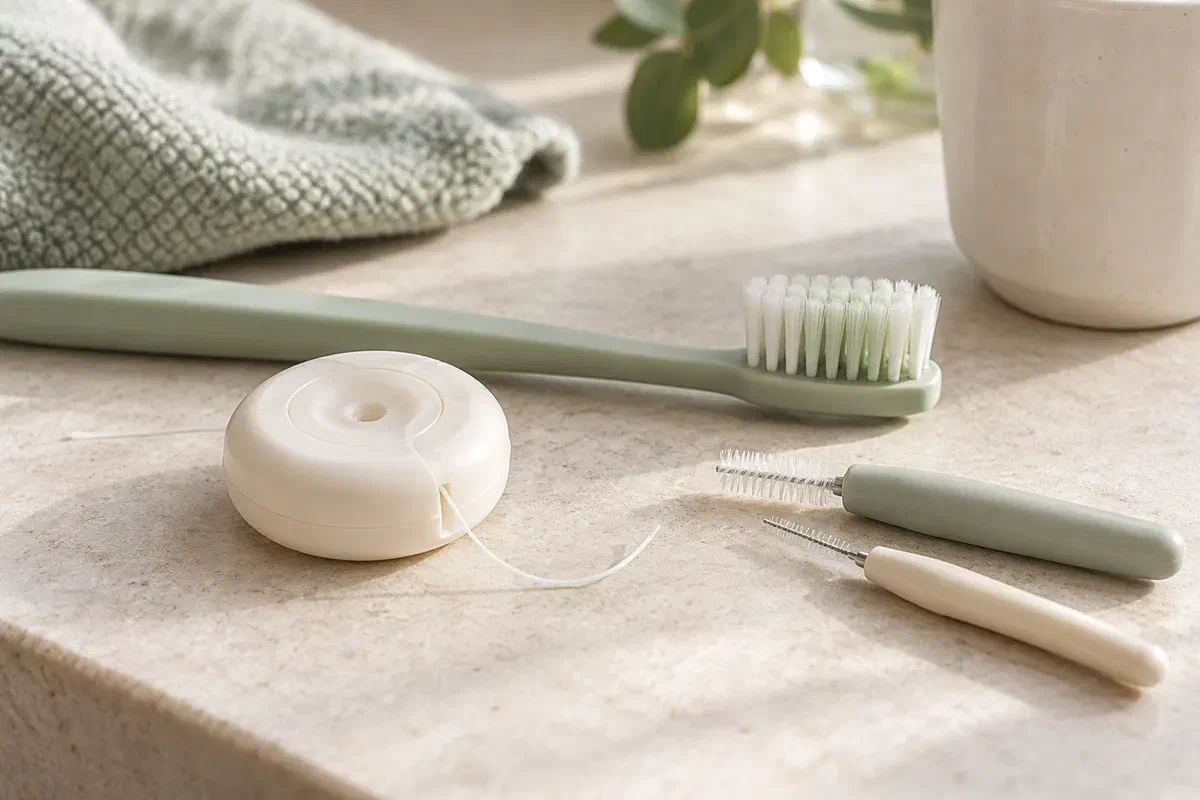
Illustrative soft toothbrush, floss, and interdental brushes arranged beside a ceramic cup
What usually gets in the way

Name the step you skip, and we will start there.

Nobody arrives with a flawless routine, and you are not expected to. Describe what you actually do now, the parts that feel awkward or slow, and what would help the advice survive a busy week.

Contacts and gaps that resist cleaning

Show us where floss snags or tears, where a small brush will not pass, or where food keeps packing in after meals. Mention any crown or bridge nearby. A demonstration at those exact teeth is far more practical than a broad reminder to clean between everything.

Gums that bleed so often it seems normal

Frequent bleeding is a signal to check, not a habit to live with. Tell us which areas bleed and for how long it has been happening. The clinician can examine the tissue, watch your technique, explain the probable cause, and say whether prevention is still enough or treatment is already due.

Health changes, smoking, or earlier gum treatment

Let us know about new diagnoses, medicines, or past periodontal care. Diabetes and tobacco use are two examples of factors that can affect the gums and the plan around them. Sharing them lets review timing and advice match you rather than a one-size calendar.

Talking about prevention is not about assigning fault. Many factors shape gum health, and the point of the visit is to agree on helpful next steps and the right level of care from here.

What you should leave with

A clear focus, a method you can repeat, and a reason for the next date.

Two or three precise instructions tend to outlast a bag of sample products. Ask which habit to work on first and how you will know the tool is reaching where it should. If something feels uncomfortable or will not fit your morning, say so plainly; that feedback is how the plan gets better.

An examination picks up what a mirror cannot. Gum disease can progress quietly, with little or no pain, so feeling fine is a weak guide to whether a check is worthwhile. Ask how today’s findings and your past history shape the cleaning and examination interval being suggested.

Patient information: Canadian Dental Association — plaque control, professional cleaning, and gum-disease review

Practical plaque control at home

Talk through gentle brushing with a fluoride toothpaste and the between-teeth method that suits your spaces. Ask for coaching on pressure and angle at the sites you struggle with. Any tool earns its place only when you can use it comfortably where it is meant to work.

Professional removal of hardened deposits

Tartar cannot be brushed away at home. The team can show where professional cleaning is needed and whether the gum findings call for more than preventive care. Ask what the appointment contributes beyond your home routine and which measurements will be compared next time.

Review timing based on your record

A person who has had periodontitis treated may need a different maintenance schedule from someone who never has. Ask why the suggested interval fits you and what might shorten or lengthen it. The timing should follow a clinical reason, not simply a habit of booking twice a year.

How a Milton prevention visit runs

From what you do now to one change you can keep

A preventive appointment may combine an examination, coaching, and suitable professional cleaning. Ask what your visit will include and whether a separate appointment is needed for any treatment the examination uncovers.

  1. Describe your current routine honestly

    Tell us how you brush and clean between teeth, how many days each actually happens, and what makes it hard. Bring the tools you want checked. Mention bleeding, trapped food, a dry mouth, any earlier gum care, and recent changes in health or medication.

  2. Examine the gums and find the priority sites

    The clinician looks at the gum tissue and its supporting structures as needed, then shows you which areas matter most. Ask directly whether the picture fits prevention or points to active disease. Knowing which one applies keeps a home-care chat from hiding something that needs professional treatment.

  3. Practise the technique and talk through risks

    Have the method shown on the teeth you find awkward, then try it yourself. If a tool is hard to grip, ask about alternatives. Where it applies, discuss help with quitting tobacco or coordination with your physician, without altering any prescribed treatment on your own.

  4. Settle the next step and the review date

    Pick the single change you will start with and confirm what the next appointment is for. Ask which signs mean you should call sooner. When you return, tell us what worked and what did not, so the plan is refined rather than repeated unchanged.

Between visits

Keep it simple enough to survive the busiest weeks.

A routine lasts when the tools are handy, the method is clear, and it has a set place in your day. Raise problems early instead of waiting until frustration makes you give up altogether.

Store the tools where you will see them

Pick one consistent time and spot for the steps you agreed on. If you travel or your schedule shifts, plan how to keep the essentials with you. Ask which items are truly needed so the routine does not depend on a long shelf of products.

Ask for a change when a tool hurts or will not fit

Never force an interdental brush into a tight gap or scrub a tender gumline harder. Note where the trouble happens and ask for an adjustment. If bleeding or soreness continues, book an assessment rather than treating it as the cost of cleaning well.

Treat new circumstances as a cue to revisit

Fresh dental work, reduced hand strength, or returning gum symptoms can make an old routine a poor fit. Bring these up at your next appointment, or earlier if symptoms call for it. The plan should stay both workable and clinically sound.

Which kind of care fits now

Preventing, treating, and maintaining are three separate tasks.

Ask which of these matches your current findings. A strong home routine helps in every case, yet it does not make all professional visits the same or replace a proper diagnosis.

For keeping healthy gums healthy and catching early signs

Preventive care when no periodontal disease is established

Talk about suitable cleaning, hands-on coaching, and examination intervals based on what was found. Ask which areas need watching and how change will be tracked. The plan supports ongoing health, though no routine can remove every future risk.

For a problem the examination has already identified

Treatment when inflammation or disease is found

Professional treatment may be needed alongside better daily cleaning. Ask what the diagnosis is and how it changes the advice. Prevention should support that treatment, never become a reason to put off an identified problem month after month.

For a past periodontal diagnosis that still matters

Ongoing periodontal maintenance after active care

After treatment, regular assessment and maintenance help monitor the tissues and handle remaining needs. Ask how this differs from a standard preventive cleaning and why your interval was chosen. Feeling better does not cancel the need to recheck sites affected before.

Gum prevention questions from Milton

Quick answers for the questions that come up at the sink

Bring your tool, point to the troublesome area, and ask us to show you. Advice works best when it fits your teeth, your dental work, and the shape of your day.

(905) 876-4488
Is an electric toothbrush necessary to prevent gum disease?
Not necessarily. What matters is reaching the gumline gently and consistently. Some people find a powered brush easier, especially with limited dexterity, while others do well with a manual one. Bring whichever you use and ask whether your technique is reaching the areas that need it.
My teenager’s gums bleed when brushing. Is that worth a visit?
Bleeding at any age is worth having checked rather than ignored. Braces, missed spots, and changing routines can all play a part. An examination can show where plaque is collecting and whether simple coaching is enough or something more needs attention.
Do I still need between-teeth cleaning if my teeth have no gaps?
Yes. Tight contacts still have surfaces a toothbrush cannot reach. Very snug spaces may suit floss or a particular aid better than a brush. Ask to have the method demonstrated so you can clean those surfaces without forcing anything.
Can a rinse do the job if I am too tired to floss at night?
A rinse is not a replacement for mechanically removing plaque. Ask whether a rinse has any role for you and how to use it. If evenings are the problem, ask whether your between-teeth step could move to another time of day.
Can I skip a preventive review when my gums feel fine?
Comfort is not a dependable sign of gum health, since disease can develop with little pain. Keep to the review plan your examination supports, and call sooner about persistent bleeding or swelling. Ask what is being monitored so the purpose is clear.
How easy is it to fit a gum-care visit into a Milton workday?
Our Bronte Street practice is open Monday to Thursday from 11am to 7pm, with Friday to Sunday by appointment only. Mention your schedule when you call, and bring your medicine list and cleaning tools so the visit stays focused.
Book in Milton

Start with the routine you have and the spots that bother you.

Call our Bronte Street practice to talk about preventive gum care, hard-to-clean areas, or past periodontal treatment. We will begin with what you already do and the questions you want the assessment to answer.

Advice, professional cleaning, any treatment, and review intervals depend on your individual findings. No routine can guarantee you will never develop gum disease.

Visit Milton Dental Clinic
Unit 1, 342 Bronte St. S, Milton, ON L9T 5B7
Get directions Clinic hours
Monday–Thursday
11am–7pm
Friday–Sunday
By appointment only

Areas we serve

  • Milton
  • Oakville
  • Mississauga
  • Georgetown
  • Halton Hills
  • Acton
  • Campbellville
  • Brampton
  • Burlington
  • Puslinch
  • Rockwood
  • Erin
  • Caledon
  • Etobicoke
  • Old Milton
  • Bronte Meadows
  • Timberlea
  • Dorset Park
  • Dempsey
  • Clarke
  • Beaty
  • Coates
  • Harrison
  • Scott
  • Willmott
  • Ford
  • Bowes
  • Cobden
  • Walker
  • Mountain View
  • Milton Heights
  • Hawthorne Village
  • Valley View
  • Fallingbrook
  • Nassagaweya
  • Trafalgar
  • Esquesing
  • Nelson
  • Brookville
  • Moffat
  • Glen Williams
  • Norval
  • Limehouse
  • Stewarttown
  • Ashgrove
  • Hornby
  • Silver Creek
  • Speyside
  • Scotch Block
  • North Oakville
  • River Oaks
  • Glen Abbey
  • West Oak Trails
  • Palermo
  • Bronte Creek
  • College Park
  • Joshua Creek
  • Uptown Core
  • Preserve
  • Iroquois Ridge
  • Lisgar
  • Meadowvale
  • Meadowvale Village
  • Churchill Meadows
  • Erin Mills
  • Central Erin Mills
  • Streetsville
  • East Credit
  • Creditview
  • Heartland
  • Sheridan
  • Mount Pleasant
  • Credit Valley
  • Huttonville
  • Churchville
  • Springbrook
  • Northwest Brampton
  • Bram West
  • Fletcher's Meadow
  • Fletcher's Creek South
  • Alton Village
  • Orchard
  • Millcroft
  • Headon Forest
  • Tansley
  • Brant Hills
  • Tyandaga
  • Kilbride
  • Lowville
  • Aberfoyle
  • Morriston
  • Arkell
  • Hillsburgh
  • Freelton
  • Carlisle
  • Waterdown
  • Flamborough
  • Mountsberg

How can we help?

Milton Dental Clinic

Have a question about your smile? Choose the option that works best for you.

For urgent dental concerns, please call.
Messages are reviewed during clinic hours.