

Illustrative patient discussing a daily gum-care routine with a dental clinician
Specialized Care

Gum Disease Prevention in Mississauga

That toothpick in your desk drawer is a clue. When food keeps catching in the same spots, gums there can become irritated. If you are coming from Mississauga, we can examine those areas, find a cleaning aid that actually fits, and plan follow-up around your history.

Gum prevention for Mississauga commuters

The same three teeth, every single lunch

Most people can name the spot without looking: the gap behind a lower molar, the space beside an old filling, the corner where spinach always ends up. Those repeat offenders are where plaque settles and where gums often show the first signs of irritation. Prevention aims to keep them clean every day while a clinician checks for changes you cannot see.

Trapped food is a practical problem with a practical answer. Sometimes the space suits a small interdental brush, sometimes floss or a soft pick works better, and sometimes a filling or contact needs to be looked at. Picking harder with a toothpick or reaching for a stronger mouthwash rarely fixes the cause and can leave the gum sore.

From Mississauga, plan the appointment to cover both the examination and the coaching, so one trip does the work of two. Bring the aid you already reach for and show us the troublesome teeth. We will look at the gums there, demonstrate an approach that suits the space, and suggest when a review would be useful.

Show us your trouble spots
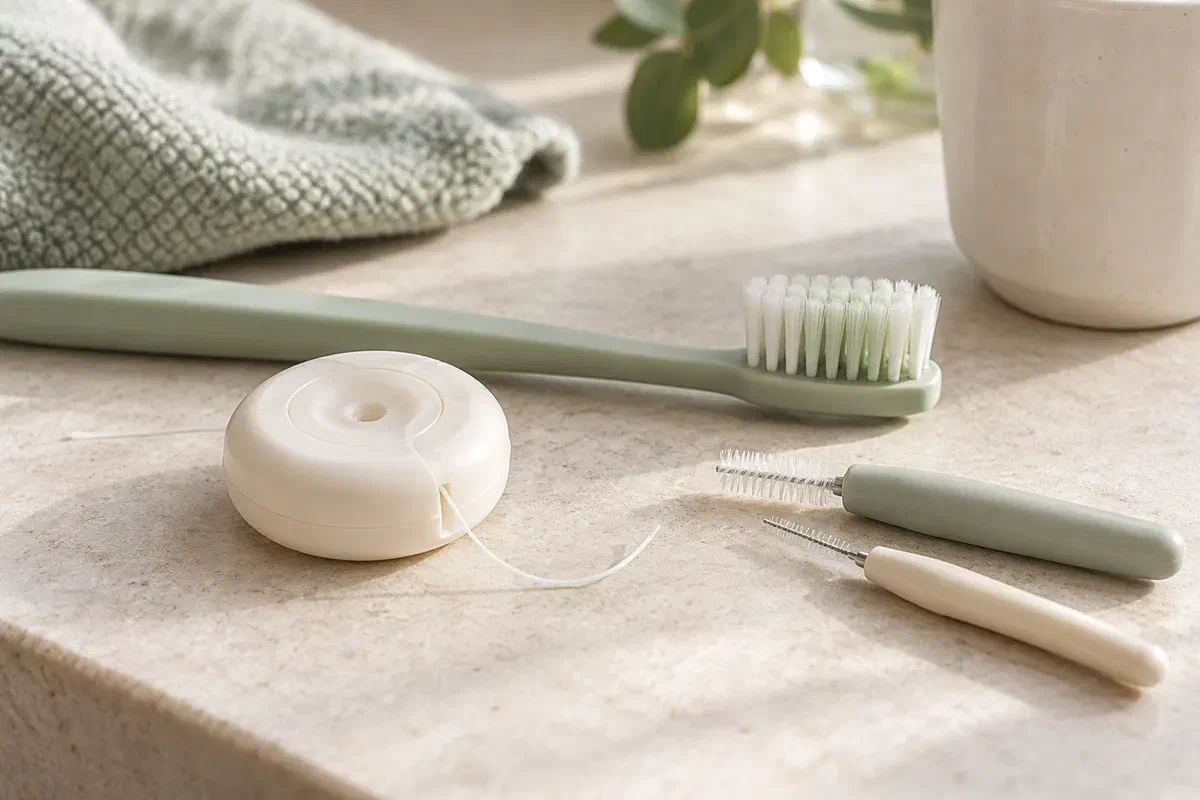
Illustrative soft toothbrush, floss, and interdental brushes arranged beside a ceramic cup
Common sticking points

Food traps, bleeding, and the details of your health

A messy or inconsistent routine is still a useful place to start. Describe your real habits, the steps you tend to skip, and what would make cleaning fit around commuting and work.

Gaps where food lodges after every meal

Point to the teeth that collect food and explain what you use to clear them. Mention nearby crowns, fillings, or a bridge. Seeing a suitable aid used in that exact space is far more useful than being told, in general, to clean between teeth.

A little blood whenever you floss

Regular bleeding is a sign to examine, not something to shrug off. Tell us where it appears and how long it has been going on. The clinician can check the gums, review your technique, explain what is probably causing it, and say whether treatment is needed in addition to prevention.

Medical changes, tobacco, or previous gum care

Let us know about new conditions, prescriptions, or any periodontal treatment in the past. Diabetes and tobacco use are two examples of factors that can affect gum health. Discussing them openly helps the review interval and advice reflect you specifically.

A diagnosis is not an accusation. Gum health has many contributing factors, and the purpose of the visit is to work out sensible next steps and appropriate care.

What good prevention looks like

Clean the right spaces, then check in at the right time.

It helps to leave with a focused plan rather than a list of things to buy. Ask what to change first and how to judge whether an aid is reaching the surface it should. Mention any recommendation that hurts or simply will not fit your day, because that feedback shapes a better plan.

A clinician can detect changes that you are unlikely to notice. Because gum disease may cause little pain as it develops, comfort on its own is not a good reason to postpone a check. Ask how your findings and any past treatment affect how often examinations and cleanings are suggested.

Patient information: Canadian Dental Association — plaque control, professional cleaning, and gum-disease review

A between-teeth method sized to your gaps

Talk through gentle brushing with fluoride toothpaste and the right cleaner for each space. Ask for coaching on angle and pressure where food collects. A tool only earns its place in your routine if you can use it comfortably where it is needed.

Removal of tartar you cannot brush off

Once plaque hardens, home cleaning will not shift it. The team can show where professional cleaning is required and whether your gum findings point beyond prevention. Ask what the visit contributes and which observations will be tracked at future appointments.

Follow-up spaced around your own history

If periodontitis has been treated before, maintenance may need to be closer together than for someone without that history. Ask why your interval was chosen and what would change it. The spacing should rest on clinical reasoning, not on a default reminder.

What the visit involves

Show, examine, practise, and plan

Prevention appointments can include an examination, guidance, and suitable professional cleaning. Ask what yours includes and whether any treatment that comes up would need a separate booking.

  1. Point out your food traps and habits

    Describe how you brush and clean between teeth, how often each happens, and where food gets stuck. Bring the picks or floss you use. Mention bleeding, dryness, previous gum treatment, and any changes in health or medication.

  2. Examine the gums around those teeth

    The clinician assesses the gums and supporting structures as needed, paying attention to the sites you identified. Ask whether the findings suggest prevention or active disease. That answer decides whether coaching is enough or professional treatment should come first.

  3. Practise with a suitable aid

    Watch the method demonstrated in the spaces you find difficult, then try it with feedback. If a tool feels awkward, ask about another option. Where relevant, talk through tobacco support or coordination with your doctor, without adjusting prescribed treatment on your own.

  4. Leave with a first step and a reason to return

    Choose one change to begin with and confirm what the next appointment should achieve. Ask which symptoms mean you should call earlier. When you come back, let us know how the change went so we can fine-tune it instead of starting over.

Keeping it going on busy days

A routine that travels as well as you do

Habits stick when the tools are close, the method is clear, and there is a reliable moment for it. Bring up difficulties early rather than letting the routine fade without anyone noticing.

Keep a second set where you need it

Choose a dependable time for the agreed steps, and consider keeping a small kit at work or in a bag if food traps bother you after lunch. Ask which items truly matter so you are not carrying a pharmacy around.

Change the aid if it hurts

Never force a brush through a space that is too small or press harder on gums that feel tender. Tell us where it is uncomfortable and ask about a different size or approach. Ongoing bleeding or soreness should be assessed rather than tolerated.

Recheck the plan after any big change

A new filling or crown, changes in hand strength, or symptoms returning can make your routine less suitable. Mention these at the next appointment or earlier if needed. The plan should keep working in real life as well as clinically.

Finding the right category

Keeping gums healthy is different from treating them

Ask where your current findings place you. Careful home cleaning supports every one of these paths, yet it cannot make them equivalent or substitute for a diagnosis.

For maintaining health and noticing early changes

Staying healthy when no periodontal disease is present

Plan cleaning, coaching, and examination intervals around what your examination shows. Ask which areas to watch and how they will be compared over time. This supports continued health, although no plan can remove every possibility of future problems.

For a problem identified at your assessment

Dealing with inflammation or disease that has been found

Treatment by the dental team may be needed along with better home care. Find out the diagnosis and what it means for your routine. Preventive habits support treatment; they should never become a reason to keep postponing it.

For a history of periodontal disease

Staying on track after periodontal treatment

Once active care is complete, ongoing maintenance visits watch the treated areas and deal with any remaining needs. Ask how these visits compare with a standard cleaning and why the spacing suits you. Sites that have improved still need to be reviewed.

Mississauga gum-care questions

Answers for food traps, floss, and follow-up

Bring the aid you use, show us the space that bothers you, and ask for a demonstration. Advice helps most when it matches your teeth, your dental work, and your schedule.

(905) 876-4488
Is it harmful to use a toothpick to clear trapped food?
Used roughly, it can irritate the gum, and it may not clean the space properly. Show us where you use it. A soft pick, floss, or interdental brush may suit the area better, and the clinician can check whether a contact or filling needs attention.
Why does food get stuck in the same spot every time?
It may relate to the shape of the space, an open contact, or a filling or crown edge. An examination can help identify the reason. Ask whether a cleaning aid is the answer or whether the area itself should be assessed further.
Does it matter what time of day I clean between my teeth?
Consistency matters more than the exact time. Choose a moment you can reliably keep, whether morning or evening. If your current slot keeps getting skipped, ask for help moving the step to a part of the day that works.
How do I know if I am using an interdental brush correctly?
It should pass through the space without forcing and without pain. Bring it to your visit and have the size and angle checked in your own mouth. Different spaces may need different sizes.
My gums only bleed sometimes. Can I wait until it gets worse?
It is better not to. Bleeding is worth assessing even when it is occasional, and gum disease can progress without pain. Keep your recommended reviews, and ring us before the next one if the bleeding carries on or the gum swells.
Can I book my review and my family’s on the same day?
Ask when you call. Coming from Mississauga, grouping appointments can reduce trips, and our Bronte Street practice is open Monday to Thursday, 11am to 7pm, with Friday to Sunday by appointment. We will see what can be arranged.
Planning from Mississauga

Bring the toothpick. We will help you find something better.

Get in touch with our Bronte Street practice about preventive gum care, spaces that trap food, or a previous periodontal diagnosis. We will begin with your current routine and the questions you want the examination to answer.

Advice, professional cleaning, treatment, and review intervals depend on what your examination shows. No routine can guarantee you will never develop gum disease.

Visit Milton Dental Clinic
Unit 1, 342 Bronte St. S, Milton, ON L9T 5B7
Get directions Clinic hours
Monday–Thursday
11am–7pm
Friday–Sunday
By appointment only

Areas we serve

  • Milton
  • Oakville
  • Mississauga
  • Georgetown
  • Halton Hills
  • Acton
  • Campbellville
  • Brampton
  • Burlington
  • Puslinch
  • Rockwood
  • Erin
  • Caledon
  • Etobicoke
  • Old Milton
  • Bronte Meadows
  • Timberlea
  • Dorset Park
  • Dempsey
  • Clarke
  • Beaty
  • Coates
  • Harrison
  • Scott
  • Willmott
  • Ford
  • Bowes
  • Cobden
  • Walker
  • Mountain View
  • Milton Heights
  • Hawthorne Village
  • Valley View
  • Fallingbrook
  • Nassagaweya
  • Trafalgar
  • Esquesing
  • Nelson
  • Brookville
  • Moffat
  • Glen Williams
  • Norval
  • Limehouse
  • Stewarttown
  • Ashgrove
  • Hornby
  • Silver Creek
  • Speyside
  • Scotch Block
  • North Oakville
  • River Oaks
  • Glen Abbey
  • West Oak Trails
  • Palermo
  • Bronte Creek
  • College Park
  • Joshua Creek
  • Uptown Core
  • Preserve
  • Iroquois Ridge
  • Lisgar
  • Meadowvale
  • Meadowvale Village
  • Churchill Meadows
  • Erin Mills
  • Central Erin Mills
  • Streetsville
  • East Credit
  • Creditview
  • Heartland
  • Sheridan
  • Mount Pleasant
  • Credit Valley
  • Huttonville
  • Churchville
  • Springbrook
  • Northwest Brampton
  • Bram West
  • Fletcher's Meadow
  • Fletcher's Creek South
  • Alton Village
  • Orchard
  • Millcroft
  • Headon Forest
  • Tansley
  • Brant Hills
  • Tyandaga
  • Kilbride
  • Lowville
  • Aberfoyle
  • Morriston
  • Arkell
  • Hillsburgh
  • Freelton
  • Carlisle
  • Waterdown
  • Flamborough
  • Mountsberg

How can we help?

Milton Dental Clinic

Have a question about your smile? Choose the option that works best for you.

For urgent dental concerns, please call.
Messages are reviewed during clinic hours.