

Illustrative patient discussing a daily gum-care routine with a dental clinician
Specialized Care

Gum Disease Prevention in Puslinch

A bonded retainer wire, aligners, or a lower front tooth that never feels clean can make gum care fiddly. From Puslinch, you can bring those awkward areas in for an examination, a hands-on demonstration of suitable aids, and a review plan based on your history.

Coming in from Puslinch

That thin wire behind your front teeth

Years after orthodontic treatment, plenty of adults still have a fixed retainer bonded behind the lower front teeth. It does its job well, but floss cannot simply slide down between those teeth anymore, and tartar often gathers there. Gum disease prevention means finding a practical way to clean such spots every day, alongside regular professional assessment.

Retainers are only one example. Crowded teeth, aligner trays worn most of the day, a bridge, wider spaces after recession, or sore fingers can all make standard advice hard to apply. The answer is usually a threader, a small brush, or a different angle, chosen and demonstrated for that site, rather than scrubbing harder or reaching for a stronger rinse.

Travelling from Puslinch, it helps to point out every awkward area in one appointment. Bring your aligners or any aids you use, and tell us which teeth feel neglected. We will examine your gums, show you how to clean around the wire or dental work, and suggest an interval for review that can change as your needs do.

Ask about cleaning around a retainer
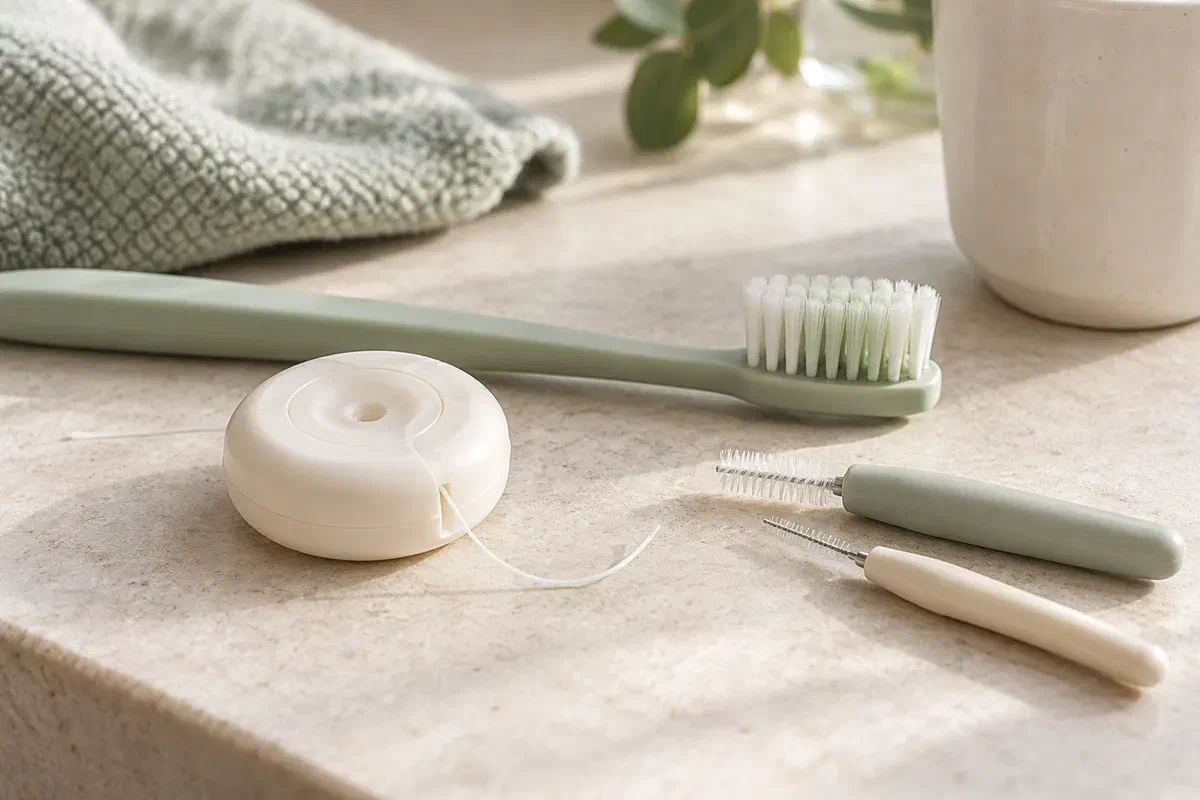
Illustrative soft toothbrush, floss, and interdental brushes arranged beside a ceramic cup
Tricky spots we often see

Wires, trays, and the spaces floss cannot reach

Arrive with whatever routine you have. Tell us what you manage, what you have given up on, and anything that makes it awkward, such as limited time or hand discomfort.

Teeth joined by a retainer or bridge

Show us where floss will not pass, where a brush cannot angle in, or where tartar seems to build up quickly. Mention how long the retainer or bridge has been in place. A demonstration at those exact teeth gives you a method you can actually repeat.

Bleeding around the front or under the wire

Bleeding in hard-to-clean areas is worth examining, not just tolerating. Describe where and how often you notice it. The clinician can look at the tissue, review your method, explain what is likely happening, and tell you whether prevention is enough or treatment is warranted.

Health factors and earlier gum care

Let us know about medical conditions, medications, tobacco use, and any periodontal treatment you have had. Factors such as diabetes and smoking can affect gum health. Sharing them helps shape advice and review timing for you specifically.

Difficulty cleaning around dental work is common and nothing to be embarrassed about. The visit is about finding methods that work and the right level of care from here.

Why it is worth sorting out

One reliable method for every awkward area

The most helpful outcome is a short list of techniques you trust. Ask which area to tackle first and how to tell whether the aid is really cleaning it. If threading floss under a wire every night feels impossible, say so; there may be a quicker alternative worth trying.

A clinician can see things you cannot. Gum disease may advance with little pain, so a comfortable mouth is not proof that a review can be skipped. Ask how today’s findings and any earlier treatment shape the spacing of examinations and professional cleanings.

Patient information: Canadian Dental Association — plaque control, professional cleaning, and gum-disease review

Aids that fit your dental work

Discuss gentle brushing with fluoride toothpaste and between-teeth aids that reach under wires or bridges. Ask for practice with the angle and pressure needed. An aid becomes useful only once you can handle it comfortably in the space it was chosen for.

Professional cleaning where tartar collects

Tartar behind lower front teeth and around retainers is common, and only professional cleaning removes it. The team can show you where it has formed and whether the gum findings go beyond prevention. Ask what will be looked at again next time.

Review intervals that make sense for you

A history of treated periodontitis may mean a different maintenance schedule than for someone without one. Ask why the interval was chosen and what could change it. The spacing should have a clinical reason behind it, not just habit.

How the appointment flows

We look, we show, you try, and then we plan.

Expect an examination, a practical lesson with the aids, and professional cleaning if your findings call for it. Check ahead what your appointment will include and whether any treatment uncovered would be booked separately.

  1. Point out every awkward area

    Tell us how you clean your teeth now, including any work around a retainer, bridge, or aligners. Bring the aids you use. Mention bleeding, trapped food, dryness, earlier gum treatment, and any changes in health or medication.

  2. Examine and identify what matters most

    The clinician checks the gum tissue and, where needed, the support around each tooth, paying attention to sites around dental work. Ask whether the findings suggest prevention or active disease, so cleaning advice never stands in for treatment.

  3. Practise with the right aid

    See a threader, small brush, or other aid demonstrated on your own teeth, then try it with guidance. If it feels too fiddly, ask for another option. Where relevant, discuss tobacco support or coordinating with your doctor, keeping prescribed treatment as it is.

  4. Decide what to start with and when to return

    Agree on the first change and the purpose of your next appointment. Ask which symptoms would justify calling sooner. At review, let us know which aid you kept using and which you dropped, so the plan can be refined.

Back home in Puslinch

Keep the aids where the awkward teeth will remind you

Routines last when the tools are within reach, the method is familiar, and there is a regular time. Tell us early about problems rather than letting the habit lapse.

Set up a small, dedicated kit

Keep threaders or small brushes next to your toothbrush and choose a consistent time to use them. If you are away, pack the essentials. Ask which items you really need so the kit stays small.

Stop if an aid hurts the gum

Do not force a brush or threader where it will not go easily, and avoid scrubbing tender tissue. Tell us where the trouble is and ask about a different size or method. Persistent bleeding or soreness should be examined.

Mention changes to your dental work

A loose or broken retainer wire, new restorations, changes in dexterity, or returning symptoms may all need attention. Contact us about a loose wire, and raise other changes at your next visit or sooner if needed.

Getting the category right

Healthy, inflamed, or previously treated: each calls for different care.

Ask which applies to your current findings. A thorough home routine supports all three, but it does not make the visits equivalent or replace a diagnosis.

Maintaining health, including around dental work

Prevention for gums without established disease

Plan cleaning, coaching, and examination spacing around what is found. Ask which areas to keep under watch and how changes will be recorded. The plan supports health over time, though no routine can rule out every future problem.

Responding to a problem identified at the examination

Treatment when inflammation or disease is present

Professional treatment may be needed in addition to better home cleaning. Ask what has been found and what it changes in your routine. Preventive habits support treatment and should not delay it.

Ongoing care when you have a periodontal history

Maintenance following periodontal treatment

Once active care is complete, maintenance visits watch the tissues and address any remaining needs. Ask how they differ from a standard preventive cleaning and why your spacing fits you. Sites that were treated still need monitoring.

Puslinch gum-care questions

Answers for retainers, aligners, and hard-to-reach teeth

Bring your aids, show us the tricky areas, and ask for a demonstration. A technique is worth learning only if it works around your own wire, trays, or restorations.

(905) 876-4488
How do I floss with a fixed retainer behind my teeth?
Floss threaders, specially designed floss, or small interdental brushes can help reach under the wire. Ask to have the method shown in your own mouth so you can manage it at home. It may feel slow for the first week or two; most people find it gets quicker once the movement becomes familiar, and a different aid can be tried if it does not.
Can wearing aligners affect my gums?
Trays can hold food and plaque against the teeth if they are put back in without cleaning. Brushing before putting them back and keeping them clean is usually advised. Ask about your own routine during the visit, and follow the care instructions from whoever provided the aligners for cleaning the trays themselves.
Why does tartar build up behind my lower front teeth?
It is a common spot for buildup. Professional cleaning removes it, and careful daily cleaning can help limit it. Ask the clinician to show you how to reach that area effectively, including the angle of the brush along the inside surfaces, which are easy to miss when you cannot see them.
What if my retainer wire comes loose?
Contact a dental office to have it checked. A loose wire can make cleaning harder and may affect the teeth it holds. Avoid trying to bend or remove it yourself. If a sharp end is rubbing your tongue or cheek in the meantime, mention that when you call so we can advise on keeping comfortable.
If my gums feel fine, can I put off my review?
Comfort is not a reliable guide, as gum disease can progress quietly. Keep to the interval your examination supports, and get in touch sooner if bleeding or swelling continues.
How can I plan an efficient visit from Puslinch?
Mention your retainer or other dental work when booking with our Bronte Street practice, and bring your aids and a medicine list. That lets us cover as much as is appropriate in one appointment.
Puslinch to our Bronte Street practice

Show us the wire, the tray, or the tooth that never feels clean.

Get in touch with our Bronte Street team about gum prevention, cleaning around retainers or bridges, or previous periodontal care. We will begin with what you do now and what you would like to know.

Advice, cleaning, treatment, and review spacing depend on your own examination findings. No routine can guarantee you will stay free of gum disease.

Visit Milton Dental Clinic
Unit 1, 342 Bronte St. S, Milton, ON L9T 5B7
Get directions Clinic hours
Monday–Thursday
11am–7pm
Friday–Sunday
By appointment only

Areas we serve

  • Milton
  • Oakville
  • Mississauga
  • Georgetown
  • Halton Hills
  • Acton
  • Campbellville
  • Brampton
  • Burlington
  • Puslinch
  • Rockwood
  • Erin
  • Caledon
  • Etobicoke
  • Old Milton
  • Bronte Meadows
  • Timberlea
  • Dorset Park
  • Dempsey
  • Clarke
  • Beaty
  • Coates
  • Harrison
  • Scott
  • Willmott
  • Ford
  • Bowes
  • Cobden
  • Walker
  • Mountain View
  • Milton Heights
  • Hawthorne Village
  • Valley View
  • Fallingbrook
  • Nassagaweya
  • Trafalgar
  • Esquesing
  • Nelson
  • Brookville
  • Moffat
  • Glen Williams
  • Norval
  • Limehouse
  • Stewarttown
  • Ashgrove
  • Hornby
  • Silver Creek
  • Speyside
  • Scotch Block
  • North Oakville
  • River Oaks
  • Glen Abbey
  • West Oak Trails
  • Palermo
  • Bronte Creek
  • College Park
  • Joshua Creek
  • Uptown Core
  • Preserve
  • Iroquois Ridge
  • Lisgar
  • Meadowvale
  • Meadowvale Village
  • Churchill Meadows
  • Erin Mills
  • Central Erin Mills
  • Streetsville
  • East Credit
  • Creditview
  • Heartland
  • Sheridan
  • Mount Pleasant
  • Credit Valley
  • Huttonville
  • Churchville
  • Springbrook
  • Northwest Brampton
  • Bram West
  • Fletcher's Meadow
  • Fletcher's Creek South
  • Alton Village
  • Orchard
  • Millcroft
  • Headon Forest
  • Tansley
  • Brant Hills
  • Tyandaga
  • Kilbride
  • Lowville
  • Aberfoyle
  • Morriston
  • Arkell
  • Hillsburgh
  • Freelton
  • Carlisle
  • Waterdown
  • Flamborough
  • Mountsberg

How can we help?

Milton Dental Clinic

Have a question about your smile? Choose the option that works best for you.

For urgent dental concerns, please call.
Messages are reviewed during clinic hours.