

Illustrative patient and clinician discussing options beside a small gum model
Specialized Care

Gum Grafting in Oakville

A sharp twinge from iced coffee near the gumline can feel like proof you need surgery. It may not be. If you're coming from Oakville, an assessment can sort out whether the problem is the exposed root, the tissue itself or something else, and whether a graft, simpler care or specialist input fits.

Sensitivity or structure?

The twinge and the tissue are two different problems.

Cold water, a winter breath or a sweet drink: when one tooth winces every time, it's natural to look at the gum and blame the recession. Sometimes that's right. Often, though, there's more going on, and treating the symptom can be a separate job from treating the tissue.

Grafting is a soft-tissue procedure. Tissue is added or moved at a tooth to thicken the gum, cover part of an exposed root, or make a site easier to keep clean without discomfort. Each of those outcomes is distinct, and a given technique is usually chosen with one main aim in mind.

When you visit from Oakville, tell us exactly when the tooth reacts and what you've already tried. We'll examine the gum and the support beneath it, consider other causes of sensitivity, and explain whether a graft, nonsurgical care, monitoring or a periodontal referral makes the most sense for you.

Ask about a gum assessment from Oakville
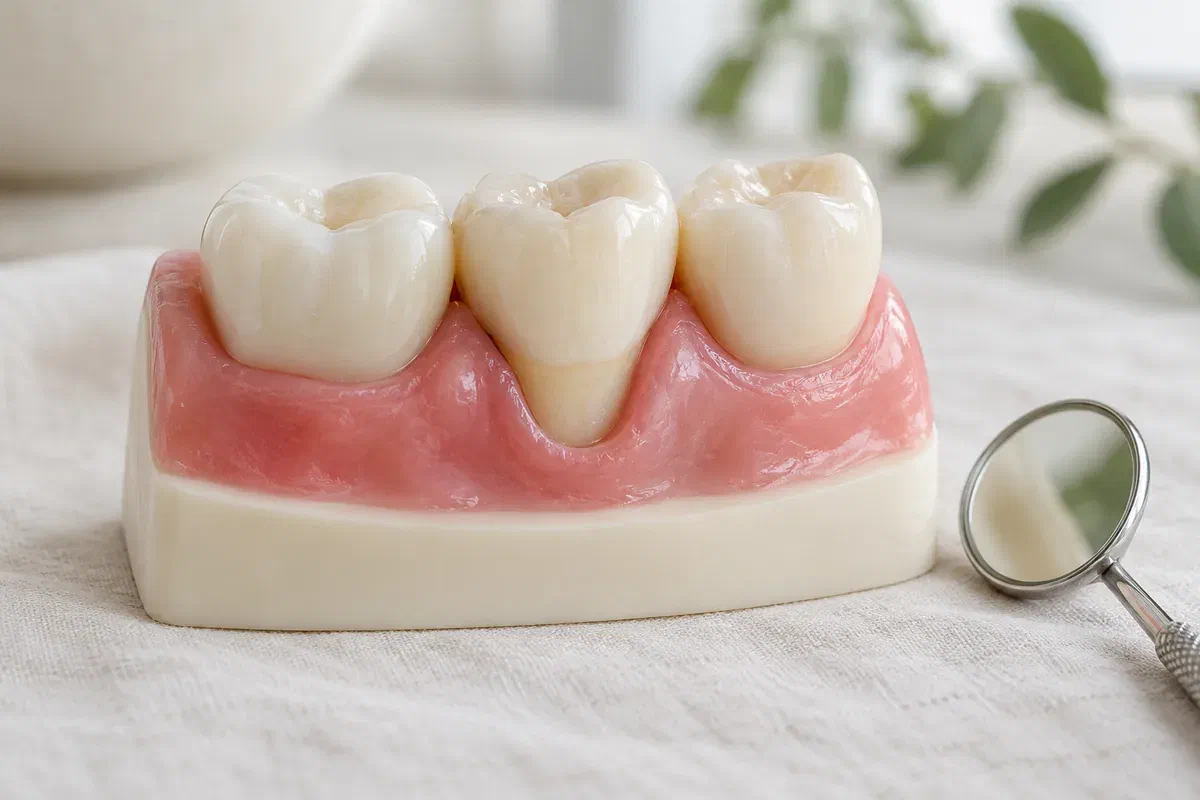
Illustrative physical tooth-and-gum model showing a localized lowered gum margin
Sorting out the cause

Is it the root, the gum, or something nearby?

Describe what bothers you most: the sensation, the look, the difficulty brushing, or a recommendation already on paper. We use that to focus the visit, and the exam then shows which goals are actually achievable.

A darker band or a root edge you can now see

Show us where it is and when it first appeared. Comparing older pictures or charts can reveal whether the site is still moving. That helps us discuss likely contributors and what we'd need to confirm before choosing between keeping an eye on it and stepping in.

A tooth that reacts to cold, sweets or brushing

Note the triggers and how long the discomfort lasts. Exposed root is one explanation, but worn enamel, a cracked filling or decay can produce similar complaints. We can look at whether a desensitizing approach could settle it and what grafting would add on top.

A suggestion to graft before other treatment

An orthodontist or another dentist may have recommended grafting ahead of their work. Ask how the plans fit, what the order should be and who will keep them coordinated. The reasoning should name the specific concern at the tooth rather than resting on the label thin tissue.

Gum grafting addresses soft tissue. It isn't a way to regrow all the bone or attachment lost through gum disease, and a fully covered root is never a given.

Setting a fair target

Comfort, coverage or stronger tissue?

Before agreeing to a graft, it helps to know what it's supposed to fix. If sensitivity is the main complaint, ask whether the planned procedure is expected to reduce it, and by how much it might. If the aim is sturdier tissue, the visible change may be modest. Ask what should improve and what likely won't.

Whatever led to the recession needs attention too. Heavy-handed brushing, clenching or ongoing gum inflammation can keep working against the site after surgery. A graft is part of a wider plan and doesn't replace regular cleanings, good daily care or follow-up checks.

Patient information: Cambridge University Hospitals — soft-tissue grafting goals, procedure, and risks

A prediction specific to your tooth

The gum and bone around neighbouring teeth affect what any procedure can achieve, and two sites in one mouth can differ. A useful answer lays out the intended improvement, the uncertainty, and how the outcome will be checked later.

Understanding the donor tissue

The palate is a common source, though some situations allow other materials or approaches. Ask which is proposed, why, and whether a second spot in your mouth would need to heal. Knowing this is part of giving informed consent.

Recovery you can plan around

Ask about expected soreness, food limits, cleaning changes, stitches, follow-up visits and possible complications. Think about work, travel and other commitments. No approach is risk-free, and further care may be needed if the tissue heals differently than intended.

What happens, in order

Four stages, one clear reason

Your assessment and the surgery itself may happen in separate offices. Ask where each stage takes place and how records and follow-up will be passed along before you set a date.

  1. Map the symptoms and examine the site

    We ask about triggers, previous gum care, cleaning habits, health history and medicines, then assess the recession and the support around the tooth. If extra records or a periodontist's opinion would clarify the indication, we'll say so.

  2. Decide what you're treating and how

    Monitoring, desensitizing or other nonsurgical care, and grafting are compared where each fits. Ask what would happen if you held off and what improvement is realistic. The tissue source, any donor area, anaesthetic, fees and preparatory care should all be explained.

  3. Undergo the graft if it is the right step

    The treating clinician outlines how the site will be prepared and how tissue will be positioned and stabilized. Local anaesthetic is usual, and anything further is assessed individually. The technique and where it's done depend on the tooth, the aim and that provider's approach.

  4. Heal, then check the original goal

    Take home written guidance on cleaning, eating, medicines and stitches for both the graft and any donor site. Confirm review dates and when your usual habits can return. Over time, ask whether the sensitivity, coverage or tissue goal was met, not only how the gum looks.

Looking after a new graft

Quiet tissue heals best.

The aftercare you follow should match the procedure you had. Ask if instructions for the graft and the donor site seem to conflict, and keep the treating office's phone number nearby.

Skip the mirror checks

Pulling the lip away for a look, pressing the tissue or checking whether it has stuck can disturb healing. The treating clinician will look at it at your review. Waiting is frustrating, but it protects the result you went through surgery for.

Change your routine only as advised

Brushing and flossing may need to stop at the treated spot for a while. Follow the instructions on where to clean, any prescribed rinse, what to eat and when to go back to normal. A fresh graft should not get your regular brushing until you've been cleared.

Know when to call and keep your review

Ask what level of discomfort and swelling is expected and how to manage it safely. Get in touch about bleeding that keeps going, pain that increases, fever or other worries. Attend the stitch and tissue review even if the area feels settled.

Patient information: Guy's and St Thomas' — protecting a gum graft and following postoperative instructions

Possible approaches

Surgery is one option among several.

Ask which option fits the concern that was actually found and how it compares with the alternatives. A good plan reflects symptoms, stability, tissue type, tooth support and your priorities.

When the site looks stable

Keeping watch while improving home care

We may document the area, help refine your cleaning and recheck it at planned visits. Ask what change would reopen the treatment conversation and how comparisons will be made. Monitoring is a plan only if it has a reason and a review date.

When comfort is the immediate goal

Calming the sensitivity without surgery

Desensitizing products, managing inflammation or a gentler brushing method may help where suitable. These don't add tissue back, so ask what each can and can't do. Relief from the twinge and the long-term tissue plan may be handled separately.

When the exam supports surgery

A soft-tissue graft with a defined purpose

Compare the tissue change you can expect with the risks and recovery. Ask which technique is proposed and whether a periodontist should do it. Seeing grafting listed online doesn't confirm it suits you, that a specialist is in-house, or that complete coverage is assured.

Sensitivity and grafting questions

Questions worth asking first

Point out the tooth you're concerned about and ask that any recommendation be explained using your own exam. These questions can help separate a real benefit from assumptions.

(905) 876-4488
Will a gum graft stop my tooth from being sensitive to cold?
It may help in some cases, but relief isn’t guaranteed and sensitivity can have other causes. Ask whether reducing sensitivity is a stated goal of the proposed graft, and whether simpler measures should be tried first or alongside it.
Could a sensitivity toothpaste be enough on its own?
Sometimes it eases the symptom well. It won’t replace lost gum tissue, though, and it shouldn’t hide a problem that needs attention. We can talk about whether a toothpaste trial is reasonable and when to come back if it isn’t working.
Does every graft aim to cover the exposed root completely?
No. Some are mainly intended to thicken the tissue, and the coverage possible depends on the site. Ask what result is planned for your tooth and what might limit it rather than assuming full coverage.
Does a gum graft rebuild lost bone?
No. Soft-tissue grafting is different from procedures aimed at regenerating deeper support. Ask which structures the plan addresses, and don’t read improved gum coverage as a sign that lost bone has come back.
Can grinding or clenching play a role in recession?
It’s sometimes discussed as one possible factor among several. If you clench or grind, mention it. We can look for signs, consider whether a night guard or other step is worth discussing, and include it in the overall plan.
How should I plan appointments if I'm travelling in from Oakville?
Ask for an overview of how many visits are likely, including assessment, any referral, surgery and reviews. Booking the review dates early and keeping a quiet day after the procedure can make recovery easier to manage.
Oakville gum assessments

Find out what's causing the twinge before choosing a fix.

Contact our Bronte Street practice about recession, a sensitive tooth or a grafting recommendation. We'll explain the assessment involved and how we coordinate with a periodontist or your other dental providers.

Grafting indication, method, tissue source, availability, referral, fees, recovery and expected coverage all require an individual assessment.

Visit Milton Dental Clinic
Unit 1, 342 Bronte St. S, Milton, ON L9T 5B7
Get directions Clinic hours
Monday–Thursday
11am–7pm
Friday–Sunday
By appointment only

Areas we serve

  • Milton
  • Oakville
  • Mississauga
  • Georgetown
  • Halton Hills
  • Acton
  • Campbellville
  • Brampton
  • Burlington
  • Puslinch
  • Rockwood
  • Erin
  • Caledon
  • Etobicoke
  • Old Milton
  • Bronte Meadows
  • Timberlea
  • Dorset Park
  • Dempsey
  • Clarke
  • Beaty
  • Coates
  • Harrison
  • Scott
  • Willmott
  • Ford
  • Bowes
  • Cobden
  • Walker
  • Mountain View
  • Milton Heights
  • Hawthorne Village
  • Valley View
  • Fallingbrook
  • Nassagaweya
  • Trafalgar
  • Esquesing
  • Nelson
  • Brookville
  • Moffat
  • Glen Williams
  • Norval
  • Limehouse
  • Stewarttown
  • Ashgrove
  • Hornby
  • Silver Creek
  • Speyside
  • Scotch Block
  • North Oakville
  • River Oaks
  • Glen Abbey
  • West Oak Trails
  • Palermo
  • Bronte Creek
  • College Park
  • Joshua Creek
  • Uptown Core
  • Preserve
  • Iroquois Ridge
  • Lisgar
  • Meadowvale
  • Meadowvale Village
  • Churchill Meadows
  • Erin Mills
  • Central Erin Mills
  • Streetsville
  • East Credit
  • Creditview
  • Heartland
  • Sheridan
  • Mount Pleasant
  • Credit Valley
  • Huttonville
  • Churchville
  • Springbrook
  • Northwest Brampton
  • Bram West
  • Fletcher's Meadow
  • Fletcher's Creek South
  • Alton Village
  • Orchard
  • Millcroft
  • Headon Forest
  • Tansley
  • Brant Hills
  • Tyandaga
  • Kilbride
  • Lowville
  • Aberfoyle
  • Morriston
  • Arkell
  • Hillsburgh
  • Freelton
  • Carlisle
  • Waterdown
  • Flamborough
  • Mountsberg

How can we help?

Milton Dental Clinic

Have a question about your smile? Choose the option that works best for you.

For urgent dental concerns, please call.
Messages are reviewed during clinic hours.