

Illustrative patient and clinician discussing options beside a small gum model
Specialized Care

Gum Grafting in Old Milton

Gums often change slowly over decades, and a past dentist may have mentioned recession years ago. From Old Milton, you can have the area looked at again, compared with earlier records where possible, and discussed honestly: is it stable, is a graft worth it, or would monitoring or specialist care serve you better?

Recession, revisited

Has it changed, or has it simply been there a long time?

Plenty of adults carry a note in their dental history that says “recession, monitor.” Years later, the same tooth catches their eye again and the question returns. Knowing whether that site has actually moved since then is often the most useful starting point, and it usually matters more than how it looks today.

Grafting means adding or shifting soft tissue at a tooth to meet a specific aim. That aim might be thicker tissue, some coverage of exposed root, or easier and more comfortable cleaning. Different grafts are chosen for different jobs, so the right question is what this particular site needs, if anything.

Our Bronte Street office is close to Old Milton, the town's historic downtown. Bring older X-rays, charts or photos if you have them, plus any past advice about the area. We'll examine the gum and supporting structures, look at what may be contributing, and explain whether referral, a graft, another approach or continued watching fits.

Arrange a gum review in Old Milton
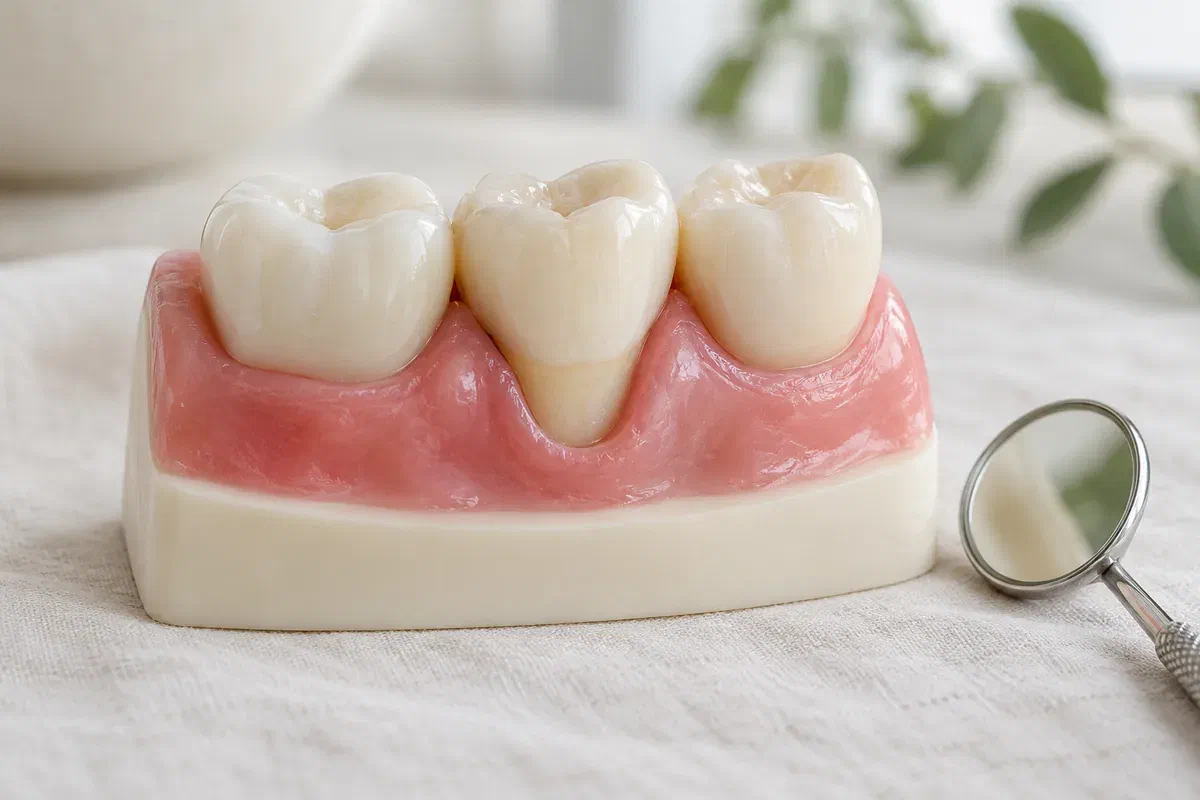
Illustrative physical tooth-and-gum model showing a localized lowered gum margin
Reasons for a second look

An old finding can lead to new questions.

Let us know whether you're mainly worried about change over time, sensitivity, how the tooth looks, or a recommendation from another office. That priority guides the discussion, while the exam shows which goals are within reach.

A root surface that seems more visible than before

Show us the tooth and give a rough idea of when it last looked different. Earlier records make it easier to judge whether the site has progressed or held steady. We can then talk about what might be driving it and what we'd want to confirm before suggesting monitoring or treatment.

Discomfort or awkward cleaning around one tooth

Tell us what sets it off, whether that's cold air, a toothbrush bristle or flossing. Sensitivity has more than one source, and exposed root is only one of them. We'll look at whether a simpler measure could ease things and what a graft might genuinely add for you.

Grafting suggested alongside crowns, bridges or braces

When older restorations are being replaced or other treatment is planned, grafting may come up. Ask how the steps relate, in what order they'd happen, and who is coordinating them. The explanation should describe the actual concern at that tooth, not just call the tissue thin.

A gum graft treats soft tissue only. It cannot be counted on to replace bone or attachment lost to past periodontal disease, and complete coverage of an exposed root should not be taken for granted.

What a good outcome looks like

Thicker tissue, partial coverage, easier cleaning: which one is the aim?

Success only makes sense when it's measured against a reason. In some mouths the realistic aim is firmer, more resilient tissue. Elsewhere, covering a portion of the root might be a fair goal. Ask for a description of the change expected at your tooth and an honest word about what probably won't change.

It also helps to look at why the gum moved in the first place. Inflammation, a scrubbing brushing style or other habits can contribute, and they don't disappear after surgery. Think of a graft as one piece of ongoing care rather than something that ends the need for maintenance.

Patient information: Cambridge University Hospitals — soft-tissue grafting goals, procedure, and risks

Expectations that fit the site

Neighbouring tissue and bone shape what can be achieved, and the answer can vary from one tooth to the next. A clear explanation covers the hoped-for improvement, what remains uncertain, and how the result will be checked at follow-up.

Plain information on the tissue source

Tissue is often taken from the roof of the mouth, though other materials or methods may suit certain cases. Ask what is planned, why it suits your goal, and whether there would be a second healing spot. That decision should be part of informed consent.

A realistic view of recovery

Discuss likely soreness, limits on eating and cleaning, stitches, follow-up visits and possible complications. If you take medicines or manage other health conditions, raise them early. Risk can't be eliminated, and extra treatment may be needed if healing or the final gum level differs from the plan.

Step by step

A decision built on findings, not on a photo

Assessment and surgery are sometimes handled in different offices. Before you make any arrangements, ask where each step would take place and how records and follow-up will be shared.

  1. Gather the history and look closely

    Expect questions about symptoms, previous gum care, how you clean, your health history and medicines. We assess the recession and the structures supporting the tooth. If more records or a periodontal opinion are needed to confirm what's going on, we'll tell you.

  2. Choose a goal and compare the paths

    Watching, nonsurgical steps and a surgical approach are weighed side by side where they apply. Ask what waiting would mean and what improvement is realistic. Tissue source, any donor area, anaesthetic, fees and preparatory care all belong in this conversation.

  3. Have the procedure if it is warranted

    The clinician performing the graft describes how the site will be prepared and how the tissue will be placed and secured. Local anaesthetic is common, and other arrangements are discussed case by case. Exact method and setting depend on the tooth and the treating provider.

  4. Recover, then measure against the goal

    Written instructions for the graft and any donor area should cover cleaning, food, medicines and stitches. Confirm your review dates and when normal routines can return. At later checks, the result is compared with the reason the graft was done, not only its appearance.

Healing well

Hands off, instructions close at hand

Aftercare advice should be specific to the procedure you received. If the graft and donor-site instructions don't seem to agree, ask, and keep the treating office's contact information handy.

Don't lift the lip for a peek

Stretching the lip or cheek to inspect the graft, pressing on it or checking whether it has taken can interfere with healing. The clinician will assess it at review. Curiosity is natural, but a quick look is not worth the risk to the site.

Follow the cleaning and food advice exactly

Regular brushing and interdental cleaning may be paused at the treated area for a time. Stick to the guidance on where to clean, any rinse, suitable foods and when to return to normal methods. A new graft shouldn't meet your usual brush until you've been told it's safe.

Report anything unexpected and attend the check

Ask what discomfort and swelling are normal and how to manage them alongside your existing medicines. Contact the provider about ongoing bleeding, growing pain, fever or other concerns. Go to the stitch removal and tissue review even when the area feels comfortable.

Patient information: Guy's and St Thomas' — protecting a gum graft and following postoperative instructions

Weighing the choices

Long-standing recession may need care, change, or simply watching.

Ask which option matches the documented concern and how it stacks up against the others. The plan should reflect symptoms, stability, tissue characteristics, tooth support and your own priorities.

When the area appears stable

Recording the site and checking it over time

Measurements or photos can be taken, home care adjusted and the tooth reviewed at set intervals. Ask what change would bring treatment back into discussion and how each review will compare with the last. Monitoring needs a purpose and a schedule to be useful.

When a nonsurgical step meets the need

Addressing sensitivity or inflammation directly

Desensitizing products, gum inflammation management or a gentler cleaning technique may be suggested where they fit. These don't replace tissue that has gone, so ask what each can and can't do. Easing a symptom and dealing with the structural issue may be separate tasks.

When surgery offers a real advantage

A graft planned for a specific purpose

Weigh the expected change in the tissue against the risks and the recovery. Ask about the technique and whether a periodontist should provide it. A page describing grafting doesn't mean it suits you, that a specialist is on site, or that full coverage is assured.

Common questions

What long-time patients tend to ask

Bring the area you'd like reviewed and ask that any proposal be explained against your own findings. These questions can help you test the reasoning behind a recommendation.

(905) 876-4488
I was told years ago to just watch my recession. Should that advice still stand?
Possibly, but it’s worth rechecking. If the site hasn’t changed and causes no trouble, monitoring may remain reasonable. If it has progressed, become sensitive or is harder to clean, the options may look different now. Earlier records help with that comparison.
Do older fillings or crowns near the gumline affect grafting?
They can. The edge of a restoration, its shape and its condition may influence the tissue and the plan. Ask whether any existing work should be adjusted or replaced first, and how that sequence would be coordinated.
Can medicines I take affect healing after a gum graft?
Some medicines and health conditions can influence bleeding or healing. Share a full list, including supplements, at the assessment. The treating clinician may need to coordinate with your physician before planning surgery, and you should never stop a prescribed medicine on your own.
Is complete root coverage a realistic expectation for every graft?
No. Some grafts mainly aim to improve tissue thickness, and the amount of coverage possible depends on the site. Ask what outcome is intended for your tooth and what might limit it. Full coverage shouldn’t be promised automatically.
Will the graft tissue necessarily come from my palate?
Not always. The source depends on the goal, the site and the clinician’s judgment. Ask whether your own tissue or another material is proposed, why it suits you, and how that affects healing and consent.
If a graft is placed, can I stop worrying about that tooth?
Not entirely. Daily care, regular cleanings and attention to whatever contributed to the recession still matter. A graft can improve a site, but ongoing maintenance and review remain part of looking after it.
Old Milton consultations

Bring the history and we'll look at it together.

Call or write to our Bronte Street practice about recession you've been watching, a sensitive tooth or a grafting recommendation. We can explain the assessment involved and how we work with a periodontal specialist or your other providers.

Need for grafting, technique, tissue source, availability, referral, fees, recovery and expected coverage are decided only after individual assessment.

Visit Milton Dental Clinic
Unit 1, 342 Bronte St. S, Milton, ON L9T 5B7
Get directions Clinic hours
Monday–Thursday
11am–7pm
Friday–Sunday
By appointment only

Areas we serve

  • Milton
  • Oakville
  • Mississauga
  • Georgetown
  • Halton Hills
  • Acton
  • Campbellville
  • Brampton
  • Burlington
  • Puslinch
  • Rockwood
  • Erin
  • Caledon
  • Etobicoke
  • Old Milton
  • Bronte Meadows
  • Timberlea
  • Dorset Park
  • Dempsey
  • Clarke
  • Beaty
  • Coates
  • Harrison
  • Scott
  • Willmott
  • Ford
  • Bowes
  • Cobden
  • Walker
  • Mountain View
  • Milton Heights
  • Hawthorne Village
  • Valley View
  • Fallingbrook
  • Nassagaweya
  • Trafalgar
  • Esquesing
  • Nelson
  • Brookville
  • Moffat
  • Glen Williams
  • Norval
  • Limehouse
  • Stewarttown
  • Ashgrove
  • Hornby
  • Silver Creek
  • Speyside
  • Scotch Block
  • North Oakville
  • River Oaks
  • Glen Abbey
  • West Oak Trails
  • Palermo
  • Bronte Creek
  • College Park
  • Joshua Creek
  • Uptown Core
  • Preserve
  • Iroquois Ridge
  • Lisgar
  • Meadowvale
  • Meadowvale Village
  • Churchill Meadows
  • Erin Mills
  • Central Erin Mills
  • Streetsville
  • East Credit
  • Creditview
  • Heartland
  • Sheridan
  • Mount Pleasant
  • Credit Valley
  • Huttonville
  • Churchville
  • Springbrook
  • Northwest Brampton
  • Bram West
  • Fletcher's Meadow
  • Fletcher's Creek South
  • Alton Village
  • Orchard
  • Millcroft
  • Headon Forest
  • Tansley
  • Brant Hills
  • Tyandaga
  • Kilbride
  • Lowville
  • Aberfoyle
  • Morriston
  • Arkell
  • Hillsburgh
  • Freelton
  • Carlisle
  • Waterdown
  • Flamborough
  • Mountsberg

How can we help?

Milton Dental Clinic

Have a question about your smile? Choose the option that works best for you.

For urgent dental concerns, please call.
Messages are reviewed during clinic hours.