

Illustrative patient and clinician discussing options beside a small gum model
Specialized Care

Gum Grafting in Puslinch

Gum grafting isn't only about looks. If one spot snags floss, traps food or flinches every time the brush passes, that's worth raising. From Puslinch, you can have the site examined to see what's making it hard to care for, and whether a graft, simpler care or specialist input would help most.

A practical reason to ask

The tooth you keep skipping when you brush

Most of us have one: a tooth where the bristles sting, the floss catches, or the gum feels raw after cleaning. Over time, people start to go easy on that spot, which can make things worse. A functional complaint like this is a perfectly good reason to ask about the gum.

A graft adds or relocates soft tissue at a tooth with a specific intention. For some sites, that's tissue thick enough to tolerate brushing comfortably. For others, it's covering part of a root or improving a margin that's hard to keep clean. These goals overlap at times but aren't the same thing.

If you're coming from Puslinch, bring your toothbrush and floss and show us how you clean that area. We'll examine the gum, the tooth and its underlying support, look at what may be contributing, and explain whether grafting, technique changes, monitoring or a periodontal referral would best help you clean comfortably.

Ask about a gum check from Puslinch
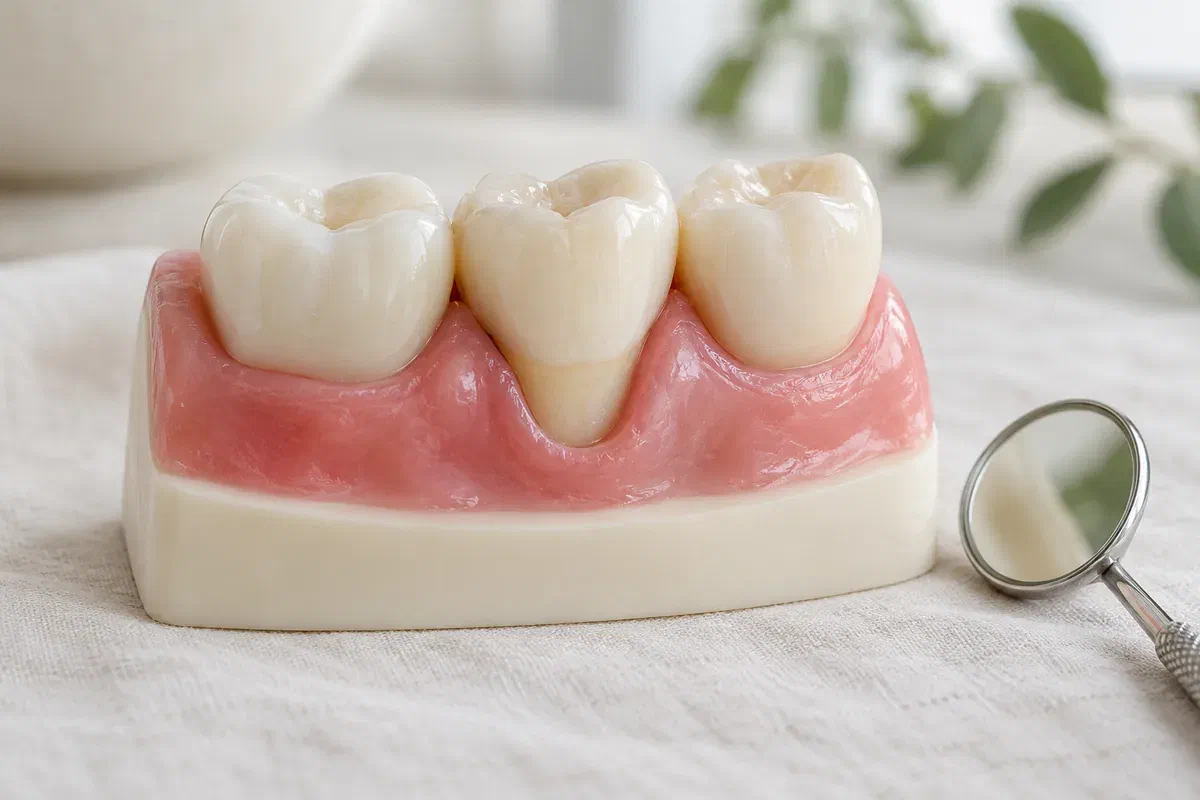
Illustrative physical tooth-and-gum model showing a localized lowered gum margin
Everyday clues

Small irritations that point to a gum question

Tell us whether you're mostly troubled by discomfort, food trapping, appearance or advice from someone else. That gives the visit a focus, and the examination clarifies which goals can realistically be met.

A root edge you can now feel or see

Show us the tooth and tell us when you noticed it. Earlier X-rays, charts or photos help show whether the site has moved. We'll talk about what may be driving the change and what information is needed before choosing to watch it or treat it.

Brushing or flossing that hurts at one spot

Describe what you do and what you feel. Sensitivity has several possible causes, and a raw-feeling gum isn't always recession. A softer brush, a different angle or a desensitizing product may help, so we'll consider those before deciding what a graft could add.

Thin tissue noted ahead of other work

Grafting is sometimes proposed before orthodontic or restorative treatment. Ask how the procedures connect, what order is planned and who's coordinating. The recommendation should describe what was seen at that tooth, not simply say the tissue is thin.

A graft changes soft tissue. It isn't a way to regrow bone or attachment that periodontal disease has destroyed, and full coverage of an exposed root can't be assumed at any site.

Defining a useful result

Easier, more comfortable cleaning is a legitimate goal.

If your main complaint is functional, ask whether the proposed graft is meant to make that site easier or less painful to clean. In some cases the aim is firmer tissue that can handle brushing; in others, root coverage may be part of the plan. Ask what should improve and what may not.

Technique matters on both sides of surgery. If cleaning style, inflammation or other habits played a part, they still need attention once the area heals. A graft supports good daily care rather than replacing it, and regular maintenance remains important.

Patient information: Cambridge University Hospitals — soft-tissue grafting goals, procedure, and risks

A clear outlook for that site

Neighbouring gum and bone influence what's achievable, and outcomes vary between teeth. Ask what difference you should notice when cleaning, how confident the clinician is, and how the result will be reviewed.

The tissue source and what it means

The palate is a common donor area, which means a second spot to heal, though some situations allow other materials. Ask what's proposed and why it suits your goal. That's part of informed consent.

A sensible recovery picture

Go over expected tenderness, eating and cleaning restrictions, stitches, reviews and possible complications. Consider work and household tasks in the days after. No method is free of risk, and if healing doesn't go as planned, more care could be required.

From complaint to plan

Watch how you clean, then talk treatment.

The clinician who assesses the area and the one who performs any surgery may not share an office. Before you commit to appointments, check where each step will be done and how your records travel.

  1. Show us your routine and let us examine

    We'll ask about symptoms, past gum care, cleaning methods, overall health and any medicines, and may watch you brush or floss the area. The gum, the tooth and the support beneath are assessed. We'll explain if more records or a periodontist's input would help.

  2. Choose between adjusting, watching and grafting

    We lay out technique changes, monitoring, other nonsurgical care and a graft, keeping only the ones that suit your site. Ask what would happen if you tried simpler steps first, and what extra benefit surgery might bring. Tissue source, donor area, anaesthetic, fees and preparation should be explained.

  3. Have the procedure if it's indicated

    The treating clinician describes readying the site and placing and stabilizing the new tissue. Local anaesthetic is commonly used, with any further arrangements considered case by case. The exact approach depends on the tooth, your goal and that provider's plan.

  4. Heal, then relearn cleaning that spot

    You'll need written instructions on cleaning, food, medicines and stitches for each treated area. Confirm review dates and when normal routines can return. Ask for a refresher on how to clean the healed site comfortably, and judge the result against your original complaint.

Protecting the result

Clean around it, not on it, until you're told otherwise.

Aftercare should be specific to the procedure you had. If the graft and any palate site come with different instructions, check that you understand both, and keep the treating office's number nearby.

Don't stretch the lip to look

Pulling back the lip or cheek, pressing on the graft or poking it to see if it has attached can all interrupt healing. The clinician will examine it at review. It's best to leave it be.

Follow the interim cleaning instructions

Normal brushing and interdental cleaning will likely pause at the treated site for a time. Use any recommended rinse, keep cleaning the rest of your mouth as advised, choose soft foods and wait for clearance before brushing the graft. This temporary change is part of protecting it.

Report problems and attend each review

Find out what tenderness and swelling are normal and what pain relief is safe for you. Contact the treating provider about ongoing bleeding, rising pain, fever or anything else that worries you. Attend each review, including stitch removal, even if the area feels comfortable.

Patient information: Guy's and St Thomas' — protecting a gum graft and following postoperative instructions

Ways to make that spot easier

Surgery, technique or time: which one fits?

Ask which option targets the concern actually found at your tooth and what each would change. A balanced plan considers your symptoms, whether the site is stable, the tissue and bone around it, and what you want to achieve.

When the site is stable and cleaning can improve

Monitoring with a better cleaning method

We can record the area, adjust your technique or tools, and recheck it at planned visits. Agree in advance on what would make grafting worth reconsidering, so each review has a question to answer. Monitoring needs a reason and a date.

When comfort can be improved without surgery

Nonsurgical relief for a sore spot

A desensitizing product, managing gum inflammation or switching to softer tools may help where appropriate. These don't restore lost tissue, so ask what each can achieve. Comfort while cleaning and the condition of the tissue may need separate solutions.

When the exam supports a surgical benefit

A graft aimed at function

Consider how much easier cleaning is likely to become, and balance that against surgical risk and healing time. Ask about the technique and whether a periodontist should do it. A web page about grafting doesn't confirm suitability, on-site specialist care or full root coverage.

Cleaning and grafting questions

Practical questions worth asking

Point to the trouble spot and ask that any advice be connected to what's found there. These questions focus on comfort and everyday care rather than appearance alone.

(905) 876-4488
Why does food keep catching near my receded gum?
Changes in the gum or the shape of the space between teeth can create areas where food collects. We can look at what’s causing it and suggest tools such as interdental brushes, and discuss whether grafting or other care would help.
Which toothbrush and floss are gentlest on a receded area?
A soft-bristled brush and gentle technique usually help. Interdental brushes or other aids may suit some spaces better than floss. Bring what you use, and we can recommend options that fit your teeth and gums.
Is a graft worth it if appearance doesn't bother me?
It can be, if there’s a clear functional benefit such as more comfortable cleaning or stronger tissue. Ask what improvement is expected at that site and whether nonsurgical care might give you enough relief.
Does gum grafting aim to cover the entire root?
Not always. Thickening the tissue is the main purpose of some grafts, and how far a root can be covered differs from one site to the next. Ask what’s planned for your tooth and which local factors might hold the result back.
Will my gum grow back if I stop brushing so hard?
Receded gum doesn’t usually return on its own. A gentler technique may help protect the area from further change. Ask whether monitoring after you change your habits is reasonable for your site.
How soon can I clean the grafted area normally again?
That depends on the procedure and how healing progresses. The treating clinician will give you specific timing and may suggest a gradual return. Until then, follow the interim instructions and keep cleaning the rest of your mouth as advised.
Puslinch gum assessments

Make the hard-to-clean spot easier to live with.

Contact our Bronte Street practice about a sensitive or awkward area, a receding gum or a grafting suggestion. We'll explain the assessment and how we coordinate with a periodontist when specialist care is the better route.

Need, technique, tissue source, referral, fees, recovery and expected coverage are decided only after an individual assessment.

Visit Milton Dental Clinic
Unit 1, 342 Bronte St. S, Milton, ON L9T 5B7
Get directions Clinic hours
Monday–Thursday
11am–7pm
Friday–Sunday
By appointment only

Areas we serve

  • Milton
  • Oakville
  • Mississauga
  • Georgetown
  • Halton Hills
  • Acton
  • Campbellville
  • Brampton
  • Burlington
  • Puslinch
  • Rockwood
  • Erin
  • Caledon
  • Etobicoke
  • Old Milton
  • Bronte Meadows
  • Timberlea
  • Dorset Park
  • Dempsey
  • Clarke
  • Beaty
  • Coates
  • Harrison
  • Scott
  • Willmott
  • Ford
  • Bowes
  • Cobden
  • Walker
  • Mountain View
  • Milton Heights
  • Hawthorne Village
  • Valley View
  • Fallingbrook
  • Nassagaweya
  • Trafalgar
  • Esquesing
  • Nelson
  • Brookville
  • Moffat
  • Glen Williams
  • Norval
  • Limehouse
  • Stewarttown
  • Ashgrove
  • Hornby
  • Silver Creek
  • Speyside
  • Scotch Block
  • North Oakville
  • River Oaks
  • Glen Abbey
  • West Oak Trails
  • Palermo
  • Bronte Creek
  • College Park
  • Joshua Creek
  • Uptown Core
  • Preserve
  • Iroquois Ridge
  • Lisgar
  • Meadowvale
  • Meadowvale Village
  • Churchill Meadows
  • Erin Mills
  • Central Erin Mills
  • Streetsville
  • East Credit
  • Creditview
  • Heartland
  • Sheridan
  • Mount Pleasant
  • Credit Valley
  • Huttonville
  • Churchville
  • Springbrook
  • Northwest Brampton
  • Bram West
  • Fletcher's Meadow
  • Fletcher's Creek South
  • Alton Village
  • Orchard
  • Millcroft
  • Headon Forest
  • Tansley
  • Brant Hills
  • Tyandaga
  • Kilbride
  • Lowville
  • Aberfoyle
  • Morriston
  • Arkell
  • Hillsburgh
  • Freelton
  • Carlisle
  • Waterdown
  • Flamborough
  • Mountsberg

How can we help?

Milton Dental Clinic

Have a question about your smile? Choose the option that works best for you.

For urgent dental concerns, please call.
Messages are reviewed during clinic hours.