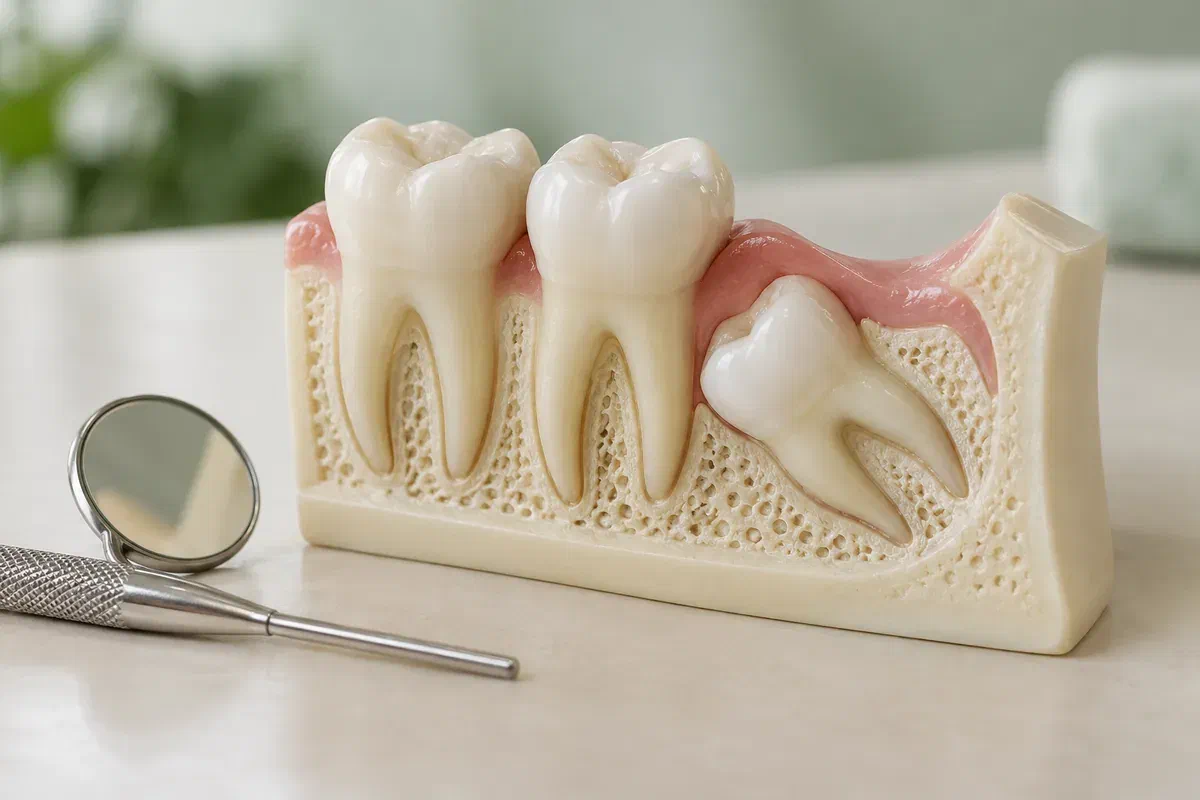
A wisdom-tooth decision is never only about the tooth. Medicines, chronic conditions, and past reactions to anaesthetic all feed into whether surgery is sensible and how it should be done. The tooth itself is impacted when it has not erupted properly, usually because there was no room or it grew on an angle. It may sit in bone, under gum, or partly through, and that position alone does not require removal.
Clinicians weigh symptoms, disease, the condition of the neighbouring molar, the likelihood of future problems, and the risks of the procedure. For someone with a complex medical history, those risks can look different, sometimes favouring monitoring and sometimes making it more important to deal with a tooth that keeps becoming infected. The reasoning should be explained clearly.
From Bolton or elsewhere in Caledon, bring an up-to-date medicine list, your physician's details, any relevant letters, and earlier dental images. We will review the findings, explain the options, and discuss whether a specialist or medical input is needed. Before deciding, you should understand the purpose, alternatives, recovery, and the risks that apply to your anatomy and your health.