

Illustrative patient discussing an infected tooth and treatment choices with a clinician
Specialized Care

Infected Tooth Extraction in Acton

Dread of the dental chair keeps many people living with an infected tooth far longer than they should. If you are coming from Acton and feeling nervous, we will explain each step at your pace, look at whether the tooth can be kept, and plan any removal around your comfort.

For anxious patients

Putting it off has stopped working.

In Acton, as anywhere, plenty of people delay dental care out of fear, then find an infected tooth forces the issue. You do not have to walk in ready to agree to anything. The first job is to find which tooth is behind the infection and how much healthy structure and support it still has, because swelling does not automatically mean it must come out.

It can help to know that talking comes before treatment. You can describe what worries you, ask what each step feels like, and hear the alternatives, including keeping the tooth. Antibiotics you have already taken are useful to mention, but an easier week does not mean the source has settled, and avoiding the chair tends to let the problem return.

Call and tell us both about the tooth and about your nerves; neither is unusual. Let us know right away if swelling is spreading or you feel unwell. We can explain the options and referral if appropriate. If you need care straight away and we cannot see you, please go to another emergency dental provider.

Talk to someone about your worries
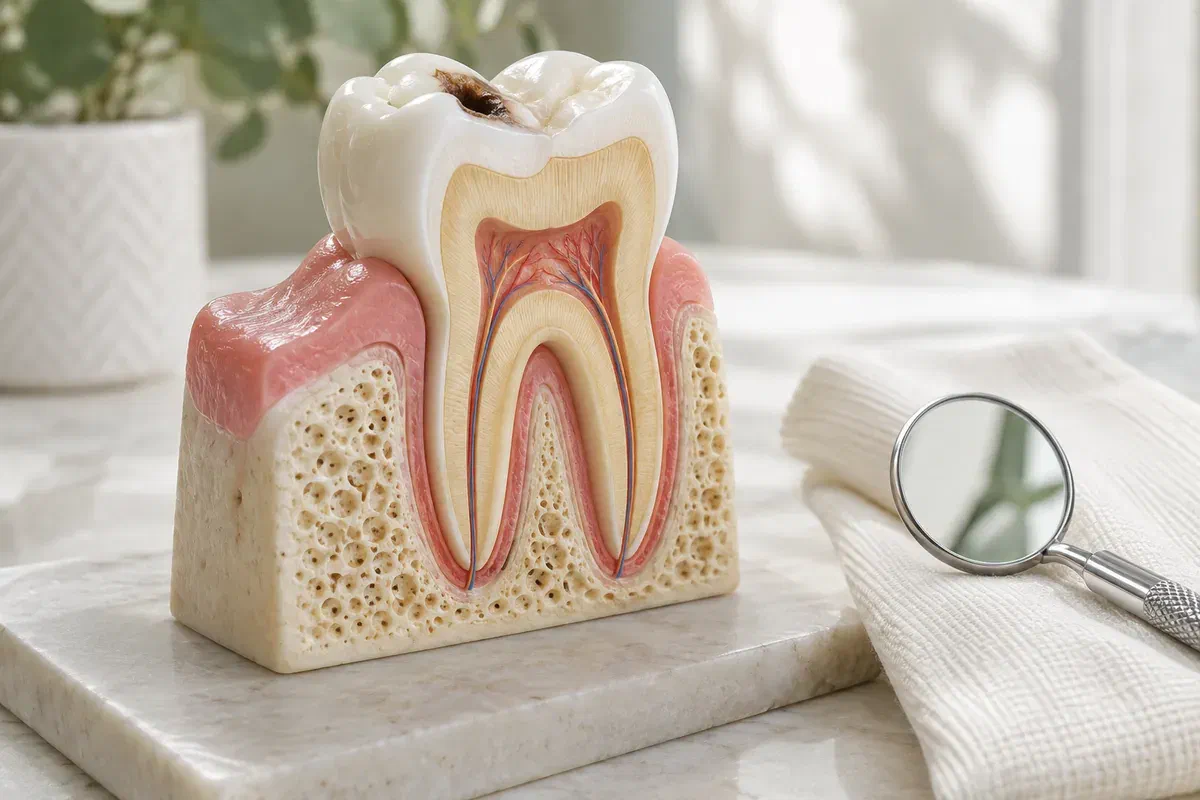
Illustrative physical molar cross-section showing decay within a supported tooth model
Things worth saying out loud

Tell us what happened before, in the chair and with the tooth.

Share any earlier recommendations, X-rays and prescription details, and also anything that has made past visits hard. Both kinds of history help the dentist advise on removal and plan a calmer appointment.

A tooth that keeps flaring between visits you avoided

There is no judgement in describing how long it has been going on. Mention swelling or drainage that comes and goes, a bad taste or tenderness when chewing. Repeated settling can mean the cause is still active, and it is fair to ask what would actually resolve it.

What earlier treatment left behind

Old fillings, a crown, a root canal or a broken edge all affect the options, as does any earlier warning that the gum or bone holding the tooth had receded. Ask which current findings make keeping the tooth hard. History informs the plan; the present prognosis drives it.

Health, medicines and past reactions

List your medicines, any immune or bleeding concerns and difficulties after earlier surgery, along with reactions to freezing or antibiotics. Keep taking regular medicines unless told otherwise; the team will say if your doctor should be consulted first.

Anxiety should never keep you from emergency care. Difficulty breathing or swallowing, swelling that spreads fast or reaches the eye, or being unable to open your mouth properly needs emergency medical assessment. In an immediate emergency, call 911.

What you gain from dealing with it

An end to the cycle of flare-ups and worry

For a tooth with no realistic future, removal can deal with the diagnosed dental source of the infection, often bringing an end to the uncertainty that comes with each flare-up. Ask what else needs care and how healing will be checked. The dentist should describe recovery honestly rather than make promises about comfort.

The gap afterward is part of the conversation too. Depending on where the tooth sits and what you prefer, replacement may be discussed ahead of time or after healing. Getting the infection treated promptly does not mean you have to make every decision on the same day.

Patient information: American Dental Association — source-directed dental care and antibiotic decisions

A calm look at keeping the tooth

Saving it through root canal treatment, retreatment or another approach may be possible, and none of these is decided without your agreement. Compare the tooth that remains, the support around it, the restoration it would need and the follow-up. Understanding what each path asks of you can make the choice less daunting.

A clear explanation of any prescription

Antibiotics are sometimes appropriate, such as with spreading or whole-body infection, but they do not remove the source. Whether one makes sense for you depends on your general health, what the infection is doing and the timing of treatment. Ask what a medicine is for and what treatment remains.

An extraction planned around your comfort

Ask about freezing, what you are likely to feel, how long it may take, specific risks and whether a specialist or sedation-capable setting would suit you better. Find out what happens if extra surgical steps are needed and who to call with worries afterward.

No surprises

Here is what happens, one step at a time.

When and where treatment happens depends on the infection’s severity, the tooth’s anatomy, your health and available care. There is no universal rule that an infected tooth comes out on the first visit or only after another treatment.

  1. A conversation and an examination

    You describe your history and concerns, and the dentist examines the area with suitable tests or X-rays. Mention fever, spreading swelling or difficulty eating and opening. You can ask what the results mean for timing, and whether a different clinic or hospital would suit the situation.

  2. Time to decide, with your questions answered

    The dentist explains the outlook and the reasonable alternatives, including a specialist view. If removal is chosen, you confirm the tooth, method, risks, fees and aftercare. Nothing permanent should happen until you understand why it is recommended.

  3. Freezing first, then the extraction

    The dentist checks that the area is numb before beginning. Mention any past difficulty getting frozen, and agree on a hand signal so you can stop at any point. If a tooth looks likely to need surgical removal or a specialist, you should hear that well before the day.

  4. Going home with a plan

    You leave with written or spoken guidance for bleeding, cleaning, eating, medicines and stitches. Ask when a review is due and who answers if a worry comes up in the evening. Confirm whether you need another visit for the rest of your care or a replacement discussion.

Afterward

Knowing what is normal makes recovery less stressful.

Your instructions are specific to your extraction and health. An infection beforehand does not make every later symptom expected, and fresh pain is not automatically a reason for more antibiotics.

Leaving the site to heal

Follow the bleeding-control method you were shown and try not to explore the socket with a finger or tongue. Ask when rinsing and brushing nearby can resume. If bleeding does not ease as described, phone rather than repeatedly checking the wound.

Medicines, as written

Take pain relief and any antibiotic exactly as the label and dentist direct, and ask if you are unsure about side effects or interactions. Avoid leftover pills and do not raise doses because you feel uneasy. Continue your regular medicines unless told to change them.

Calling early is never a bother

Phone about pain that gets worse, swelling that returns, fever, bleeding that continues or numbness that is new. Say when the tooth was removed and how symptoms changed. Keep the review appointment even if you are tempted to skip it because you feel fine.

Patient information: Royal Devon — bleeding advice and prescribed anticoagulant precautions

Your choices

You will hear every reasonable option.

Which one fits depends on the diagnosis, the tooth’s condition and the infection’s severity. A first urgent step may be followed by another stage before care is complete.

When there is enough tooth and support to save

Keeping the tooth

Root canal treatment or another indicated approach may be suggested, followed by a restoration and review. A specialist opinion is worth asking about if the case is borderline. Saving the tooth should come with a realistic long-term plan, not just a pause.

When extraction is right after considering alternatives

Removing the tooth

The dentist should explain why the tooth is not a good candidate to keep, or confirm that removal is what you prefer. Go over the procedure, risks and gap. Ask which replacement decisions, if any, need to be made first and which can wait until you feel ready.

When severity, complexity or anxiety needs more support

Referral elsewhere

Serious infection, medical concerns, difficult anatomy or significant dental anxiety may be better managed by another provider or a hospital. You are entitled to know what the referral should achieve and how soon to arrange it. Do not let a preferred location delay necessary care.

Acton questions

Honest answers for nervous patients

Bring past records and prescriptions with you. These answers aim to ease the unknowns, but only an examination can say whether your tooth needs removal.

(905) 876-4488
Will I feel the tooth coming out?
With effective freezing, most people describe pressure or pushing rather than sharp pain. Tell the dentist immediately if you feel pain, so more freezing can be given or the plan adjusted.
Can infection make it harder to get numb?
It can. Inflamed or infected areas sometimes respond less well to local anaesthetic. The dentist will check the area before starting and may use additional techniques. Mention past freezing difficulties.
Is sedation an option if I am very anxious?
Ask about it during your consultation. Depending on your health and the procedure, the dentist can explain what options exist and whether a referral to a setting that offers sedation would be appropriate.
Can someone come with me to the appointment?
Having a trusted person with you can help, and may be necessary if you need a ride home. Ask the team about arrangements when you book.
If I have put this off for a long time, can the tooth still be saved?
Sometimes. The deciding factors are the tooth’s structure, its support and any previous treatment. Ask whether root canal care is realistic and what restoration would follow.
Do I have to take antibiotics first and come back later?
Not always. The dentist weighs severity, your health, the procedure and the setting. Some infections need prompt treatment of the source, others need additional steps first. Waiting is not automatically the safer choice.
From Acton, at your pace

Start with a phone call, not a procedure.

Ring our Bronte Street office at (905) 876-4488 and let us know you are nervous as well as what the tooth is doing. Bring any records and a medicine list. If urgent care is needed and we cannot see you, contact another emergency dental provider.

Extraction, timing, antibiotics, referral and replacement are decided after individual assessment. Email and online forms are for questions that are not urgent.

Visit Milton Dental Clinic
Unit 1, 342 Bronte St. S, Milton, ON L9T 5B7
Get directions Clinic hours
Monday–Thursday
11am–7pm
Friday–Sunday
By appointment only

Areas we serve

  • Milton
  • Oakville
  • Mississauga
  • Georgetown
  • Halton Hills
  • Acton
  • Campbellville
  • Brampton
  • Burlington
  • Puslinch
  • Rockwood
  • Erin
  • Caledon
  • Etobicoke
  • Old Milton
  • Bronte Meadows
  • Timberlea
  • Dorset Park
  • Dempsey
  • Clarke
  • Beaty
  • Coates
  • Harrison
  • Scott
  • Willmott
  • Ford
  • Bowes
  • Cobden
  • Walker
  • Mountain View
  • Milton Heights
  • Hawthorne Village
  • Valley View
  • Fallingbrook
  • Nassagaweya
  • Trafalgar
  • Esquesing
  • Nelson
  • Brookville
  • Moffat
  • Glen Williams
  • Norval
  • Limehouse
  • Stewarttown
  • Ashgrove
  • Hornby
  • Silver Creek
  • Speyside
  • Scotch Block
  • North Oakville
  • River Oaks
  • Glen Abbey
  • West Oak Trails
  • Palermo
  • Bronte Creek
  • College Park
  • Joshua Creek
  • Uptown Core
  • Preserve
  • Iroquois Ridge
  • Lisgar
  • Meadowvale
  • Meadowvale Village
  • Churchill Meadows
  • Erin Mills
  • Central Erin Mills
  • Streetsville
  • East Credit
  • Creditview
  • Heartland
  • Sheridan
  • Mount Pleasant
  • Credit Valley
  • Huttonville
  • Churchville
  • Springbrook
  • Northwest Brampton
  • Bram West
  • Fletcher's Meadow
  • Fletcher's Creek South
  • Alton Village
  • Orchard
  • Millcroft
  • Headon Forest
  • Tansley
  • Brant Hills
  • Tyandaga
  • Kilbride
  • Lowville
  • Aberfoyle
  • Morriston
  • Arkell
  • Hillsburgh
  • Freelton
  • Carlisle
  • Waterdown
  • Flamborough
  • Mountsberg

How can we help?

Milton Dental Clinic

Have a question about your smile? Choose the option that works best for you.

For urgent dental concerns, please call.
Messages are reviewed during clinic hours.