

Illustrative patient discussing an infected tooth and treatment choices with a clinician
Specialized Care

Infected Tooth Extraction in Caledon

Often it is a son, daughter or partner who notices the swollen cheek first and makes the call. From Bolton to the smaller villages of Caledon, we can assess a loved one’s infected tooth, explain whether it can be kept, and help the family plan any extraction and recovery.

Supporting someone you care for

You noticed the swelling. Here is how to help.

An older relative may play down a sore tooth, or a partner may simply be too busy to deal with it. Once infection is suspected, the useful first step is an examination that identifies the tooth responsible and looks at how much structure and bone support it has. A puffy face by itself does not mean the tooth must go.

As a supporter, you can help by gathering the medicine list, any records from a previous dentist and details of antibiotics already taken. You can also gently point out that an easier few days on a prescription is not the same as the source being treated. A clear plan, made with the patient, is the goal.

Call to describe what you have noticed and ask about times; the patient can join the call or give permission for you to speak for them. Tell us at once if swelling is spreading or they seem unwell. If care is needed immediately and we cannot see them, reach another emergency dental provider.

Arrange a visit for a family member
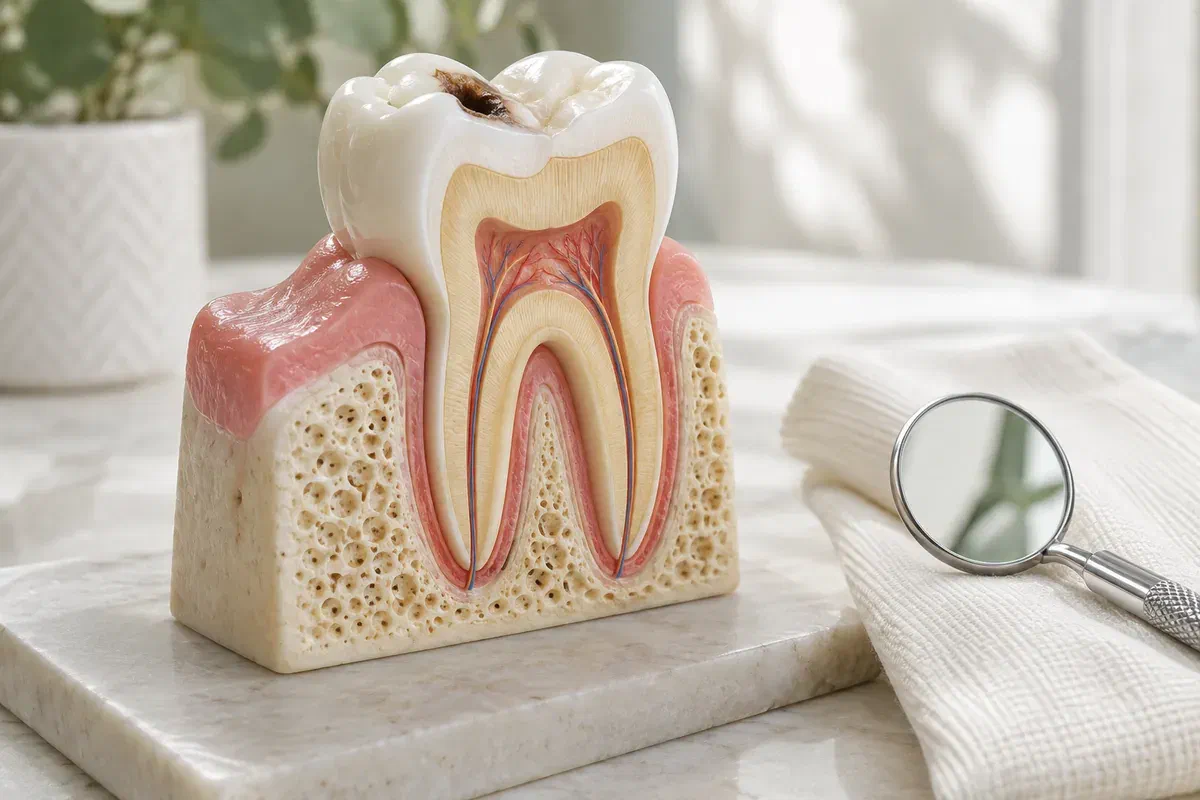
Illustrative physical molar cross-section showing decay within a supported tooth model
What a supporter can bring

Medicines, history and what you have seen at home

Family members often notice changes the patient overlooks. Bring the medicine list, earlier dental records and prescription details, and describe what you have observed, so the dentist can judge whether removal is advisable.

Changes you have noticed over time

Swelling that comes and goes, a bad smell or taste, eating on one side, or a gum bump that drains are all useful observations. Mention when they started and what helped. If things keep settling and returning, ask what treatment is meant to deal with the cause.

The tooth’s condition and past work

Note any broken tooth, root canal, crown, large filling or partial denture nearby, and anything earlier dentists said about gum or bone loss. Ask which present findings make the tooth hard to keep. The history helps, but the decision rests on today’s prognosis.

Health conditions and the medicine list

Bring every prescription and supplement, and mention conditions such as heart problems, diabetes, blood thinners or memory concerns, plus past surgical difficulties and antibiotic reactions. Do not stop medicines without advice; the team will say if the family doctor should be involved.

Call 911 or go to emergency care if your family member has trouble breathing or swallowing, swelling that is spreading or reaching the eye, severe difficulty opening the mouth, or seems confused or very unwell. These signs need emergency medical assessment.

What removal can do

Relief from the source, and a plan the whole household understands

If keeping the tooth is unrealistic, extraction can deal with the diagnosed dental source of infection. Ask what else in the mouth might need care and how healing will be checked. For an older person in particular, a calm, clear explanation of the recovery helps everyone know what to expect.

Consider the gap as well. Depending on where it is and the patient’s priorities, replacement might be planned, adapted from an existing denture, discussed later or not pursued. Prompt treatment for infection matters, but nobody should go home uncertain what the space means for eating.

Patient information: American Dental Association — source-directed dental care and antibiotic decisions

Whether keeping the tooth is realistic

An older tooth is not automatically a lost cause; a root canal or a second attempt at one sometimes works well. Weigh the structure remaining, the supporting tissues, the restoration needed and how many visits it would take. For some patients, the number of appointments is an important part of the decision.

What antibiotics are meant to do

A prescription can be appropriate in particular cases, such as spreading or systemic infection, but it does not treat the source. Health conditions, symptoms and how soon definitive care can happen all come into it. Ask what any medicine is for and what remains to be done.

How the procedure will be managed

Discuss freezing, likely difficulty and risks, and whether a specialist or hospital setting would be safer given the patient’s health. Ask what happens if surgical steps are needed and who the family should call if something seems wrong afterward.

How it unfolds

A process the patient and family can follow together

Timing and setting depend on the infection, the anatomy of the tooth, the patient’s health and what care can be arranged. An infected tooth carries no single rule about immediate extraction versus another step first.

  1. Assessment with the history in hand

    The dentist reviews the medical and dental history, examines the area and uses suitable tests or X-rays. Mention fever, spreading swelling, poor eating or difficulty opening. You and the patient can ask how pressing the situation is and whether a hospital or specialist would be a safer place for treatment.

  2. A decision the patient agrees to

    The outlook and alternatives are explained, including specialist input if useful. If extraction is chosen, the tooth, method, risks, fees and aftercare are confirmed with the patient, who gives consent. Supporters can help make sure every question is answered first.

  3. Treatment with comfort in mind

    The dentist selects freezing and an extraction approach suited to the patient. Mention anxiety, hearing or mobility needs and past freezing problems, and agree on a pause signal. Surgical steps or a referral, if likely, should be part of the plan.

  4. Aftercare the household can manage

    Instructions cover bleeding, cleaning, food, medicines and stitches; it can help for a supporter to hear them too. Ask when the site will be reviewed and how to get help after hours. Confirm any further visits needed.

Helping at home

Quiet days, soft meals, and a second pair of eyes

Aftercare is tailored to the extraction and the patient’s health. A tooth that was infected does not make every later symptom normal, and new pain does not automatically call for antibiotics.

Keeping the socket undisturbed

Help the patient follow the bleeding-control method demonstrated, and discourage touching the site. Check how long to wait before rinsing or cleaning beside the socket, and whether a partial denture should be left out for a time. Call if bleeding does not ease as expected.

Keeping medicines straight

A written schedule can help when new pain relief or antibiotics are added to regular medicines. Ask about interactions and side effects. Avoid leftover prescriptions and do not increase doses out of worry; regular medicines continue unless a clinician changes them.

Watching for changes and keeping the review

Report increasing pain, renewed swelling, fever, ongoing bleeding, new numbness, or a loved one who stops eating or seems unwell. Note the extraction date. Keep the follow-up even if things seem fine, so healing and any remaining infection can be checked.

Patient information: Royal Devon — bleeding advice and prescribed anticoagulant precautions

Talking through the choices

Every option, explained to the patient and the family

What the examination finds, how much of the tooth is left and how serious the infection has become all point toward one route. Some plans begin with urgent care and still need a further stage, which matters when you are arranging visits for someone else in Caledon.

When it has enough structure and support

Saving the tooth

A root canal or another indicated treatment may be suggested, with the restoration and reviews it requires. Ask whether a specialist would see it differently, and whether the visits involved are manageable for the patient. A saved tooth needs a realistic future.

When removal is right after weighing alternatives

A planned extraction

The dentist should explain why keeping the tooth is unsuitable, or confirm the patient prefers removal. Review the procedure, risks and gap, and ask whether an existing denture can be adapted or any replacement decision must come first.

When infection or health concerns call for more support

Specialist or hospital care

Severe infection, complex medical needs or difficult anatomy may require another provider or a hospital. Make sure the family understands the purpose of the referral and the timeframe. Necessary escalation should not wait for a preferred location.

Caledon family questions

For the people helping someone through it

Bring the medicine list and any previous records. These answers help families prepare, but only an examination can decide whether the tooth should come out.

(905) 876-4488
Can I speak with the dental team on behalf of my parent?
With your parent’s permission, or as their authorized substitute decision-maker, the team can discuss their care with you. Mention this when you call so it can be noted.
Is an infected tooth more serious for an older person?
Age alone does not decide it, but health conditions and medicines can affect how infection is handled. Share the full history so the dentist can judge urgency and the safest approach.
Can my parent keep wearing a partial denture after the extraction?
Ask the dentist. The denture may need to be left out for a period, adjusted or have a tooth added, depending on its design and the site.
What should I watch for at home after the tooth is removed?
Bleeding that does not settle, pain that worsens rather than eases, swelling that grows or returns, fever, poor eating or confusion. Contact the treating dentist promptly, and seek emergency care for breathing, swallowing or eye involvement.
Does a dental abscess mean the tooth can’t be saved?
Not necessarily. The tooth’s structure, support and earlier treatment decide whether root canal care is realistic. Ask what restoration would follow and whether the visits are manageable.
Should the family doctor know about the planned extraction?
Sometimes. If the patient’s health or medicines call for coordination, the dentist will explain this. Do not stop or change medicines without advice from the prescribing clinician.
Booking from Caledon

One call can start the plan for someone you love.

Phone (905) 876-4488 to reach our Bronte Street team. Describe what you have noticed, bring the medicine list, and let us know if the patient needs extra time or support. If urgent care is needed and we cannot see them, please contact another emergency dental provider.

Extraction, timing, antibiotics, referral and replacement are decided individually with the patient. Email and online forms are for non-urgent questions only.

Visit Milton Dental Clinic
Unit 1, 342 Bronte St. S, Milton, ON L9T 5B7
Get directions Clinic hours
Monday–Thursday
11am–7pm
Friday–Sunday
By appointment only

Areas we serve

  • Milton
  • Oakville
  • Mississauga
  • Georgetown
  • Halton Hills
  • Acton
  • Campbellville
  • Brampton
  • Burlington
  • Puslinch
  • Rockwood
  • Erin
  • Caledon
  • Etobicoke
  • Old Milton
  • Bronte Meadows
  • Timberlea
  • Dorset Park
  • Dempsey
  • Clarke
  • Beaty
  • Coates
  • Harrison
  • Scott
  • Willmott
  • Ford
  • Bowes
  • Cobden
  • Walker
  • Mountain View
  • Milton Heights
  • Hawthorne Village
  • Valley View
  • Fallingbrook
  • Nassagaweya
  • Trafalgar
  • Esquesing
  • Nelson
  • Brookville
  • Moffat
  • Glen Williams
  • Norval
  • Limehouse
  • Stewarttown
  • Ashgrove
  • Hornby
  • Silver Creek
  • Speyside
  • Scotch Block
  • North Oakville
  • River Oaks
  • Glen Abbey
  • West Oak Trails
  • Palermo
  • Bronte Creek
  • College Park
  • Joshua Creek
  • Uptown Core
  • Preserve
  • Iroquois Ridge
  • Lisgar
  • Meadowvale
  • Meadowvale Village
  • Churchill Meadows
  • Erin Mills
  • Central Erin Mills
  • Streetsville
  • East Credit
  • Creditview
  • Heartland
  • Sheridan
  • Mount Pleasant
  • Credit Valley
  • Huttonville
  • Churchville
  • Springbrook
  • Northwest Brampton
  • Bram West
  • Fletcher's Meadow
  • Fletcher's Creek South
  • Alton Village
  • Orchard
  • Millcroft
  • Headon Forest
  • Tansley
  • Brant Hills
  • Tyandaga
  • Kilbride
  • Lowville
  • Aberfoyle
  • Morriston
  • Arkell
  • Hillsburgh
  • Freelton
  • Carlisle
  • Waterdown
  • Flamborough
  • Mountsberg

How can we help?

Milton Dental Clinic

Have a question about your smile? Choose the option that works best for you.

For urgent dental concerns, please call.
Messages are reviewed during clinic hours.