

Illustrative patient discussing an infected tooth and treatment choices with a clinician
Specialized Care

Infected Tooth Extraction in Campbellville

Out in the countryside, recovering from an extraction means having what you need at home before you leave for the appointment. For Campbellville households, we assess the infected tooth, explain whether it can stay, and help you prepare for the days after a removal.

Getting ready, rural style

Plan the recovery before the appointment day.

When the nearest shop is not around the corner, a bit of forethought goes a long way. Still, preparation starts with the diagnosis. The dentist has to locate the tooth causing the infection and see whether there is enough sound tooth and bone to keep it. A swollen jaw alone does not decide that removal is necessary.

If extraction does turn out to be the right step, knowing in advance lets you arrange soft food, collect any prescription and clear your schedule. Mention earlier antibiotics or a dentist’s past warnings, because they help. Just remember that a quieter tooth after medicine has not necessarily healed, and leaving it can mean another flare at an awkward moment.

Give us a call to describe the problem and check when we can see you. Tell us straight away about spreading swelling or feeling unwell. We will explain keeping, removing or referring the tooth. If you need care immediately and we cannot help, reach another emergency dental provider without delay.

Call about an infected tooth
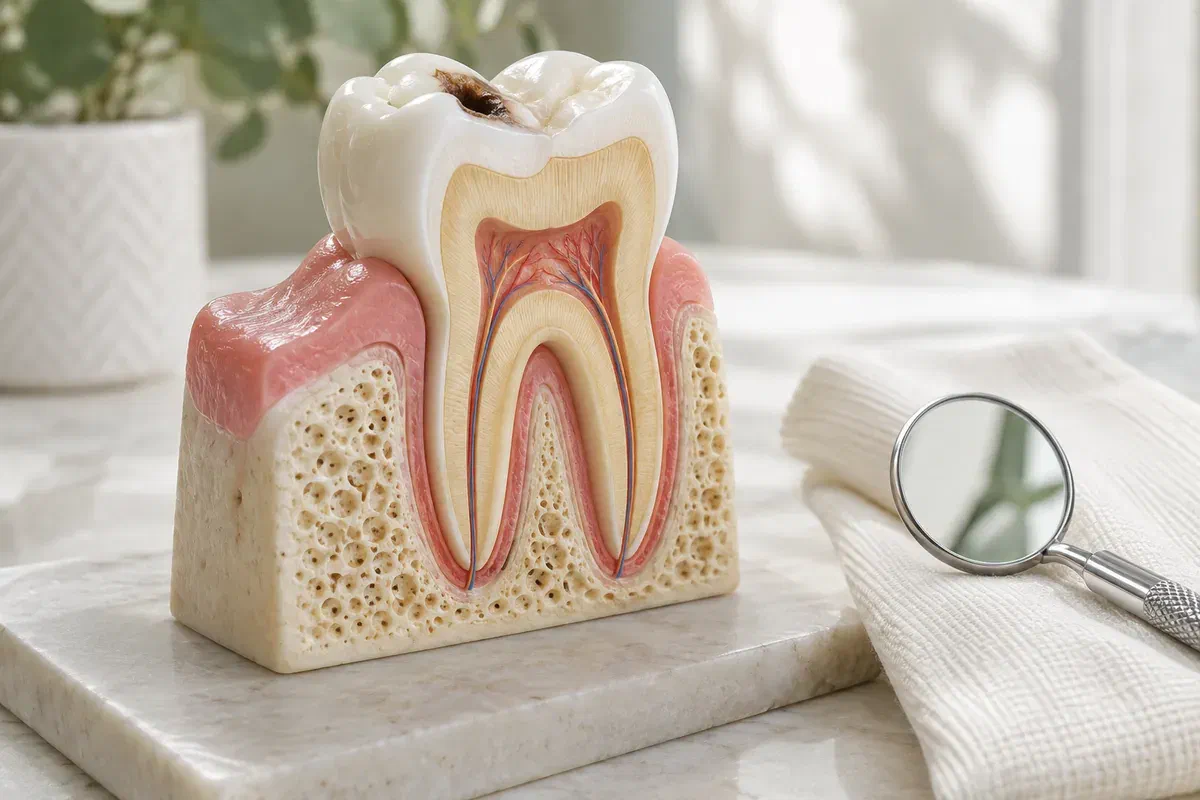
Illustrative physical molar cross-section showing decay within a supported tooth model
Before you head in

Pack the paperwork along with the questions.

Old X-rays, a note from another dentist and the name of any recent antibiotic save time at the visit. The dentist uses the tooth’s past and present together to judge whether extraction is the right recommendation.

Swelling that has come and gone

Try to recall when each episode began and what helped. Draining bumps on the gum, a sour taste or soreness when chewing are useful clues. If calm periods have not lasted, the source is probably still active, so ask what treatment is aimed at it rather than the symptoms.

Wear and tear on the tooth

Point out cracks, a past root canal, big fillings or a crown, and recall any mention of receding gums or bone loss. Ask what in today’s findings makes keeping it difficult. A long history is helpful to know, but the current prognosis is what counts.

Medical details and prescriptions

Write down every medicine you take, any immune or bleeding issue and past surgical trouble, plus the latest antibiotic and any reaction. Keep up regular medicines unless the team says otherwise; they will tell you if your physician should weigh in.

Distance is not a reason to wait with severe signs. Difficulty breathing or swallowing, swelling that is spreading or approaching the eye, or a jaw that will barely open requires emergency medical care. Call 911 for an immediate emergency.

Why it can be worth removing

Fewer unplanned flare-ups far from help

For a tooth that cannot reasonably be kept, extraction can eliminate the diagnosed dental source of the infection. Ask the dentist what else might need treatment or watching, and how healing will be checked. A sound plan sees removal as one step toward solving the problem and sets realistic expectations about recovery.

Consider the gap too. Where the tooth sits and what matters to you will shape whether a replacement is discussed before the extraction or after healing. Timely care for an infection is important, but it should still leave you clear about what the space may mean.

Patient information: American Dental Association — source-directed dental care and antibiotic decisions

The keep-the-tooth alternative

Root canal care, retreatment or another approach can be reasonable for a suitable tooth. Weigh the structure left, the gum and bone support, the restoration needed and the follow-up visits. Seeing the full requirement for this tooth tells you more than a procedure name.

The role of antibiotics

In some cases, such as infection that is spreading or affecting your whole body, a prescription is appropriate. It still does not deal with the source. The decision takes into account your health, symptoms and timing of care. Ask what the medicine is meant to do.

The procedure, planned

Go over freezing, the likely difficulty, particular risks and whether an oral surgeon should be involved. Ask what would happen if a root is hard to remove or extra surgical steps are needed, and how you would get advice from home afterward.

Visit by visit

A clear order of events

Severity, anatomy, your health and available care determine timing and setting, and for a household in Campbellville the plan can also take into account how the visits fit together. There is no fixed rule that an infected tooth must be removed immediately, nor that something else must always be tried first.

  1. Examination

    The dentist asks about your history, examines the area and takes appropriate tests or images to confirm the source. Report fever, swelling that is moving, or difficulty eating or opening. Ask what the findings mean for urgency and the right setting.

  2. The decision

    Prognosis and realistic alternatives are discussed, along with a specialist view if useful. If removal is chosen, the tooth, method, risks, fees and aftercare are confirmed with you. Ask anything that is still unclear before agreeing to a permanent step.

  3. The extraction

    Freezing is chosen and tested before the tooth is removed. Tell the team about anxiety or poor freezing in the past, and agree on a signal to pause. When surgical steps or referral are needed, that is explained as part of your plan.

  4. Home care and the recheck

    You receive guidance on bleeding, cleaning, meals, medicines and stitches if used. Find out when the site will be reviewed and who to call outside office hours. Confirm whether more visits are needed to finish your treatment or discuss replacement.

The first few days at home

Soft food, quiet socket, phone nearby

Your aftercare reflects your particular extraction and health. A tooth that was infected can still leave behind symptoms that are not part of ordinary healing, and new pain is not automatically a cue for antibiotics.

Rest the area

Use the bleeding-control steps you were given and avoid touching the socket. Keep gauze or whatever the dentist recommends on hand at home, since a late-night run to the store is less practical in the country. Check how many hours or days to wait before rinsing or brushing beside the socket, and call the provider if bleeding does not ease as described.

Have medicines sorted in advance

Pick up prescriptions before you get home if you can, and follow the directions for pain relief and antibiotics. Ask about side effects or interactions. Do not use leftover medicines or take extra out of worry, and keep taking your regular medicines unless told otherwise.

Know who to call and keep the review

Report increasing pain, renewed swelling, fever, persistent bleeding or unexpected numbness. Mention the extraction date and how things changed. The follow-up is worth the drive even on a day you feel completely fine, because it is how the dentist confirms the site has closed over and the infection is gone.

Patient information: Royal Devon — bleeding advice and prescribed anticoagulant precautions

Options to weigh

Save, remove or escalate

The route depends on the diagnosis, the state of the tooth and how serious the infection is. Treatment may start urgently and still involve another stage before it is complete.

When structure and outlook allow

Saving the tooth

A root canal or other indicated treatment may be advised, followed by a durable restoration and checks. Ask if a specialist would view it differently. Keeping the tooth should be a realistic plan for years, not a brief rest from infection.

When extraction is chosen after alternatives

Removing it with a home recovery plan

You deserve a plain reason this tooth cannot reasonably be kept, or a clear note that removal is your own preference after hearing the alternatives. Review the procedure, risks and gap. Ask which replacement decisions must come before removal and which can wait.

When the case is severe or complex

Referral to a hospital or specialist

Serious infection, medical concerns or difficult anatomy may need another provider or a hospital. Ask what the referral is meant to address and how soon to go. Necessary escalation should not wait for a location that suits you better.

Campbellville questions

Getting ready for recovery

Bring past records and prescriptions. These answers help you prepare, but only an examination can confirm whether your tooth should be removed.

(905) 876-4488
What should I have at home before an infected tooth is removed?
Ask the dentist for a short list. It often includes soft foods, any recommended pain relief, gauze and your prescriptions picked up in advance. Following the specific instructions you receive matters more than any general checklist.
How long does it take for an extraction site to heal?
It varies with the tooth, the procedure and your health. Early healing often takes days to a couple of weeks, with fuller healing of bone taking longer. Ask what is expected in your case.
When can I go back to heavy physical work after the extraction?
That depends on the extraction and your health. Strenuous activity soon afterward can sometimes affect bleeding, so ask the dentist what is sensible for your job and your recovery.
Is smoking a problem after the tooth comes out?
Smoking can interfere with healing and is commonly discouraged after extractions. Ask the dentist how long to avoid it and for advice suited to you.
Does infection always mean the tooth is too far gone?
No. The remaining structure, the support around it and any earlier treatment shape the options. Root canal care may be suitable for some teeth; infection alone does not decide.
A stitch came loose a few days after the extraction. Is that a problem?
Call the dentist who treated you and describe what happened, including any bleeding or new pain. Some stitches are designed to dissolve or loosen on their own as the gum heals; the dentist can tell you whether yours needs attention or a quick check.
Coming in from Campbellville

Make one call and leave prepared.

Phone (905) 876-4488 to reach the team at our Bronte Street practice, explain your symptoms and find a time. Ask what to have ready at home in Campbellville before you set out. Should the situation be urgent and no appointment be free with us, another emergency dental provider is the right next call.

Extraction, timing, antibiotics, referral and replacement are individual decisions made after examination. Please use email or online forms for non-urgent matters only.

Visit Milton Dental Clinic
Unit 1, 342 Bronte St. S, Milton, ON L9T 5B7
Get directions Clinic hours
Monday–Thursday
11am–7pm
Friday–Sunday
By appointment only

Areas we serve

  • Milton
  • Oakville
  • Mississauga
  • Georgetown
  • Halton Hills
  • Acton
  • Campbellville
  • Brampton
  • Burlington
  • Puslinch
  • Rockwood
  • Erin
  • Caledon
  • Etobicoke
  • Old Milton
  • Bronte Meadows
  • Timberlea
  • Dorset Park
  • Dempsey
  • Clarke
  • Beaty
  • Coates
  • Harrison
  • Scott
  • Willmott
  • Ford
  • Bowes
  • Cobden
  • Walker
  • Mountain View
  • Milton Heights
  • Hawthorne Village
  • Valley View
  • Fallingbrook
  • Nassagaweya
  • Trafalgar
  • Esquesing
  • Nelson
  • Brookville
  • Moffat
  • Glen Williams
  • Norval
  • Limehouse
  • Stewarttown
  • Ashgrove
  • Hornby
  • Silver Creek
  • Speyside
  • Scotch Block
  • North Oakville
  • River Oaks
  • Glen Abbey
  • West Oak Trails
  • Palermo
  • Bronte Creek
  • College Park
  • Joshua Creek
  • Uptown Core
  • Preserve
  • Iroquois Ridge
  • Lisgar
  • Meadowvale
  • Meadowvale Village
  • Churchill Meadows
  • Erin Mills
  • Central Erin Mills
  • Streetsville
  • East Credit
  • Creditview
  • Heartland
  • Sheridan
  • Mount Pleasant
  • Credit Valley
  • Huttonville
  • Churchville
  • Springbrook
  • Northwest Brampton
  • Bram West
  • Fletcher's Meadow
  • Fletcher's Creek South
  • Alton Village
  • Orchard
  • Millcroft
  • Headon Forest
  • Tansley
  • Brant Hills
  • Tyandaga
  • Kilbride
  • Lowville
  • Aberfoyle
  • Morriston
  • Arkell
  • Hillsburgh
  • Freelton
  • Carlisle
  • Waterdown
  • Flamborough
  • Mountsberg

How can we help?

Milton Dental Clinic

Have a question about your smile? Choose the option that works best for you.

For urgent dental concerns, please call.
Messages are reviewed during clinic hours.