

Illustrative patient discussing an infected tooth and treatment choices with a clinician
Specialized Care

Infected Tooth Extraction in Halton Hills

Is this a dental appointment or a trip to the emergency department? From Glen Williams to Acton, households across Halton Hills can call us to sort out an infected tooth’s urgency, whether it can be kept, and how a removal would be planned.

Sorting out urgency first

How worried should you be about this swelling?

Swelling around a tooth can range from a tender lump on the gum to a cheek that is visibly puffy and hot. Most infected teeth are a dental matter that needs timely care. A smaller number become a medical emergency, and knowing the difference is the first decision you make, well before anyone talks about extraction.

For the dental side, removal is one possibility among several. The dentist confirms which tooth is the source and judges its remaining structure and support; swelling on its own does not mean the tooth is lost. Earlier antibiotics or a past warning about the tooth help the picture, but easing pain is not proof the cause has gone.

Phone and describe the swelling, how fast it has changed and whether you feel unwell. We can talk about timing and options, including referral. Spreading facial swelling or feeling generally ill warrants urgent attention, and if you need care immediately and we cannot see you, seek another emergency provider.

Call about a swollen tooth
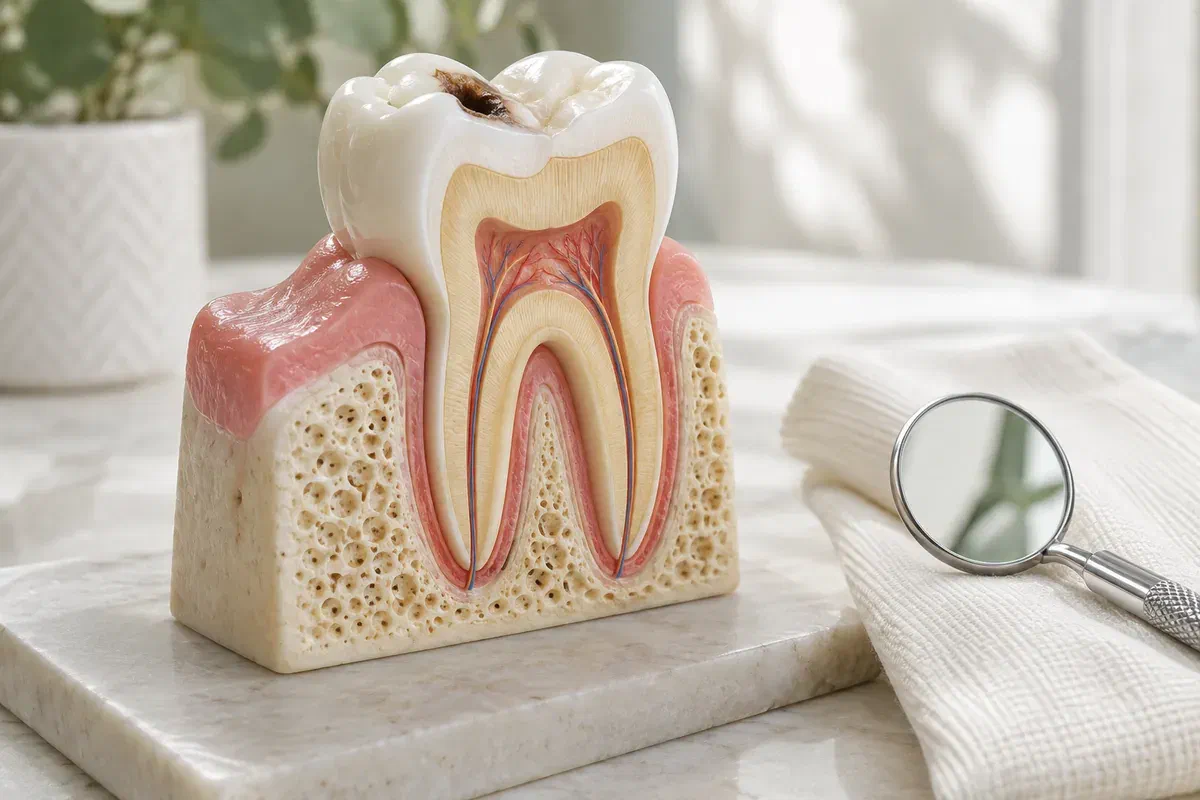
Illustrative physical molar cross-section showing decay within a supported tooth model
Signs and history

What the swelling is doing, and what the tooth has been through

Note how the swelling has changed over hours or days, and bring any X-rays, earlier recommendations and prescription details. The dentist uses both the current signs and the tooth’s past to judge urgency and whether removal makes sense.

Swelling that grows, drains or recurs

Describe where it started, how quickly it changed and whether it drained. A gum bump, foul taste or pain when biting adds detail. If it has calmed before and come back, mention what helped, because temporary improvement can mean the source is still untreated.

A tooth with damage or thin support

Breaks, a previous root canal, sizeable fillings or crowns, and earlier comments about gum or bone loss all matter. Ask which present findings work against keeping the tooth. The dentist bases the advice on the current prognosis, with history as context.

Health factors that raise the stakes

Conditions or medicines that affect immunity, healing or bleeding can change how urgently an infection is handled. Share a full list, recent antibiotics and reactions, and any past surgical complications. Keep taking regular medicines; the team will advise if your doctor needs to be involved.

Go to emergency medical care or call 911, not a dental office, if you have trouble breathing or swallowing, swelling that is spreading quickly, swelling pushing toward the eye, or such stiffness you can barely open your mouth.

Why the source matters

Calming symptoms buys time; treating the source ends the episode.

If the tooth cannot reasonably be kept, extraction can remove the diagnosed dental source of the swelling. You can ask what else should be treated or monitored and how recovery will be checked. Removal belongs within a larger plan, and the dentist should be realistic about how quickly symptoms settle.

Losing the tooth leaves a space that may or may not matter much, depending on its position and what you care about. Replacement can be discussed before or after removal. An urgent infection needs prompt attention, yet you should still understand what the gap may mean.

Patient information: American Dental Association — source-directed dental care and antibiotic decisions

Is keeping the tooth realistic?

A swollen tooth can sometimes still be saved through endodontic treatment or redoing an earlier root canal. A meaningful comparison looks at remaining structure, gum and bone support, the restoration required and follow-up. Focus on what this particular tooth would need to stay healthy over time.

What will an antibiotic do here?

Prescriptions can be appropriate, for instance with spreading or systemic infection, but they do not deal with the source. The dentist considers your health, symptoms and how quickly treatment can happen. Ask the purpose of any medicine and what treatment remains.

How will the removal be managed?

Cover the freezing first, then how hard this particular tooth is likely to be, what could go wrong and whether an oral surgeon would be a better fit. Ask what the plan is if roots are stubborn or surgical steps are needed. For homes spread across Halton Hills, it also helps to know exactly how complications will be handled once you are back home.

From first call to final check

Urgency, options, treatment, review

How soon and where care happens depends on the infection’s severity, the tooth’s anatomy, your health and what is available. No one rule says an infected tooth must be removed at once, or only after another treatment.

  1. Gauge urgency and find the source

    The dentist reviews your history, examines the swelling and tooth, and uses suitable tests or images. Report fever, spreading swelling or difficulty eating and opening. Ask whether the findings call for faster or hospital-level care.

  2. Settle on keep, remove or refer

    Discuss the prognosis and realistic alternatives, including specialist assessment if it would help. If extraction is chosen, confirm the tooth, procedure, risks, fees and aftercare. Make sure the reasoning is clear before agreeing to a permanent step.

  3. Carry out the extraction

    The dentist chooses how to freeze the area and take the tooth out. Mention anxiety or past freezing problems and agree on a signal for a break. Surgical steps or referral are sometimes needed and should be discussed beforehand.

  4. Recheck healing and the infection

    You receive guidance on bleeding, cleaning, eating, medicines and stitches if placed. Ask when the area will be reviewed and how to reach help after hours. Confirm whether further visits are needed for other treatment or replacement.

Watching the recovery

Expect gradual improvement, and act if the swelling heads the other way.

Aftercare instructions reflect your extraction and health. An infection before removal does not make every later symptom normal, and new pain does not automatically mean more antibiotics.

Day-to-day socket care

Manage bleeding with the method you were shown, and resist the urge to touch or probe the socket with a finger or tongue. Ask when to begin rinsing and brushing near it. If bleeding does not settle as described, call the provider instead of lifting the gauze again and again to look.

Sensible use of medicines

Take any pain relief or antibiotic exactly as directed, and ask about interactions and side effects. Avoid leftover prescriptions and do not increase doses because you are concerned. Continue regular medicines unless your clinician has advised a change.

Tracking the swelling

Some puffiness can follow an extraction, but swelling that grows, returns after improving or comes with fever needs a call, as do worsening pain, ongoing bleeding or a change in sensation. Keep the review appointment even if you feel fine.

Patient information: Royal Devon — bleeding advice and prescribed anticoagulant precautions

Matching care to severity

Not every infected tooth goes the same way.

Severity leads, but the diagnosis and the tooth’s state of repair matter just as much in choosing the route. A plan may start with urgent care and still need a further stage before treatment is finished.

When the tooth is restorable and well supported

Treat and keep

Root canal treatment or another indicated approach may be recommended, after which the tooth usually needs a protective restoration and periodic review. A specialist might see it differently, and it is fair to ask. Keeping a tooth should mean a realistic lasting plan rather than briefly settling the infection.

When removal is the right choice after alternatives

Extract and recover

You should hear why the tooth is unsuitable to keep, or confirm that removal is the route you have chosen. Review the procedure, risks and the space left behind. Ask whether replacement planning needs to come first and what can wait.

When severity, health or anatomy calls for it

Escalate to hospital or specialist care

A fast-moving infection, a complicating health condition or roots in an awkward position may mean a hospital team or oral surgeon is the better place for care. Find out what the referral should achieve and how quickly to act. Waiting for a more convenient location is not a good reason to postpone it.

Halton Hills FAQ

Questions about swelling and urgency

Bring any previous prescriptions and recommendations. These answers can guide you, but only an examination can show whether your tooth needs to come out.

(905) 876-4488
How can I tell if facial swelling from a tooth is an emergency?
Swelling that spreads quickly, affects your eye, makes breathing or swallowing difficult, or comes with being unable to open your mouth properly needs emergency medical care. Feeling very unwell with a fever is also a reason to seek urgent help.
Should I put heat on a swollen tooth?
Ask a dental or medical professional before trying home measures, and do not let them delay assessment. What matters most is having the source of the infection examined and treated.
Can a dentist remove a tooth while the face is still swollen?
It depends. The dentist considers the severity of the infection, your health, the procedure and the setting. Some cases call for prompt removal of the source; others need other steps or referral first.
Does swelling mean the tooth definitely has to come out?
No. The tooth’s structure, support and previous treatment shape the options. Root canal care may be possible for a suitable tooth. Swelling alone does not settle the question.
Is the swelling supposed to disappear right after the tooth is removed?
Not necessarily straight away. Healing takes time and some swelling can follow the procedure itself. Swelling that grows, returns or comes with fever should be reported to the treating dentist promptly.
Who should I call if new swelling appears days after my extraction?
Contact the dentist who treated you and describe when it started and how severe it is. It needs to be examined rather than handled with another antibiotic by default. Go to emergency care for breathing, swallowing or eye involvement.
Help for Halton Hills households

Describe the swelling, and we will help you decide the next step.

Reach our Bronte Street practice at (905) 876-4488. Tell us how the swelling has changed and whether you feel unwell, and bring any records. If you need urgent dental care and we are not available, contact another emergency dental provider.

Extraction, timing, antibiotic use, referral and replacement are decided after an individual assessment. Email and web forms should only be used for non-urgent questions.

Visit Milton Dental Clinic
Unit 1, 342 Bronte St. S, Milton, ON L9T 5B7
Get directions Clinic hours
Monday–Thursday
11am–7pm
Friday–Sunday
By appointment only

Areas we serve

  • Milton
  • Oakville
  • Mississauga
  • Georgetown
  • Halton Hills
  • Acton
  • Campbellville
  • Brampton
  • Burlington
  • Puslinch
  • Rockwood
  • Erin
  • Caledon
  • Etobicoke
  • Old Milton
  • Bronte Meadows
  • Timberlea
  • Dorset Park
  • Dempsey
  • Clarke
  • Beaty
  • Coates
  • Harrison
  • Scott
  • Willmott
  • Ford
  • Bowes
  • Cobden
  • Walker
  • Mountain View
  • Milton Heights
  • Hawthorne Village
  • Valley View
  • Fallingbrook
  • Nassagaweya
  • Trafalgar
  • Esquesing
  • Nelson
  • Brookville
  • Moffat
  • Glen Williams
  • Norval
  • Limehouse
  • Stewarttown
  • Ashgrove
  • Hornby
  • Silver Creek
  • Speyside
  • Scotch Block
  • North Oakville
  • River Oaks
  • Glen Abbey
  • West Oak Trails
  • Palermo
  • Bronte Creek
  • College Park
  • Joshua Creek
  • Uptown Core
  • Preserve
  • Iroquois Ridge
  • Lisgar
  • Meadowvale
  • Meadowvale Village
  • Churchill Meadows
  • Erin Mills
  • Central Erin Mills
  • Streetsville
  • East Credit
  • Creditview
  • Heartland
  • Sheridan
  • Mount Pleasant
  • Credit Valley
  • Huttonville
  • Churchville
  • Springbrook
  • Northwest Brampton
  • Bram West
  • Fletcher's Meadow
  • Fletcher's Creek South
  • Alton Village
  • Orchard
  • Millcroft
  • Headon Forest
  • Tansley
  • Brant Hills
  • Tyandaga
  • Kilbride
  • Lowville
  • Aberfoyle
  • Morriston
  • Arkell
  • Hillsburgh
  • Freelton
  • Carlisle
  • Waterdown
  • Flamborough
  • Mountsberg

How can we help?

Milton Dental Clinic

Have a question about your smile? Choose the option that works best for you.

For urgent dental concerns, please call.
Messages are reviewed during clinic hours.