

Illustrative patient discussing an infected tooth and treatment choices with a clinician
Specialized Care

Infected Tooth Extraction in Mississauga

Keep it or take it out? For an infected tooth, both paths involve real commitments. Coming from Mississauga, you can sit down with us to compare what saving the tooth would require against what a planned extraction and the gap afterward would mean.

Two paths, one tooth

Saving and removing both ask something of you.

Most people facing an infected tooth want one thing: for the problem to end. Root canal care and extraction can each do that, in different ways and with different follow-through. Which one suits you depends on facts the dentist has to establish first, starting with which tooth is the source and how sound it still is.

A tooth worth keeping needs enough healthy structure and supporting bone and gum to hold a lasting restoration. When those are missing, removal may be the more honest choice. Neither the swelling you see nor the relief a prescription brings is enough to decide, and repeated short improvements tend to postpone the decision rather than make it.

Get in touch to describe the tooth and find out about our availability. Say so immediately if swelling is spreading or you feel unwell in yourself. We will set out the options, including referral when it makes sense. If travelling in from Mississauga makes several separate visits difficult, mention it, and we can talk about how the appointments in each path might be grouped. Should you need care at once and we cannot provide it, contact another emergency dental provider.

Compare options for an infected tooth
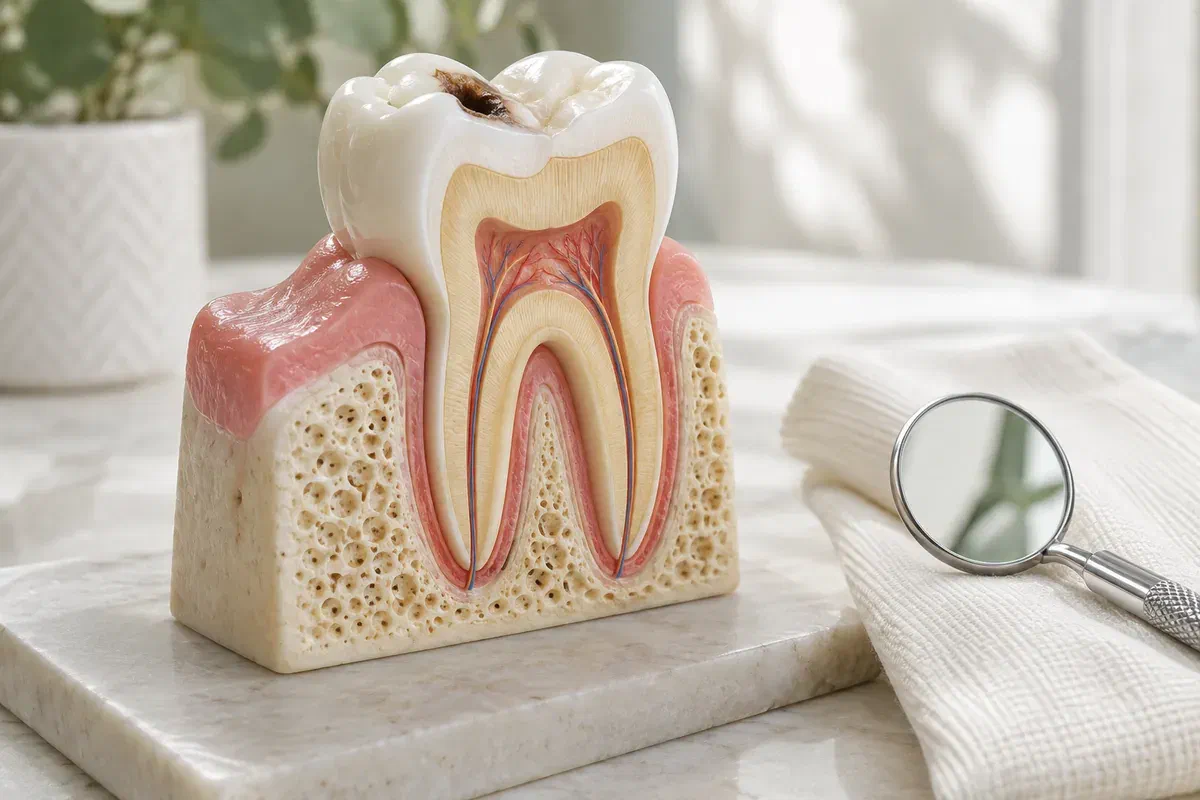
Illustrative physical molar cross-section showing decay within a supported tooth model
Inputs to the decision

The facts that tip the balance

The dentist can only weigh keeping against removing with good information. Recent X-rays, an earlier dentist’s recommendation and prescription details all help, together with an examination of how the tooth is today.

How the infection has behaved

Note when swelling or drainage first appeared, how often it has come back and what each treatment changed. A recurring gum blister, an odd taste or soreness when chewing all suggest a source still at work. A tooth that keeps flaring needs a plan aimed at that cause.

How much tooth there is to work with

Breaks, a past root canal, large fillings and crowns, and earlier comments about gum or bone support all bear on the choice. Ask which present findings make the tooth hard to restore. History is helpful, but the decision should rest on the prognosis the dentist sees now.

How your health shapes treatment

A full medicine list matters, along with any immune, bleeding or healing concerns and past surgical complications. Name recent antibiotics and reactions. Keep your regular medicines going unless advised otherwise; the team will explain if your doctor needs to be part of the plan.

Whatever you decide about the tooth, some symptoms come first. Breathing or swallowing problems, swelling that is spreading or affecting the eye, or barely being able to open your mouth require emergency medical assessment. Call 911 in an immediate emergency.

The case for extraction

Sometimes removal is the cleaner solution

For a tooth that cannot reasonably be kept, extraction removes the diagnosed dental source of infection in a single defined step. You can still ask what else needs care, and how recovery will be checked. A good recommendation places the removal inside the wider plan and is candid about healing.

The trade-off is a gap. Depending on its position and what you want, a replacement might be planned before the extraction or considered after the site heals, and some people choose to leave the space. Prompt treatment for infection should still leave room to understand those consequences.

Patient information: American Dental Association — source-directed dental care and antibiotic decisions

What keeping the tooth would really take

Root canal treatment, retreatment, a specialist referral or another method may be on the table. Compare the remaining structure, gum and bone support, the final restoration required and the follow-up. That list of requirements says more than the treatment names do.

Antibiotics as support, not a solution

There are situations, such as spreading or systemic infection, where a prescription makes sense. It still leaves the source untreated. The dentist considers your health, your symptoms and how soon definitive care is possible. Ask what any medicine is meant to accomplish.

A removal you can prepare for

Talk through the freezing, how complex the extraction looks, its particular risks and whether a specialist is the better choice. Ask what happens if a root fractures or extra surgical steps are needed, and how aftercare questions will be answered.

Moving from question to treatment

Diagnosis, decision, procedure, review

Severity, anatomy, health and the care available set the timing and the setting. No universal rule requires an infected tooth to come out at once, nor to wait until something else has been tried.

  1. Diagnosis

    Your dentist goes through your history, examines the area and uses relevant tests and images to identify the responsible tooth. Mention fever, swelling that is spreading, or difficulty eating or opening. Ask how urgent things are and whether a different setting is needed.

  2. Decision

    You weigh the tooth’s prognosis against the reasonable alternatives, with a specialist opinion if it would help. When extraction is chosen, confirm the tooth, the approach, risks, fees and aftercare. A permanent choice deserves a clear explanation before you consent.

  3. Procedure

    The dentist selects how to numb the area and remove the tooth. Mention nerves or past freezing trouble, and agree on a pause signal. Some teeth need surgical steps or a referral, and that possibility should be covered in your plan.

  4. Review

    Instructions cover bleeding, cleaning, eating, medicines and stitches if used. Ask when infection and healing will be rechecked and how to get help after hours. Confirm whether more visits are needed for the rest of your treatment or replacement planning.

Once the tooth is out

Recovery that follows the plan, and what to do if it doesn’t

Follow the guidance written for your extraction and health. A prior infection does not mean every symptom afterward is expected, nor that later discomfort should be met with more antibiotics.

Protecting the clot

Control bleeding using the method you were shown and keep fingers and objects away from the socket. Ask when rinsing and brushing next to the site can resume. If bleeding does not settle as described, phone the provider rather than repeatedly inspecting the area.

Taking medicines as prescribed

Use pain relief and antibiotics exactly as directed, and ask about side effects or interactions. Leftover medicine from another time is not a safe stand-in, and doses should not go up because of worry. Regular medicines continue unless your clinician has said otherwise.

Reporting anything unexpected

Call about worsening pain, swelling that reappears, fever, persistent bleeding or a change in sensation. Give the date of the extraction and describe how things have changed. Attend the review even when you feel fine, so healing and any remaining infection can be assessed.

Patient information: Royal Devon — bleeding advice and prescribed anticoagulant precautions

Laying out the choices

Keep, extract or refer

Each route answers a different question about the diagnosis, the tooth’s condition and how serious the infection is. Urgent care may start the process without finishing it, so expect another stage in some plans.

When structure and prognosis make it realistic

Keep the tooth

A root canal or other suitable treatment may be recommended, along with the final restoration and the follow-up it needs. Ask whether a specialist would weigh it differently. A kept tooth should come with a credible long-term plan, not just a pause in the infection.

When removal is the sound choice after alternatives

Extract the tooth

You should understand why the tooth is unsuitable to keep, or why removal is the option you prefer. Review the procedure, risks and resulting space. Ask whether any replacement decision must be made beforehand and which ones can wait.

When severity or complexity calls for another setting

Refer for more support

Serious infection, medical concerns or difficult anatomy may mean another provider or a hospital is better placed. Ask what the referral should achieve and how soon. Necessary escalation should not be put off to wait for a preferred location.

Mississauga patient questions

Comparing the two choices, honestly

Bring past records and prescriptions with you. These answers help frame the decision, but only an examination can show whether your tooth should be kept or removed.

(905) 876-4488
Is a root canal always better than extraction if the tooth can technically be saved?
Not always. Keeping a natural tooth is often worthwhile, but the decision also depends on how restorable it is, its support, your health and your own priorities. The dentist should explain the realistic outlook for each path so you can choose with full information.
How many visits does each option usually involve?
It varies. Root canal care is often followed by a separate restoration, and extraction may be followed by review visits and, if you choose, replacement planning. Ask the dentist to outline the likely sequence for your tooth.
What happens to neighbouring teeth if I leave a gap?
Depending on the location, nearby or opposing teeth can shift over time, and chewing may change. The dentist can explain what the space might mean for you and whether replacement is worth considering.
Can I ask a specialist to look at the tooth before deciding?
Yes. A specialist assessment is reasonable when the decision is close or the tooth is complex. Ask the dentist whether it would add useful information, and how the timing fits with the infection.
Do I have to keep taking antibiotics until the extraction day?
There is no universal rule. Whether a prescription is needed depends on severity, your health and how soon treatment can happen. Follow the advice you are given and do not delay treatment on the assumption that antibiotics must come first.
Can swelling return even after the right tooth was removed?
Yes, it can, and it should be checked rather than assumed to be normal. Contact the treating dentist promptly. Seek emergency medical care for breathing or swallowing trouble, swelling near the eye, or quickly spreading symptoms.
From Mississauga to Bronte Street

Talk it through before you choose.

Reach our Bronte Street practice at (905) 876-4488 to describe the tooth and book a time. Bring any X-rays and your medicine list. If treatment is urgent and we cannot see you soon enough, contact another emergency dental provider.

Whether to remove a tooth, the timing, antibiotics, referral and replacement are individual decisions. Please keep email and online forms for non-urgent matters.

Visit Milton Dental Clinic
Unit 1, 342 Bronte St. S, Milton, ON L9T 5B7
Get directions Clinic hours
Monday–Thursday
11am–7pm
Friday–Sunday
By appointment only

Areas we serve

  • Milton
  • Oakville
  • Mississauga
  • Georgetown
  • Halton Hills
  • Acton
  • Campbellville
  • Brampton
  • Burlington
  • Puslinch
  • Rockwood
  • Erin
  • Caledon
  • Etobicoke
  • Old Milton
  • Bronte Meadows
  • Timberlea
  • Dorset Park
  • Dempsey
  • Clarke
  • Beaty
  • Coates
  • Harrison
  • Scott
  • Willmott
  • Ford
  • Bowes
  • Cobden
  • Walker
  • Mountain View
  • Milton Heights
  • Hawthorne Village
  • Valley View
  • Fallingbrook
  • Nassagaweya
  • Trafalgar
  • Esquesing
  • Nelson
  • Brookville
  • Moffat
  • Glen Williams
  • Norval
  • Limehouse
  • Stewarttown
  • Ashgrove
  • Hornby
  • Silver Creek
  • Speyside
  • Scotch Block
  • North Oakville
  • River Oaks
  • Glen Abbey
  • West Oak Trails
  • Palermo
  • Bronte Creek
  • College Park
  • Joshua Creek
  • Uptown Core
  • Preserve
  • Iroquois Ridge
  • Lisgar
  • Meadowvale
  • Meadowvale Village
  • Churchill Meadows
  • Erin Mills
  • Central Erin Mills
  • Streetsville
  • East Credit
  • Creditview
  • Heartland
  • Sheridan
  • Mount Pleasant
  • Credit Valley
  • Huttonville
  • Churchville
  • Springbrook
  • Northwest Brampton
  • Bram West
  • Fletcher's Meadow
  • Fletcher's Creek South
  • Alton Village
  • Orchard
  • Millcroft
  • Headon Forest
  • Tansley
  • Brant Hills
  • Tyandaga
  • Kilbride
  • Lowville
  • Aberfoyle
  • Morriston
  • Arkell
  • Hillsburgh
  • Freelton
  • Carlisle
  • Waterdown
  • Flamborough
  • Mountsberg

How can we help?

Milton Dental Clinic

Have a question about your smile? Choose the option that works best for you.

For urgent dental concerns, please call.
Messages are reviewed during clinic hours.