

Illustrative patient discussing an infected tooth and treatment choices with a clinician
Specialized Care

Infected Tooth Extraction in Old Milton

A tooth that has carried a crown or root canal for years can become infected again. From Old Milton, our nearby Bronte Street practice can assess the source, explain whether the tooth still has a future, and plan a careful extraction if it does not.

When older dental work fails

Years of repairs, and now an infection underneath.

Many teeth in older mouths have been filled, crowned and treated more than once. When one of them becomes infected, removal can seem like the obvious end of the story. Sometimes it is. Still, the decision rests on finding which tooth is responsible and on how much healthy structure and bone are left, not on the swelling alone.

You might remember a dentist warning, long ago, that this tooth was on borrowed time. Perhaps a recent prescription calmed it for a while. Both details are worth sharing, though neither replaces an up-to-date examination. Pain that fades has not necessarily taken the infection with it, and settling for repeated short reprieves leaves the real problem unplanned.

From Old Milton, call us to describe the tooth and ask when we can see you. Let us know right away if swelling is growing or you feel feverish or unwell. Together we can look at keeping the tooth, removing it, or a referral. If you need care immediately and we are not available, go to another emergency dental provider.

Ask about an older infected tooth
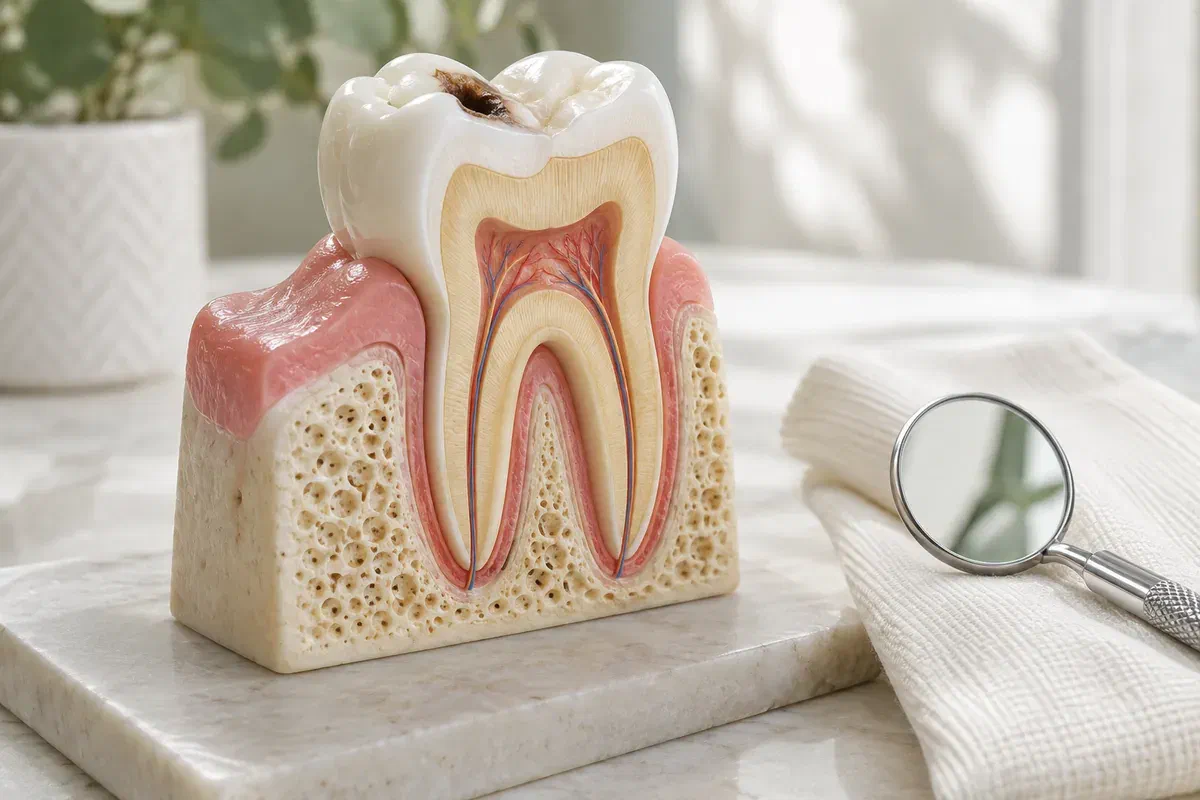
Illustrative physical molar cross-section showing decay within a supported tooth model
History worth bringing in

What has been done to this tooth before?

Old records, a note from a former dentist or the name of an earlier antibiotic all help. The dentist wants the full story of the tooth, as well as how it feels today, before saying whether it should come out.

An infection that keeps coming back

Describe how often the area has flared and what was done each time. A small gum blister, an unpleasant taste or soreness when you chew can all point to an ongoing source. Calm spells may not last if that source is untouched, so ask what treatment is aimed at the cause.

Crowns, posts and earlier root canals

Older teeth often carry layers of work. Mention any crown, post, past root canal or crack, and anything you were told about receding gums or bone. Ask which findings now limit the chance of keeping the tooth. Its history is context, not a substitute for today’s prognosis.

Medicines and health changes over the years

Bring an up-to-date list of prescriptions, including blood thinners, along with conditions that affect healing or immunity and any past trouble with surgery or bleeding. Note recent antibiotics and reactions. Do not stop a regular medicine on your own; the team will say if your doctor should be consulted.

Seek emergency medical care for difficulty breathing or swallowing, swelling that spreads quickly or reaches the eye, or jaw stiffness so severe you can barely open your mouth. In an immediate emergency, phone 911 rather than waiting to hear back from a dental office.

What extraction can resolve

Ending a recurring source, without losing sight of the bite.

If keeping the tooth is not realistic, taking it out can remove the dental source of infection that was diagnosed. You can reasonably ask what else in your mouth needs checking and how healing will be followed. The extraction is one piece of dealing with the problem, and the expected course of symptoms afterward should be explained honestly.

Losing a long-serving tooth can change how you chew, so the gap deserves a conversation. Depending on its position and your priorities, a replacement may be planned ahead of time or discussed once things heal. Urgency should not stop you from understanding what the space could mean.

Patient information: American Dental Association — source-directed dental care and antibiotic decisions

An honest comparison with retreatment

For a tooth that has had a root canal, ask whether retreatment, a specialist opinion or another approach is clinically sensible. Weigh the remaining structure, the gum and bone around it, the restoration required and the follow-up involved. What matters is what this tooth would need to stay healthy.

A clear role for any prescription

Antibiotics can help in particular situations, for example when infection is spreading or affecting your whole body, but they do not remove a dental source. The dentist considers your health, symptoms and how soon treatment can happen. Ask what a prescription is expected to achieve.

Preparation for the removal itself

Older teeth with crowns or curved roots can be harder to remove. Discuss freezing, likely difficulty, specific risks, and whether a specialist would be a better fit. Find out what the plan is if extra surgical steps become necessary, and who to contact with problems afterward.

Step by step

From the first look to the follow-up visit

Timing and setting are shaped by how serious the infection is, how the tooth is built, your health and what care can be arranged. No single rule says an infected tooth must come out the same day, or only after something else has been tried.

  1. Locate the problem tooth

    Expect questions about your history, a careful examination and suitable tests or X-rays. Tell the dentist about fever, swelling that is moving, or trouble eating and opening. Ask what the results say about urgency and whether you would be better served somewhere else.

  2. Talk through keeping it or removing it

    Discuss the outlook and realistic alternatives, including a specialist view where it could help. If you choose removal, confirm the exact tooth, the method, the risks, the cost and the aftercare. Because the decision is permanent, get any confusing point clarified before you sign consent.

  3. Numb the area and remove the tooth

    The dentist decides how best to freeze the area and take out the tooth. Mention any worry or past freezing problems, and settle on a signal to stop for a moment. Some extractions need surgical steps or a referral, and that should already be part of your plan.

  4. Go home with instructions and a review date

    You will receive advice on bleeding, cleaning, meals, medicines and any stitches. Ask when the site and infection will be rechecked and how to reach help after hours. Confirm whether further visits are needed for the rest of your care or to discuss a replacement.

The first days after

A quiet socket heals best; a changing one needs a call.

Aftercare is fitted to your extraction and your health. An earlier infection does not make every later symptom normal, and new pain is not automatically a reason for more antibiotics.

Leave the socket alone and manage bleeding

Apply the pressure method you were shown and keep fingers and objects out of the area. Check when you can rinse and brush near it again. If the bleeding does not ease as you were told it should, phone the provider instead of repeatedly looking at the wound.

Handle pain relief and antibiotics carefully

Follow the directions for anything prescribed and ask about interactions or side effects when you take several medicines. Avoid old prescriptions from the cabinet and do not increase a dose out of concern. Continue your regular medicines unless the relevant clinician has said otherwise.

Report changes and keep the check-up

Call about worsening pain, swelling that returns, fever, bleeding that persists or any new numbness. Explain when the tooth was removed and how symptoms have changed. Keep your review appointment even if you feel well, so healing and any remaining infection can be checked.

Patient information: Royal Devon — bleeding advice and prescribed anticoagulant precautions

Paths for an infected tooth

Save it, remove it, or send it elsewhere

The right route depends on the diagnosis, the state of the tooth and the severity of the infection. Urgent care may be only the first stage, with more treatment to follow before the problem is fully addressed.

When enough structure and support remain

Keeping a tooth with a realistic future

Root canal treatment, retreatment or another fitting approach may be possible, along with the final restoration and follow-up. Ask whether a specialist would see things differently. Keeping a tooth should be a durable plan for the whole tooth, not just a way to quiet the infection briefly.

When removal makes sense after weighing alternatives

Planned extraction and recovery

You should hear why the tooth is not a good candidate for keeping, or why removal is the route you chose. Review the procedure, its risks and the space left behind. Check whether any replacement decision has to be made before removal and which can wait.

When severity, health or anatomy calls for it

Urgent or specialist referral

Severe infection, medical complications or challenging roots may need another provider or a hospital. Ask what the referral will address and how quickly it should take place. Necessary escalation should not be delayed for the sake of a preferred location.

Old Milton questions

Straight answers about older teeth and infection.

Bring any old dental records and recent prescriptions. These answers can help you prepare, but whether your tooth should be removed is something only an examination can decide.

(905) 876-4488
A tooth with a root canal from years ago is infected now. How can that happen?
A previously treated tooth can develop infection again for several reasons, such as a leaking or broken restoration, a crack, or parts of the root system that were difficult to treat. The dentist will look for the likely cause before discussing options.
Is retreating an old root canal ever worth asking about instead of removal?
Yes. Depending on the cause and the condition of the tooth, retreatment or a specialist assessment may be reasonable. Other teeth have cracks or support problems that rule it out. You should hear why the alternative does or does not suit your tooth.
Can a tooth under a crown be extracted if the crown is still intact?
Often, yes, though a crowned tooth can be more fragile or harder to grip than it looks. The dentist plans for that using the examination and X-rays, and should tell you if surgical steps or a referral may be needed.
I take a blood thinner. Does that stop me from having an infected tooth removed?
Not necessarily, but it must be planned for. Tell the team exactly what you take. Do not stop or change it yourself; the dentist will advise whether to coordinate with the doctor who prescribes it.
My pain went away on antibiotics. Can I simply leave the tooth alone now?
Feeling better does not mean the dental source has gone. The tooth still needs examining and a lasting plan, whether that means keeping it or removing it, rather than waiting for the next flare-up.
How soon after removal should I worry about new swelling?
Contact the dentist who treated you promptly whenever swelling returns or grows, and describe when it started. It needs to be examined, not just covered with another prescription. Go to emergency care for breathing or swallowing trouble, eye swelling, or rapidly spreading symptoms.
Close to Old Milton

Have the tooth looked at before deciding its future.

Our Bronte Street practice sits near Milton’s historic downtown. Phone (905) 876-4488 to explain your symptoms and check availability, and bring records and a medicine list. If urgent care is needed before we can see you, contact another emergency dental provider.

Extraction, its timing, antibiotics, referral and replacement are always individual decisions. Email and web forms are meant for non-urgent questions only.

Visit Milton Dental Clinic
Unit 1, 342 Bronte St. S, Milton, ON L9T 5B7
Get directions Clinic hours
Monday–Thursday
11am–7pm
Friday–Sunday
By appointment only

Areas we serve

  • Milton
  • Oakville
  • Mississauga
  • Georgetown
  • Halton Hills
  • Acton
  • Campbellville
  • Brampton
  • Burlington
  • Puslinch
  • Rockwood
  • Erin
  • Caledon
  • Etobicoke
  • Old Milton
  • Bronte Meadows
  • Timberlea
  • Dorset Park
  • Dempsey
  • Clarke
  • Beaty
  • Coates
  • Harrison
  • Scott
  • Willmott
  • Ford
  • Bowes
  • Cobden
  • Walker
  • Mountain View
  • Milton Heights
  • Hawthorne Village
  • Valley View
  • Fallingbrook
  • Nassagaweya
  • Trafalgar
  • Esquesing
  • Nelson
  • Brookville
  • Moffat
  • Glen Williams
  • Norval
  • Limehouse
  • Stewarttown
  • Ashgrove
  • Hornby
  • Silver Creek
  • Speyside
  • Scotch Block
  • North Oakville
  • River Oaks
  • Glen Abbey
  • West Oak Trails
  • Palermo
  • Bronte Creek
  • College Park
  • Joshua Creek
  • Uptown Core
  • Preserve
  • Iroquois Ridge
  • Lisgar
  • Meadowvale
  • Meadowvale Village
  • Churchill Meadows
  • Erin Mills
  • Central Erin Mills
  • Streetsville
  • East Credit
  • Creditview
  • Heartland
  • Sheridan
  • Mount Pleasant
  • Credit Valley
  • Huttonville
  • Churchville
  • Springbrook
  • Northwest Brampton
  • Bram West
  • Fletcher's Meadow
  • Fletcher's Creek South
  • Alton Village
  • Orchard
  • Millcroft
  • Headon Forest
  • Tansley
  • Brant Hills
  • Tyandaga
  • Kilbride
  • Lowville
  • Aberfoyle
  • Morriston
  • Arkell
  • Hillsburgh
  • Freelton
  • Carlisle
  • Waterdown
  • Flamborough
  • Mountsberg

How can we help?

Milton Dental Clinic

Have a question about your smile? Choose the option that works best for you.

For urgent dental concerns, please call.
Messages are reviewed during clinic hours.