

Illustrative patient calmly discussing jaw movement with a dental clinician
Specialized Care

Jaw Clicking Assessment in Campbellville

The click has gone quiet, but your jaw no longer opens as wide? From Campbellville, call our team before you head in so we can advise. Painless clicking is often left alone, yet a new limit on opening, catching, or pain is worth assessing promptly.

When the noise stops

Silence is not always the good news it seems

For months your jaw clicked every morning. Then one day it stopped, and you noticed you could not quite fit a forkful in. That pattern deserves a phone call. At the same time, keep perspective: most clicking jaws never do anything of the sort. The joints by your ears make noise easily, a sound on its own does not mean harm, and it is never by itself a reason to change how your teeth bite together.

What the clinician wants to know is what changed and when. Is there pain? Did the jaw catch first, or lock outright? Can you open at all, or only partway? Has there been a knock or a fall? Those answers, together with an examination in the chair, are what decide the next step. A short video, however clear, cannot replace them.

Living outside the town centre, it makes sense to ring ahead and describe what is happening. We can then examine the jaw and teeth, explain whether watching it is appropriate or whether more care or a referral is needed, and set out a plan focused on comfortable opening and chewing. A jaw that never clicks again is not the promise, and it is not the goal.

Call about a change in your jaw
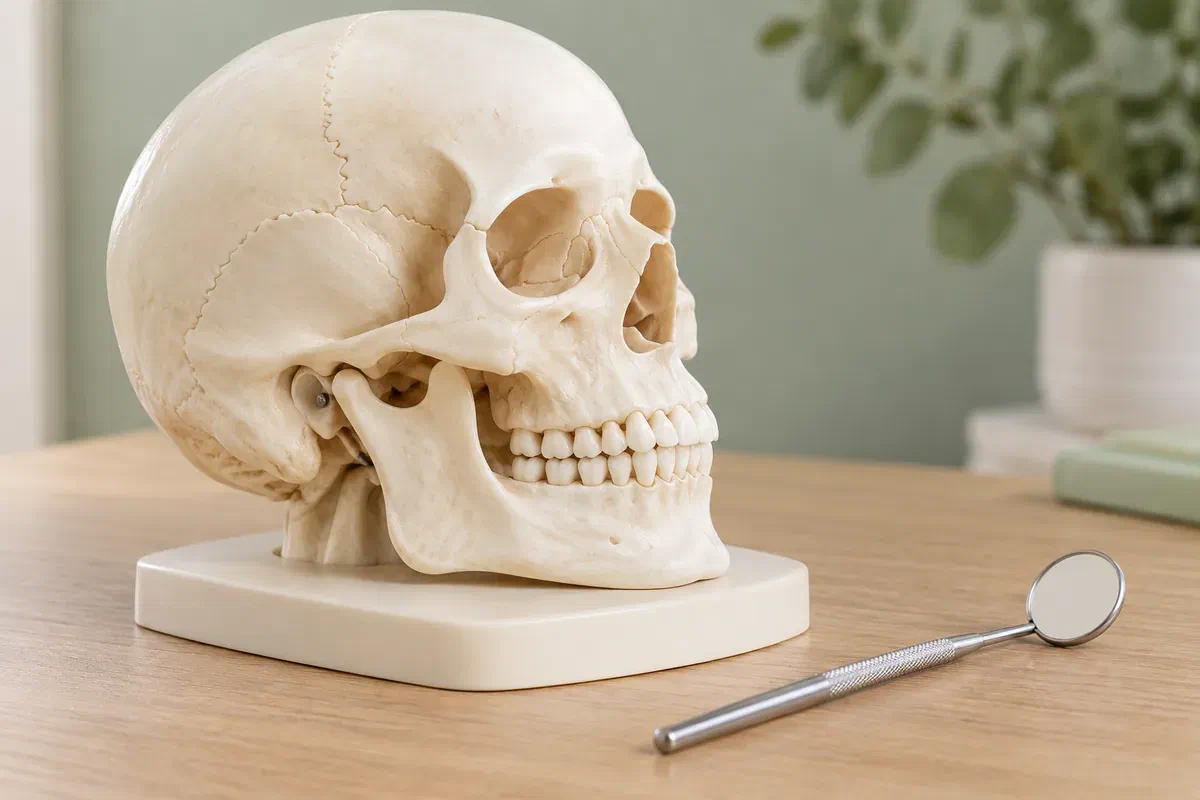
Illustrative anatomical skull model with an attached lower jaw and visible joint region
Campbellville, three patterns

Noise, pain, or less movement?

Before you call, think about which side is involved, when the sound happens or stopped happening, and roughly how long this has been going on. There is no need to keep testing the jaw. Describe a typical day.

The click is old and nothing else has changed

A long-standing sound that has never held you back at meals or when yawning is worth describing as exactly that. Ask whether anything found during the examination alters its significance. If not, reassurance and an occasional check are often all it needs.

It has started to hurt

Show where the ache is, close to the joint, across the cheek, or elsewhere, and tell us which jobs or foods have become difficult. Mention tenderness, tiredness, and any problem with your teeth. Pain is looked at on its own terms, because it may have a separate cause from the click.

It catches, locks, or opens less

Say whether the jaw snags briefly, stays stuck, or has a new limit, and whether you have had an injury or trouble eating or drinking. Call promptly about significant restriction or locking. Do not wrench the jaw open or try a repositioning technique from the internet.

Call for prompt advice before driving in if the jaw is stuck, the face has been hurt badly, or you cannot eat or drink. Emergency medical care is the right place for difficulty breathing or swallowing, rapidly growing swelling, or any severe symptom.

Why it is worth the call

So you know whether this can wait

The assessment tells a harmless sound apart from a problem with pain or restricted opening. You can ask what the examination shows and whether a firm diagnosis is possible yet. If the answer includes some uncertainty, that is honest, and far better than a single catch-all name for every noisy or stiff jaw.

If treatment is suggested, it should be clear what it is for. Getting back to comfortable opening and chewing is a sensible target. Silencing a joint that has never hurt is a different and much weaker one. Ask how the plan responds to the change that worried you and when it will be reviewed.

Attention on the change you noticed

The clinician looks at your account, jaw movement, tender spots, and relevant dental findings as a set. Ask which matter and which are likely beside the point. A noticeable click, or its sudden absence, should not distract from the limits on opening you are actually living with.

A scan only if it adds something

Imaging or referral is worth considering when it could answer a particular question or change your care. Ask what it would show and what it could miss. Not every jaw needs a picture, and a result still has to be interpreted alongside the examination.

Gentle care that can be reversed

When help is needed, conservative options and a review date come first. Ask what improvement you might expect and what to do if opening gets worse. A noisy or quiet joint is no reason by itself to reshape or move your teeth.

What the visit involves

Four steps from your first call to a clear plan

We begin with how the jaw has behaved recently in ordinary life. If opening is limited or uncomfortable, say so, and agree on a signal to pause.

  1. Tell us what changed

    When did the click start, and when did it stop? Is one side involved, or both? Is opening painful, stiff, or limited? Mention injuries, earlier jaw treatment, appliances, and any relevant health information, and say which change concerns you most.

  2. Check movement without forcing it

    The clinician gently examines opening, closing, tender areas, and dental findings where appropriate. You will not be asked to push through sharp pain or force the jaw wider. Say whether the examination matches what you have been feeling at home.

  3. Explain what is clear and what is not

    You will hear whether the findings suggest observation, a jaw-related diagnosis, a dental problem, or a need for further assessment. If imaging or a referral is raised, ask what question it is meant to settle. What was observed should be kept separate from guesses about the cause.

  4. Agree on next steps and when to call

    Confirm whether anything needs treatment and which signs mean phoning before the planned review. For any proposed care, ask about purpose, costs, limitations, and follow-up. With a specific plan, there is no need to test the jaw all day.

At home afterwards

What to watch, and when to pick up the phone

Follow the guidance that matches your own findings. Advice for a painless click is very different from advice for reduced opening or locking, so a neighbour's routine may not suit your jaw at all.

Notice how far and how comfortably you open

If you have been asked to monitor, watch for new pain, catching, or changes in how well you can eat or open. Repeatedly working the jaw to see what happens is unnecessary. Ask which changes should prompt a call and when a review is planned.

Stick to the movements you were shown

Any exercises or temporary changes to activity should be demonstrated, with a clear idea of where to stop. A locked jaw must never be forced, and painful stretching is not a way to restore a click or open wider. Ring us if the advice seems to make things worse.

Bring any appliance with you

If you wear a guard or splint, explain why it was made and how symptoms behaved while using it. Do not modify it or buy another simply to change the sound. If a prescribed device starts to hurt, set it aside and speak with the provider who made it.

Next steps after the assessment

Reassure, manage gently, or refer

Ask which response fits your mix of sound, pain, and movement. The plan should deal with the problem the assessment found, and a completely quiet joint is not the only sign of success.

Painless clicking and full, comfortable movement

Explanation and keeping watch

Sometimes the right advice is to leave the click alone. Find out what would be a reason to come back and whether a quick check can happen at regular visits. You should leave understanding why no appliance or procedure is being offered.

Pain or another confirmed jaw concern

Conservative help for discomfort or stiffness

A reversible approach might deal with habits, easier use of the jaw, or other factors that seem to contribute. Ask what the first measure is and how you will know if it helps. Expect realistic goals tied to the diagnosis, never a guarantee that the noise or stiffness disappears for good.

Locking, injury, or difficulty that does not ease

Referral when movement stays limited

If opening remains restricted or the situation is complex, a clinician focused on jaw joints or facial pain may be the right next stop. Ask what records will be sent and what to do in the meantime. Anything urgent should be handled now, not left on a routine list.

Patient information: NIDCR — conservative TMD care and avoiding permanent bite changes

Questions about a quiet, stiff jaw

Calling ahead, waiting, and what to eat

These answers can help you talk about clicking and stiffness without assuming the jaw needs fixing. When you phone, be specific about pain, locking, or how far you can open.

(905) 876-4488
Can I wait a few days to see if my jaw loosens up by itself?
If opening is clearly limited or the jaw is locked, call promptly rather than waiting. The team can advise you on how soon to be seen. A painless click with normal movement, on the other hand, can usually wait for a routine visit.
My jaw swings to one side when I open. Is that important?
It is worth describing, along with when you first noticed it. The meaning depends on the rest of the history and the examination, including pain and how far you can open. Avoid pushing the jaw straight to test it.
What should I eat while my jaw is stiff?
Softer foods that need little chewing can be more comfortable for now, and it is reasonable to avoid very wide bites. Ask the clinician what suits your situation. Tell us at once if eating or drinking becomes difficult.
Can I phone for advice before booking a visit?
Yes. Describing your symptoms on the phone helps the team suggest how soon to come in, and whether urgent care elsewhere would be more appropriate for something like a fully locked jaw.
Does a very loud click mean the joint is in worse shape?
Volume on its own says little. A diagnosis and the need for care depend on pain, movement, and the examination, so describe how your jaw functions instead of how much noise it makes.
Would braces or tooth reshaping stop a click that does not hurt?
That should not be assumed. Permanent changes to your bite are not a standard response to painless joint sounds. Ask about the diagnosis, the evidence, and alternatives first, and consider an independent opinion if the reason is unclear.
From Campbellville

Ring first. Then let us take a proper look.

Contact our Bronte Street practice about clicking, stiffness, catching, or limited jaw movement. If the jaw is locked, will barely open, or you are struggling to eat or drink, tell us straight away so we can advise you before you set out.

A painless click often needs no care. What we recommend, including imaging or referral, depends on your history and examination, and we cannot guarantee the jaw will stop clicking.

Visit Milton Dental Clinic
Unit 1, 342 Bronte St. S, Milton, ON L9T 5B7
Get directions Clinic hours
Monday–Thursday
11am–7pm
Friday–Sunday
By appointment only

Areas we serve

  • Milton
  • Oakville
  • Mississauga
  • Georgetown
  • Halton Hills
  • Acton
  • Campbellville
  • Brampton
  • Burlington
  • Puslinch
  • Rockwood
  • Erin
  • Caledon
  • Etobicoke
  • Old Milton
  • Bronte Meadows
  • Timberlea
  • Dorset Park
  • Dempsey
  • Clarke
  • Beaty
  • Coates
  • Harrison
  • Scott
  • Willmott
  • Ford
  • Bowes
  • Cobden
  • Walker
  • Mountain View
  • Milton Heights
  • Hawthorne Village
  • Valley View
  • Fallingbrook
  • Nassagaweya
  • Trafalgar
  • Esquesing
  • Nelson
  • Brookville
  • Moffat
  • Glen Williams
  • Norval
  • Limehouse
  • Stewarttown
  • Ashgrove
  • Hornby
  • Silver Creek
  • Speyside
  • Scotch Block
  • North Oakville
  • River Oaks
  • Glen Abbey
  • West Oak Trails
  • Palermo
  • Bronte Creek
  • College Park
  • Joshua Creek
  • Uptown Core
  • Preserve
  • Iroquois Ridge
  • Lisgar
  • Meadowvale
  • Meadowvale Village
  • Churchill Meadows
  • Erin Mills
  • Central Erin Mills
  • Streetsville
  • East Credit
  • Creditview
  • Heartland
  • Sheridan
  • Mount Pleasant
  • Credit Valley
  • Huttonville
  • Churchville
  • Springbrook
  • Northwest Brampton
  • Bram West
  • Fletcher's Meadow
  • Fletcher's Creek South
  • Alton Village
  • Orchard
  • Millcroft
  • Headon Forest
  • Tansley
  • Brant Hills
  • Tyandaga
  • Kilbride
  • Lowville
  • Aberfoyle
  • Morriston
  • Arkell
  • Hillsburgh
  • Freelton
  • Carlisle
  • Waterdown
  • Flamborough
  • Mountsberg

How can we help?

Milton Dental Clinic

Have a question about your smile? Choose the option that works best for you.

For urgent dental concerns, please call.
Messages are reviewed during clinic hours.