

Illustrative patient calmly discussing jaw movement with a dental clinician
Specialized Care

Jaw Clicking Assessment in Erin

Caught yourself opening and closing your jaw to see if it still clicks? From Erin or Hillsburgh, our team can help you swap that habit for a simple plan. A painless click often needs no care, while pain, catching, or reduced opening deserves an assessment.

Open, close, click, repeat

The checking habit

It starts innocently. You hear a click while eating, and soon you are testing it at red lights, in the shower, during the evening news. Is it louder today? Is it on both sides now? That cycle is very common, and it rarely tells you much. Jaw joints make noise easily, many clicks never cause pain, and the sound alone is not a sign of damage or a reason to change your bite.

A better use of that attention is on how the jaw actually works. Can you eat what you want comfortably? Does it ever catch, lock, or refuse to open fully? Has it changed after a knock or fall? Those are the questions an assessment answers, by listening to you and examining the jaw directly. Replaying the click, or recording it, adds very little.

For households around Erin, the visit is a chance to set the habit down. Tell us what you have noticed and what worries you. We will look at the jaw and teeth, explain whether simply observing makes sense, and say clearly when more care or a referral would help. You will leave with specific things to watch for, and no promise that the joint will fall silent.

Get a plan for a clicking jaw
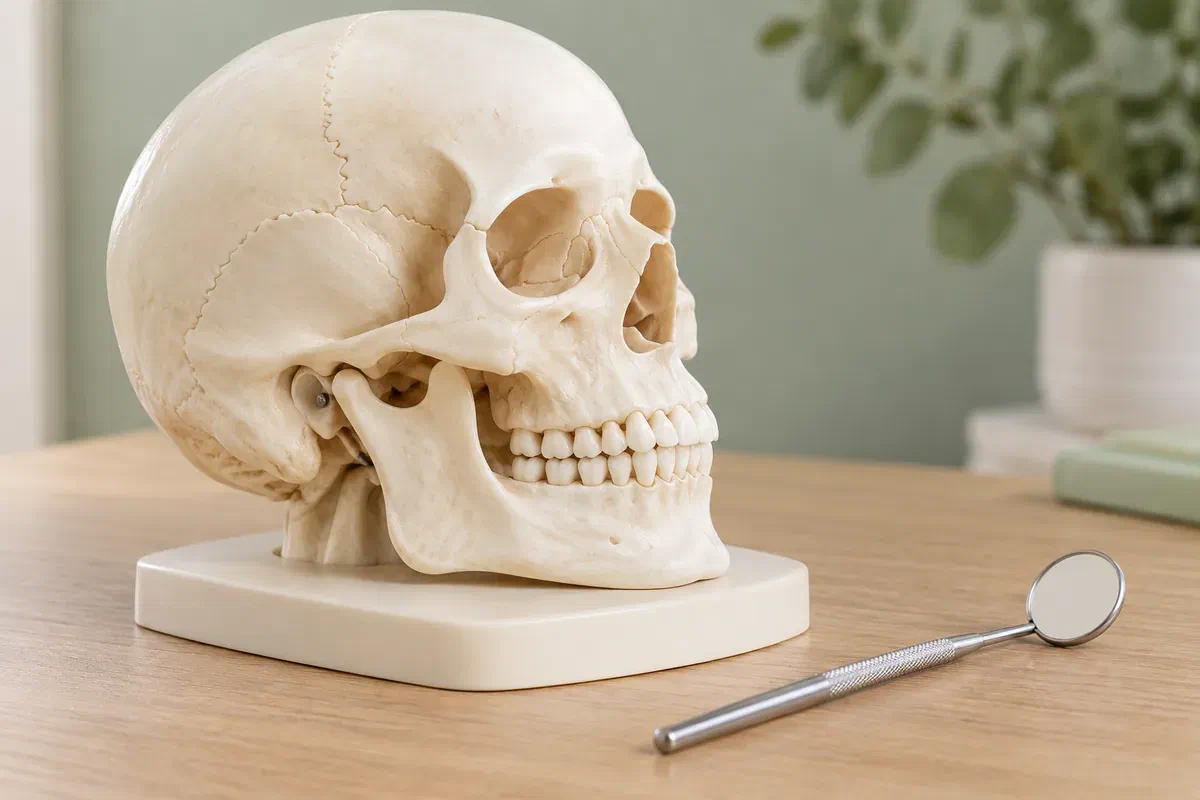
Illustrative anatomical skull model with an attached lower jaw and visible joint region
Worth knowing in Erin

Separate the noise from what it is doing to your day

Jot down the side, the usual triggers, and roughly how long the click has been around, then stop testing it. Arriving with an account of ordinary days is far more useful than proof that it still clicks.

The click is the only thing you notice

Many people have a sound that comes and goes for years with no effect on eating or opening. Describe it honestly, and ask whether anything in the examination changes what that history means. If not, an explanation and periodic review may be all you need.

There is soreness alongside it

Note whether the ache is right at the joint, spread through the cheek muscles, or somewhere else, and which everyday tasks have become a chore. Mention tenderness, tiredness, and any tooth symptoms. Discomfort is examined for its own cause, which may not be the click.

The jaw catches or does not open fully

Tell the clinician if it hitches, sticks, or has lost some of its usual range, and whether there was an injury or trouble eating or drinking. Significant restriction or locking calls for prompt contact. Avoid forcing it or copying a repositioning trick from a video.

A locked jaw, a serious blow to the face, or not being able to eat or drink needs prompt professional attention. Use emergency medical care if breathing or swallowing becomes difficult, swelling is large, or symptoms are severe.

What you gain

Permission to stop listening

The assessment's first job is telling a harmless click apart from a problem with pain or movement. Once that is clear, a lot of worry tends to settle. You can ask what the findings show and whether a diagnosis has been made, and it is fine if part of the answer is still uncertain. Not every click belongs under the same heading.

Where care is recommended, its aim should be easy to understand. Comfortable meals and easy opening are worthwhile targets; silencing a joint that does not hurt is not the same target. Ask how the plan connects to the reason you came and how you will know whether it is helping.

Attention on comfort, not volume

Your account, jaw movement, tender spots, and any relevant dental findings are considered together. Ask which observations matter and which are likely beside the point. The click you keep testing should not overshadow a quieter complaint that affects your day more.

Tests only if they answer something

A scan or referral earns its place by clarifying a question or changing care. Ask what it would show and what it would miss. No one test fits every clicking joint, and a result needs the examination to make sense of it.

Small, reversible steps first

If help is needed, conservative options and a clear review point come first. Ask what change is realistic and what to do if symptoms get worse. A noisy jaw is not a reason by itself to have teeth reshaped or moved.

The appointment

We ask, we look, we explain, and then you can stop checking

The conversation starts with your daily routine, not with the click on command. If opening wide is uncomfortable, mention it, and agree on how you will signal for a pause.

  1. What you have been noticing

    Share when the click began, which side or sides are involved, and whether pain, stiffness, or catching comes with it. Mention injuries, past jaw care, appliances, and relevant health information. If you have been keeping notes, bring them.

  2. A gentle check of movement

    The clinician looks at opening, closing, tenderness, and related dental findings as appropriate. Pushing through sharp pain is never required. Say whether the examination matches the sensation you get at home.

  3. A straight explanation

    Ask whether the findings suggest observation, a jaw-related diagnosis, a separate dental problem, or further assessment. If imaging or a referral is recommended, ask which question it would answer. Keep the sound that was heard separate from speculation about why.

  4. A short list of things to watch

    Confirm whether treatment is needed, and leave with a few clear signs that should prompt an earlier call. For any proposed care, ask about its purpose, cost, limits, and follow-up. That list replaces the urge to test the click throughout the day.

Back at home

Live normally. Note what matters.

Follow the guidance written for your findings. Advice for a painless click is very different from advice for pain or locking, so a stretching routine someone recommended online may not suit you.

Let ordinary days do the monitoring

If observation is the plan, simply notice any new pain, catching, or difficulty with meals and opening. Producing the click on purpose adds nothing. Ask which changes deserve a note and when the clinician would like an update.

Exercises, only as demonstrated

Should exercises or temporary changes be suggested, have them shown in person and ask about limits. A jaw that locks should never be forced, and painful movements are not a way to make a click vanish. Call us if the advice seems to aggravate things.

Bring the appliance you already wear

If you have a guard or splint, explain what it was made for and how your symptoms responded. Do not file it down, and do not buy a new one just to quieten the joint. If a prescribed device becomes painful, put it aside and ask the provider who made it.

Possible next steps

Most clicks need watching, some need care, a few need more

Where you land depends on what the examination finds, not on how often the click turns up. A sensible plan answers the actual problem, and complete silence is never the only acceptable result.

Painless clicking and comfortable movement

Explanation and observation

You may learn that the sound needs nothing at all. Ask what would be a reason to look again, and whether a quick check at routine visits is enough. You should understand why no appliance or procedure is being suggested.

Pain or another assessed jaw concern

Conservative care for discomfort

A reversible approach might look at habits, how you use the jaw, or other factors that feed the problem. Ask what is tried first and how its effect will be judged. Care should follow the diagnosis and your goals, without a promise that one method stops every sound.

Locking, injury, or difficulty that persists

Further evaluation

Someone with jaw-joint or facial-pain experience may be helpful when the picture is complex or movement stays limited. Ask what information will be passed on and whether you need care while waiting. Urgent symptoms should be seen promptly.

Patient information: NIDCR — conservative TMD care and avoiding permanent bite changes

Monitoring questions

How to keep an eye on a click without obsessing

These answers can help you talk about a clicking jaw without assuming it needs fixing. When you call, be specific about pain, locking, or a change in movement.

(905) 876-4488
I keep testing my jaw to see if it still clicks. Should I stop?
Yes, it is better to let it be. Repeatedly provoking the sound is not needed and tends to keep your attention on the noise rather than on comfort and function, which are what matter.
Is a symptom diary useful?
A short one can be, if it focuses on pain, catching, difficulty eating, or reduced opening rather than every click. Bring it to your appointment. Ask the clinician which details are worth tracking for your situation.
Can I use a warm or cold compress on a sore jaw?
Some people find gentle warmth or cold comfortable for jaw muscle soreness. Ask the clinician whether either suits your situation, and stop if it makes things worse. Persistent pain, catching, or reduced opening still needs assessment.
What kind of change is worth a phone call?
Call if pain appears or increases, the jaw catches or locks, opening becomes limited, or eating and drinking become difficult. A painless click that simply continues, without those changes, can usually wait for a routine visit.
Is a click that seems louder this week a sign it is getting worse?
Not on its own. Changes in volume say little about diagnosis or the need for care. Pay attention to comfort, catching, and how far you can open, and mention those when you book.
Could I be offered permanent bite work just to quiet a click?
Permanent changes to the bite are not a routine response to painless joint sounds. If something irreversible is suggested, ask for the diagnosis, the evidence, and alternatives, and consider an independent opinion before agreeing.
Booking from Erin

One assessment. Then a lot less worrying.

Contact our Bronte Street practice about a jaw that clicks with discomfort, catching, or limited movement. If it is locked, will barely open, or eating and drinking have become difficult, let us know when you call so we can advise you before you drive in.

A click with no pain may need nothing done. Any imaging, management, or referral is decided from your history and examination, and we cannot promise the sound will disappear.

Visit Milton Dental Clinic
Unit 1, 342 Bronte St. S, Milton, ON L9T 5B7
Get directions Clinic hours
Monday–Thursday
11am–7pm
Friday–Sunday
By appointment only

Areas we serve

  • Milton
  • Oakville
  • Mississauga
  • Georgetown
  • Halton Hills
  • Acton
  • Campbellville
  • Brampton
  • Burlington
  • Puslinch
  • Rockwood
  • Erin
  • Caledon
  • Etobicoke
  • Old Milton
  • Bronte Meadows
  • Timberlea
  • Dorset Park
  • Dempsey
  • Clarke
  • Beaty
  • Coates
  • Harrison
  • Scott
  • Willmott
  • Ford
  • Bowes
  • Cobden
  • Walker
  • Mountain View
  • Milton Heights
  • Hawthorne Village
  • Valley View
  • Fallingbrook
  • Nassagaweya
  • Trafalgar
  • Esquesing
  • Nelson
  • Brookville
  • Moffat
  • Glen Williams
  • Norval
  • Limehouse
  • Stewarttown
  • Ashgrove
  • Hornby
  • Silver Creek
  • Speyside
  • Scotch Block
  • North Oakville
  • River Oaks
  • Glen Abbey
  • West Oak Trails
  • Palermo
  • Bronte Creek
  • College Park
  • Joshua Creek
  • Uptown Core
  • Preserve
  • Iroquois Ridge
  • Lisgar
  • Meadowvale
  • Meadowvale Village
  • Churchill Meadows
  • Erin Mills
  • Central Erin Mills
  • Streetsville
  • East Credit
  • Creditview
  • Heartland
  • Sheridan
  • Mount Pleasant
  • Credit Valley
  • Huttonville
  • Churchville
  • Springbrook
  • Northwest Brampton
  • Bram West
  • Fletcher's Meadow
  • Fletcher's Creek South
  • Alton Village
  • Orchard
  • Millcroft
  • Headon Forest
  • Tansley
  • Brant Hills
  • Tyandaga
  • Kilbride
  • Lowville
  • Aberfoyle
  • Morriston
  • Arkell
  • Hillsburgh
  • Freelton
  • Carlisle
  • Waterdown
  • Flamborough
  • Mountsberg

How can we help?

Milton Dental Clinic

Have a question about your smile? Choose the option that works best for you.

For urgent dental concerns, please call.
Messages are reviewed during clinic hours.