

Illustrative patient calmly discussing jaw movement with a dental clinician
Specialized Care

Jaw Clicking Assessment in Georgetown

Did the clicking start after a fall, a knock at the rink, or a bump to the chin? From Georgetown, our team can assess what changed. Many jaw sounds are harmless, but a click that follows an injury, or arrives with pain or stiffness, should be examined.

After a bump or a fall

The click is new, and so is the bruise. Where do you start?

A slip on an icy driveway, an elbow during a pickup game, a child's head meeting your chin. Afterwards the jaw starts to pop, and you wonder whether something has shifted. It is worth knowing that clicking jaws are common even without injury, and that a sound alone does not tell anyone the joint has been damaged or that your teeth now need to be realigned.

After a knock, though, the details deserve more care. Is there pain at the joint or in the face? Do your teeth meet the way they did before? Does the jaw catch, lock, or open less than normal? Those questions are answered by a careful history and a hands-on examination. A recording or an online comparison will not tell you what happened inside the joint.

Tell us exactly what happened and what you have felt since. We will examine the jaw and teeth, explain whether watching it is reasonable or whether further care or a referral is needed, and point out anything that should not wait. The goal is a safe, understandable plan for comfort and function, not a promise to silence the sound.

Book an assessment after a jaw injury
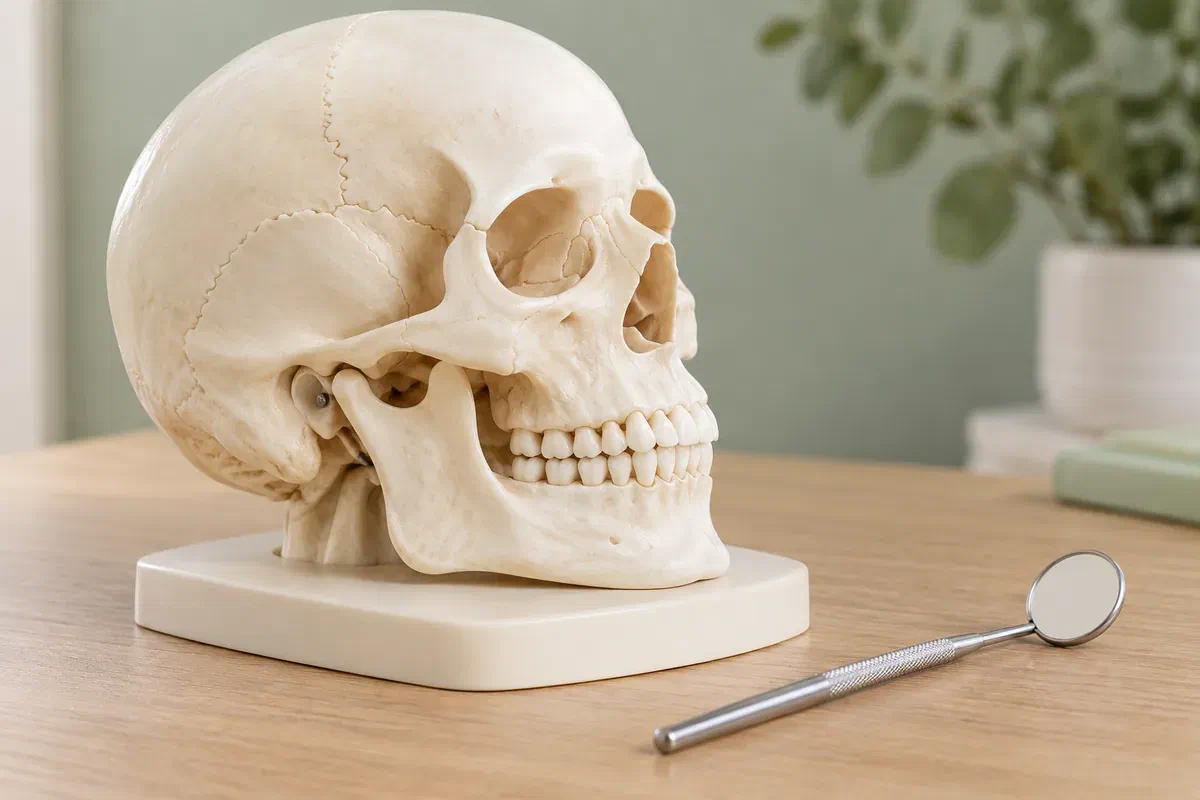
Illustrative anatomical skull model with an attached lower jaw and visible joint region
Sorting out what the knock changed

Not every post-injury click means the same thing

Note the side, the moments it clicks, and whether it began with the injury or was there already. You do not need to keep testing it. An honest description of the days since is the most useful thing to bring.

An older click, unchanged by the knock

Some people realise, once they pay attention, that the click predates the injury and never interfered with eating or opening. Say so, and ask whether the examination changes how it should be read. If nothing else is found, observation may be all that is needed.

Soreness since the injury

Describe where it hurts: at the joint, across the cheek muscles, or around the face more widely. Mention which activities are harder, any tenderness or bruising, and anything that feels wrong with your teeth. Pain after a knock is assessed carefully in its own right.

Catching, locking, or teeth that meet differently

Explain whether the jaw snags, stays stuck, opens less, or your bite feels suddenly different. Mention any trouble eating or drinking. These signs call for prompt contact with a clinician. Do not force the jaw or try to reposition it yourself.

A significant facial injury, a jaw that is stuck, or being unable to eat or drink needs prompt professional care. Seek emergency medical help for breathing or swallowing difficulty, major swelling, or other severe symptoms after a blow to the face.

Why an examination matters here

Peace of mind, or a clear next step

An assessment after an injury aims to separate a harmless sound from a problem with pain or function, and to notice anything that needs attention sooner. Ask what the findings support and whether a diagnosis has been reached. Some uncertainty is normal, and a careful clinician will say so instead of filing every click under one label.

If care is recommended, its purpose should be plain. Reducing pain and helping you open and chew comfortably again are sensible goals. Making a joint perfectly quiet is a separate one. Ask how the plan fits what happened to you and how you will both tell whether it is helping.

Questions about the injury, not just the sound

The history of the knock, your jaw movement, tenderness, and dental findings are reviewed as a whole. Ask which findings matter most and which are probably incidental. The click should not draw attention away from pain or a bite that feels different.

Imaging when it can answer something

After an injury, a scan or referral may be worthwhile if it can clarify a specific question or change your care. Ask what it would show and what it would not. Even then, results are interpreted together with the examination.

Reversible care before permanent work

If treatment is needed, ask about conservative approaches and when the plan will be reviewed. Ask how recovery is likely to unfold and which warning signs mean calling before the review. A click after a knock is not, on its own, a reason to alter your teeth.

At your appointment

What happened, how the jaw moves now, and what it means

We begin with the injury and the days since. If opening is sore, tell the clinician at the outset and agree on a way to ask for a pause.

  1. Recount the injury

    Describe how and when it happened, when the clicking started, which side is involved, and any pain, stiffness, or change in your bite. Mention earlier jaw problems, appliances, and relevant health information, including any medical assessment you have already had.

  2. Careful examination

    The clinician checks opening and closing, tender areas, and the teeth and bite as appropriate. You should not push through sharp pain. Say whether the examination brings on the same sensation you have noticed since the injury.

  3. Explain the findings

    Ask whether the picture suggests observation, a jaw-related diagnosis, a dental injury, or further assessment. If imaging or referral is suggested, clarify the question it is meant to answer. A good explanation separates what was observed from assumptions about the cause.

  4. Agree on follow-up

    Confirm whether treatment is needed now and which changes should prompt an earlier call. If care is proposed, ask about purpose, costs, limitations, and follow-up. Knowing what to watch for means you are not checking the click through the day.

While things settle

Give the jaw time, and watch for warning signs

Follow the advice for your own findings. Recovery from a knock can look very different from managing a painless, long-standing click, so a friend's routine is not a safe substitute.

Pay attention to function

If you are monitoring, notice new pain, catching, difficulty eating, or changes in how your teeth meet. Avoid clicking the jaw on purpose to check. Ask which signs mean you should call before the next review.

Move only as advised

If exercises or a temporary change in activity are recommended, have them demonstrated and ask where the limits are. Never force a locked jaw, and do not use a painful movement to try to stop the click. Call if the advice increases discomfort or stiffness.

Bring any guard or splint

If you already wear an appliance, explain why it was prescribed and how it has felt since the injury. Do not adjust it or replace it just to quiet the joint. If it now hurts to wear, stop and check with the provider who made it.

Possible paths forward

Watch, treat gently, or refer on

Ask which approach fits your situation after the injury. The recommendation should address what was assessed, not make silence the only measure of success.

A painless click and normal movement

Observation with clear warning signs

If the examination finds nothing else, you may be told the click needs no treatment. Ask exactly which symptoms would justify a recheck. Choosing observation should come with an explanation of why no appliance or procedure is needed.

Pain or another assessed concern

Conservative care while you recover

Reversible measures may focus on comfortable jaw use, rest from certain activities, or other contributing factors. Ask what is being tried and how progress will be judged. Care should follow the diagnosis, with realistic expectations rather than a promise to end every sound.

Locking, significant injury, or persistent difficulty

Referral for further assessment

A clinician with jaw-joint or facial-pain expertise, or a medical service, may be appropriate when the injury is significant or function stays limited. Ask what information will be shared and what to do while waiting. Urgent problems should be seen promptly.

Patient information: NIDCR — conservative TMD care and avoiding permanent bite changes

Georgetown questions

Clicking after an injury: what people ask

These answers can help you talk about a click after a knock without assuming it needs fixing. Be clear about pain, locking, or a changed bite when you get in touch.

(905) 876-4488
How soon after a jaw injury should I be seen?
Promptly if there is significant pain, a bite that feels different, locking, or difficulty eating or drinking. If the knock was minor and only a painless click followed, a regular assessment is reasonable. Call and describe what happened so the team can advise.
Should I go to the emergency department or a dentist after a hit to the jaw?
Go to emergency medical care for trouble breathing or swallowing, major swelling, heavy bleeding, or other serious symptoms. For dental and jaw concerns without those signs, contact a dental clinic promptly for advice.
My teeth do not seem to fit together the way they did before the fall. Is that urgent?
A sudden change in how your teeth meet after an injury should be assessed promptly. Avoid chewing hard foods on that side until you have been seen, and do not try to push the jaw into place.
I hurt my jaw years ago. Is that worth mentioning?
Yes. Past injuries are part of the history, even if they seemed minor. The clinician will consider them alongside your current symptoms and the examination.
Will I need a scan because the click started after an injury?
Not automatically. Imaging may be considered when it can answer a specific question raised by the history or examination. Ask what the clinician is looking for and how the result might change your care.
Do I need to make my jaw click so you can hear it?
No. Describe when it happens and let the examination stay comfortable. The click may not appear that day, and that is fine. Pain, catching, or a changed bite matter more than demonstrating the sound.
Booking from Georgetown

Tell us what happened. We will take it from there.

Contact our Bronte Street practice about a click that followed an injury, or one that now comes with discomfort, catching, or limited movement. If the jaw is locked, your bite has changed, or eating and drinking are difficult, say so when you call.

Some clicks need nothing at all. After an injury, what we recommend, from imaging to referral, rests on your history and examination, and the sound may never go away completely.

Visit Milton Dental Clinic
Unit 1, 342 Bronte St. S, Milton, ON L9T 5B7
Get directions Clinic hours
Monday–Thursday
11am–7pm
Friday–Sunday
By appointment only

Areas we serve

  • Milton
  • Oakville
  • Mississauga
  • Georgetown
  • Halton Hills
  • Acton
  • Campbellville
  • Brampton
  • Burlington
  • Puslinch
  • Rockwood
  • Erin
  • Caledon
  • Etobicoke
  • Old Milton
  • Bronte Meadows
  • Timberlea
  • Dorset Park
  • Dempsey
  • Clarke
  • Beaty
  • Coates
  • Harrison
  • Scott
  • Willmott
  • Ford
  • Bowes
  • Cobden
  • Walker
  • Mountain View
  • Milton Heights
  • Hawthorne Village
  • Valley View
  • Fallingbrook
  • Nassagaweya
  • Trafalgar
  • Esquesing
  • Nelson
  • Brookville
  • Moffat
  • Glen Williams
  • Norval
  • Limehouse
  • Stewarttown
  • Ashgrove
  • Hornby
  • Silver Creek
  • Speyside
  • Scotch Block
  • North Oakville
  • River Oaks
  • Glen Abbey
  • West Oak Trails
  • Palermo
  • Bronte Creek
  • College Park
  • Joshua Creek
  • Uptown Core
  • Preserve
  • Iroquois Ridge
  • Lisgar
  • Meadowvale
  • Meadowvale Village
  • Churchill Meadows
  • Erin Mills
  • Central Erin Mills
  • Streetsville
  • East Credit
  • Creditview
  • Heartland
  • Sheridan
  • Mount Pleasant
  • Credit Valley
  • Huttonville
  • Churchville
  • Springbrook
  • Northwest Brampton
  • Bram West
  • Fletcher's Meadow
  • Fletcher's Creek South
  • Alton Village
  • Orchard
  • Millcroft
  • Headon Forest
  • Tansley
  • Brant Hills
  • Tyandaga
  • Kilbride
  • Lowville
  • Aberfoyle
  • Morriston
  • Arkell
  • Hillsburgh
  • Freelton
  • Carlisle
  • Waterdown
  • Flamborough
  • Mountsberg

How can we help?

Milton Dental Clinic

Have a question about your smile? Choose the option that works best for you.

For urgent dental concerns, please call.
Messages are reviewed during clinic hours.