

Illustrative patient describing a specific urgent dental concern to a clinician
Specialized Care

Limited Emergency Examinations in Caledon

Some people put off urgent dental care because they dread the chair, or worry about being rushed into treatment. A limited emergency examination is an assessment first: it looks at one problem, explains it, and leaves the decisions with you. For anyone in Caledon, a phone call is the gentle place to start.

For the reluctant or anxious

An assessment first, and decisions you are part of

Walking in does not commit you to a procedure. A limited emergency examination is an assessment of one concern that cannot sensibly wait: a tooth that has started aching, a filling that has broken, or a swollen area that worries you. The dentist listens to what has happened, examines the affected area, and explains what is likely going on and how soon it should be dealt with.

To give you good advice, the dentist will ask about your overall health too. Medical conditions, the medications you take, any recent accident, and symptoms such as fever influence what needs checking and whether another setting is safer. A probable cause may be clear by the end; otherwise the plan explains what imaging, records or specialist opinion would help.

From Caledon, ringing ahead lets you ask every question before you arrive: what the visit includes, how long it may take, and whether someone can come with you. Bring earlier dental records if you have them. The examination provides an explanation and a plan; treatment, if any, follows your agreement.

Ask us about the visit first
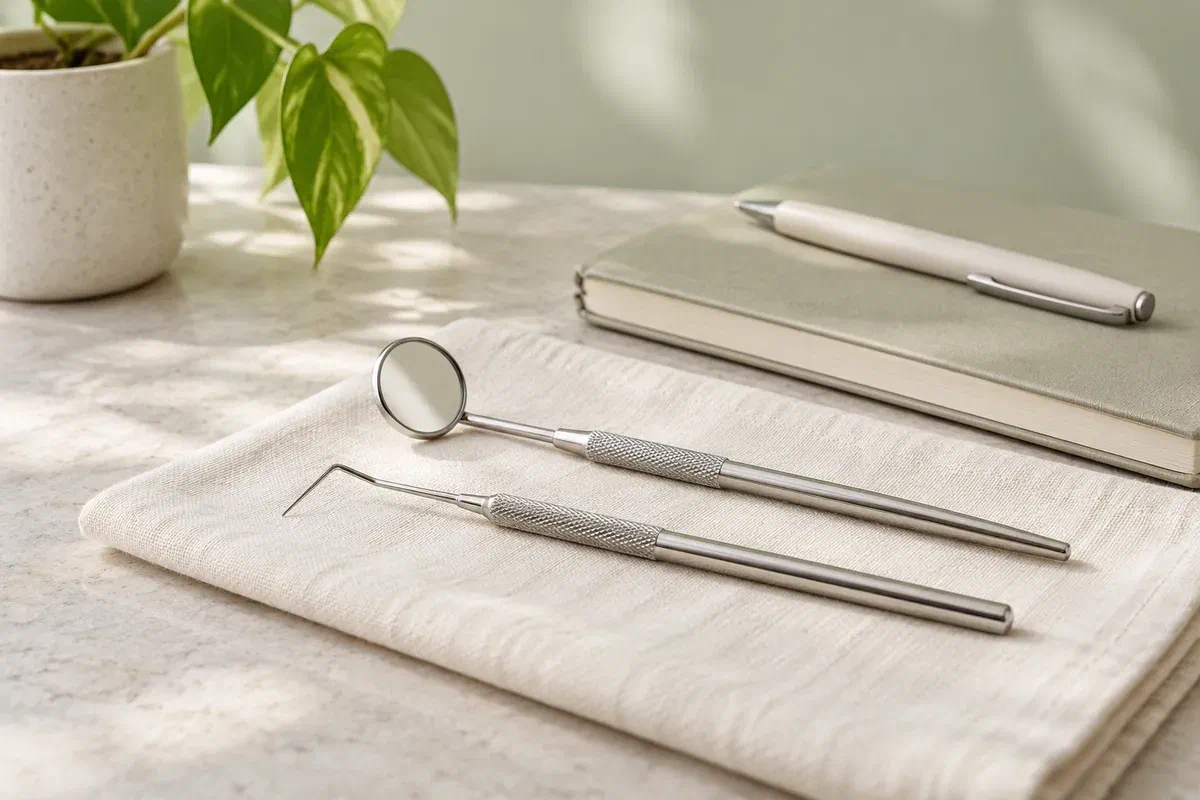
Illustrative dental examination instruments beside a closed notebook
Getting ready to call

There is no wrong way to describe it.

Tell us the problem that bothers you most, then anything that makes it feel more serious. If several things are wrong, mention which is newest or getting worse. It is also fine to say you are nervous; that helps us plan.

How it hurts, in your words

Roughly where is it, and since when? Does biting, cold, heat or rest change it? Is it waking you, or spreading? You do not need dental vocabulary or a tooth number; telling us you are not sure where it comes from is useful.

Damage you have noticed

Describe what chipped, cracked or came out, any sharp edge, and whether your teeth come together normally. Keep any piece or crown in a clean container and bring it along. Leave it out of your mouth rather than trying glue at home.

Swelling, an injury, or feeling unwell

Explain whether swelling is growing and how fast, whether an accident happened, and whether you have a fever or feel ill. Mention important health conditions. If you start feeling worse after booking, call again; waiting for the original time may not be right.

Please do not let worry about dental visits delay emergency care. Struggling to breathe or swallow, swelling around the eye, severe or fast-spreading facial swelling, bleeding that will not stop, or a serious facial injury needs 911 or an emergency department now.

What a calm, focused visit offers

Information first. Treatment only once you understand it.

Anxiety can make words wash past you, so it is fine to ask the dentist to repeat or simplify. You should hear the main finding in everyday language and how it relates to your symptoms. If the cause is still uncertain, the plan should say what further assessment would help, rather than overstating what is known.

It is equally reasonable to ask which parts of care are needed now and which can be scheduled later, when you feel more prepared. A temporary step may provide comfort or protection but has limits and needs review. Ask whether the next visit completes treatment, re-examines the problem, or is a broader checkup.

Patient information: American Dental Association — individualized selection of dental radiographs

Each test explained before it happens

Checks of neighbouring teeth and gum, or particular tests, can narrow down the cause. X-rays are used only where they will genuinely inform the diagnosis. Before anything begins, you can ask what the step involves and what it should show.

Consent that is truly yours

Hear the reasonable options, the goal of each, its risks and its cost. An urgent problem does not remove your right to decide, and no procedure is automatic. Ask whether choosing today is necessary or whether you can take time.

A next step you feel ready for

Confirm who provides the following stage and what they will need. If you usually see another dentist, ask how notes and images can be shared. A plan you understand makes the next appointment less daunting.

At your pace

What to expect, one step at a time

The visit adapts to your symptom and its severity, and to how you are feeling. Agree on a signal for a pause if that helps, and ask to hear each decision before anything is done.

  1. A conversation before anything else

    You will be asked how the problem began, what treatment that area has had, and what pain relief you have used. Your health history, allergies and recent changes are reviewed. Mention any past difficult dental experiences, too. Missing records should not delay urgent care.

  2. A gentle, focused examination

    The dentist examines the affected tooth or tissue and nearby structures that may be involved, explaining tests as they go. Say whether a test feels like your usual symptom. If something important is still unclear, further imaging or another assessment may be suggested.

  3. The findings, and your choices

    You will hear what is likely causing the problem, or what remains uncertain, how urgent it is, and what is recommended. Ask whether it is a temporary measure or a lasting one and about alternatives. Time, complexity and health may mean treatment happens on another day.

  4. Agreeing on the next step together

    Before you leave, ask how to look after the area and which changes should prompt a sooner call. Confirm who provides follow-up, when, and what records are needed. If a comprehensive examination is suggested, ask how it differs from this visit.

When you get home

You did the hard part. Now keep the plan going.

Aftercare depends on what was found and whether treatment was provided. Keep written instructions so you do not have to remember everything, and call with questions rather than relying on advice from another procedure.

Take care of any temporary work

If a temporary filling or other measure was placed, ask how to protect it and when it is due for review. If no treatment was given, confirm what precautions apply while assessment continues. Less pain does not mean the underlying issue is resolved.

Medicines within the agreed plan

A pharmacist or the dentist can confirm which painkillers are safe alongside your other prescriptions and health conditions. Use prescriptions as directed. Antibiotics are not a routine result of an urgent visit and do not replace treating the dental cause.

Reach out instead of waiting it out

Phone about increasing pain, new swelling, fever, difficulty opening your mouth, or problems with temporary work. Explain what has changed. It is always better to ask than to wait silently and hope.

Patient information: American Dental Association — dental treatment and antibiotic decisions for pain and swelling

Choices after the assessment

The decision about what to do next is shared.

Ask why the recommended route fits what was found, and what would happen if you chose differently. Urgent visits end in different ways, but you should always leave understanding the next step.

When the cause is clear and you agree to proceed

Treatment for a clearly identified problem

A repair or other procedure that tackles the source might be offered. Ask what it will involve and whether more care will follow. Your consent, the time available, resources and suitability all count, and you can ask for a pause at any point.

When relief or protection should come first

Temporary comfort while you prepare

An interim measure can ease symptoms while further assessment or treatment is arranged, giving you time to prepare. Ask how long it is meant to last, its limits, and what would require an earlier visit. The remaining work should be clear.

When another setting or a wider look is needed

Referral or a fuller examination

You could be pointed toward a specialist, a different urgent clinic, or a complete dental visit. Ask what each referral would answer and how quickly to arrange it. Signs of serious illness mean going to emergency care straight away.

Questions from nervous patients

Easing into an urgent dental visit

These answers can help you feel prepared and understand the plan. For urgent symptoms, call the practice instead of relying on email or a callback.

(905) 876-4488
Will I be pressured into treatment at an emergency examination?
You should not be. The examination assesses the problem and explains options. Treatment requires your informed consent, and you can ask whether a decision is needed today or can wait for more information.
Can I tell the dentist I am anxious?
Yes, and it helps. Mention it when you call and again at the appointment. You can ask for explanations before each step, agree on a signal for breaks, and bring someone for support if that is permitted.
What if I have avoided the dentist for years?
That is more common than you might think, and it is not a reason to delay urgent care. The visit focuses on the immediate problem. A broader examination can be planned later at a pace that suits you.
Does a limited examination check every tooth?
No. It focuses on the urgent concern and related information. Ask what was outside the scope so you can arrange a comprehensive examination when you are ready.
Can I leave with just a plan and decide on treatment later?
Often, yes, as long as the dentist does not think waiting would be unsafe. Ask what to do in the meantime and what changes would make the situation more urgent.
How can I make the trip from Caledon feel less stressful?
Call ahead so you know what to expect, ask how long the visit may take, and plan to arrive without rushing. If you would like a companion, ask whether they can join you.
Caledon urgent dental care

Start with a conversation, not a procedure.

Our Bronte Street office takes calls on (905) 876-4488. Describe the problem, mention if you are nervous, and ask about the next available assessment. When immediate care is needed and we have no time to offer, another emergency dental provider is the right call.

Availability, tests, same-day treatment and referrals depend on your circumstances. Online forms and email are for non-urgent enquiries.

Visit Milton Dental Clinic
Unit 1, 342 Bronte St. S, Milton, ON L9T 5B7
Get directions Clinic hours
Monday–Thursday
11am–7pm
Friday–Sunday
By appointment only

Areas we serve

  • Milton
  • Oakville
  • Mississauga
  • Georgetown
  • Halton Hills
  • Acton
  • Campbellville
  • Brampton
  • Burlington
  • Puslinch
  • Rockwood
  • Erin
  • Caledon
  • Etobicoke
  • Old Milton
  • Bronte Meadows
  • Timberlea
  • Dorset Park
  • Dempsey
  • Clarke
  • Beaty
  • Coates
  • Harrison
  • Scott
  • Willmott
  • Ford
  • Bowes
  • Cobden
  • Walker
  • Mountain View
  • Milton Heights
  • Hawthorne Village
  • Valley View
  • Fallingbrook
  • Nassagaweya
  • Trafalgar
  • Esquesing
  • Nelson
  • Brookville
  • Moffat
  • Glen Williams
  • Norval
  • Limehouse
  • Stewarttown
  • Ashgrove
  • Hornby
  • Silver Creek
  • Speyside
  • Scotch Block
  • North Oakville
  • River Oaks
  • Glen Abbey
  • West Oak Trails
  • Palermo
  • Bronte Creek
  • College Park
  • Joshua Creek
  • Uptown Core
  • Preserve
  • Iroquois Ridge
  • Lisgar
  • Meadowvale
  • Meadowvale Village
  • Churchill Meadows
  • Erin Mills
  • Central Erin Mills
  • Streetsville
  • East Credit
  • Creditview
  • Heartland
  • Sheridan
  • Mount Pleasant
  • Credit Valley
  • Huttonville
  • Churchville
  • Springbrook
  • Northwest Brampton
  • Bram West
  • Fletcher's Meadow
  • Fletcher's Creek South
  • Alton Village
  • Orchard
  • Millcroft
  • Headon Forest
  • Tansley
  • Brant Hills
  • Tyandaga
  • Kilbride
  • Lowville
  • Aberfoyle
  • Morriston
  • Arkell
  • Hillsburgh
  • Freelton
  • Carlisle
  • Waterdown
  • Flamborough
  • Mountsberg

How can we help?

Milton Dental Clinic

Have a question about your smile? Choose the option that works best for you.

For urgent dental concerns, please call.
Messages are reviewed during clinic hours.