

Illustrative patient describing a specific urgent dental concern to a clinician
Specialized Care

Limited Emergency Examinations in Georgetown

The first thing most people want to know is whether the tooth will be fixed today. Sometimes it can be; sometimes the right answer is temporary care and a second visit. From Georgetown, a limited emergency examination is where that question gets an honest, explained answer.

Fixed today, or patched for now?

The examination decides the treatment, not the other way round.

It is natural to hope one appointment will end the problem. Before anyone can say whether that is realistic, the dentist needs to understand what is wrong. A limited emergency examination concentrates on the complaint that brought you in, perhaps a cracked molar, a lost crown or a sore swollen spot, and assesses its likely cause and urgency. Everything else in your mouth is left for another day.

What happens next depends on more than the tooth. Your medical history, current medicines, any recent injury and whether you feel generally unwell can change which areas are checked, what treatment is safe, and where it should happen. A probable cause may be obvious. It may also take imaging, previous records or a specialist before a firm decision makes sense.

Anyone travelling from Georgetown can save time by phoning first. Describe the problem, ask what the appointment usually involves, and bring past dental records if you have them. You will leave with an explanation and a plan; whether treatment is completed the same day depends on the findings.

Ask what today's visit can include
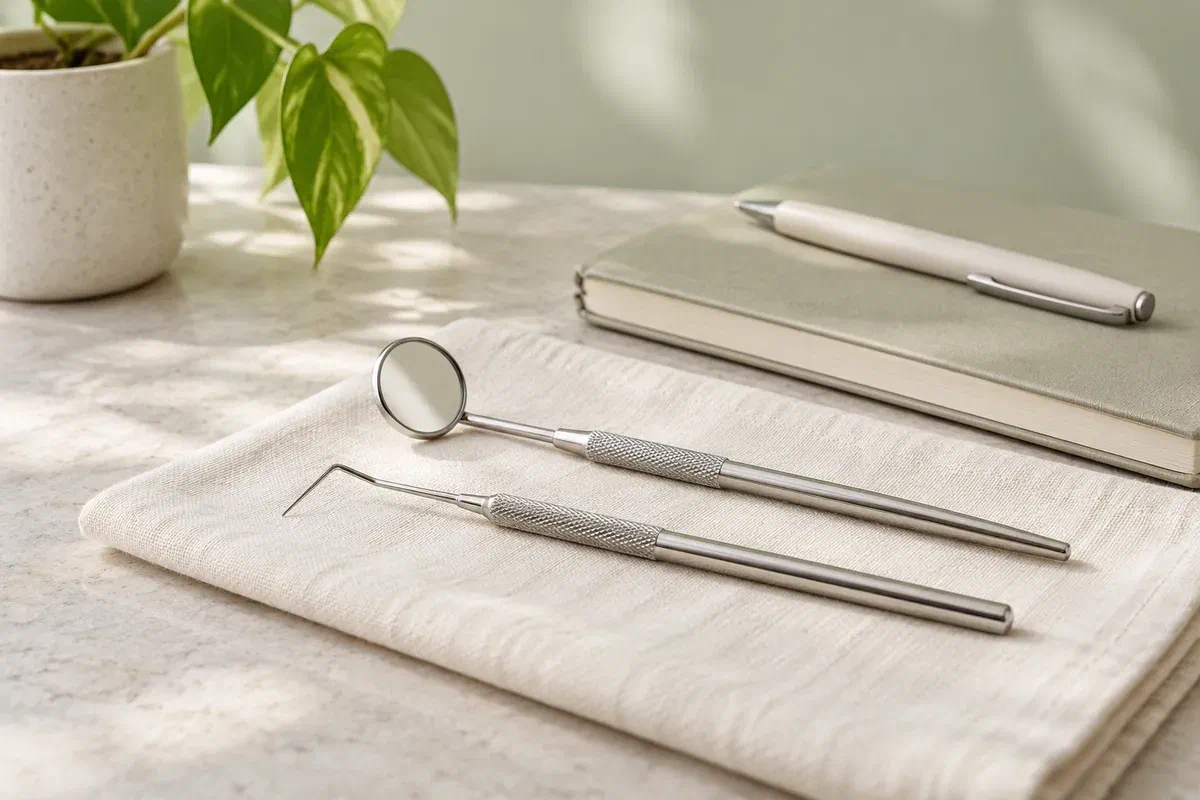
Illustrative dental examination instruments beside a closed notebook
Describing the problem

The clearer the picture, the better the appointment can be planned.

Start with what worries you most, then list anything that seems to raise the stakes. If you have more than one problem, flag the newest or the one getting worse, so time can be set aside for it.

When and how it hurts

Point to where the discomfort sits, say roughly when it started, and note whether chewing, cold drinks, hot food or lying down affects it. Mention if sleep is being interrupted or the pain is moving. You do not need to know which tooth it is; telling us that you are unsure is useful.

A crack, chip or lost restoration

Explain what broke, whether an edge is rough or sharp, and whether your teeth close the way they normally do. A fragment or crown is worth saving in a small clean box for the appointment. Resist gluing or wedging anything back before it has been examined.

Swelling, an injury or a fever

Tell us how swelling has changed, whether an accident was involved, and whether you feel feverish or unwell. Note any significant health conditions. If your symptoms worsen after booking, call back, since a later slot may no longer be appropriate.

Some symptoms need emergency medical care, not a dental chair: difficulty breathing or swallowing, swelling around the eye, severe or rapidly spreading facial swelling, bleeding that keeps coming, or a serious injury to the face. Call 911 straight away.

Why the explanation matters

Temporary or final? You should hear which, and why.

Discomfort and worry make it hard to absorb detail, so ask for the essentials first. The dentist should name the main finding in ordinary language and show how it fits your symptoms. Where some uncertainty remains, a good plan describes how it will be resolved rather than presenting a best guess as certainty.

Most important for many people is knowing which care is immediate and which is deferred. A temporary filling or protective step can be valuable, but it has a lifespan and needs reviewing. Ask whether the next appointment will complete treatment, recheck the problem, or carry out a broader examination.

Patient information: American Dental Association — individualized selection of dental radiographs

Tests chosen to answer a question

The dentist may check neighbouring teeth and the gum around them, or use specific tests to rule causes in or out. X-rays are taken when they are likely to contribute useful information. Ask what each test is for; there is no standard set for every urgent visit.

Options discussed openly

Hear the realistic choices, their purpose, risks and fees. A painful tooth does not remove your consent, and no treatment is automatic. Ask whether you need to decide today, or whether more information might change your preference between a temporary and a lasting approach.

A next step with a name and a date

Confirm who will carry out the next stage and what they need. If you normally attend another practice, ask how findings and images can be shared. A focused visit is most useful when the follow-up is clear rather than vague.

Step by step

How a focused urgent visit unfolds

The order and depth vary with the symptom and how serious it is. Let the clinician know if you feel anxious or need a pause, and ask for decisions to be explained before treatment begins.

  1. Tell the story of the problem

    Describe how it started, any earlier work on that tooth, and the pain relief you have taken. The dentist reviews your medical conditions, allergies and any recent health developments. Previous images or a referral help, but urgent care should not be postponed to find them.

  2. Examine the area and test what is relevant

    The dentist assesses the affected tooth or tissue and any nearby structures that may be involved. Ask what each test checks and say whether the sensation matches your usual symptom. When the first round of checks leaves a gap, an X-ray or a different kind of assessment may follow.

  3. Weigh up today's options

    You will hear the likely diagnosis or what is still unknown, how urgent it is, and what is proposed. Ask directly whether the suggestion is a stopgap or a lasting repair, and what else could be done. Available time, complexity and your health shape whether it happens now.

  4. Leave with a plan for the next visit

    Check how to look after the area meanwhile and which changes call for an earlier phone call. Confirm the follow-up provider, timing and any records needed. If a comprehensive examination is suggested, ask what it covers that today's visit did not.

Living with a temporary fix

Comfortable for now, but not done yet

Your aftercare depends on the diagnosis and whether treatment was provided. Keep any written advice, and ask if something is unclear rather than following instructions from another type of procedure.

Treat interim work gently

Temporary fillings and similar measures are not designed to last indefinitely. Find out how to protect yours and the date it is due for a check. Where no treatment was given, clarify what to avoid until the next stage. Feeling better is not proof that the problem is finished.

Keep medicine use within the plan

Ask the dentist or a pharmacist about suitable pain relief, especially if you take other medication or have medical conditions. Use any prescription exactly as instructed. Antibiotics are not an automatic part of urgent dental care and do not take the place of treating the source.

Let us know if things shift

Phone if the ache climbs, a swelling appears, you run a temperature, your jaw feels stiff, or a temporary filling cracks or comes out. Describe what has changed since your visit, as that may alter the urgency or plan even if follow-up is booked.

Patient information: American Dental Association — dental treatment and antibiotic decisions for pain and swelling

After the findings

Definitive care, a temporary bridge, or a referral

Ask why the suggested route suits the findings. Two people with similar pain can leave with quite different plans, yet each of them deserves a clear idea of what comes next and the reason behind it.

When the cause is clear and conditions allow

A lasting repair, where suitable

If the diagnosis is established and time permits, the dentist may discuss a repair or other procedure aimed at the cause. Ask what it will achieve and whether further care remains. Consent, resources and clinical suitability all still count.

When relief or protection must come first

Temporary care with a defined end

A temporary measure may make sense while further assessment or a longer appointment is arranged. Ask how long it is designed to last, what it cannot do, and what should bring you back early. The plan should name the work still to come.

When another setting or wider assessment is needed

Specialist care or a full examination

You may be referred to a specialist, a different urgent provider, or a comprehensive dental visit. Ask which question each referral will answer and when it should take place. Serious medical warning signs require immediate escalation.

Same-day treatment questions

What can realistically happen in one visit?

These answers can help you set expectations and understand the plan. For urgent symptoms, call rather than relying on email or a callback request.

(905) 876-4488
Can my broken tooth be repaired at the emergency examination?
Sometimes. It depends on the extent of the damage, the time available, and whether the diagnosis is clear. In other cases a temporary measure protects the tooth until a longer appointment. Ask why the recommended timing makes sense.
How long is a temporary filling meant to last?
It depends on the material and the situation, so ask the dentist directly. Temporary work is intended to bridge a gap, not replace definitive treatment. Keep the review appointment even if the tooth feels fine.
Why would the dentist suggest waiting rather than treating today?
More information, such as imaging or a specialist opinion, may change what treatment is best. Your health or the complexity of the procedure may also matter. Ask what you should do in the meantime and what would make it more urgent.
Will I need a second appointment after a limited emergency examination?
Often, yes, whether to complete treatment, review temporary care, or carry out a full examination. Ask what each future visit is for so you can plan around it.
What happens if my temporary filling falls out?
Call the practice and describe what happened. Avoid chewing on that side and keep the area clean. If you notice swelling, fever or severe pain, mention it, because the urgency may have changed.
How can I plan follow-up visits from Georgetown around work or school?
Ask before you leave how many visits are expected and roughly how long each takes. Clinic hours are Monday to Thursday, with Friday to Sunday by appointment, so knowing the sequence early makes scheduling easier.
Georgetown urgent dental care

Ask us what is possible today.

Phone (905) 876-4488 and our Bronte Street team will listen to the problem and talk through the next available assessment. If you need help immediately and we cannot provide it in time, reach out to another emergency dental provider.

Availability, testing, same-visit treatment and referral are decided case by case. Please keep online forms and email for non-urgent matters.

Visit Milton Dental Clinic
Unit 1, 342 Bronte St. S, Milton, ON L9T 5B7
Get directions Clinic hours
Monday–Thursday
11am–7pm
Friday–Sunday
By appointment only

Areas we serve

  • Milton
  • Oakville
  • Mississauga
  • Georgetown
  • Halton Hills
  • Acton
  • Campbellville
  • Brampton
  • Burlington
  • Puslinch
  • Rockwood
  • Erin
  • Caledon
  • Etobicoke
  • Old Milton
  • Bronte Meadows
  • Timberlea
  • Dorset Park
  • Dempsey
  • Clarke
  • Beaty
  • Coates
  • Harrison
  • Scott
  • Willmott
  • Ford
  • Bowes
  • Cobden
  • Walker
  • Mountain View
  • Milton Heights
  • Hawthorne Village
  • Valley View
  • Fallingbrook
  • Nassagaweya
  • Trafalgar
  • Esquesing
  • Nelson
  • Brookville
  • Moffat
  • Glen Williams
  • Norval
  • Limehouse
  • Stewarttown
  • Ashgrove
  • Hornby
  • Silver Creek
  • Speyside
  • Scotch Block
  • North Oakville
  • River Oaks
  • Glen Abbey
  • West Oak Trails
  • Palermo
  • Bronte Creek
  • College Park
  • Joshua Creek
  • Uptown Core
  • Preserve
  • Iroquois Ridge
  • Lisgar
  • Meadowvale
  • Meadowvale Village
  • Churchill Meadows
  • Erin Mills
  • Central Erin Mills
  • Streetsville
  • East Credit
  • Creditview
  • Heartland
  • Sheridan
  • Mount Pleasant
  • Credit Valley
  • Huttonville
  • Churchville
  • Springbrook
  • Northwest Brampton
  • Bram West
  • Fletcher's Meadow
  • Fletcher's Creek South
  • Alton Village
  • Orchard
  • Millcroft
  • Headon Forest
  • Tansley
  • Brant Hills
  • Tyandaga
  • Kilbride
  • Lowville
  • Aberfoyle
  • Morriston
  • Arkell
  • Hillsburgh
  • Freelton
  • Carlisle
  • Waterdown
  • Flamborough
  • Mountsberg

How can we help?

Milton Dental Clinic

Have a question about your smile? Choose the option that works best for you.

For urgent dental concerns, please call.
Messages are reviewed during clinic hours.