

Illustrative patient describing a specific urgent dental concern to a clinician
Specialized Care

Limited Emergency Examinations in Milton

A filling lets go at dinner, or a tooth starts throbbing on a Tuesday afternoon. A limited emergency examination looks closely at that one problem, works out what is likely behind it, and explains what should happen next. Phone our Milton practice to describe what is going on and ask when the dentist can see you.

One problem, looked at properly

When something goes wrong with a single tooth

Most urgent dental visits start with an ordinary moment: biting into toast and feeling a sharp jolt, or finding an edge on a tooth that was not there yesterday. A limited emergency examination is built around that moment. The dentist asks about the complaint, looks at the area involved, and works out both the likely cause and how pressing it is.

Narrow scope is not tunnel vision. Medical conditions, your medicines, a recent knock to the face, or a fever alongside the toothache can change what needs checking and where you are best treated. Sometimes a likely cause is clear by the end of the visit; other times, more tests, older records or a specialist opinion come first.

In Milton, the first step is a phone call to describe the trouble and hear about availability. Ask what the visit will cover and bring recent dental records if you have them. Expect an explanation and a plan; not every procedure that turns out to be needed can be finished in the same sitting.

Ask about a focused dental visit
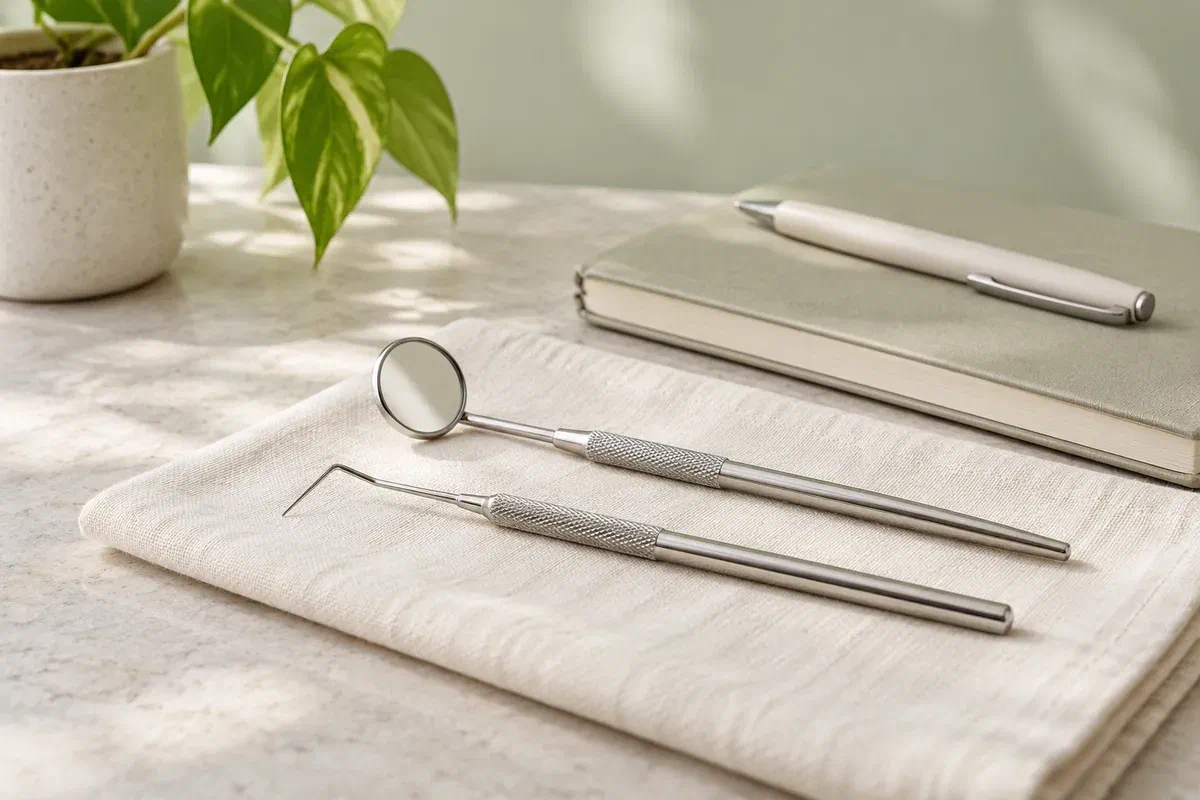
Illustrative dental examination instruments beside a closed notebook
Before you pick up the phone

A few clear details help us judge how soon you should be seen.

Start with the problem that worries you most, then add anything that makes it feel more serious. When more than one thing is bothering you, say which is new or getting worse so the team can plan the right kind of appointment.

Where it hurts and what sets it off

Point us to the general area, roughly when the pain started, and whether chewing, hot or cold drinks, or lying down make a difference. Say if it keeps you awake or is spreading. Not knowing which tooth is involved is fine; the dentist will investigate that.

Something chipped, cracked or fell out

Tell us what came loose or broke, whether an edge is cutting your tongue or cheek, and whether your teeth still meet normally. If you still have the broken piece or crown, keep it in a clean container and bring it along. Avoid home glue or pressing it back in before the dentist has looked.

Swelling, a recent injury, or feeling unwell

Let us know if swelling is growing and how fast, whether a fall or accident was involved, and whether you have a temperature or feel ill. Medical history matters too. If things get worse after booking, call again rather than assume the original slot still fits.

Go to emergency medical care or call 911 for difficulty breathing or swallowing, swelling that reaches the eye, rapidly spreading facial swelling, bleeding that will not stop, or a serious injury to the face. These situations should not wait for a dental appointment or an emailed response.

Leaving with answers

You should know what was found, what is still unclear, and what comes next.

Pain makes it hard to take in detail, so it is reasonable to ask the dentist to slow down. A good explanation names the main finding in everyday words and links it to what you have felt. If the cause is not yet pinned down, the plan should say what further checking is needed rather than present a guess as settled.

It also helps to separate what is done today from what is left for later. Temporary care can genuinely help, but know how long it is meant to last and when it will be checked. Ask whether the next booking finishes treatment, rechecks the problem, or is a more complete examination.

Patient information: American Dental Association — individualized selection of dental radiographs

Tests that answer a specific question

Neighbouring teeth and gums may be checked, or simple tests used, to rule causes in or out. X-rays are taken when they are likely to add useful information. You can ask what each test is for; a single complaint does not come with a standard set of images that everyone receives.

Options explained before anything is done

Expect to hear the reasonable choices, what each aims to achieve, the risks and the fees. Being in pain does not cancel your right to decide. Ask whether you need to choose today or whether more information would change the picture.

A clear handover for the next stage

Find out who will look after the following step and what they will need from you. If you usually see a different dentist, ask how notes and images can be passed along. The visit is far more useful when the follow-up is spelled out instead of left for you to assemble.

How the appointment runs

History first, then the examination, then a plain explanation.

Exactly what happens depends on the symptom and how severe it is. Let the clinician know if you feel nervous or need a break, and ask to hear the key decisions before any treatment starts.

  1. Talk through the problem and your health

    Explain how the symptom developed, any past work on that tooth, and what pain relief you have tried. The team will go over medical conditions, allergies and recent health changes. Earlier X-rays help, but urgent care should not be put off while you track them down.

  2. Examine the area and run the tests that fit

    The dentist checks the tooth or tissue in question and the nearby structures that could explain it. Ask what each test is checking and say whether the sensation matches the pain you normally feel. If something important is still unanswered, more imaging or a different kind of assessment may be suggested.

  3. Go over the findings and what can be done now

    You will hear the most likely explanation, or what remains uncertain, how urgent it is and what is proposed. Ask whether the plan is temporary or lasting and what the alternatives are. Time, complexity and your health can decide whether it happens today or elsewhere.

  4. Leave with instructions and a reason for the next visit

    Before you go, check what to do in the meantime and which changes mean you should call sooner. Confirm who provides the follow-up, roughly when, and what records they need. If a full examination is advised, ask how it differs from the urgent, single-problem visit you have just had.

In the days that follow

Feeling better is not the same as being finished.

What you are told afterward depends on the diagnosis and on whether anything was done during the visit. Keep any written advice, and ask if something is unclear instead of borrowing instructions meant for a different procedure.

Look after any temporary work

When a temporary filling or other short-term measure has been placed, ask how to protect it and when it needs checking. If nothing was done in the chair, find out which precautions apply meanwhile. Less pain does not prove the original problem has gone for good.

Stay within the medicine and self-care advice you were given

Check safe pain relief with the dentist or a pharmacist, particularly if you take other medicines or manage a health condition. Take anything prescribed as directed. An urgent visit does not automatically end with antibiotics, and they cannot stand in for treating the dental source of an infection.

Call when something changes

Get in touch about pain that is building, swelling that is new, a fever, trouble opening your mouth, or a temporary filling that has failed. Describe what is different from the day of the examination. Fresh information can change the urgency or the plan even when a follow-up is already booked.

Patient information: American Dental Association — dental treatment and antibiotic decisions for pain and swelling

Where the visit can lead

Treatment, more investigation, or a referral elsewhere

Ask the dentist why a particular route suits what was found. An urgent assessment does not have to end with the same procedure for everyone, but you should walk out understanding the next step and the reason for it.

When the cause is clear and treatment is suitable

Treatment for a problem that is clearly identified

The dentist may suggest a repair or another procedure aimed at the cause. Ask what it will achieve and whether more work will follow. Consent, time, resources and clinical suitability still count, even with an urgent problem.

When relief or protection comes first

Short-term care while the rest is arranged

A temporary measure can make sense while further tests or treatment are organised. Ask how long it is meant to last, what it cannot do, and what would mean coming back sooner. The plan should name the remaining work so the temporary step does not quietly become permanent.

When a different setting or wider look is needed

A referral or a fuller examination

You may be directed to a specialist, another urgent care provider, or a complete dental examination. Ask what question each referral is meant to answer and how soon it should happen. Serious medical warning signs call for immediate escalation, not a place on an ordinary waiting list.

Questions people ask us

What to expect from a focused urgent visit

These answers can help you prepare and make sense of the plan afterward. For urgent symptoms, please phone rather than relying on email or a callback request.

(905) 876-4488
Is a limited emergency examination the same as a regular checkup?
No. It concentrates on the problem you came in with and the information needed to assess it, rather than reviewing every tooth. A complete examination can be booked separately. Ask what was looked at so you know what still needs attention later.
My filling fell out but nothing hurts. Do I still need to be seen?
It is worth calling. A missing filling can leave a sharp edge or exposed tooth even without pain. Describe what happened and the team can advise how soon to come in. Keep the filling if you found it, and avoid chewing hard foods on that side meanwhile.
Should I bring anything to the appointment?
Bring a list of your medicines, any broken piece of tooth or crown in a clean container, and recent dental records or X-rays if you have them easily. If records are not to hand, come anyway; urgent care should not wait on paperwork.
Will the dentist fix the problem during the same visit?
Sometimes, but not always. It depends on what is found, how complex the treatment is, the time available and your health. The examination may end with temporary care or a plan for another appointment. Ask why the recommended timing makes sense.
Can I see my usual dentist for the follow-up?
Often, yes. Ask how the findings, any images and details of treatment can be shared with your regular practice. Confirm what still needs doing and who is arranging it, so nothing falls between the two offices.
What should I do if my symptoms get worse before the appointment in Milton?
Call the practice again and explain what has changed, since new swelling, a fever or rising pain can alter how soon you should be seen. If you have trouble breathing or swallowing, or swelling near the eye, call 911 or go to emergency care instead.
Urgent dental concerns in Milton

Describe what is happening and we will work out the next step together.

Call our Bronte Street practice at (905) 876-4488 to describe the problem and ask when an assessment is possible. If you need care right away and we are unable to see you, please contact another emergency dental provider.

Appointment timing, which tests are used, any same-day treatment and referrals all depend on your situation. Online forms and email are best kept for non-urgent questions.

Visit Milton Dental Clinic
Unit 1, 342 Bronte St. S, Milton, ON L9T 5B7
Get directions Clinic hours
Monday–Thursday
11am–7pm
Friday–Sunday
By appointment only

Areas we serve

  • Milton
  • Oakville
  • Mississauga
  • Georgetown
  • Halton Hills
  • Acton
  • Campbellville
  • Brampton
  • Burlington
  • Puslinch
  • Rockwood
  • Erin
  • Caledon
  • Etobicoke
  • Old Milton
  • Bronte Meadows
  • Timberlea
  • Dorset Park
  • Dempsey
  • Clarke
  • Beaty
  • Coates
  • Harrison
  • Scott
  • Willmott
  • Ford
  • Bowes
  • Cobden
  • Walker
  • Mountain View
  • Milton Heights
  • Hawthorne Village
  • Valley View
  • Fallingbrook
  • Nassagaweya
  • Trafalgar
  • Esquesing
  • Nelson
  • Brookville
  • Moffat
  • Glen Williams
  • Norval
  • Limehouse
  • Stewarttown
  • Ashgrove
  • Hornby
  • Silver Creek
  • Speyside
  • Scotch Block
  • North Oakville
  • River Oaks
  • Glen Abbey
  • West Oak Trails
  • Palermo
  • Bronte Creek
  • College Park
  • Joshua Creek
  • Uptown Core
  • Preserve
  • Iroquois Ridge
  • Lisgar
  • Meadowvale
  • Meadowvale Village
  • Churchill Meadows
  • Erin Mills
  • Central Erin Mills
  • Streetsville
  • East Credit
  • Creditview
  • Heartland
  • Sheridan
  • Mount Pleasant
  • Credit Valley
  • Huttonville
  • Churchville
  • Springbrook
  • Northwest Brampton
  • Bram West
  • Fletcher's Meadow
  • Fletcher's Creek South
  • Alton Village
  • Orchard
  • Millcroft
  • Headon Forest
  • Tansley
  • Brant Hills
  • Tyandaga
  • Kilbride
  • Lowville
  • Aberfoyle
  • Morriston
  • Arkell
  • Hillsburgh
  • Freelton
  • Carlisle
  • Waterdown
  • Flamborough
  • Mountsberg

How can we help?

Milton Dental Clinic

Have a question about your smile? Choose the option that works best for you.

For urgent dental concerns, please call.
Messages are reviewed during clinic hours.