

Illustrative patient describing a specific urgent dental concern to a clinician
Specialized Care

Limited Emergency Examinations in Rockwood

Tapping a tooth, a cold test, a single X-ray: each check during an urgent visit is there to answer a question. A limited emergency examination uses only the tests your problem calls for, then explains what they showed. Before setting out from Rockwood, call to describe the symptom and ask about timing.

Tests with a reason behind them

Every check should earn its place.

People often wonder what will actually be done to them during an urgent appointment. In a limited emergency examination, the answer follows from your complaint. A cracked tooth, a lost filling, a painful spot or a localized swelling each raise different questions, and the dentist chooses the history, examination and tests needed to work out the likely cause and how urgent it is.

Your general health is part of that reasoning. Medical conditions, prescriptions, a recent fall or blow to the face, and symptoms such as fever can change which structures are examined and whether a medical setting is wiser. Some tests settle the matter quickly. Others leave a question that needs further imaging, earlier records, or a specialist's opinion.

Coming in from Rockwood? Phone ahead, explain what you are feeling, and ask what the visit is likely to involve. Bring or mention any X-rays taken elsewhere in recent months. You will leave with an explanation of the findings and a plan, though some treatment may need another appointment.

Call about a focused examination
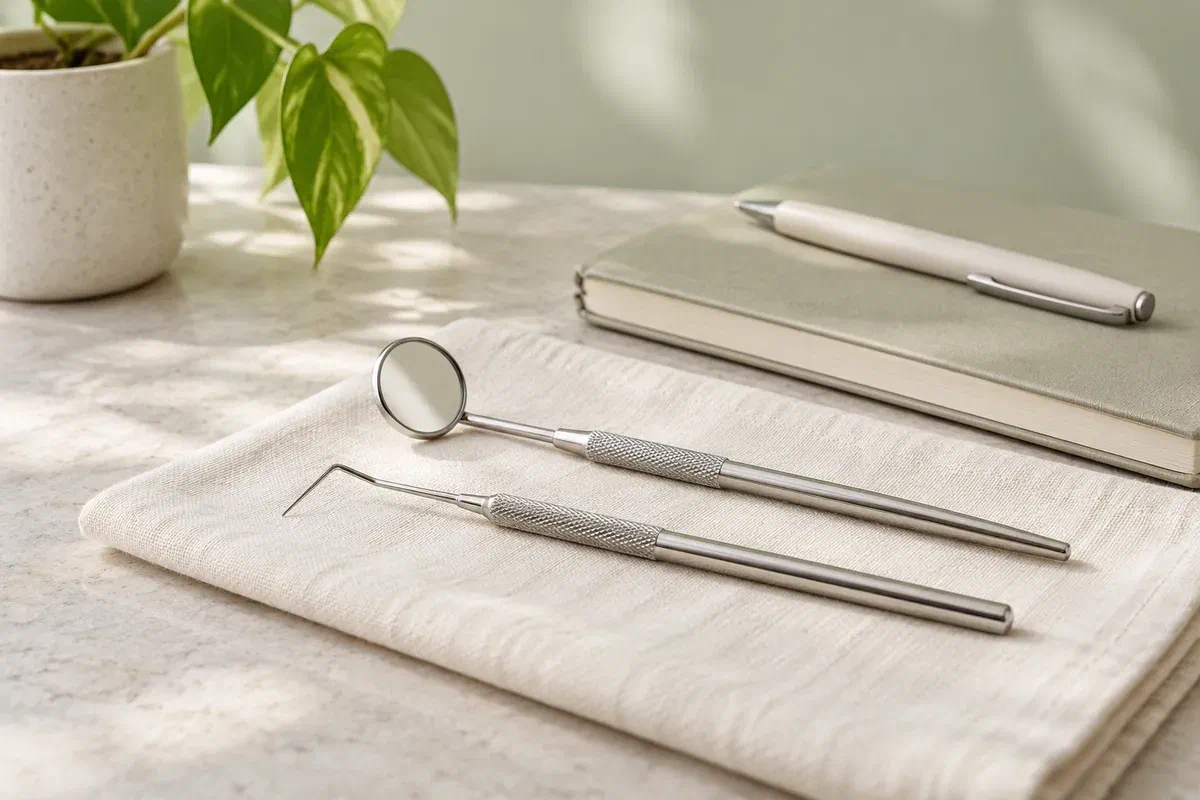
Illustrative dental examination instruments beside a closed notebook
Information that guides the tests

Your description decides where the dentist looks first.

Explain the main problem, then anything that makes it feel more serious. If several things are bothering you, say which is newest or worsening, so the right checks and enough time can be planned.

What triggers the pain

Biting down, cold water, a hot drink, lying flat: knowing what sets the pain off helps the dentist decide which tests to use. Tell us roughly where it is, when it started, and whether it disrupts sleep. Uncertainty about the exact tooth is fine to share.

Visible damage or a changed bite

If a tooth chipped or a filling or crown came out, describe it and say whether your teeth meet differently now. Bring any loose piece in a clean container. Hold off on glue and avoid pushing it back before the dentist has examined the area.

Swelling, injury and overall health

Let us know whether swelling is changing, whether an accident occurred, and whether you have a fever or feel ill. Medical history can affect which tests are safe and useful. If symptoms worsen after you book, call again before travelling.

Tests can wait; emergencies cannot. Call 911 or go to hospital for difficulty breathing or swallowing, swelling near or around the eye, rapidly spreading or severe facial swelling, persistent heavy bleeding, or a serious injury to the face.

Results you can follow

What each test told the dentist, in plain words

Test results mean little unless someone explains them. Ask the dentist to summarize the main finding simply and say how the tests support it. Where results are inconclusive, the plan should describe what would settle the question, such as another image or a later review, instead of treating a partial answer as complete.

Knowing what was done today and what is left helps you plan. A temporary step may protect the tooth or ease pain, but it has limits and should be reviewed. Ask whether the next appointment is for finishing treatment, repeating a test, or carrying out a full examination.

Patient information: American Dental Association — individualized selection of dental radiographs

Imaging chosen for your situation

X-rays are taken when they are expected to add useful diagnostic information, not as an automatic package. Recent suitable images from another office may help. Ask what a proposed image is meant to show and how it will affect the decision.

Options before any procedure

Once the findings are clear, discuss the reasonable choices, their purpose, risks and fees. Your consent is still required in an urgent situation, and no treatment is predetermined. Ask whether further test results might change what you would choose.

Results that travel with you

Confirm who handles the next stage and what they need. If you have a regular dentist elsewhere, ask how the findings and any images can be passed on, so tests do not need to be repeated unnecessarily.

How the assessment unfolds

Question, check, interpret, plan

Which tests are used, and in what order, depends on your symptom and its severity. Tell the clinician if you are anxious or need pauses, and ask what each step involves before it begins.

  1. Hear the history first

    The dentist asks how the problem began, what work has been done on that tooth, and what pain relief you have tried. Health conditions, allergies and recent changes are reviewed. Previous X-rays help, but do not delay urgent care because you cannot find them.

  2. Examine, then test what is still uncertain

    After looking at the affected area, the dentist may gently tap, apply cold, check gum and bite, or take an image. Say whether a test reproduces your usual pain. If an important question remains, further imaging or another assessment may be advised.

  3. Interpret the results together

    You will hear what the tests point to, what remains unknown, and how urgent the situation is. Ask whether the recommended care is temporary or definitive and what alternatives exist. Time, complexity and your health may decide whether it happens today.

  4. Leave with a written plan

    Before you go, find out how to manage symptoms and which changes should prompt an earlier call. Confirm the follow-up provider and timing, and whether images will be shared. If a complete examination is suggested, ask what else it would cover.

After the tests

Results guide the plan. The plan guides the next few days.

Aftercare depends on the diagnosis and on whether any treatment was carried out. Keep written instructions, and ask about anything unclear rather than relying on advice from another procedure.

Look after interim work

If a temporary restoration or protective measure was placed, ask how to care for it and when it will be reviewed. If nothing was placed, confirm what precautions to take while assessment continues. Feeling better does not mean the cause is resolved.

Keep medicine use within safe limits

Discuss pain relief with the dentist or a pharmacist, especially if you take other medicines or have health conditions. Use prescriptions exactly as directed. Antibiotics are not a standard outcome of urgent testing and do not replace treating a dental source.

Report changes that may alter the results

Call about increasing pain, new swelling, fever, difficulty opening, or a failed temporary repair. A change in symptoms can mean a test needs repeating or the urgency has shifted, even with follow-up already arranged.

Patient information: American Dental Association — dental treatment and antibiotic decisions for pain and swelling

Turning findings into action

What the results may lead to

Ask why the suggested route follows from the test results. Similar symptoms can lead to different plans, but you should always understand the next step and why it was chosen.

When findings support a confident diagnosis

Treatment when the results are clear

If the tests point clearly to a cause, the dentist may discuss a repair or other procedure. Ask what it accomplishes and whether further care will follow. Consent, available time, resources and suitability remain part of the decision.

When relief or protection is needed before more testing

Temporary care while questions are answered

An interim measure can keep you comfortable while further images, a review or longer treatment are arranged. Ask how long it is designed to last, its limits, and what should bring you back sooner. The work still outstanding belongs in the plan, so the stopgap does not become permanent by default.

When results point beyond a focused visit

Referral for more specialized assessment

A specialist, another urgent provider or a full dental examination may be recommended. Ask what question each referral will answer and its timing. Signs of serious illness need emergency medical care rather than a routine appointment.

Testing and imaging questions

What will the dentist actually do?

These answers explain the checks commonly involved in a focused urgent visit. When symptoms are urgent, please phone us instead of emailing.

(905) 876-4488
What kinds of tests might happen at a limited emergency examination?
It depends on the complaint. The dentist may gently tap teeth, check response to cold, examine the gum and bite, or take an X-ray. Each is used to answer a particular question, and you can ask what each one is for.
Will the cold test or tapping hurt?
Some tests are designed to reproduce your symptom briefly, which can be uncomfortable. Tell the dentist if you are anxious and ask them to explain before each test. You can ask for a pause at any time.
Can I decline an X-ray?
You can ask questions and decline, but the dentist should explain what the image would show and how not having it might limit the diagnosis. Discuss alternatives, including whether recent images from another office could be used.
Why might I need another test at a later visit?
Some findings change over time, or the first results may be inconclusive. A later review can clarify the cause or check how a tooth is responding. Ask what the repeat test is intended to show.
Is a limited examination the same as my routine checkup?
No. The tests focus on the urgent problem and the structures closest to it. A comprehensive examination of all your teeth and gums is booked separately and may be recommended afterward. Ask which areas were not looked at, so nothing is overlooked once the emergency has passed.
Can my X-rays be sent to a dentist closer to Rockwood?
Ask before you leave how images and findings can be shared with another provider. Confirm who is arranging follow-up and what they will need, so tests are not repeated without reason.
Rockwood urgent dental assessments

Tell us what you feel, and we will explain what we check.

Phone our Bronte Street practice on (905) 876-4488 to describe the symptom and ask about the next available assessment. If you need care right away and we cannot accommodate you, please look for another emergency dental provider.

Availability, diagnostic tests, same-visit treatment and referrals depend on individual circumstances. Online forms and email are intended for non-urgent enquiries.

Visit Milton Dental Clinic
Unit 1, 342 Bronte St. S, Milton, ON L9T 5B7
Get directions Clinic hours
Monday–Thursday
11am–7pm
Friday–Sunday
By appointment only

Areas we serve

  • Milton
  • Oakville
  • Mississauga
  • Georgetown
  • Halton Hills
  • Acton
  • Campbellville
  • Brampton
  • Burlington
  • Puslinch
  • Rockwood
  • Erin
  • Caledon
  • Etobicoke
  • Old Milton
  • Bronte Meadows
  • Timberlea
  • Dorset Park
  • Dempsey
  • Clarke
  • Beaty
  • Coates
  • Harrison
  • Scott
  • Willmott
  • Ford
  • Bowes
  • Cobden
  • Walker
  • Mountain View
  • Milton Heights
  • Hawthorne Village
  • Valley View
  • Fallingbrook
  • Nassagaweya
  • Trafalgar
  • Esquesing
  • Nelson
  • Brookville
  • Moffat
  • Glen Williams
  • Norval
  • Limehouse
  • Stewarttown
  • Ashgrove
  • Hornby
  • Silver Creek
  • Speyside
  • Scotch Block
  • North Oakville
  • River Oaks
  • Glen Abbey
  • West Oak Trails
  • Palermo
  • Bronte Creek
  • College Park
  • Joshua Creek
  • Uptown Core
  • Preserve
  • Iroquois Ridge
  • Lisgar
  • Meadowvale
  • Meadowvale Village
  • Churchill Meadows
  • Erin Mills
  • Central Erin Mills
  • Streetsville
  • East Credit
  • Creditview
  • Heartland
  • Sheridan
  • Mount Pleasant
  • Credit Valley
  • Huttonville
  • Churchville
  • Springbrook
  • Northwest Brampton
  • Bram West
  • Fletcher's Meadow
  • Fletcher's Creek South
  • Alton Village
  • Orchard
  • Millcroft
  • Headon Forest
  • Tansley
  • Brant Hills
  • Tyandaga
  • Kilbride
  • Lowville
  • Aberfoyle
  • Morriston
  • Arkell
  • Hillsburgh
  • Freelton
  • Carlisle
  • Waterdown
  • Flamborough
  • Mountsberg

How can we help?

Milton Dental Clinic

Have a question about your smile? Choose the option that works best for you.

For urgent dental concerns, please call.
Messages are reviewed during clinic hours.