

Illustrative patient discussing restricted jaw movement with a dental clinician
Specialized Care

Limited Jaw Opening Assessment in Etobicoke

Travelling from Etobicoke for a jaw that won’t open fully is easier with a plan. We use a phone conversation to judge urgency, then make the assessment visit count by checking likely causes and setting out clear next steps.

Etobicoke · planning around the distance

Make one visit do the work of several.

From the west end of Toronto, a dental appointment takes a bigger slice of the day, so it pays to arrive prepared. Before you come, think about when the restriction began, what it stops you doing and what seemed to set it off. Bring a medication list and any relevant records. That groundwork lets the dentist spend the visit examining rather than piecing together history.

Limited opening describes how the jaw is moving, not why. Tight or sore chewing muscles, a joint that catches, infection around a tooth, a past knock to the face or earlier treatment to the head and neck can all be responsible. Some of these are routine to assess; others are urgent. A phone call first helps sort out which applies to you.

Distance also means knowing when not to travel. If your jaw has suddenly locked, swelling is spreading or you are struggling to swallow, closer urgent or emergency care is the right choice. For a stable restriction, you won’t be asked to force your jaw open; just describe what’s comfortable and what has changed.

Call to plan your assessment
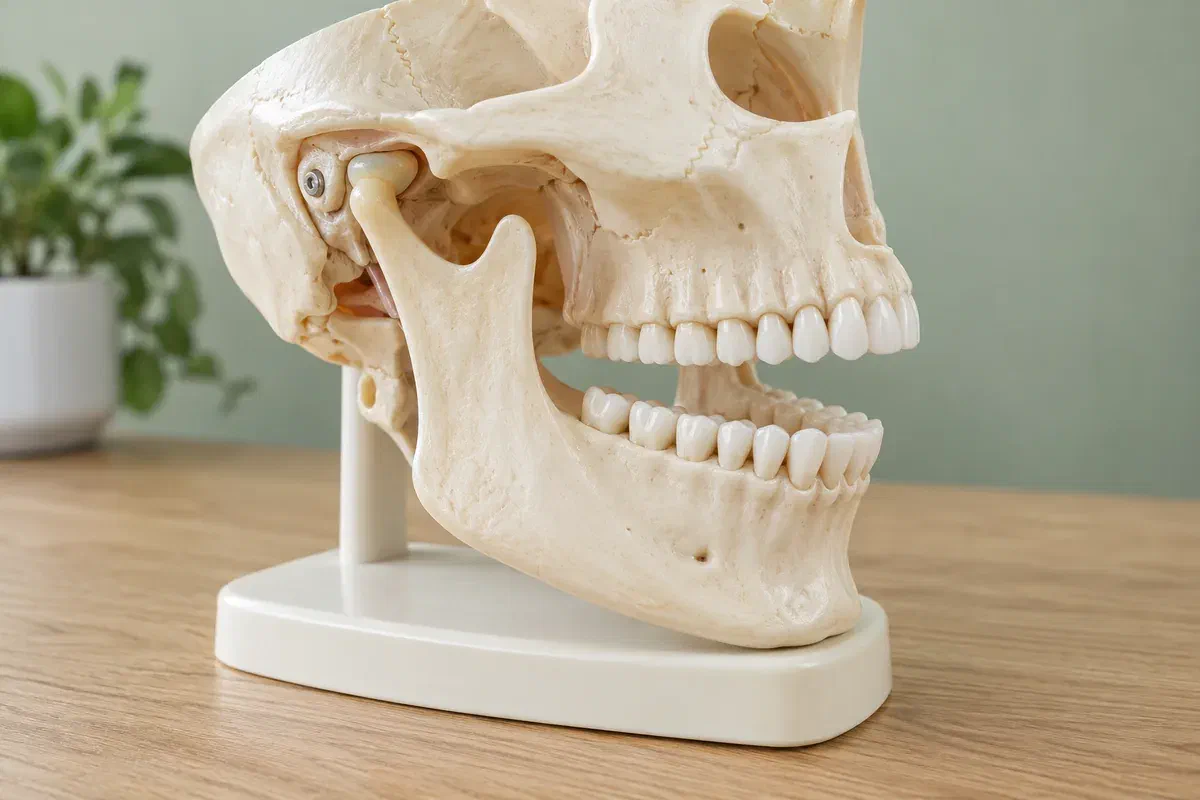
Illustrative physical teaching model showing the jaw and its supporting joint
Before you set out

Three things to tell us on the phone

These details let the team decide whether a booked visit suits you or whether nearer urgent care is wiser. Mention sudden worsening or swelling at the start of the call.

What the jaw is doing

Explain whether it stops suddenly, feels stiff throughout or behaves differently from try to try. Tell us if it has stuck open or shut and for how long. Describing it is enough, so please don’t keep forcing a painful catch to check.

How eating, drinking and cleaning are going

Say which everyday tasks are affected and whether you can manage fluids and meals. If you can’t drink or keep your teeth clean, you need advice promptly, possibly closer to home. These examples also shape how the exam is planned.

Recent treatment, injury or medical history

Mention recent dental work, an injury to the face, swelling or a history of jaw problems. Past surgery or radiotherapy to the head and neck is also important. This information can change the assessment and whether another team should be involved first.

A jaw that has locked, a severe new restriction or being unable to eat or drink needs urgent assessment, which may be quicker nearer to you. Swelling that spreads fast or affects the eye, or any trouble breathing or swallowing, requires emergency medical care; call 911 if immediate.

Getting the most from the trip

Leave with a baseline, a likely explanation and a written plan.

Your opening may be measured and recorded, giving a reference for later reviews. That number is only meaningful alongside your history and the other findings. Ask whether the dentist has a probable cause in mind and, if uncertainty remains, what information would clear it up. That way you know whether a further visit is genuinely needed.

We also look at how ongoing dental care can stay manageable while your jaw is limited, and how to group future treatment to reduce trips. Explain which positions are difficult and agree a pause signal. If the exam is partial, ask what was safely covered and how the rest will be handled.

Patient information: NIDCR — assessment and management of temporomandibular disorders

Comfortable movement, carefully documented

The dentist observes how your jaw opens and listens to where you feel resistance or pain. Say when you reach your comfortable limit. The aim is to understand the pattern, not to meet a target or push through real discomfort for the sake of a reading.

Teeth and soft tissues examined too

The exam may include teeth, gums, muscles and nearby areas. Ask which findings support the proposed explanation and whether more tests would help. If every restriction were blamed on the joint, a condition that needs different care might be missed.

A review schedule that respects the journey

Settle on the improvements that would matter to you, say a toothbrush reaching the back again or dinner without strain, and how often review is really necessary. Decide which changes should bring you back sooner. A plan is easier to follow when its purpose is clear.

On the day

An organised visit, paced to your comfort

You can describe the problem rather than repeating painful movements. If opening for an exam is difficult, say so on the phone beforehand so time and approach can be planned.

  1. Review the history you’ve prepared

    We go through when and how the restriction started and whether it is improving, worsening or fluctuating. Injuries, recent treatment, medicines and health conditions are discussed. Records or contact details for another clinician save time and repeat visits.

  2. Examine what is comfortable

    The dentist looks at your jaw’s comfortable movement and checks areas linked to your symptoms. Show where you feel discomfort and whether it is typical. Pauses are fine; if part of the examination isn’t possible, that should be recorded honestly.

  3. Discuss findings and whether tests are worthwhile

    You hear the likely explanation and what is still uncertain. Imaging or referral is suggested when it would answer a specific question, ideally arranged to limit extra travel. Ask whether dental, medical or specialist assessment should come before any management plan.

  4. Leave with clear instructions

    Confirm interim advice, the purpose of any treatment and how progress will be assessed. If exercises are recommended, ask for written instructions suited to your diagnosis. Know who to call, and when to seek closer care, if symptoms worsen.

Back home in Etobicoke

Protect everyday function between visits.

What you do at home should follow from the assessment. A routine created for recovery from a particular operation may not fit an unexplained restriction, even though both involve reduced opening.

Avoid DIY stretching

Don’t force the jaw with objects, aggressive stretches or repeated painful movements. If you are given a movement programme, be sure of the technique, frequency and stopping rules before you leave. Phone if it increases symptoms rather than doing more.

Keep a short function log

Note real changes in eating, drinking, brushing and comfort, and when symptoms tend to show up. A record like this can sometimes be discussed by phone, saving a trip. You needn’t measure every opening or deliberately trigger a lock.

Call before care slips

Let us know if you can’t clean an area or are struggling with food and fluids. The team can advise on adjustments, further assessment or nearer options if needed. Don’t put off necessary care assuming your jaw has to improve first.

Patient information: Guy's and St Thomas' — jaw opening advice after relevant medical treatment

Possible care pathways

Where things go next depends on what is found.

Before agreeing to any approach, ask what it should improve and how and when that will be judged. Limited opening alone does not warrant an appliance, a procedure or a permanent change in your bite.

When the cause is a tooth or nearby tissue

Treating a dental source

Infection or inflammation linked to a tooth may need treatment focused on it. Discuss urgency and whether it can be done in our clinic, possibly alongside other planned care. Loosening the jaw wouldn’t, by itself, resolve an underlying infection.

When muscles or the joint are involved

Reversible care with a planned review

Your plan might include explanation, self-care and other reversible steps chosen for you. You should leave knowing the first step, the habits to drop and the date of your next check. A gradual approach lets your progress be checked without presuming an irreversible bite change.

When history or a lasting restriction needs more

Specialist input or shared rehabilitation

If you’ve had head and neck surgery or radiotherapy, or the restriction persists, your medical team or a specialist may need to be involved, perhaps closer to home. Ask who coordinates and what the referral is for. Rehabilitation should be individual.

Etobicoke travel and jaw questions

Planning ahead for a jaw opening assessment

These answers help you prepare. For a severe new restriction or trouble managing fluids and food, phone for prompt advice and consider nearer urgent care rather than relying on an online request.

(905) 876-4488
When should I go somewhere closer instead of travelling to you?
If your jaw has locked, swelling is spreading, you have a fever or you can’t eat, drink, breathe or swallow comfortably, seek urgent or emergency care near you. For a stable restriction, a planned visit is usually reasonable.
Can my assessment and any needed dental treatment happen on the same day?
Sometimes, depending on what is found and how comfortable you are. Ask when booking. Assessment comes first, and some treatment may need its own appointment or a different setting.
What records are worth bringing?
A list of medicines, notes on when the restriction started, and any recent dental or medical records relating to your head, neck or jaw. Contact details for other treating clinicians are helpful too.
Can follow-up be done by phone?
Some updates can be discussed by phone, but an examination may still be needed to judge progress properly. Agree at your assessment what type of review suits your situation.
Is a measurement enough to tell what is wrong?
No. It is one part of the assessment and needs to be interpreted with your history and examination. Ask what the combined findings suggest and whether further investigation is required.
If I’ve had radiotherapy to the head or neck, should I tell you?
Yes, even if it was some time ago. It can affect how the restriction is assessed and managed. Bring details of your treating team so care can be coordinated with them.
Assessment visits from Etobicoke

Phone first, travel once, leave with a plan.

Our team at the Bronte Street practice takes calls at (905) 876-4488. Describe any sudden locking, swelling, injury or difficulty eating and drinking so they can judge urgency and tell you whether to book a visit or seek nearer care.

Causes, appropriate treatment, referral needs and recovery vary widely. Online requests are for non-urgent matters and are no substitute for urgent assessment when symptoms are severe or getting worse.

Visit Milton Dental Clinic
Unit 1, 342 Bronte St. S, Milton, ON L9T 5B7
Get directions Clinic hours
Monday–Thursday
11am–7pm
Friday–Sunday
By appointment only

Areas we serve

  • Milton
  • Oakville
  • Mississauga
  • Georgetown
  • Halton Hills
  • Acton
  • Campbellville
  • Brampton
  • Burlington
  • Puslinch
  • Rockwood
  • Erin
  • Caledon
  • Etobicoke
  • Old Milton
  • Bronte Meadows
  • Timberlea
  • Dorset Park
  • Dempsey
  • Clarke
  • Beaty
  • Coates
  • Harrison
  • Scott
  • Willmott
  • Ford
  • Bowes
  • Cobden
  • Walker
  • Mountain View
  • Milton Heights
  • Hawthorne Village
  • Valley View
  • Fallingbrook
  • Nassagaweya
  • Trafalgar
  • Esquesing
  • Nelson
  • Brookville
  • Moffat
  • Glen Williams
  • Norval
  • Limehouse
  • Stewarttown
  • Ashgrove
  • Hornby
  • Silver Creek
  • Speyside
  • Scotch Block
  • North Oakville
  • River Oaks
  • Glen Abbey
  • West Oak Trails
  • Palermo
  • Bronte Creek
  • College Park
  • Joshua Creek
  • Uptown Core
  • Preserve
  • Iroquois Ridge
  • Lisgar
  • Meadowvale
  • Meadowvale Village
  • Churchill Meadows
  • Erin Mills
  • Central Erin Mills
  • Streetsville
  • East Credit
  • Creditview
  • Heartland
  • Sheridan
  • Mount Pleasant
  • Credit Valley
  • Huttonville
  • Churchville
  • Springbrook
  • Northwest Brampton
  • Bram West
  • Fletcher's Meadow
  • Fletcher's Creek South
  • Alton Village
  • Orchard
  • Millcroft
  • Headon Forest
  • Tansley
  • Brant Hills
  • Tyandaga
  • Kilbride
  • Lowville
  • Aberfoyle
  • Morriston
  • Arkell
  • Hillsburgh
  • Freelton
  • Carlisle
  • Waterdown
  • Flamborough
  • Mountsberg

How can we help?

Milton Dental Clinic

Have a question about your smile? Choose the option that works best for you.

For urgent dental concerns, please call.
Messages are reviewed during clinic hours.