

Illustrative patient discussing restricted jaw movement with a dental clinician
Specialized Care

Limited Jaw Opening Assessment in Old Milton

Stiffness that comes back every few months, or a restriction you have quietly lived with for years, still deserves a fresh look. We review what has changed, consider likely causes and explain whether dental, conservative or wider care makes sense.

Old Milton · recurring or long-standing restriction

Has this happened before?

Plenty of people around Old Milton, Milton’s historic downtown, have had a jaw that tightens now and then for as long as they can remember. Because the pattern is familiar, it is easy to shrug off. Yet a restriction that lasts longer than usual, arrives with new pain, or begins to interfere with eating is a change, and changes are worth describing to a dentist.

Limited opening is a symptom rather than a diagnosis. It can reflect sore chewing muscles, a joint that catches, infection around a tooth, a past injury, or the after-effects of earlier treatment to the head and neck. Comparing this episode with previous ones, including how fast it came on and what preceded it, often tells us more than a single examination can.

Our Bronte Street practice is close by, so there is no need to wait for things to become severe before calling. You will not be asked to stretch as far as possible. Tell us what is comfortable now, how that compares with your normal, and whether brushing, chewing or drinking has become harder.

Ask about a jaw opening assessment
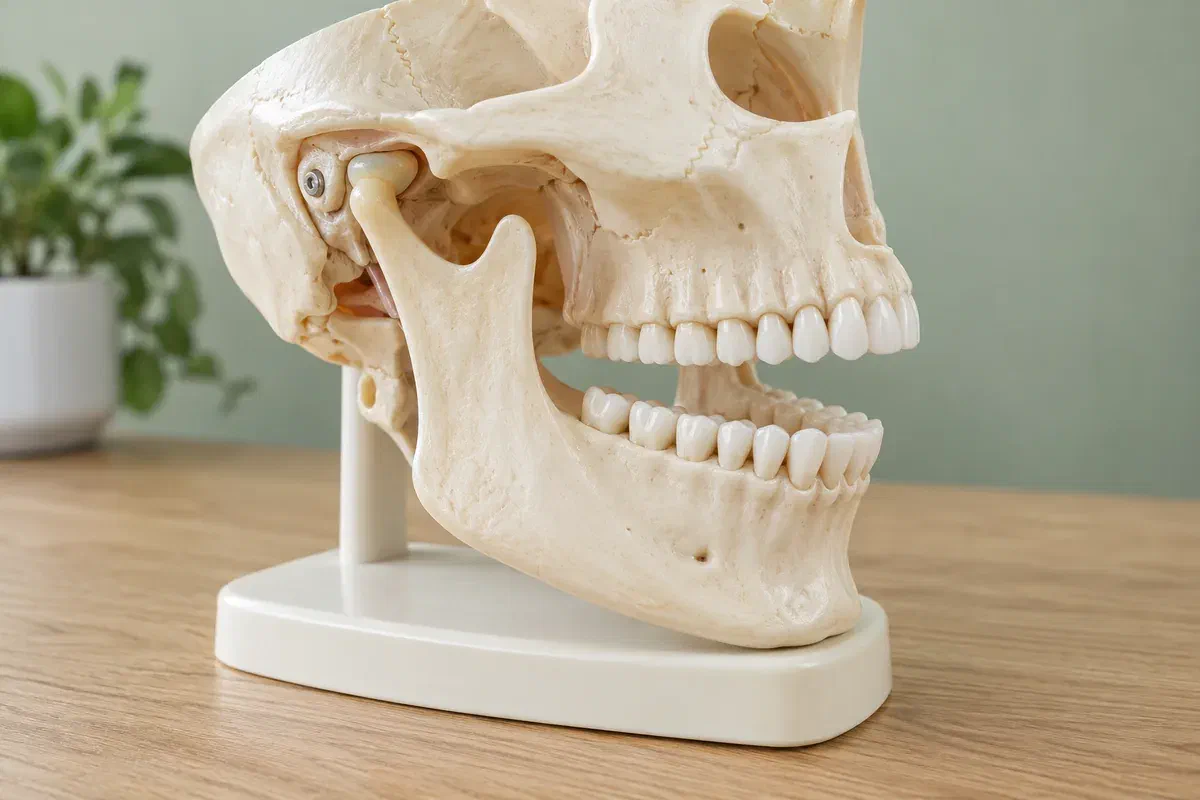
Illustrative physical teaching model showing the jaw and its supporting joint
Details that help us compare

A familiar symptom can still behave differently this time.

Before your visit, think about how this restriction differs from past ones. If it has worsened quickly or swelling has appeared, mention that when you phone rather than holding it for a routine visit.

A different kind of stop

Say whether the jaw now halts abruptly, feels stiff the whole way, or varies between attempts, and how that compares with earlier episodes. Tell us if it has ever stayed stuck open or closed and for how long. Please avoid repeatedly recreating a painful catch to check it.

Everyday tasks that have slipped

Note which routines have become awkward, such as biting into a sandwich or reaching back teeth with a brush, and whether you are getting enough to drink and eat. Being unable to drink or clean your mouth calls for prompt advice, not a wait.

History you may have forgotten to mention

Old injuries, a past jaw problem, recent fillings or extractions, and any swelling all matter. So does earlier surgery or radiotherapy to the head and neck, even years ago. These facts can change what we look for and whether another clinician should be involved.

Call for urgent assessment if your jaw has locked, opening has suddenly become much more limited, or you can’t eat or drink. Swelling that spreads quickly or affects the eye, or any trouble breathing or swallowing, is a medical emergency; call 911 if it is immediate.

Why a fresh baseline helps

Today’s findings become the reference point for next time.

If your jaw has tightened before, a recorded starting point makes future episodes far easier to judge. The dentist may note how far you open, but that number is weighed with your history and the rest of the exam. Ask whether a probable cause has been identified, and if questions remain, what further information would answer them.

We also talk about keeping routine dental care practical while opening is limited. Explain which positions bring on discomfort and agree a hand signal so you can pause at any time. When a complete exam is not possible, ask what can be checked safely now and how the remaining parts will be followed up.

Patient information: NIDCR — assessment and management of temporomandibular disorders

Range of movement, gently recorded

The clinician observes your opening and listens to how you describe tightness or pain along the way. Let them know where comfort ends. Nobody is trying to beat a target here, and pushing through significant discomfort would only blur the picture.

Checking teeth, gums and muscles as well

A recurring restriction is often assumed to be the joint, but other sources are possible. The exam can include teeth, gums and the muscles of the face and neck. Ask which findings support the explanation offered and whether more tests are worthwhile.

A clear sense of what improvement means

Decide together what a good result would look like for you, perhaps biting an apple again or brushing without strain. Agree when to review and which changes should bring you in earlier. Plans are simpler to stick with when their aims and limits are spelled out.

During the assessment

History, a careful exam, then a shared plan.

You don’t need to demonstrate the movement that hurts most. If opening wide enough for an exam is a struggle, mention it when you book so the appointment can be arranged thoughtfully.

  1. Compare this episode with earlier ones

    We ask how the restriction started, whether it is settling, worsening or fluctuating, and how it differs from past bouts. Injuries, recent dental work, medicines and general health are reviewed. Older records or the name of a previous treating team can be very useful.

  2. Examine movement and nearby structures

    The dentist looks at what your jaw does comfortably and checks for signs connected to your symptoms. Point to where you feel discomfort and say whether it is typical for you. Rest breaks are fine, and anything that could not be examined should be noted honestly.

  3. Discuss a working explanation

    You hear what appears likely and what is still uncertain. Imaging or referral is suggested only when it would answer a specific question. Ask how a proposed test might change the plan, and whether dental, medical or specialist input is needed before management starts.

  4. Agree on next steps and a review

    Confirm any interim advice, the aim of any treatment and how progress will be checked. If exercises are part of the plan, ask for clear instructions suited to your diagnosis. Know who to call if symptoms worsen or the plan makes movement more painful.

Looking after your jaw at home

Comfort first, while the cause is worked through.

Home advice should match your diagnosis. Exercises written for recovery from a particular operation may be wrong for a new or unexplained restriction, even when both involve limited opening.

Resist the urge to stretch it out

Long-standing habits like prying the jaw wider with fingers or objects can aggravate symptoms. If a clinician prescribes a movement routine, confirm technique, frequency and when to stop. Report it if the routine increases pain instead of adding repetitions on your own.

A simple diary beats constant checking

Note real changes in eating, drinking, brushing and comfort, and roughly when symptoms appear. That kind of record is helpful at review. There is no need to measure every opening or keep testing a lock; ordinary moments tell the story.

Ask before letting care slide

Tell us if you can’t reach an area to clean it or are struggling to eat and drink enough. The team can suggest adjustments or arrange further assessment. Please don’t postpone necessary care in the belief that your jaw has to loosen first.

Patient information: Guy's and St Thomas' — jaw opening advice after relevant medical treatment

Possible directions

Treatment depends on the reason, not the restriction alone.

Ask what any approach is meant to change and how its effect will be assessed. Reduced opening by itself is not a reason for an appliance, a procedure or permanent adjustment of your bite.

If a tooth or nearby tissue is responsible

Treatment aimed at a dental cause

An infected tooth or inflamed gum may need care focused on that source. Ask how urgent it is and whether it can be managed in our clinic. Improving movement without dealing with the infection or untreated problem would leave the real issue in place.

If muscles or the joint seem to be involved

Conservative care, reviewed over time

Your plan may include explanation, gentle self-care and other reversible measures. Ask what to try first, what to steer clear of and when to return. Taking it step by step allows a proper review without assuming you need an irreversible bite change.

If your history or a persistent restriction calls for it

Wider input from specialists

A specialist or your existing medical team may need to assess the problem, particularly after relevant surgery or radiotherapy. Ask who will lead coordination and what the referral is meant to clarify. Rehabilitation should be planned for you rather than copied from another person.

Questions we hear near Old Milton

Recurring jaw stiffness, answered plainly

Use these answers to prepare for your visit. A sudden severe restriction, or trouble keeping up with food and drink, needs a phone call for prompt advice rather than an online request alone.

(905) 876-4488
My jaw has tightened on and off for years. Why get it checked now?
A recorded assessment gives you a baseline, and any recent change in how long episodes last, how painful they are or what they stop you doing is worth reviewing. Describing earlier episodes alongside this one helps the dentist see the pattern.
Could my old dental records help?
Yes, if they are easy to obtain. Notes about previous jaw trouble, treatment or imaging can add context. Don’t delay a needed appointment to track them down, though; a clear verbal history is often enough to start.
Is it safe to keep stretching my jaw the way I always have?
It depends on the cause, which is why we assess first. Forcing the jaw open with fingers or objects is not advised. If movement exercises suit your diagnosis, the clinician can explain technique and stopping rules.
Does a jaw that locks shut mean the same thing as one that clicks?
Not necessarily. Painless clicking with normal movement is a different situation from a new lock or a real loss of opening. Report a lock promptly and say whether you can still eat and drink.
Will treatment for my jaw involve changing my bite?
Restricted opening alone does not justify permanent bite changes. Care usually begins with reversible measures when muscles or the joint are involved, and with treating the source when a dental cause is found. Ask what any proposed step is meant to achieve.
Can I still have a cleaning if I can’t open very wide?
Often, with adjustments. Let the team know about the restriction beforehand and describe which areas are hard to reach. They can plan around your comfortable range and explain if a different setting is needed.
Jaw opening assessment for Old Milton

Tell us how this time is different.

To arrange an assessment, ring the practice on (905) 876-4488. Please mention any sudden locking, swelling, recent injury or difficulty eating and drinking so the team can judge how soon you should be seen.

Causes, appropriate care, whether referral is needed and recovery all vary. Online requests suit non-urgent questions and are not a replacement for urgent assessment when symptoms are severe or getting worse.

Visit Milton Dental Clinic
Unit 1, 342 Bronte St. S, Milton, ON L9T 5B7
Get directions Clinic hours
Monday–Thursday
11am–7pm
Friday–Sunday
By appointment only

Areas we serve

  • Milton
  • Oakville
  • Mississauga
  • Georgetown
  • Halton Hills
  • Acton
  • Campbellville
  • Brampton
  • Burlington
  • Puslinch
  • Rockwood
  • Erin
  • Caledon
  • Etobicoke
  • Old Milton
  • Bronte Meadows
  • Timberlea
  • Dorset Park
  • Dempsey
  • Clarke
  • Beaty
  • Coates
  • Harrison
  • Scott
  • Willmott
  • Ford
  • Bowes
  • Cobden
  • Walker
  • Mountain View
  • Milton Heights
  • Hawthorne Village
  • Valley View
  • Fallingbrook
  • Nassagaweya
  • Trafalgar
  • Esquesing
  • Nelson
  • Brookville
  • Moffat
  • Glen Williams
  • Norval
  • Limehouse
  • Stewarttown
  • Ashgrove
  • Hornby
  • Silver Creek
  • Speyside
  • Scotch Block
  • North Oakville
  • River Oaks
  • Glen Abbey
  • West Oak Trails
  • Palermo
  • Bronte Creek
  • College Park
  • Joshua Creek
  • Uptown Core
  • Preserve
  • Iroquois Ridge
  • Lisgar
  • Meadowvale
  • Meadowvale Village
  • Churchill Meadows
  • Erin Mills
  • Central Erin Mills
  • Streetsville
  • East Credit
  • Creditview
  • Heartland
  • Sheridan
  • Mount Pleasant
  • Credit Valley
  • Huttonville
  • Churchville
  • Springbrook
  • Northwest Brampton
  • Bram West
  • Fletcher's Meadow
  • Fletcher's Creek South
  • Alton Village
  • Orchard
  • Millcroft
  • Headon Forest
  • Tansley
  • Brant Hills
  • Tyandaga
  • Kilbride
  • Lowville
  • Aberfoyle
  • Morriston
  • Arkell
  • Hillsburgh
  • Freelton
  • Carlisle
  • Waterdown
  • Flamborough
  • Mountsberg

How can we help?

Milton Dental Clinic

Have a question about your smile? Choose the option that works best for you.

For urgent dental concerns, please call.
Messages are reviewed during clinic hours.