

Illustrative patient discussing restricted jaw movement with a dental clinician
Specialized Care

Limited Jaw Opening Assessment in Puslinch

A sore back tooth, some swelling and a jaw that suddenly won’t open far can belong together. From Puslinch, call us first so we can judge urgency, then assess whether infection, muscles or the joint is behind the restriction.

Puslinch · when swelling is part of it

Is it the jaw, or is it a tooth?

Picture a few days of nagging pain near a back molar, then a morning when your jaw won’t open past a finger’s width and your cheek looks fuller. That combination can mean infection is affecting the muscles that move the jaw. It isn’t the only explanation, but it is one that should be checked promptly rather than left to see whether it passes.

Of course, many restrictions have nothing to do with infection. Tight chewing muscles, a jaw joint that catches, a recent injury and the effects of earlier cancer treatment around the mouth or neck can all limit opening too. The details you give us, such as timing, pain, fever, taste and swelling, help sort an urgent problem from one that can be planned.

For anyone in Puslinch, a phone call is the right first step, especially when swelling is involved. It lets us advise whether to come in, how soon, or whether emergency care is more appropriate. At the visit you won’t be asked to force your mouth open. Simply tell us what is comfortable and whether you can eat, drink and brush.

Phone about swelling and restriction
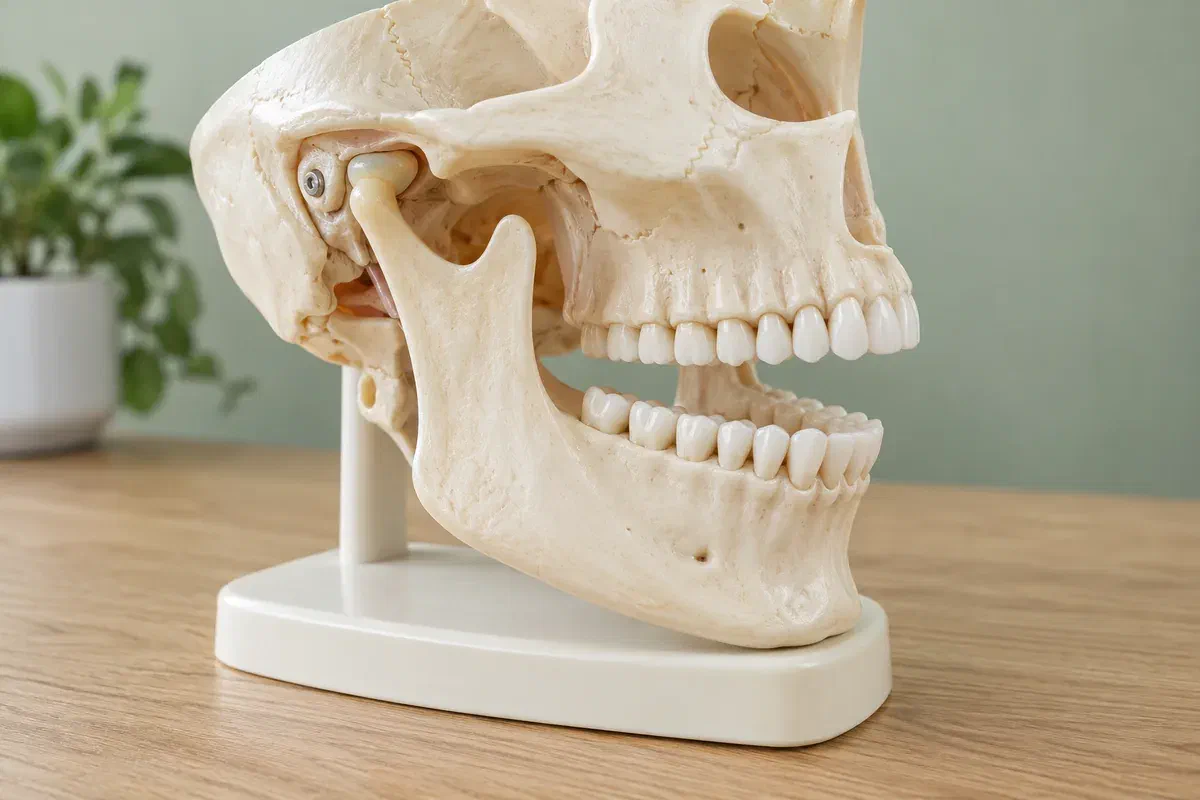
Illustrative physical teaching model showing the jaw and its supporting joint
Signs to report when you call

Swelling changes the urgency.

Start the call with any swelling, fever or rapid worsening. These shift the timing of care and shouldn’t be held back for a regular appointment.

How opening has changed

Describe whether the jaw meets a sudden block, feels stiff throughout or varies from attempt to attempt, and whether it has been fixed in one position. Has it been getting tighter by the day? Please don’t keep pushing against a painful limit to measure it.

Swallowing, drinking and eating

Tell us whether you can drink normally, swallow comfortably and get enough to eat. If fluids or basic cleaning have become difficult, you need prompt advice. These details also guide how the dentist examines you safely.

Toothache, fever and other history

Mention any sore tooth, bad taste, fever, swelling, recent dental work or facial injury. Earlier jaw problems, and surgery or radiation treatment near the jaw or neck, matter too. They influence what must be ruled out first and whether a doctor should be involved.

Call for urgent assessment if your jaw is locked, opening has dropped sharply, or eating and drinking have become impossible. Any difficulty breathing or swallowing, or swelling that spreads quickly or affects the eye, is an emergency: seek emergency medical care and call 911 when it is immediate.

What a prompt assessment achieves

Find the source quickly, then treat the right thing.

The dentist may record how far you can open, which helps track whether things improve once the cause is treated. That figure can’t tell infection from a joint problem, though. Ask how it fits your symptoms and the examination findings, and whether a likely source has been identified. If the cause is still unclear, ask what information would resolve it.

When opening is restricted, even examining the back teeth takes care. Tell the clinician which positions are uncomfortable and agree a signal to pause. If part of the mouth can’t be seen today, ask what was safely assessed and how the rest will be covered, especially if infection is suspected.

Patient information: NIDCR — assessment and management of temporomandibular disorders

A careful look within your range

The clinician observes your opening and listens to how you describe pain or tightness. Say when you reach your limit. Forcing the jaw, particularly when there is swelling, adds discomfort and doesn’t make the findings more reliable.

Teeth and gums examined first

With swelling or toothache, teeth and gums are a priority, along with muscles and other nearby areas. Ask which findings support the explanation and whether an X-ray would help. Treating this as a joint problem alone could leave an infection untreated.

A plan that tracks recovery

Agree what improvement should look like, such as swelling going down and meals becoming easier. Set a review point and decide which warning signs mean calling sooner. Knowing the purpose and limits of the plan makes it simpler to follow.

When you come in

Urgency first, then the full picture

Describing your symptoms is enough; you don’t need to show the most painful movement. If you can barely open, say so on the phone so the visit is planned with that in mind.

  1. Check the timeline and warning signs

    We ask when the restriction and any swelling began, whether they are spreading or easing, and about fever, pain and taste. Recent treatment, injuries, medicines and health conditions are reviewed. Records from another clinician are useful if you have them.

  2. Examine teeth, gums and movement

    The dentist checks your comfortable range and looks closely at teeth, gums and swelling. Point to the sore area and say whether symptoms are spreading. Breaks are fine, and anything that couldn’t be examined should be acknowledged.

  3. Explain the likely source

    You hear what seems probable and which questions remain open. An X-ray or referral may be advised if it would answer a clear question. Ask how a test would change treatment and whether a doctor or specialist needs to see you first.

  4. Agree treatment and follow-up

    Confirm any immediate advice, what treatment aims to do and how recovery will be checked. Exercises, if ever suggested, should come only after the cause is addressed and with instructions for your diagnosis. Know whom to call if swelling or restriction worsens.

Over the next few days

Watch for warning signs while care takes effect.

Home advice should follow what was found. Stretching routines designed for recovery after a particular operation are unlikely to suit a restriction caused by infection or one without a known cause.

Don’t stretch a swollen jaw

Avoid forcing your mouth open with objects or repeating painful movements. If a movement programme is later prescribed, confirm technique, frequency and when to stop. If it increases symptoms, call rather than pushing on.

Keep an eye on swelling and function

Note whether swelling, pain and opening are improving, along with how meals, drinks and brushing are going. That record helps at review. You don’t need to measure your opening constantly or provoke a lock to check.

Speak up if you can’t keep up with basics

Tell us if you can’t clean an area or are struggling with food and fluids. The team can discuss adjustments or arrange more assessment. Don’t let necessary care slide on the assumption that your jaw has to loosen first.

Patient information: Guy's and St Thomas' — jaw opening advice after relevant medical treatment

Care that fits the cause

Infection, muscle or joint: each needs its own approach.

Ask what any proposed step should achieve and how you’ll know whether it has. A restricted opening, even a painful one, doesn’t by itself justify an appliance, a procedure or permanent changes to your bite.

When infection or a dental source is found

Treating the infected tooth or tissue

An abscess or inflamed tissue around a tooth may need treatment aimed directly at it. Discuss urgency and whether it can be managed at our clinic or needs another setting. Improving movement alone would not deal with the infection.

When there is no infection and muscles or the joint are involved

Reversible care for muscles or the joint

A plan for you might include explanation, self-care and other reversible measures. Ask where to start, what to avoid and when to return. A gradual approach lets your response be reviewed without assuming an irreversible bite change.

When swelling, history or a lasting restriction needs wider input

Medical or specialist involvement

Spreading infection, previous head and neck cancer treatment or a persistent restriction may mean your doctor, a hospital team or a specialist should be involved. Ask who coordinates and what the referral is for. Rehabilitation should be individual.

Puslinch questions about swelling and jaw opening

When infection might be involved

These answers help you prepare. A new severe restriction, swelling, or difficulty managing food and fluids needs a phone call for advice, not just an online request.

(905) 876-4488
Can a tooth infection really stop my jaw from opening?
It can. Infection near the back teeth sometimes affects nearby muscles and limits opening, often with swelling and pain. That’s why swelling alongside restriction should be assessed promptly.
When is swelling an emergency rather than a dental appointment?
Swelling that spreads quickly, affects the eye or neck, or comes with trouble breathing or swallowing needs emergency medical care. Call 911 if it is immediate. Milder swelling still needs a prompt call.
Should I take leftover antibiotics while I wait?
No. Don’t take leftover or borrowed medication. Call for advice so the cause can be assessed and, if needed, appropriate treatment prescribed by a clinician.
If there’s no swelling, is it probably the joint?
Not necessarily. Muscles, teeth, injury and previous treatment can all play a part even without swelling. The assessment looks across these before settling on an explanation.
Will opening return once the infection is treated?
Often movement improves as the cause settles, but this varies. Your review should check symptoms and function, and persistent restriction may need further assessment.
Do you see people from outside Halton for urgent problems?
Call and describe your symptoms. The team will advise on timing, and if your situation needs emergency care, they will direct you to it rather than waiting for a booking.
Jaw opening assessment for Puslinch

Start with a call, especially if there’s swelling.

Our Bronte Street practice answers at (905) 876-4488. Describe any swelling, fever, locking, injury or difficulty eating and drinking so the team can decide how urgently you need to be seen and the right place for that care.

Causes, treatment needs, referral and recovery vary considerably. Online requests are for non-urgent enquiries only and should not delay emergency or urgent care when symptoms are severe or getting worse.

Visit Milton Dental Clinic
Unit 1, 342 Bronte St. S, Milton, ON L9T 5B7
Get directions Clinic hours
Monday–Thursday
11am–7pm
Friday–Sunday
By appointment only

Areas we serve

  • Milton
  • Oakville
  • Mississauga
  • Georgetown
  • Halton Hills
  • Acton
  • Campbellville
  • Brampton
  • Burlington
  • Puslinch
  • Rockwood
  • Erin
  • Caledon
  • Etobicoke
  • Old Milton
  • Bronte Meadows
  • Timberlea
  • Dorset Park
  • Dempsey
  • Clarke
  • Beaty
  • Coates
  • Harrison
  • Scott
  • Willmott
  • Ford
  • Bowes
  • Cobden
  • Walker
  • Mountain View
  • Milton Heights
  • Hawthorne Village
  • Valley View
  • Fallingbrook
  • Nassagaweya
  • Trafalgar
  • Esquesing
  • Nelson
  • Brookville
  • Moffat
  • Glen Williams
  • Norval
  • Limehouse
  • Stewarttown
  • Ashgrove
  • Hornby
  • Silver Creek
  • Speyside
  • Scotch Block
  • North Oakville
  • River Oaks
  • Glen Abbey
  • West Oak Trails
  • Palermo
  • Bronte Creek
  • College Park
  • Joshua Creek
  • Uptown Core
  • Preserve
  • Iroquois Ridge
  • Lisgar
  • Meadowvale
  • Meadowvale Village
  • Churchill Meadows
  • Erin Mills
  • Central Erin Mills
  • Streetsville
  • East Credit
  • Creditview
  • Heartland
  • Sheridan
  • Mount Pleasant
  • Credit Valley
  • Huttonville
  • Churchville
  • Springbrook
  • Northwest Brampton
  • Bram West
  • Fletcher's Meadow
  • Fletcher's Creek South
  • Alton Village
  • Orchard
  • Millcroft
  • Headon Forest
  • Tansley
  • Brant Hills
  • Tyandaga
  • Kilbride
  • Lowville
  • Aberfoyle
  • Morriston
  • Arkell
  • Hillsburgh
  • Freelton
  • Carlisle
  • Waterdown
  • Flamborough
  • Mountsberg

How can we help?

Milton Dental Clinic

Have a question about your smile? Choose the option that works best for you.

For urgent dental concerns, please call.
Messages are reviewed during clinic hours.