

Illustrative patient discussing tooth support with a clinician and a dental teaching model
Specialized Care

Loose Adult Tooth Treatment in Acton

Your back teeth suddenly meet before the front ones, or one tooth seems to hit first when you close. A change in bite can be the first sign of a loosening permanent tooth. From Acton, our dentist can check the tooth, its gum and bone support, and how your teeth come together.

When your bite feels off

The teeth close, but not the way they used to.

You might notice it while chewing supper: one tooth lands first, or there's a faint click as it shifts under pressure. In an adult mouth, that change in how the teeth meet sometimes goes hand in hand with a tooth that has started to loosen. It's a clue worth following up, rather than something to chew around for months.

The bite can change for several reasons. A blow may have nudged a tooth out of its usual position. Slower changes in the gum and bone holding a root can let it drift. Heavy clenching or grinding, other dental conditions, or a crown sitting higher after it loosened may also play a part. Pain is not a dependable guide to which of these is happening.

From Acton, a phone call is the easiest first step. Describe when your bite began to feel different, whether anything struck the tooth, and whether you can see a change in its position. Try not to bite down repeatedly to test it. The team will advise on timing and arrange an exam.

Arrange a bite and loose tooth check
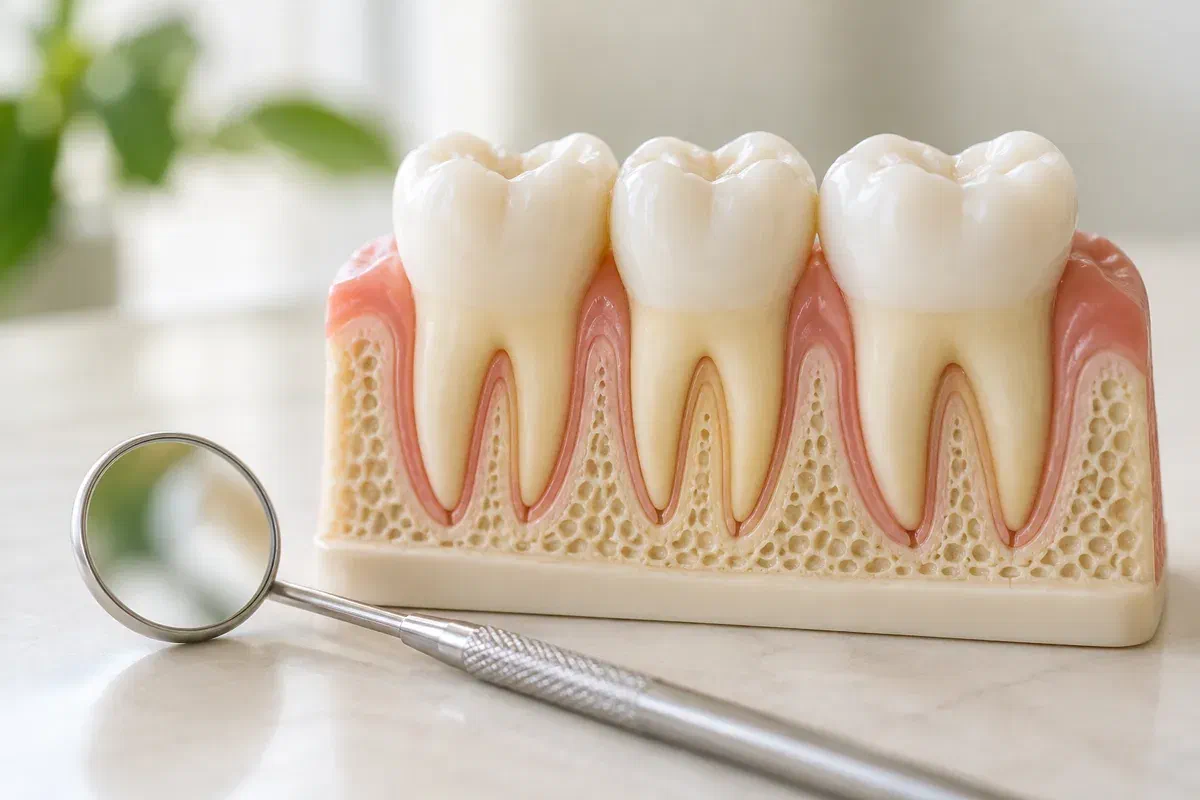
Illustrative cross-section teaching model showing teeth within gum and supporting bone
What helps us help you

Notice the pattern, then tell us about it.

Sudden bite changes after an accident need prompt attention. If a permanent tooth has been knocked loose or pushed out of line, call for an assessment instead of waiting for discomfort to build.

The change followed an accident

Let the team know when and how it happened, whether the tooth looks displaced, and exactly how your bite now feels different. Mention lip cuts, facial swelling or jaw ache. Teeth near the injured one can be affected too and are examined as well.

The change came on slowly

Gradual shifts often come with other gum signs: bleeding, receding gumlines, new spaces, or food lodging where it never used to. Earlier gum treatment is relevant. These point the dentist toward the tissue and bone that hold the root steady.

There's dental work on the tooth

A crown that has partly lifted can make the bite feel high. Mention any restorations on the tooth, and describe the sensation without pressing it again and again. If something comes off, keep it in a container and call. Skip the glue.

Phone promptly about a loose or displaced adult tooth after trauma. A tooth knocked completely out is a separate emergency where time is critical. If there is serious facial injury, bleeding you can't control, or difficulty breathing, call 911 for emergency medical care.

Questions the exam should answer

What moved, why it moved, and what can be done.

Whether a tooth can be kept for the long term depends on far more than how much it gives under pressure. The dentist looks at the root, the gum and bone around it, and how your teeth come together. Ask which findings drive the advice and which still need clarifying. If further tests or a specialist referral are suggested, ask what they should resolve.

Two goals often get blurred: settling the bite and steadying the tooth for now, and treating the underlying cause. A splint or a small bite adjustment may help in selected cases. Neither rebuilds lost support or cures gum disease. Ask what each proposed step can realistically achieve for this tooth.

Patient information: NIDCR — assessment and treatment of gum disease

The support around the root

The dentist may examine your gums and supporting tissues and take suitable images, along with checking the tooth. Medical history and earlier gum care help interpret what's found. Ask whether the concern seems localized or whether broader gum care is wise.

The bite and any dental work

A lifted crown, a loose filling and a mobile tooth can all change the bite. Ask which applies and whether the tooth beneath any restoration is sound, because that shapes whether simple re-cementing would be enough.

A realistic forecast

Discuss the likely benefits, limitations, costs and review needs of each choice. Keeping a tooth may involve ongoing care, and no one can promise the outcome from appearance alone. Ask what developments would prompt a change of plan.

During your appointment

From the first question to a shared decision.

Speak up about tenderness, or about any fear of losing the tooth. Each finding is explained as it comes, so you can take part in choosing what happens next.

  1. Map out the history

    We'll ask when the bite or movement first changed, and whether an injury or dental appointment came before it. Your gum treatment history, current symptoms, medications and general health all add context. Records from another dentist can show how things have shifted.

  2. Check the tooth, its support and your bite

    The dentist examines the moving tooth, the structures around it and how your teeth meet. Tests and images are chosen to answer the question at hand. Ask what they show about bone levels, the root, and the nerve.

  3. Decide what needs doing first

    An injury may need treatment soon; a slower cause may be tackled in stages. If a splint or bite adjustment is suggested, ask whether it's temporary and what it is protecting. If removal is mentioned, ask what in the findings points that way.

  4. Agree on the follow-up

    Confirm what each review will check, when it's due, and whether a referral is planned. Ask how to clean and chew in the meantime and which signs mean calling sooner. Clear review goals make monitoring worthwhile.

Taking care at home

Go easy on the tooth while it's assessed and treated.

Home care depends on the cause, whether an injury, gum disease, a restoration issue, or something else. Follow your own instructions rather than advice meant for someone else's problem.

Avoid test bites

Clenching down or pushing the tooth with your tongue to check it can disturb the area. Chew on the other side and avoid hard foods with that tooth. Don't try to pull, glue or wire it yourself.

Ask about cleaning around any new work

If a splint or restoration is placed, have the team show you how to clean around it. Point out any area that's hard to reach. A device brings extra cleaning needs, and advice should take your gums into account.

Let us know if things change

Contact us if movement increases, your bite shifts again, pain or swelling develops, or a splint loosens. Don't remove a splint yourself. After an injury, keep the planned reviews even once the tooth feels steady, because later findings can matter.

Treatment paths

Care aimed at the cause, not just the symptom.

Loose teeth don't share a single fix. Ask how the plan relates to your findings and what it is for: short-term protection, managing disease, repairing dental work, or preparing for replacement.

When periodontal disease is involved

Gum and supporting tissue treatment

If gum disease is found, treatment and regular maintenance may be recommended. Ask the dentist to explain the amount of support lost and the goals of care. Treatment manages the disease and can't promise every loose tooth will tighten.

When the injury suits a splint

Stabilization after injury

A splint with scheduled reviews may suit certain injuries. Ask what further treatment might be required and how long the splint stays. The nerve's condition, not the movement, decides whether root canal treatment is considered.

When the dental work or outlook changes the choice

Restoration repair or tooth removal

Restorations that have lifted or loosened can sometimes be redone if the tooth below allows. A tooth with a poor outlook may lead to a discussion about removal and replacing it later. Ask what led to the advice and what else is possible.

Acton bite and loose tooth questions

When the bite changes, here's what people ask.

Your exam determines which options apply. Get in touch soon about new movement, especially after an injury, and describe how your bite has changed.

(905) 876-4488
Why does one tooth suddenly hit first when I bite?
A tooth that has shifted, a crown that has lifted, or changes in the support around a root can all alter how your teeth meet. An exam helps identify which is happening and what to do.
Can grinding at night loosen a tooth?
Grinding and clenching put extra force on teeth and may be one factor the dentist considers, especially if gum support is reduced. Mention jaw soreness, morning headaches or worn teeth. A night guard may be discussed.
Will the dentist adjust my bite?
In some cases, a small adjustment may be suggested to reduce heavy contact on a tooth. It depends on the findings. Ask what the adjustment aims to do and whether other treatment is needed too.
My tooth doesn't hurt. Do I still need to be seen?
Yes. A tooth can move or change your bite without pain while its support is changing. Tell the team when it began and about any gum changes or injury, so they can judge timing.
Is it possible the crown is lifting rather than the tooth moving?
Yes. A crown that has partly come loose can feel high or move slightly. Avoid testing it, and let the dentist check both the crown and the tooth beneath before deciding on repair.
Should I avoid chewing on that side entirely?
Until you’ve been seen, it’s sensible to chew on the other side and avoid hard foods with the affected tooth. Your dentist will advise what’s suitable after the exam.
For adults in Acton

Tell us how your bite has changed.

Our Bronte Street team takes calls on (905) 876-4488. Describe the change in your bite or the tooth's movement, and they'll arrange the right assessment. If an injury came first, say so straight away so urgency can be discussed.

Keeping the tooth, the need for a splint, bite adjustment or referral, and its response to care all depend on individual findings. Please use online forms only for non-urgent matters.

Visit Milton Dental Clinic
Unit 1, 342 Bronte St. S, Milton, ON L9T 5B7
Get directions Clinic hours
Monday–Thursday
11am–7pm
Friday–Sunday
By appointment only

Areas we serve

  • Milton
  • Oakville
  • Mississauga
  • Georgetown
  • Halton Hills
  • Acton
  • Campbellville
  • Brampton
  • Burlington
  • Puslinch
  • Rockwood
  • Erin
  • Caledon
  • Etobicoke
  • Old Milton
  • Bronte Meadows
  • Timberlea
  • Dorset Park
  • Dempsey
  • Clarke
  • Beaty
  • Coates
  • Harrison
  • Scott
  • Willmott
  • Ford
  • Bowes
  • Cobden
  • Walker
  • Mountain View
  • Milton Heights
  • Hawthorne Village
  • Valley View
  • Fallingbrook
  • Nassagaweya
  • Trafalgar
  • Esquesing
  • Nelson
  • Brookville
  • Moffat
  • Glen Williams
  • Norval
  • Limehouse
  • Stewarttown
  • Ashgrove
  • Hornby
  • Silver Creek
  • Speyside
  • Scotch Block
  • North Oakville
  • River Oaks
  • Glen Abbey
  • West Oak Trails
  • Palermo
  • Bronte Creek
  • College Park
  • Joshua Creek
  • Uptown Core
  • Preserve
  • Iroquois Ridge
  • Lisgar
  • Meadowvale
  • Meadowvale Village
  • Churchill Meadows
  • Erin Mills
  • Central Erin Mills
  • Streetsville
  • East Credit
  • Creditview
  • Heartland
  • Sheridan
  • Mount Pleasant
  • Credit Valley
  • Huttonville
  • Churchville
  • Springbrook
  • Northwest Brampton
  • Bram West
  • Fletcher's Meadow
  • Fletcher's Creek South
  • Alton Village
  • Orchard
  • Millcroft
  • Headon Forest
  • Tansley
  • Brant Hills
  • Tyandaga
  • Kilbride
  • Lowville
  • Aberfoyle
  • Morriston
  • Arkell
  • Hillsburgh
  • Freelton
  • Carlisle
  • Waterdown
  • Flamborough
  • Mountsberg

How can we help?

Milton Dental Clinic

Have a question about your smile? Choose the option that works best for you.

For urgent dental concerns, please call.
Messages are reviewed during clinic hours.